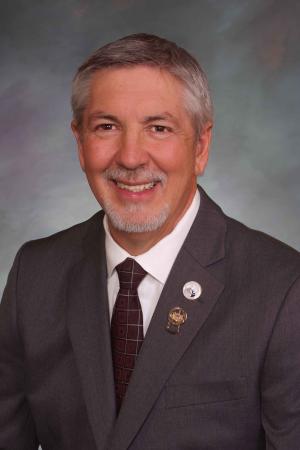
Photo of Dennis Hisey
R Colorado Senate · District 2

Sen. Dennis Hisey

Contact Email
Compare
Total votes
1,839
all sessions
Attendance
100%
2 missed
Higher than 81% of chamber peers
With party
93%
of cast votes
Near the chamber average
Bipartisan score
5%
crosses aisle rarely
Near the chamber average
Sponsored
103
bills & resolutions
Near the chamber average
Committees
0
assignments
103 bills and resolutions

Sponsored bills

Total
103
Primary
103
Co-sponsor
0
This page
103
matching current filters
Primary SB 21-270
Signed into law · Colorado Senate · Lead sponsor
Increase Alcohol Beverages On-premises Production

The act increases the alcohol beverage production limits for distillery pubs and vintner's restaurants, per calendar year:From 45,000 liters to 875,000 liters of spirituous liquor for distillery pubs; and From 250,000 gallons to 925,000 gallons of wine for vintner's restaurants.(Note: This summary applies to this bill as enacted.)

Signed into law Jul 7, 2021 0 co-sponsors
Primary HB 21-1292
Signed into law · Colorado House · Lead sponsor
Report Revenues From Sports Betting Activity

The division of gaming within the department of revenue currently publishes on its website monthly and annual public reports of revenues, expenses, and other information from limited gaming activity in Central City, Black Hawk, and Cripple Creek. The act requires similar reporting for revenue associated with sports betting. To protect the privacy of owners of sports betting venues, when the number of licensees in any of the cities is less than 3, the act requires aggregation of data from that city with data from another city.If the use of aggregated data results in a property valuation that the casino owner or other taxpayer believes is inaccurate, the act permits the taxpayer to submit additional information to the county assessor, subject to strict confidentiality requirements that continue throughout the property valuation process and any subsequent appeals or court proceedings.(Note: This summary applies to this bill as enacted.)

Signed into law Jul 6, 2021 0 co-sponsors
Primary HB 21-1324
Signed into law · Colorado House · Lead sponsor
Promote Innovative And Clean Energy Technologies

The act replaces the integrated gasification combined cycle (IGCC) program, which was repealed in 2019, with a mechanism by which an investor-owned utility seeking to implement an innovative energy technology project may apply to the public utilities commission (PUC) to acquire resources that demonstrate the use of innovative, zero-emission technologies for energy generation and storage. To qualify for cost recovery, the utility's expenditures must be determined by the PUC to have been prudently incurred and the utility's return on investment may not exceed the return on a comparably sized photovoltaic or wind-electric generation facility.(Note: This summary applies to this bill as enacted.)

Signed into law Jul 6, 2021 0 co-sponsors
Primary SB 21-017
Signed into law · Colorado Senate · Lead sponsor
Sexual Contact By An Educator

Under current law, a secondary school teacher who has sexual contact with a student who is 18 years of age or older may not have committed a crime. The act provides that an educator who subjects a secondary school student who is 18 years of age or older to sexual intrusion or sexual penetration commits the crime of abuse of public trust by an educator if the educator is at least 4 years older than the student. Abuse of public trust by an educator is a class 1 misdemeanor. Consent by the student is not a defense to the crime.The act requires a public school prior to employing a person to inquire with the department of education (department) regarding whether the person was dismissed or resigned based on an allegation of a sexual act with a student 18 years or older.The act requires that if an employee of a public school is dismissed or resigns as a result of an allegation of a sexual act involving a student who is 18 years of age or older, regardless of whether the student consented to the sexual act, that is supported by a preponderance of the evidence, the governing board of the charter school or school board shall notify the department and provide any information requested by the department concerning the circumstances of the dismissal or resignation. The public school shall also notify the employee that information concerning the employee's dismissal or resignation is being forwarded to the department. The act prohibits a public school from entering into a settlement agreement that would restrict the public school from sharing any relevant information related to an allegation of a sexual act involving a student who is 18 years of age or older, regardless of whether the student consented to the sexual act, that is supported by a preponderance of the evidence pertaining to the employee with the department, another school district, or charter school pertaining to the incident upon which the dismissal or resignation is based.Under current law, the department of education can impose licensing sanctions on unethical behavior and professional incompetence. The act requires the state board of education to promulgate appropriate rules defining the standards of unethical behavior and professional incompetency. Unethical behavior must include conduct involving a sexual act between an applicant or holder and a student, including a student who is 18 years of age or older, regardless of whether the student consented to the sexual act.(Note: This summary applies to this bill as enacted.)

Signed into law Jul 2, 2021 0 co-sponsors
Primary HB 21-1171
Signed into law · Colorado House · Lead sponsor
Kidney Disease Task Force

The act creates the kidney disease prevention and education task force (task force) and makes an appropriation. The task force consists of members that are part of the general assembly and members that are not part of the general assembly. The task force's purpose is to evaluate and make recommendations to the general assembly about the detection, treatment, education, and awareness of kidney disease in Colorado.The task force has the following duties:To work with various entities to create kidney disease educational programs and increase overall awareness of kidney disease in Colorado; To examine chronic kidney disease, transplantation, donation, and the higher rates of affliction in minority populations; and To develop a plan to raise awareness about kidney disease in Colorado, which shall include an ongoing campaign that incorporates health workshops, preventative screenings, social media campaigns, and television and radio commercials. The task force is required to submit an initial and final report with its findings and recommendations to the department of health care and environment (department) by December 1, 2023, and August 31, 2026. The department is required to include the initial and final report of the task force as part of the department's presentation to its joint committees of reference at a hearing held pursuant to the "State Measurement for Accountable, Responsive, and Transparent (SMART) Government Act".The department is required to select a Colorado medical center with a program dedicated to treating kidney disease to administer the task force. The task force is required to convene by November 1, 2021, and is required to meet at least 4 times every year. The task force is scheduled for sunset review and repeal on September 1, 2026.(Note: This summary applies to this bill as enacted.)

Signed into law Jul 2, 2021 0 co-sponsors
Primary HB 21-1296
Signed into law · Colorado House · Lead sponsor
Limited Gaming Codify Executive Orders

By executive order, to allow for social distancing to prevent the spread of COVID-19, the governor:Suspended the operation of statutes prohibiting more than 7 players in the game of blackjack; Suspended the operation of statutes limiting a casino operator to 2 noncontiguous gaming areas within the casino; and Eliminated the requirement that an applicant for a limited gaming or sports betting license submit fingerprints simultaneously with the license application for purposes of conducting a fingerprint-based criminal history record check, instead allowing the applicant to submit fingerprints as a supplement to the application. The act codifies all 3 of these changes but specifies that final action on a license application cannot be taken until the results of the fingerprint-based criminal history record check are received.(Note: This summary applies to this bill as enacted.)

Signed into law Jun 30, 2021 0 co-sponsors
Primary HB 21-1006
Signed into law · Colorado House · Lead sponsor
Fifth-day School Enrichment Programs Funding

The act creates the fifth-day academic enrichment and support grant program (program) to award grants on a 3-year cycle to one or more eligible community-based nonprofit organizations (organizations) and to eligible rural school districts to provide supplemental enrichment programming to preschool through high school-aged children on the fifth day of the week for children in schools that have a 4-day school week.To be eligible for a grant, organizations must, in part, have experience providing before- and after-school programs, serve a majority of children from low-income families, and serve students who attend a school district that operates on a 4-day week. To be eligible for a grant, a rural school district must be rural, as determined by the department of education (department), have no eligible organization operating within the rural school district's boundaries, and serve a majority of children from low-income families.The state board of education (state board) awards program grants in a 3-year grant cycle, with an initial grant and automatic renewal of the grant for 2 years as set forth in the act. The amount of the initial and renewal grants is determined by the state board based on the number of children served in the program and other criteria specified in the act. The state board shall promulgate rules to establish the program, including the application process and deadlines.Grants must be used for one or more of the purposes specified in the act, including to provide supplemental educational programming to support students' academic, social, and emotional development on the fifth day of a 4-day school week, to provide meals and transportation for students attending the program, and to acquire educational materials and necessary technology to provide supplemental educational programming. Grantees are required to report annually to the department on the use of the grant money, with the department reporting to certain committees of the general assembly.The act creates the fifth-day academic enrichment and support grant program fund for program grants, consisting of money appropriated or transferred to the fund by the general assembly. The department shall not implement or administer the program unless the general assembly appropriates sufficient money to the fund for the program.(Note: This summary applies to this bill as enacted.)

Signed into law Jun 30, 2021 0 co-sponsors
Primary SB 21-039
Signed into law · Colorado Senate · Lead sponsor
Elimination Of Subminimum Wage Employment

Beginning July 1, 2021, the act prohibits an employer from paying an employee whose earning capacity is impaired by age, physical or mental disability, or injury less than minimum wage if the employer does not hold a special certificate issued on or before June 30, 2021, by the United States department of labor that authorizes the employer to pay wages below minimum wage to those employees. The act phases out subminimum wage employment for employers that hold a special certificate and by June 30, 2022, requires each employer that holds a special certificate to submit a transition plan to the department of health care policy and financing (department) detailing how the employer plans to phase out subminimum wage employment by July 1, 2025. On and after July 1, 2025, an employer is prohibited from paying an employee with a disability less than minimum wage regardless of whether the employer was issued a special certificate.The act requires the employment first advisory partnership in the Colorado department of labor and employment (partnership) to:Develop actionable recommendations to address structural and fiscal barriers to phasing out subminimum wage employment and successfully implementing competitive integrated employment; and Report the recommendations to specified committees of the general assembly. The act also continues operation of the partnership, which was scheduled to repeal on July 1, 2021, indefinitely.The act requires the department to seek federal approval to add employment-related services for individuals with intellectual and developmental disabilities under the state's medicaid waiver services.$90,691 is appropriated to the department to implement the act. The department also expects to receive $409,885 in federal funds to implement the act.(Note: This summary applies to this bill as enacted.)

Signed into law Jun 29, 2021 0 co-sponsors
Primary HB 21-1248
Signed into law · Colorado House · Lead sponsor
Colorado Children's Trust Fund Act

The act updates various provisions of the "Colorado Children's Trust Fund Act", including renaming it the "Colorado Child Abuse Prevention Trust Fund Act" (trust fund act). Changes include:Expanding the membership of the Colorado child abuse prevention board (board) from the current 9 members to 17 members; Expanding the powers and duties of the board to include advising and making recommendations to the governor, state agencies, and other entities regarding child maltreatment prevention; developing strategies to decrease the incidences of child maltreatment and other adverse childhood experiences; and implementing and monitoring the ongoing development of local child maltreatment prevention plans throughout the state; and Extending the repeal of the trust fund act from 2022 to 2027. For the 2021-22 state fiscal year, the act appropriates $890 to the legislative department for use by the general assembly. This appropriation is from the general fund. To implement this act, the general assembly may use this appropriation for legislator per diem.(Note: This summary applies to this bill as enacted.)

Signed into law Jun 24, 2021 0 co-sponsors
Primary HB 21-1264
Signed into law · Colorado House · Lead sponsor
Funds Workforce Development Increase Worker Skills

The act creates the workers, employers, and workforce centers cash fund (fund) for the purpose of responding to the COVID-19 public health emergency and the negative economic impacts of the pandemic as follows:To provide assistance to unemployed workers, including job training; To provide assistance to households; For programs, services, or other assistance for populations disproportionately impacted by the public health emergency, including programs or services to address or mitigate the effects on education; To provide aid to impacted industries, small businesses, and nonprofit organizations through the provision of related educational and job training services; and For related administrative costs. The act directs the state treasurer to transfer to the fund $200 million of the money the state received pursuant to the federal "American Rescue Plan Act of 2021" (ARPA) and $25 million from the general fund. Of this amount, the act appropriates a total of $75 million for use in the 2021-22 state fiscal year, allocated in the following amounts and for the following purposes related to assisting unemployed workers, aiding impacted industries, and addressing or mitigating the impacts of the public health emergency on education:$25 million for the investments in reskilling, upskilling, and next-skilling workers program (program), which is an initiative of the state work force development council (state council) to facilitate training for unemployed and underemployed workers in the state during times of substantial unemployment, defined as an unemployment rate that exceeds 4% statewide or within a work force development area. Of this amount, the state council, in collaboration with the department of labor and employment (department), is directed to allocate: $20.75 million to local work force development areas for the program; $3 million for a grant program developed by the state council to award grants to other partners to provide reskilling, upskilling, and next-skilling supports to eligible individuals for up to 13 months; and $1.25 million for the department to conduct outreach and recruitment, provide access to digital platforms for career navigation, issue licenses for virtual training classes, and implement, administer, and report on the program, with any portion of the $1.25 million that is unencumbered and unexpended as of June 30, 2022, reallocated for the program and the grant program. $35 million for programs and initiatives established under the "Work Force Innovation Act", including $17.5 million for allocation to work force development boards for the work force innovation grant program to promote innovation to improve outcomes for learners and workers by helping prepare Coloradans for well-paying, quality jobs; and $17.5 million for use by the state council for statewide work force innovation initiatives; $10 million to the department of higher education for allocation by the state board for community colleges and occupational education to specified career and technical education providers to expand equipment, facility, and instruction capacity in key career and technical education job demand areas identified in the annual Colorado talent report; and $5 million to the department of education for the adult education and literacy grant program. As required by ARPA, the money appropriated in the act must be obligated by December 31, 2024, and expended by December 31, 2026, and recipients of ARPA money must comply with reporting requirements specified in ARPA and by the state controller.The act also authorizes the department to receive and expend money from the general fund or any other state source that is appropriated by the general assembly or passed through another entity for purposes of distributing state funds to work force development areas to implement work force development activities. The act specifies that state money appropriated or passed through to the department is not subject to limits imposed on the use of money received by the department pursuant to specified federal laws.(Note: This summary applies to this bill as enacted.)


Signed into law Jun 23, 2021 0 co-sponsors
Showing 31 to 40 of 103 bills
Previous 1 3 4 5 11 Next