Senate Bill 26-016, enacted in 2026, prohibits a person from disposing of preproduction plastic materials at a location that does not have federal interim status, a federal permit granted pursuant to the federal 'Solid Waste Disposal Act', or a state permit for the treatment, storage, or disposal of hazardous waste at a hazardous waste site. The act removes this prohibition and instead prohibits the disposal of preproduction plastic materials at a location that is not a solid wastes disposal site and facility with a certificate of designation.(Note: This summary applies to this bill as enacted.)
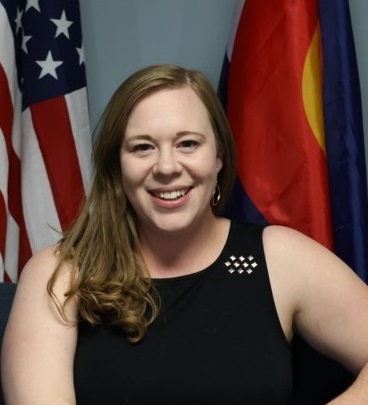
Sen. Katie Wallace
Sponsored bills
The act implements recommendations of the department of regulatory agencies (department) in its 2025 sunset review of the public utilities commission (commission) as follows:Sections 1 and 3 of the act continue the commission for 7 years to September 1, 2033;Sections 4, 8, 10, 11, 16, and 17 authorize the commission to send communications by email;Sections 20 through 22 modernize certain processes, provide additional transparency, and clarify inconsistencies in certain energy statutes by:Aligning the renewable energy standard with the statutes governing clean energy targets and removing the requirements for municipally owned utilities to submit an annual compliance report to the commission regarding renewable energy standard requirements and for qualifying wholesale utilities that comply with electric resource planning to also demonstrate compliance with electric resource standards;Directing the commission to perform a study to identify any barriers to joint procurement by electric utilities with regard to advanced technology generation resources;Section 23:Prohibits an individual from impersonating a transportation network company (TNC) driver (driver). An individual who violates the prohibition commits a class 2 misdemeanor. An individual who impersonates a driver during the commission of a felony offense commits a class 6 felony. A TNC is required to conduct periodic checks utilizing facial recognition software or equally or more effective technology, as approved by the commission, to prevent driver impersonation in accordance with rules adopted by the commission. The periodic check requirement does not apply to a TNC that predominantly contracts to serve public or private schools or the government and complies with at least 90% of the commission's rules regarding safety standards for TNCs that contract with schools or school districts.Requires a TNC to provide information about the commission, including information about how a rider may contact the commission to file a complaint using a TNC's digital network, to a rider in accordance with rules adopted by the commission; andRequires commission staff who process TNC customer complaints to receive training in trauma-informed practices;Section 25 expands the types of drivers who need to have criminal history record checks performed to include drivers who are employed by any motor carriers and contract carriers;Section 28 requires the commission to perform a market study to determine if the current systems of regulating intrastate contract and common carriers optimally balance consumer protections with industry and regulatory efficiency and to report its findings and recommendations based on the study to the general assembly by January 1, 2028;Sections 29 and 30 replace the current inspection requirements for a charter bus, children's activity bus, fire crew transport, luxury limousine, off-road scenic charter, and large-market taxicab with a requirement that these vehicles be inspected on a schedule and to a standard set by rules adopted by the commission;Sections 31 through 36 and 38 update the state railroad regulation requirements to mirror current federal law and to repeal obsolete provisions;Section 39 removes the $500 fee cap paid by companies to access the Colorado no-call list, replaces it with a $1,000 fee cap, and requires conforming list brokers, which are companies that purchase the no-call list and sell it to other companies, to pay a fee established by the commission by rule;Section 41 authorizes the commission to administratively assess a filing fee schedule for filings related to communication services, telecommunications services, and basic emergency services to help finance the commission's telecommunications-related work and exempts members of the public filing complaints and public utilities subject to certain revenue-based fees imposed by the commission from paying the filing fees;Section 43 aligns the usage of money collected from charges related to the provision of 911 services with federal requirements by clarifying that the money may be expended for public safety radio equipment outside of a public safety answering point only if the equipment is used for dispatching emergency service providers to respond to 911 calls;Section 44 authorizes the commission to adopt rules that establish caps on rates charged by penal communications service providers on intrastate penal communications services provided for intrastate communications with individuals in correctional facilities and to enforce the intrastate rate. Section 44 also authorizes the commission to adopt rules requiring penal communications service providers to report outages and imposing penalties for penal communications service providers' failure to comply with commission requirements. Section 44 also requires:Penal communications service providers to cooperate with commission staff when the staff is performing biannual testing of penal communications services;The commission to develop flyers informing the public how to file complaints to the commission about penal communications services; and Correctional facilities to post the flyers;Section 45 exempts small operators of natural gas pipelines from the minimum $5,000 civil penalty required for violations of pipeline safety laws and authorizes the commission to impose a lesser civil penalty against a small operator;Section 46 directs the commission to perform a study identifying all privately owned water utilities in the state and assessing their financial conditions and needs;Section 47 requires investor-owned electric utilities to provide interconnection information and certificates to taxpayers requesting the information for purposes of claiming the federal clean electricity investment credit; andSection 48 requires the commission, on or before December 1, 2026, to open one or more miscellaneous proceedings to investigate ways to streamline energy planning proceedings, to integrate gas and electric system planning, and to make customer programming more efficient. The commission shall solicit stakeholder feedback in its investigation and, on or before November 30, 2027, shall submit a report of its findings and recommendations to legislative committees with jurisdiction over energy matters. The act also implements the following changes regarding the commission and its work:Section 2 requires electric and gas investor-owned utilities, including combined utilities, to file annual summaries of anticipated regulatory filings with the commission starting in 2027 and requires the commission to make the filings publicly available on its website, hold informational meetings regarding the filings, and submit annual reports to the general assembly summarizing the commission's major adjudicated cases and rule-makings from the previous year. Starting September 1, 2026, the commission is required to include in each of its decisions a summary of public comments received on the matter.Sections 4 through 8 concern commission authority, personnel, and management functions, with section 4 stating that the commission, acting through its director, has authority over the commission's budgeting, purchasing, planning, and related management functions, including human resources, and section 7 requiring the director of the commission to hire or designate an equity analyst to assist the commission's work regarding equity impact proceedings and to staff an equity task force appointed by the director;Section 4 also requires the governor to consider appointing commissioners with knowledge of the regulated industries and with a diversity of experience and understanding of public interest considerations. Finally, section 4 authorizes the commission to hold weekly meetings and, beginning July 1, 2027, requires a majority of the commissioners attending the weekly meetings to attend in person.Sections 9 and 12 provide that, with certain exceptions, adjudications must first be heard by an administrative law judge. Section 12 also requires the commission, by March 31, 2027, to adopt rules regarding the format of en banc commission and hearings and meetings presided over by a single hearing commissioner with respect to whether the hearings are held in person, virtually, or a hybrid of in-person and virtual participation.Section 13 requires that commission rules regarding review of an application must prescribe that an application may only be deemed incomplete if it does not meet the commission's application requirement. Section 13 also provides that the commission's failure to act upon an application within 120 days, or within an extended time granted by the commission not to exceed an additional 130 days or, under extraordinary conditions, not to exceed an additional 90 days, constitutes an approval of the application by operation of law. An unopposed permissive motion for intervention is deemed approved if the commission does not deny the motion within 30 days after its filing.Section 14 increases the maximum civil penalty applicable to public utilities for intentional violations of public utilities law from $2,000 to $7,500, applies such civil penalties to a public utility's violation of a tariff, and requires the commission to consider factors such as utility size, harm caused, and mitigating circumstances or actions in assessing the civil penalties. Section 14 also requires that civil penalties assessed against and collected from electric and gas utilities be credited to the public utilities commission fixed utility fund (fixed utility fund) to be used for affordability programs or outreach and engagement of income-qualified customers and disproportionately impacted communities.Section 15 provides guidance for intervenor compensation in commission proceedings by authorizing the commission to award an intervenor compensation if the commission determines that the intervenor made a unique substantial contribution that provided material assistance to the commission in developing the record in a proceeding and incurred reasonable costs in the proceeding. The commission may adopt rules regarding intervenor compensation, including rules for intervenor petitions for compensation and guidelines for determining reasonable costs incurred and material assistance.Under current law, money in the legal services offset fund is continuously appropriated to the department to offset its costs of legal representation in matters involving public utilities law. Section 18 shifts the appropriation to the commission to offset its costs of legal representation in such matters.Section 21 removes verification of municipally owned utilities' voluntarily filed clean energy plans by the division of administration in the department of public health and environment;Section 22 requires the commission, on or before December 31, 2027, to adopt rules establishing minimum quality-of-service metrics for investor-owned electric and gas utilities in the state;Section 24 requires the department to consult with the director of the commission regarding annual TNC permit fees and increases the maximum annual TNC permit fee to $161,250. Likewise, section 26 requires the department to consult with the director of the commission in setting certain administrative fees on motor carriers, and section 40 requires the department to consult with the director of the commission on computation of revenue-based fees owed by utilities.Section 27 provides that a person may apply to a court for enforcement of a commission order, decision, or rule regarding noncompliance by a motor carrier without having first exhausted administrative remedies; andSection 37 requires the commission to engage an independent third-party consultant to conduct a study on how the commission may modernize its personnel, organizational, and budgetary structures, which study must include an evaluation and recommendations regarding the commission's size, compensation, and funding mechanisms for equity objectives. On or before November 1, 2026, the commission shall submit an initial report, and on or before November 1, 2027, a final report, on the study's findings and recommendations to legislative committees with jurisdiction over energy matters. For state fiscal year 2026-27, section 49 appropriates $298,448 to the department with:$232,712, including $157,712 from the fixed utility fund and $75,000 from the motor carrier fund, for personal services;$16,048 from the fixed utility fund for operating expenses; and$49,688 of the amount appropriated from the fixed utility fund for reappropriation to the department of law for legal services.(Note: This summary applies to this bill as enacted.)

The act requires a volunteer lobbyist to register and file a registration statement attesting they are not being compensated. The act exempts volunteer lobbyists from registration fees. The act provides that the judicial department may designate one individual for the judicial department and one individual for each independent agency in the judicial department who may lobby on behalf of the judicial department or an independent agency in the judicial department (judicial lobbyist). A person designated by a principal executive department to be responsible for lobbying a state official or employee on behalf of the department (legislative liaison), a judicial lobbyist, or an individual who lobbies on behalf of the offices of the governor or lieutenant governor as a member of the governor's cabinet or as a personal staff employee in the offices of the governor or the lieutenant governor (governor's lobbyist) must register with the secretary of state annually. In addition to annually registering with the secretary of state, a legislative liaison, judicial lobbyist, or a governor's lobbyist must file a monthly disclosure statement with the secretary of state (disclosure statement). The act provides that a legislative liaison, judicial lobbyist, or a governor's lobbyist must indicate on the disclosure statement the bill number of any legislation for which they have lobbied or will lobby a covered official and their position regarding the legislation. The legislative liaison, judicial lobbyist, or a governor's lobbyist must update their position on the disclosure statement within 72 hours of a change in position. The act prohibits a statewide elected official or member of the general assembly from being a legislative liaison or governor's lobbyist for a period of 2 years following vacation of office. $91,000 is appropriated from the department of state cash fund to the department of state.(Note: This summary applies to this bill as enacted.)

If certain conditions are met, the act requires health benefit plans that provide hospital, surgical, or medical expense insurance to provide reimbursement for health-care services provided by a pharmacist that are within the pharmacist's scope of practice without entering into a collaborative pharmacy practice agreement. Similarly, under the medical assistance program (medicaid), the act authorizes reimbursement for services that are within a pharmacist's scope of practice and not duplicative of other pharmacist services or programs reimbursed by medicaid. Further, solely on the basis of the type of license or certification, a health benefit plan or health insurance company (carrier) shall not discriminate against a pharmacist who is acting within the scope of the pharmacist's license or certification under state law, with respect to participation, referral, reimbursement of covered services, or indemnification, or prohibit a pharmacist from membership in a provider network; except that, in selecting pharmacist providers, the act does not:Prohibit a health benefit plan or carrier from including providers in its provider network only to the extent necessary to meet the needs of the plan or from limiting referrals or establishing quality control measures;Require a health benefit plan or carrier to contract with any provider willing to abide by the terms and conditions for participation established by the health benefit plan or carrier; orRequire coverage for any health-care service that is not otherwise covered. The act makes changes to the definitions in the pharmacy practice statutes to include a definition for 'final product verification'. For drug, device, or product orders that are not for controlled substances, final product verification may be delegated by a supervising pharmacist to a certified pharmacy technician or pharmacy intern. A pharmacy or other outlet shall have a continuous quality assessment system in place to periodically verify the accuracy of the final drug, device, or product and must create a plan for final product verification, including how pharmacists' hours will be maintained to provide direct patient care. The state board of pharmacy is required to adopt rules relating to final product verification no later than December 31, 2026. Under current law, a pharmacist may administer certain tests to patients who are 12 years old or older for certain conditions and prescribe drugs to treat the tested conditions. The act adds to the definition of the 'practice of pharmacy' independent prescriptive authority for drugs that are not controlled substances, drug categories, or devices that are prescribed to patients who are 5 years old or older but under 12 years old for conditions that do not require a new diagnosis, that are minor and self-limiting, or that have a test that guides diagnosis and are not medications that may only be prescribed pursuant to a certified education program and a limited distribution network. If a pharmacist tests or treats any patient who is under 18 years old, the act requires a pharmacist to notify the patient's primary care provider consistent with health-care privacy laws or, if the patient does not have or disclose a primary care provider, refer the patient to a primary care provider for further care.(Note: This summary applies to this bill as enacted.)
Under current law, the title board must set a ballot title for an initiative petition that is brief, does not conflict with another title for an initiative petition filed for the same election, and is in the form of a question that may be answered 'yes/for' or 'no/against' and that unambiguously states the principle of the provision sought to be added, amended, or repealed by the initiative. The act adds a requirement that the title board write a ballot title using accessible language, which means plain language that is understood by the widest possible audience. In determining whether a ballot title is written using accessible language, the title board may consider whether the title:Avoids using legal, technical, or specialized terminology when possible;Clearly identifies the principal change in law or policy proposed by the proposed statutory or constitutional amendment;Avoids unnecessary qualifiers, double negatives, and overly complex phrasing;Organizes clauses so that the effect of a 'yes/for' or 'no/against' vote is readily understood; andPresents necessary information within the ballot title in a logical and readable order. In addition, current law requires that specific language appear in the ballot title for certain initiatives that increase or reduce tax revenue. For initiatives that reduce state tax revenue or local district property tax revenue through a tax change, this required language must appear at the beginning of the ballot title. For initiatives that increase tax revenue for any district through a tax change, this required language must appear directly after language required by the Taxpayer's Bill of Rights. The act modifies these statutory provisions so that the required ballot title language must only be substantially similar to the specific statutory language and may appear anywhere in the ballot title. The act applies to initiative petitions submitted to the secretary of state for title setting on or after the effective date of the act.(Note: This summary applies to this bill as enacted.)
The act defines school zones as all roadways within at least 1,000 feet of a school property boundary, except state highways unless they are designated as part of a school zone with the written approval of the Colorado department of transportation, and including school zones established before August 12, 2026, that are 200 feet or more from a school property boundary. A school zone must have appropriate signs posted indicating it is a school zone and that the penalties and surcharges within the school zone will be doubled. The act allows a local government that has jurisdiction over a school zone to reduce the size of a school zone after first holding a public hearing, but the act does not allow a school zone to be reduced to less than 200 feet from a school property boundary. Additionally, the act does not prohibit local governments from expanding school zones to beyond 1,000 feet from a school property boundary. The act limits requirements the state, a county, a city and county, or a municipality must complete regarding placing and using an automated vehicle identification system along a safe route to school. The act allows a local government to designate a portion of a roadway immediately adjacent to a school property boundary as a school street and requires the local government to post signs indicating it is a school street if the local government has jurisdiction to do so. The local government may close a school street to traffic. If there is traffic on the school street, the maximum speed limit is 10 miles per hour and vehicles must yield the right-of-way to pedestrians, bicyclists, or micromobility users. The local government may suspend additional traffic provisions on the school street that endanger pedestrians, bicyclists, or micromobility users.(Note: This summary applies to this bill as enacted.)
The act appropriates the following amounts for the 2026-27 state fiscal year from the Colorado water conservation board (CWCB) construction fund to the CWCB or the division of water resources in the department of natural resources for the following projects:Continuation of the satellite monitoring system, $380,000 (section 1 of the act);Continuation of the floodplain map modernization program, $500,000 (section 2);Continuation of the weather modification permitting program, $500,000 (section 3);Continuation of the Colorado Mesonet project, $200,000 (section 5);Continuation of the water forecasting partnership project, $2,500,000 (section 6);Continuation of Colorado decision support system operation and maintenance, $750,000 (section 7);Support for water plan agency actions, $1,350,000 (section 9);Continuation of the Colorado watershed restoration and flood mitigation projects, $5,000,000 (section 10); andContinuation of the upper Colorado river commission planning, $750,000 (section 11). Section 4 directs the state treasurer to transfer up to $6,000,000 from the CWCB construction fund to the CWCB litigation fund on or before July 1, 2026. Section 8 restores the fish and wildlife resources fund balance by transferring $2,000,000 from the CWCB construction fund to the fish and wildlife resources fund. Section 12 authorizes the CWCB to make a loan in an amount of $151,500,000 from the severance tax perpetual base fund to the city of Fort Collins to support the Halligan water supply project. Section 13 authorizes the CWCB to make a loan in an amount of $20,166,670 from the severance tax perpetual base fund to the Lower Latham Reservoir Company for the Jurgens reservoir construction project. Section 14 appropriates $37,700,000 from the water plan implementation cash fund to the CWCB to award grants that will help implement the state water plan. Section 15 clarifies that the money that is currently in the turf replacement fund is appropriated for designated purposes to the CWCB until June 30, 2028. Any money remaining in the turf replacement fund on July 1, 2028, is transferred to the CWCB construction fund. Section 16 makes technical corrections so that money appropriated in 2025 is available to the department of natural resources executive director's office for the purpose of paying for a study by the Colorado water center at Colorado state university. Under current law, the CWCB may authorize loans up to $10 million from the CWCB construction fund or severance tax perpetual base fund without legislative authorization. The act increases that amount to $30 million (section 17).(Note: This summary applies to this bill as enacted.)
The act establishes a bill of rights for adults subject to guardianship (ward) and details what decisions a court may authorize a guardian to make on behalf of a ward. The act updates the duties of a guardian to include a duty to notify the ward at least 30 days before the ward is permanently moved to a nursing home, mental health institution, or other facility that restricts the ward's ability to leave the facility or have visitors. On or before November 1, 2027, and November 1, 2028, the act requires the state court administrator's office to submit a report detailing the fiscal impact of this act on the judicial department to the joint budget committee, the senate judiciary committee, and the house of representatives judiciary committee, or their successor committees, and requires the state court administrator's office to create the report using existing data sources.(Note: This summary applies to this bill as enacted.)
The act requires that an applicant for a building permit or a construction permit for a project with a total construction cost of more than $1 million (permit) file with the permitting agency, prior to commencing work under the permit, a signed declaration under penalty of perjury verifying that any person working under the permit maintains valid workers' compensation insurance coverage for the duration of the permit. A person may file a complaint with the division of workers' compensation in the department of labor and employment alleging a person's workers' compensation insurance coverage is not in compliance with the state's workers' compensation laws.(Note: This summary applies to this bill as enacted.)
The act extends the implementation dates for capping family copayments for child care at 7% of family income, for paying child care providers in advance of the provision of services, and for utilizing grants and contracts to improve access to child care for underserved populations to August 1, 2028. The act modifies existing reporting requirements to include the total amount of child care assistance program (CCCAP) allocation that is spent by the department and each county on administrative expenses, county indirect expenses, program implementation costs, and direct service expenses.(Note: This summary applies to this bill as enacted.)