

The act creates the future of severance taxes and water funding task force (task force). The department of natural resources is required to contract with a third party to conduct a study on severance taxes and water funding and develop recommendations for ways to continue funding water needs and energy impact grants in the face of decreasing severance tax revenue (study). The study must focus on identifying ways to alleviate the need to transfer revenues derived from severance taxes to the general fund and to replace severance tax revenue that was previously transferred to the general fund. The purpose of the task force is to work with the third party to conduct the study and develop recommendations. No later than January 15, 2026, the third party must submit a draft report, detailing the results of the study and any recommendations, to the department of natural resources and the task force for review. The task force is required to provide input on the draft report. No later than July 15, 2026, the third party must submit a final report, which incorporates the input of the task force, to the water resources and agriculture review committee (committee). The task force must present the final report to the committee during the 2026 legislative interim. The act changes the manner in which a credit allowed against severance tax in taxable years commencing January 1, 2026, but prior to January 1, 2028, is calculated. For the 2025-26 state fiscal year, $198,592 is appropriated from the severance tax operational fund to the department of natural resources to implement the act. (Note: This summary applies to this bill as enacted.)
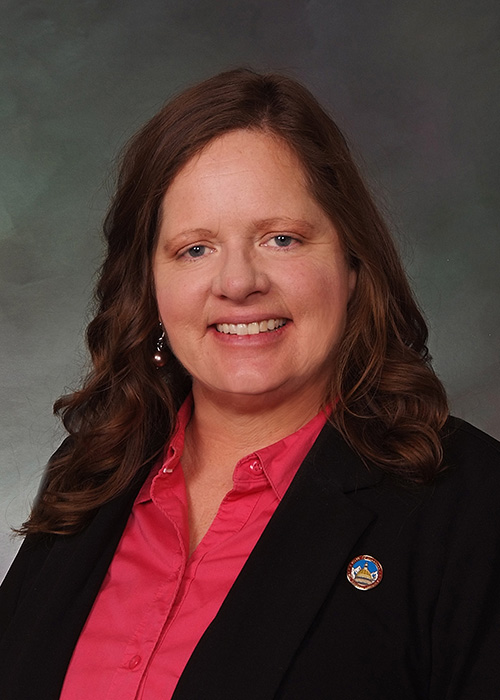
Sen. Janice Marchman
Sponsored bills
The act requires hospitals, freestanding emergency departments, and licensed health-care facilities that hold themselves out to the public as providing emergency care (facility) to provide emergency medical services to a person who presents to the facility when the person requests or a request is made on the person's behalf for emergency medical services. For each person who presents to a facility and requests emergency medical services or for each request made on the person's behalf for emergency medical services, the act requires the facility to input into a central log whether the person refused treatment or was denied treatment; whether no treatment was required; or whether the person was transferred, admitted and treated, stabilized and transferred, or discharged. The act prohibits a facility from: Denying or discriminating in providing emergency medical services to a patient for a discriminatory or unlawful reason; Penalizing or taking adverse action against a health-care provider for refusing to transfer a patient with an emergency medical condition that has not been stabilized; Delaying providing emergency medical services to a person in order to inquire about the person's ability to pay for the services; and Transferring or discharging a patient with an emergency medical condition unless certain conditions are met. A facility or health-care provider does not violate the act's requirements if certain conditions are met. The act authorizes the department of public health and environment to investigate a facility that negligently violates the requirements of the act. A physician who negligently violates the act engages in unprofessional conduct and is subject to professional discipline. If a civil monetary penalty is imposed, the act requires the maximum civil monetary penalty to be reduced by any civil monetary penalty imposed pursuant to the federal "Emergency Medical Treatment and Active Labor Act" for the same violation. The act appropriates $82,768 from the health facilities general licensure cash fund to the department of public health and environment for use by the health facilities and emergency medical services division. (Note: This summary applies to this bill as enacted.)
Dependent upon sufficient gifts, grants, and donations received by the Colorado school of public health (school) and the department of health care policy and financing, the act requires the school to: Analyze draft model legislation for implementing a single-payer, nonprofit, publicly financed, and privately delivered universal health-care payment system for Colorado that directly compensates providers (analysis);and Submit a report detailing its findings to the health and human services committees of the house of representatives and the senate by December 31, 2026. The act also creates the statewide health-care analysis collaborative (collaborative) for the purpose of advising the school during the analysis. The collaborative is repealed, effective December 1, 2027. (Note: This summary applies to this bill as enacted.)
Currently, a lobbyist may be either a professional lobbyist or a volunteer lobbyist. A professional lobbyist must register with the secretary of state before conducting lobbying activities with one or more covered officials. For each month in which a professional lobbyist lobbies one or more covered officials, a professional lobbyist must complete and submit a disclosure statement to the secretary of state. The bill creates a new category of lobbyist for nonprofit lobbyists and exempts nonprofit lobbyists from the registration and disclosure statement requirements for professional lobbyists. A nonprofit lobbyist is a lobbyist who is exclusively employed by a single nonprofit entity and who lobbies as an incidental part of the lobbyist's duties with the nonprofit entity. A nonprofit entity may use a nonprofit lobbyist to lobby a maximum of 30 days during a state fiscal year, with a maximum of 20 of those days occurring when the general assembly is in session. A nonprofit entity that employs a nonprofit lobbyist must report to the secretary of state the following information within 72 hours of engaging in lobbying of one or more covered officials: The name of the nonprofit lobbyist; The full legal name of the nonprofit entity on whose behalf the nonprofit lobbyist lobbied; The date on which the nonprofit lobbyist engaged in lobbying; Any matter about which the nonprofit lobbyist lobbied for the reported day; and The bill number of the legislation about which each nonprofit lobbyist lobbied for the reported day and whether the nonprofit entity is supporting, opposing, requesting amendments, or monitoring the legislation. A nonprofit entity may submit a single form for more than one nonprofit lobbyist if more than one nonprofit lobbyist lobbied for the nonprofit entity on the same day. A lobbyist who was a nonprofit lobbyist but no longer qualifies as a nonprofit lobbyist or who is employed by a nonprofit entity that does not comply with the timing limitations, and who meets the requirements of a professional lobbyist, must register and file disclosure statements with the secretary of state beginning in the month in which the lobbyist first lobbied as a professional lobbyist and must comply with the regulations imposed on a professional lobbyist. (Note: This summary applies to this bill as introduced.)
The bill requires the safe2tell program (safe2tell) to provide a handle-with-care notice to a school when a student has had an adverse childhood experience beginning with the 2026-27 school year, for students enrolled in a school in a small rural school district; beginning with the 2027-28 school year, for students enrolled in a small rural school district or a large rural school district; and beginning with the 2028-29 school year, for students enrolled in any school statewide. A peace officer who responds to an incident that is an adverse childhood experience shall may report to safe2tell the name and age of the child involved in the incident or provide information to the child's parent or guardian about how to inform the school through safe2tell . Upon receipt of a report, safe2tell shall send a handle-with-care notice to the child's school that includes only the child's name and the phrase "handle with care". A school shall only share the notice with school staff who need to know about the notice. Other than notifying school staff, a school is not required to take any action with respect to the notice. The bill expressly includes personal data as a "material" for the purposes of safe2tell. (Note: Italicized words indicate new material added to the original summary; dashes through words indicate deletions from the original summary.) (Note: This summary applies to the reengrossed version of this bill as introduced in the second house.)
The bill creates the Colorado nuclear workforce development and education program (program) in the department of higher education (department) council (council) in the Colorado school of mines to help meet growing workforce demand in the nuclear energy sector. The bill establishes a related grant program (grant program) to provide grants to institutions of higher education for the development or expansion of nuclear engineering degree or certificate programs or course offerings. The Colorado nuclear workforce development and education council shall advise and assist the department regarding the grant program's implementation and evaluation convene advisory sessions with stakeholders from the nuclear, educational, and workforce development sectors; implement the grant program; and contract with one or more third-party entities for staffing and operational assistance . The department may seek, accept, and expend gifts, grants, and donations for program-related council-related purposes. The state treasurer shall credit the gifts, grants, and donations to the Colorado nuclear workforce development and education cash fund (cash fund) , which is created in the bill . The general assembly shall not appropriate general fund dollars to implement or maintain program council operations or grant awards. The department council shall convene and begin awarding grants only after the balance of the cash fund reaches or exceeds $500,000. The bill imposes requirements to report to the general assembly about the program's council's funding sources, grant program implementation , and use other uses of funds. The bill repeals the program council , effective September 1, 2032, unless the program council is extended pursuant to a sunset review. Conditional upon the receipt of sufficient gifts, grants, and donations, for the 2025-26 state fiscal year, the bill appropriates $500,000 from the cash fund to the department of higher education for use by the trustees of the Colorado school of mines. (Note: Italicized words indicate new material added to the original summary; dashes through words indicate deletions from the original summary.) (Note: This summary applies to the reengrossed version of this bill as introduced in the second house.)
Joint Technology Committee. Section 1 of the bill authorizes the joint technology committee to conduct an annual review of all rates that the office of information technology (office) charges when billing users for the office's services. Section 2 requires that budget requests submitted to the joint technology committee include: Information and responses from a request for information for any budget request related to a major information technology project; and Formal market research for any budget request that is not related to a major information technology project. Section 3 provides that money in the information technology revolving fund, which the office expends to pay the costs of consolidation and information technology maintenance and upgrades, is no longer continuously appropriated to the office and instead is subject to annual appropriation by the general assembly. Section 4 repeals the office's ability to approve procurement contracts related to information technology resources on behalf of state agencies. The office may be a party to a procurement contract related to the procurement of information technology resources for a state agency if the state agency requests that the office be a party to the contract. Section 5 provides that state agencies are not required to obtain approval from the office before commencing work on a major information technology project or planning to make significant changes to the major information technology project or budget, and makes other conforming changes. Section 6 requires certain governmental bodies to issue a request for information prior to awarding a contract related to a major information technology project, and requires that the request for information be submitted to the joint technology committee as part of any budget request related to a major information technology project. Responses to a request for information related to a contract for a major information technology project must be presented to the joint technology committee if requested by the committee, and the committee shall meet in executive session to review the responses. Section 6 also requires certain governmental bodies to conduct market research prior to awarding a contract related to an information technology project that is not a major information technology project, and requires the market research to be submitted to the joint technology committee as part of any budget request related to the project.(Note: This summary applies to this bill as introduced.)
No later than January 1, 2026, the act requires the department of human services to submit an application to the United States department of agriculture food and nutrition service to implement a restaurant meals program that allows eligible supplemental nutrition assistance program recipients to purchase hot or prepared foods at participating restaurants. (Note: This summary applies to this bill as enacted.)
The act requires the department of transportation (department), no later than July 1, 2026, and in coordination with local governments and transit agencies, to create a transit and active transportation project inventory that identifies gaps in transit, bicycle, and pedestrian infrastructure and access on state highways and rights-of-way that are controlled and maintained by the department. No later than July 1, 2026, metropolitan planning organizations must create a transit and active transportation project inventory that identifies gaps in transit, bicycle, and pedestrian infrastructure and access within the network of regionally significant roadways and rights-of-way that are typically subject to planning and programming by the metropolitan planning organization. No later than October 31, 2026, the department and the metropolitan planning organizations must present a report to the transportation legislation review committee on the transit and active transportation project inventories (inventories) created, including an assessment of existing and potential funding sources for the projects listed in the inventories. The department and metropolitan planning organizations must update the inventories as part of the planning processes for the regional and statewide transportation plans and must use the inventories to inform those plans, other transit service plans, and transportation improvement programs. No later than July 1, 2026, the department must develop clear definitions for roadway capacity investments and state-of-good-repair investments. No later than December 31, 2025, a local government with a population of 5,000 or more that is within a metropolitan planning organization must submit to its metropolitan planning organization all planned transit, bicycle, and pedestrian projects included in any transportation, capital, or other plan. The act also allows a local government to: Adopt goals for the share of total trips within a specified geographic area completed using certain transportation methods; Submit local transportation demand management strategies to its metropolitan planning organization; and Collaborate with the department, its metropolitan planning organization, and transit agencies to identify unfinished transit, bicycle, and pedestrian projects in certain transit areas and to prioritize such projects based on each project's potential to increase transportation mode choice, project vulnerable road users, reduce vehicle miles traveled and greenhouse gas emissions, and improve access to nondriving transportation options in disproportionately impacted communities. The act also clarifies that the Moffat tunnel improvement district is controlled and managed by the department of transportation rather than the department of local affairs. (Note: This summary applies to this bill as enacted.)
The act requires a form issued by the state or a local government that requests that the individual completing the form disclose the individual's race or ethnicity to include, in addition to spaces for any other racial or ethnic categories required by the federal office of management and budget, a space to indicate if the individual's race or ethnicity is Middle Eastern, North African, or South Asian. The state and local governments are exempt from the act's requirements if: The demographic data collected in the form is reported by the state or a local government to the federal government; and The federal government rejects or will reject the demographic data reported by the state or a local government because it includes Middle Eastern, North African, or South Asian as a primary demographic category. When exercising the exemption, the state and local governments shall include Middle Eastern, North African, or South Asian as a demographic subcategory of the nonspecific racial category on the form. (Note: This summary applies to this bill as enacted.)