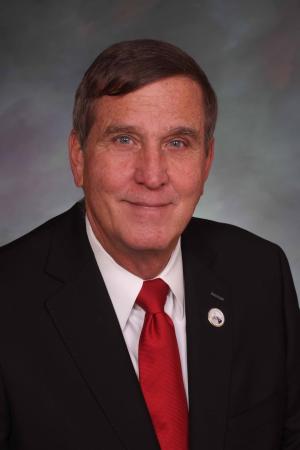
Photo of John Cooke
R Colorado Senate · District 13

Sen. John Cooke

Contact Email
Compare
Total votes
4,431
all sessions
Attendance
90%
367 missed
Lower than 86% of chamber peers
With party
95%
of cast votes
Near the chamber average
Bipartisan score
4%
crosses aisle rarely
Near the chamber average
Sponsored
173
bills & resolutions
Near the chamber average
Committees
0
assignments
173 bills and resolutions

Sponsored bills

Total
173
Primary
173
Co-sponsor
0
This page
173
matching current filters
Primary SB 17-222
Signed into law · Colorado Senate · Lead sponsor
Relocate Title 12 Fireworks

Committee on Legal Services. Current law directs the office of legislative legal services to study the organizational recodification of title 12 of the Colorado Revised Statutes, which relates to professions and occupations. To implement the initial recommendations of the study, section 1 of the bill relocates article 28 of title 12, which relates to fireworks, to a new part 20 of article 33.5 of title 24, which title pertains to the department of public safety. Section 8 repeals the article in title 12 where these laws were previously codified, and sections 2 through 7 make conforming amendments.(Note: This summary applies to the reengrossed version of this bill as introduced in the second house.)


Signed into law May 25, 2017 0 co-sponsors
Primary SB 17-225
Signed into law · Colorado Senate · Lead sponsor
Relocate Title 12 Farm Products And Warehouses

Committee on Legal Services. Current law directs the office of legislative legal services to study the organizational recodification of title 12 of the Colorado Revised Statutes, which relates to professions and occupations. To implement the initial recommendations of the study, the bill relocates the following laws: Part 2 of article 16 of title 12, the 'Commodity Handler Act', to article 36 of title 35 ( section 1 of the bill); and Part 1 of article 16 of title 12, the 'Farm Products Act', to article 37 of title 35 ( section 2 of the bill). Section 10 of the bill repeals the article where these laws were previously codified, and sections 3 through 9 make conforming amendments.(Note: This summary applies to the reengrossed version of this bill as introduced in the second house.)
Signed into law May 25, 2017 0 co-sponsors
Primary HB 17-1072
Signed into law · Colorado House · Lead sponsor
Human Trafficking Sexual Servitude

The bill amends the language defining the crime of human trafficking for sexual servitude to include that a person who knowingly advertises, offers to sell, or sells travel services that facilitate activities defined as human trafficking of a minor for sexual servitude commits the offense of human trafficking of a minor for sexual servitude. 'Travel services' are defined in the bill. Current law requires a person convicted of human trafficking of a minor for sexual servitude to be placed on the Colorado sex offender registry; the bill extends that requirement to persons convicted of human trafficking of any person of any age. The bill adds a provision to law allowing a person who was convicted of human trafficking for sexual servitude to petition the court to discontinue the person's duty to register on the sexual offender registry if he or she can establish, by a preponderance of the evidence, that at the time he or she committed the offense, he or she had been trafficked by another person for the purpose of committing the offense. (Note: This summary applies to the reengrossed version of this bill as introduced in the second house.)

Signed into law May 25, 2017 0 co-sponsors
Primary HB 17-1240
Signed into law · Colorado House · Lead sponsor
Relocate Title 12 Colorado Department Of Public Health And Environment

Committee on Legal Services. Current law directs the office of legislative legal services to study the organizational recodification of title 12 of the Colorado Revised Statutes, which relates to professions and occupations. To implement the initial recommendations of the study, the bill relocates the following laws: Article 29.3 of title 12, pursuant to which the department of public health and environment (department) regulates volunteer health practitioners and services provided by volunteer health practitioners during a declared emergency, to part 6 of article 1.5 of title 25 ( section 1 of the bill ); and Article 30 of title 12, pursuant to which the department regulates persons that represent that a drug, medicine, compound, or device is of value in the diagnosis, treatment, alleviation, or cure of cancer, and the drugs, medicines, compounds, or devices so represented, to article 48 of title 25 ( section 2 ). Section 3 repeals the articles where these laws were previously codified.(Note: This summary applies to the reengrossed version of this bill as introduced in the second house.)

Signed into law May 25, 2017 0 co-sponsors
Primary HB 17-1209
Signed into law · Colorado House · Lead sponsor
Peace Officer Status Head Of Office Prevention & Security

The bill designates as a peace officer the manager of the office of prevention and security within the division of homeland security and emergency management in the department of public safety. (Note: This summary applies to the reengrossed version of this bill as introduced in the second house.)

Signed into law May 25, 2017 0 co-sponsors
Primary HB 17-1248
Signed into law · Colorado House · Lead sponsor
Colorado Water Conservation Board Construction Fund Project

The bill appropriates the following amounts from the Colorado water conservation board (CWCB) construction fund (fund) to the CWCB or the division of water resources for the following projects: $380,000 for continuation of the satellite monitoring system maintenance ( section 1 ); $500,000 for continuation of the Colorado floodplain map modernization program ( section 2 ); $200,000 for continuation of the Colorado decision support system operation and maintenance ( section 3 ); $175,000 for continuation of the weather modification program ( section 4 ); $154,000 for the support of the Colorado Mesonet, a spatially coherent network of weather stations reporting in near real-time via major data portals ( section 5 ); $800,000 for continuation of the water forecasting partnership project ( section 6 ); $1,000,000 for continuation of the alternative agricultural transfer methods grant program ( section 7 ); $500,000 for continuation of technical assistance for the federal irrigation improvement cost-sharing program ( section 8 ); $1,100,000 for implementation of the Colorado water loss control initiative ( section 9 ); $10,000,000 for continuation of the Rio Grande cooperative project ( section 12 ); $5,000,000 for continuation of the watershed restoration program ( section 13 ); and $10,000,000 for implementation of the Colorado water plan ( section 14 ). Section 10 appropriates $260,000 from the public and private utilities sector fund to the water quality control division in the Colorado department of public health and environment for updating regulations related to nonpotable water reuse and graywater usage. Section 11 authorizes the CWCB to make loans in the amount of up to $90,000,000 from the fund for the Windy Gap firming project. The bill directs the state treasurer to transfer the following amounts from the fund: Up to $500,000 to the flood and drought response fund ( section 15 ); $1,300,000 to the litigation fund ( section 16 ); $300,000 to the feasibility study small grant fund ( section 17 ); $1,500,000 to the fish and wildlife resources fund ( section 18 ); $260,000 to the public and private utilities sector fund ( section 19 ). Section 21 transfers the following amounts from the severance tax perpetual base fund to the fund: On July 1, 2017, $10,000,000 for the Rio Grande cooperative project; On July 1, 2017, $5,000,000 for the watershed restoration program; On July 1, 2017, and each July 1 thereafter, $10,000,000 for implementation of the state water plan; and On July 1, 2017, $10,000,000 to supplement the water supply reserve fund. Section 21 also transfers, on July 1, 2017, $30,000,000 from the severance tax perpetual base fund to the loan guarantee fund, which fund is created in section 20 for use by the CWCB for the purpose of guaranteeing the repayment of loans for water projects with multiple participants; except that, if, on or before June 30, 2017, the CWCB informs the state treasurer that an amount less than $30,000,000 should be transferred from the severance tax perpetual base fund to the loan guarantee fund, the state treasurer is required to transfer that lesser amount on July 1, 2017.(Note: This summary applies to the reengrossed version of this bill as introduced in the second house.)

Signed into law May 23, 2017 0 co-sponsors
Primary HB 17-1283
Signed into law · Colorado House · Lead sponsor
Task Force Child Welfare Worker Resiliency Program

The bill creates a task force to organize county-level versions of and guidelines for child welfare caseworker resiliency programs (task force) modeled on national resiliency programs. The membership of the task force is outlined, along with its duties and reporting requirements. The task force is repealed, effective September 1, 2018. (Note: This summary applies to the reengrossed version of this bill as introduced in the second house.)

Signed into law May 22, 2017 0 co-sponsors
Primary HB 17-1204
Signed into law · Colorado House · Lead sponsor
Juvenile Delinquency Record Expungement

Under current law, there is limited access to juvenile delinquency records. The bill restricts that access by making certain records public only after a court orders that a child be charged as an adult, consistent with recent changes to the direct file statute, and by eliminating the requirement that the prosecuting attorney notify the school principal of minor offenses. The bill also ensures that the juvenile and his or her attorney can access the juvenile's records, and that juvenile record information is available to agencies that require the information for research purposes, with protections against the disclosure of identifying information. Under current law, a juvenile or someone on the juvenile's behalf must petition, after an applicable waiting period of one to 5 years, for expungement. The bill requires the court to automatically expunge records in certain situations. In some situations, the juvenile must still petition for expungement. Records will be expunged immediately upon: A finding of not guilty at an adjudicatory trial; Dismissal of the entire case; or The completion of a juvenile sentence for a petty offense, drug petty offense, a class 2 or class 3 misdemeanor, or a level 1 or level 2 drug misdemeanor that is not a sex offense, does not involve domestic violence, or is not a crime that requires victim notification. Records will be eligible for expungement upon the completion of a juvenile sentence when the juvenile has a class 1 misdemeanor or a misdemeanor involving domestic violence; or a misdemeanor offense involving unlawful sexual contact; or the dismissal after completion of juvenile diversion, a deferred adjudication, or an informal adjustment; or the adjudication of a first-time felony and the adjudicated felony is not a crime of violence, is not an offense involving unlawful sexual behavior, and is not a class 1 or class 2 felony. The court sends a notice to the prosecuting attorney that the records are eligible for expungement. The prosecuting attorney shall notify the victim, and the victim and the prosecuting attorney have the right to object to the expungement. If there is no objection, the court enters an expungement order. If there is an objection, the court holds a hearing to determine if the juvenile is sufficiently rehabilitated and whether expungement is in the best interest of the juvenile and the community. Records will be eligible for expungement upon the completion of a juvenile sentence for a municipal offense 42 days after the completion of the municipal sentence. The court shall send notice to the prosecuting attorney regarding the expungement and if the prosecuting attorney files an objection within 42 days, the court shall hold a hearing. If there is no objection, the court enters an expungement order. If there is an objection, the court holds a hearing to determine if the juvenile has successfully completed the sentence and the case is closed . A person who is adjudicated as a repeat or mandatory offender, violent juvenile offender, or aggravated juvenile offender; adjudicated for homicide or vehicular homicide as a juvenile offender; or adjudicated for a felony offense involving unlawful sexual behavior is not eligible for expungement. The bill requires written notice of the right to expungement and of the expungement process to the juvenile. A prosecuting attorney cannot require as a condition of a plea agreement that the juvenile waive his or her right to expungement. (Note: This summary applies to the reengrossed version of this bill as introduced in the second house.)

Signed into law May 18, 2017 0 co-sponsors
Primary SB 17-207
Signed into law · Colorado Senate · Lead sponsor
Strengthen Colorado Behavioral Health Crisis System

The bill clarifies the intent of the general assembly for establishing a coordinated behavioral health crisis response system (crisis system). The crisis system is intended to be a comprehensive, appropriate, and preferred response to behavioral health crises in Colorado. By clarifying the role of the crisis system and making necessary enhancements, the bill puts systems in place to help Colorado end the use of jails and correctional facilities as placement options for individuals placed on emergency mental health holds if they have not also been charged with a crime and enhances the ability of emergency departments to serve individuals who are experiencing a behavioral health crisis. The crisis system is intended to provide an appropriate first line of response to individuals in need of an emergency 72-hour mental health hold. The statewide framework created by the crisis system strengthens community partnerships and ensures that first responders are equipped with a variety of options for addressing behavioral health crises that meet the needs of the individual in a clinically appropriate setting. The bill expands and strengthens the current crisis system in the following ways: Encourages crisis system contractors in each region to develop partnerships with the broad array of crisis intervention services in the region; Requires crisis system contractors to be responsible for community engagement, coordination, and system navigation for key partners in the crisis system. The goals of community coordination are to formalize key relationships within contractually defined regions, pursue collaborative programming for behavioral health services, and coordinate interventions as necessary with behavioral health crises in the region. Increases the ability of all crisis services facilities, including walk-in centers, acute treatment units, and crisis stabilization units within the crisis system, regardless of facility licensure, to adequately care for an individual brought to the facility in need of an emergency 72-hour mental health hold; Expands the ability of mobile response units to be available within 2 hours, either face-to-face or using telehealth operations for mobile crisis evaluations; Recognizes the obligations of hospitals and hospital-based emergency departments under federal law to screen and stabilize every patient who comes to the hospital-based emergency department, including those patients experiencing a behavioral health crisis; and Requires that, on or before January 1, 2018, all walk-in centers throughout the state be appropriately designated, adequately prepared, and properly staffed to accept an individual in need of an emergency 72-hour mental health hold. The department of human services (department) shall ensure consistent training for professionals who have regular contact with individuals who are experiencing a behavioral health crisis. The department shall conduct a needs and capacity assessment of the crisis system. The office of behavioral health is required to submit a report on or before November 1, 2017, and on or before May 1, 2018, concerning the status of funding, the use of new and existing resources, and the implementation of additional behavioral health crisis services. This report is separate and in addition to the information the department is required to provide concerning the crisis system in its annual SMART report to the general assembly. The bill removes language from statute that allows, at any time for any reason, an individual who is being held on an emergency 72-hour mental health hold to be detained or housed in a jail, lockup, or other place used for the confinement of persons charged with or convicted of criminal offenses. The effective date of this component of the bill is May 1, 2018. The bill requires annual reports to the department by each emergency services facility that has treated a person pursuant to an emergency 72-hour mental health hold. The reports must only include aggregate and nonidentifying information. The reports must include information on the names and counties of involved facilities; the total number of persons treated at the facility; a summary regarding the different reasons for which persons were treated at the facility; and a summary of the disposition of the persons transferred to a designated mental health facility. An appropriation from the marijuana tax cash fund is authorized. (Note: This summary applies to the reengrossed version of this bill as introduced in the second house.)

Signed into law May 18, 2017 0 co-sponsors
Showing 141 to 150 of 173 bills
Previous 1 14 15 16 18 Next