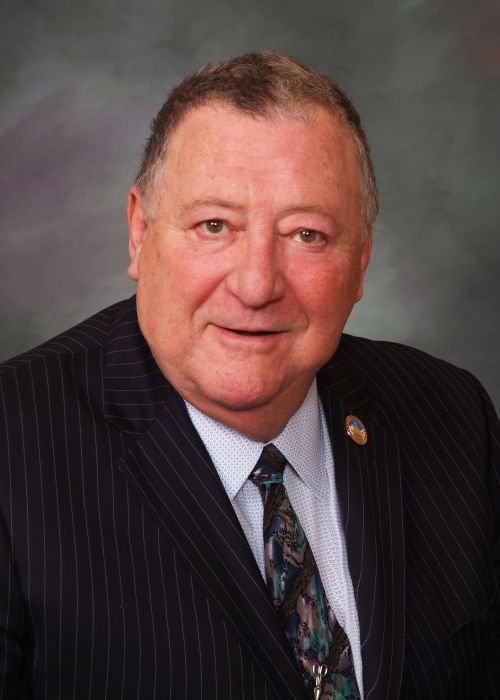
Photo of Marc Snyder
D Colorado Senate · District 12

Sen. Marc Snyder

Compare
Total votes
4,896
all sessions
Attendance
94%
324 missed
Near the chamber average
With party
95%
of cast votes
Near the chamber average
Bipartisan score
2%
crosses aisle rarely
Near the chamber average
Sponsored
543
bills & resolutions
Near the chamber average
Committees
4
assignments
543 bills and resolutions

Sponsored bills

Total
543
Primary
188
Co-sponsor
355
This page
543
matching current filters
Co-sponsor HB 1297
Signed into law · Colorado House · Co-sponsor
Uniform Language for Misdemeanor Traffic Offense

In existing law, both 'misdemeanor traffic offense' and 'traffic misdemeanor' are used to describe the same type of traffic offense. The act amends instances of 'traffic misdemeanor' to make 'misdemeanor traffic offense' the uniform term used throughout statute.(Note: This summary applies to this bill as enacted.)

Signed into law May 5, 2026 1 co-sponsor
Co-sponsor SB 60
Signed into law · Colorado Senate · Co-sponsor
Mental Health Training in Concussion Education

The act requires coaches of youth athletic activities to complete a biennial mental health education course. The required mental health education course must address a coach's impact on the mental health of a youth athlete, a wellness framework for youth athletes, mental health disorders, trauma, substance abuse, and suicide prevention. The act requires a coach of a youth athlete, or other designated personnel, to advise the parent or guardian of the youth athlete to seek a medical evaluation from a licensed health-care provider for appropriate medical and behavioral health guidance if the youth athlete is removed from play for a suspected concussion.(Note: This summary applies to this bill as enacted.)

Signed into law May 5, 2026 1 co-sponsor
Co-sponsor HB 1044
Signed into law · Colorado House · Co-sponsor
Measures to Improve Black Maternal Health Equity

The act requires measures to improve equity in maternal health, including:Requiring the Colorado medical board to consider, as part of its stakeholder process for continuing medical education, a requirement that a physician complete continuing medical education on cultural competence and equity in maternal care;Requiring the state board of nursing rules relating to continuing education to include rules relating to health-care provider attention to cultural competence and equity in providing health-care services;Authorizing the department of public health and environment (CDPHE), subject to available appropriations, to provide a health survey to additional birthing parents, beyond those currently surveyed, and to compile the data if surveyed;Requiring a health facility that provides labor and childbirth services to make available to a birthing parent and a birthing parent's companion, electronically or in writing, a statement on respectful labor and childbirth regarding rights and components, including freedom from harm, privacy and confidentiality, informed consent, and allowing a birthing parent to have a birthing companion present at the birth, and to make available information, including telephone contact information, for the appropriate state or federal agency to receive a complaint alleging discrimination in labor and childbirth services;Subject to available federal grant funding for the maternal health task force (task force) established by CDPHE, ensuring that the maternal health task force includes at least one advocate representing populations with the worst maternal mortality outcomes in the state; andBeginning October 1, 2026, with respect to CDPHE's Colorado maternal mortality review committee, changing the reporting to the general assembly every 3 years concerning maternal health outcomes and equity from July to October and requiring the reporting of certain maternal health outcomes for populations known to have the worst maternal mortality outcomes in the state.(Note: This summary applies to this bill as enacted.)


Signed into law May 5, 2026 1 co-sponsor
Primary SB 104
Signed into law · Colorado Senate · Lead sponsor
Require Key Boxes at Schools

The act requires each school district or, for an institute charter school or nonpublic school, the school, (local education provider) to install an exterior key box that contains keys and other access control devices necessary for law enforcement agencies to access each building and room located on the school grounds. A local education provider is not required to install an exterior key box at a school if:The school has a key box that does not satisfy the requirements in the act and has an alternative plan and procedures to provide emergency access for local law enforcement; orThe local education provider applied for but does not receive a disbursement from the school security disbursement program that may be used to install an exterior key box at the school.     The contents of an exterior key box and the information contained therein are not a public record for the purposes of the 'Colorado Open Records Act'.(Note: This summary applies to this bill as enacted.)
Signed into law May 4, 2026 0 co-sponsors
Co-sponsor HB 1234
Signed into law · Colorado House · Co-sponsor
Access to Records of Child Abuse or Neglect

The act prohibits a person who possesses a record or report (record) of child abuse or neglect from releasing identifying data or information contained in the record to a person who is not authorized to receive the information or data.     The act clarifies what constitutes identifying data in a record. The act adds an assigned designee of a person named in a record who is acting on the person's behalf as a person who may have access to child abuse or neglect records if the assigned designee presents a valid release of information signed by an authorized person.     The act allows a person named in a record as an alleged abused or neglected child who is in possession of a record in which they are named or, with the person's consent, the person's attorney or guardian ad litem, to disclose and make use of the record, including for the purpose of litigation or to obtain treatment or services. Except as expressly authorized in law, a criminal defendant may only access a record after an in camera review by the court in which the court finds that access to the record is necessary for the resolution of an issue.     The act requires each county department of human or social services to establish and submit to the state department of human services a process current and former clients may use to obtain access to their case records.     The act repeals the penalties associated with a person who improperly releases or willfully permits or encourages the release of data or information contained in the records to a person not permitted to access the information and makes it a petty offense for the department of education or a school district, charter school, or nonpublic school to release data or information contained in a record to a person not permitted to access the information.(Note: This summary applies to this bill as enacted.)

Signed into law May 4, 2026 1 co-sponsor
Primary HB 1253
Signed into law · Colorado House · Lead sponsor
Disconnection from Statutory Municipality

Under current law, the owners of certain tracts of agricultural or farm land within and adjacent to the boundary of a statutory town or statutory city may petition the district court for the county to disconnect the land from the town or city (disconnection by court decree). The act modifies the disconnection by court decree process so that this process is not available for any tract of land that is included within the boundaries of an urban renewal area described in an urban renewal plan of an urban renewal authority (affected urban renewal authority) or a special district that, by its service plan or pursuant to an intergovernmental agreement, is or will be expected to provide service to the tract of land (affected special district). Instead of using the disconnection by court decree process, owners of these tracts of land must use the process for disconnection applications from a statutory municipality.     Under current law, the owner of a tract of land within and adjacent to the boundary of a statutory municipality may apply to the governing body of the municipality for the enactment of an ordinance disconnecting the tract of land from the municipality (disconnection by ordinance). The act also modifies this disconnection by ordinance process by requiring that, in addition to the existing requirement that an owner provide notice and a copy of the disconnection application to the board of county commissioners of the county in which the tract of land is located and to the board of directors of any affected special district, the owner seeking disconnection must also provide notice and a copy of the disconnection application to any affected urban renewal authority. Upon receiving the notice and application, these entities may request a meeting with the owner of the land and the governing body of the municipality to discuss and address any negative impacts that would result from the disconnection, including any change in the level or extent of services being provided to the tract of land that is the subject of the disconnection application or any interference with the implementation of an urban renewal plan of an affected urban renewal authority. The failure of these entities to request a meeting constitutes an acknowledgment that the disconnection will not adversely affect them.     The act applies to applications for disconnection from a statutory municipality and petitions for disconnection from a statutory city or town commenced on or after the applicable effective date of the act.(Note: This summary applies to this bill as enacted.)

Signed into law May 4, 2026 0 co-sponsors
Primary SB 128
Signed into law · Colorado Senate · Lead sponsor
Sales & Use Tax Destination Management Company

The act exempts the sale, storage, use, or consumption of tangible personal property, commodities, or services sold by a destination management company from state sales and use taxation, beginning July 1, 2027. The exemption only applies if the destination management company has already paid the state the applicable sales or use tax on the property, commodities, or services upon acquisition.(Note: This summary applies to this bill as enacted.)

Signed into law May 4, 2026 0 co-sponsors
Co-sponsor HB 1127
Signed into law · Colorado House · Co-sponsor
Reporting After Fatal Car Crash

The act repeals the requirement for coroners, or other officials performing like functions, to report to the department of transportation (department) deaths resulting from traffic accidents on a monthly basis. The act requires coroners, or other officials performing like functions, to report all available toxicology results to the department for each deceased party who has died as a result of a motor vehicle crash. The report must be submitted by the final business day of each quarter of the calendar year.     If a participant in a crash dies within 30 days as a result of a crash, the act requires the law enforcement officer who was notified of, or investigated, the crash to submit an amended report to the department within five days after receiving a notification of the death.(Note: This summary applies to this bill as enacted.)

Signed into law May 4, 2026 1 co-sponsor
Co-sponsor HB 1305
Signed into law · Colorado House · Co-sponsor
Licensing of Behavioral Health Facilities

Maddy summaryHB 1305 allows remote psychiatric inpatient facilities in Colorado to operate under a main hospital's general license instead of needing separate psychiatric hospital licensing, provided they meet specific criteria. These facilities must be located within 35 miles of a main hospital in a rural area, offer 17+ inpatient beds, meet all psychiatric hospital standards, and maintain federal provider-based status. The main hospital remains responsible for all licensing enforcement actions related to the remote location, and the facility must pay a separate licensing fee. This change aims to streamline operations while maintaining regulatory oversight through the main hospital's license.

Signed into law May 4, 2026 1 co-sponsor
Co-sponsor SB 105
Signed into law · Colorado Senate · Co-sponsor
County Executive Officer Disclosures

Existing law specifies that an individual must be a certified death investigator or forensic pathologist to be eligible to hold the office of county coroner in a county with a population greater than 150,000. The act changes this requirement to apply in a county with a population greater than 300,000. The act also requires a county coroner to disclose, on the coroner's website, their financial interest in businesses regulated by their office, including a mortuary, funeral home, crematory, embalming service, or other death-care business. A coroner who has disclosed a financial interest shall not participate in an official action that would directly and specifically affect the business in which the coroner has a financial interest. The act does not prohibit a coroner or candidate for coroner from operating a death-care business.(Note: This summary applies to this bill as enacted.)

Signed into law May 4, 2026 1 co-sponsor
Showing 111 to 120 of 543 bills
Previous 1 11 12 13 55 Next