

Disconnection from Statutory Municipality
Summary
Under current law, the owners of certain tracts of agricultural or farm land within and adjacent to the boundary of a statutory town or statutory city may petition the district court for the county to disconnect the land from the town or city (disconnection by court decree). The act modifies the disconnection by court decree process so that this process is not available for any tract of land that is included within the boundaries of an urban renewal area described in an urban renewal plan of an urban renewal authority (affected urban renewal authority) or a special district that, by its service plan or pursuant to an intergovernmental agreement, is or will be expected to provide service to the tract of land (affected special district). Instead of using the disconnection by court decree process, owners of these tracts of land must use the process for disconnection applications from a statutory municipality. Under current law, the owner of a tract of land within and adjacent to the boundary of a statutory municipality may apply to the governing body of the municipality for the enactment of an ordinance disconnecting the tract of land from the municipality (disconnection by ordinance). The act also modifies this disconnection by ordinance process by requiring that, in addition to the existing requirement that an owner provide notice and a copy of the disconnection application to the board of county commissioners of the county in which the tract of land is located and to the board of directors of any affected special district, the owner seeking disconnection must also provide notice and a copy of the disconnection application to any affected urban renewal authority. Upon receiving the notice and application, these entities may request a meeting with the owner of the land and the governing body of the municipality to discuss and address any negative impacts that would result from the disconnection, including any change in the level or extent of services being provided to the tract of land that is the subject of the disconnection application or any interference with the implementation of an urban renewal plan of an affected urban renewal authority. The failure of these entities to request a meeting constitutes an acknowledgment that the disconnection will not adversely affect them. The act applies to applications for disconnection from a statutory municipality and petitions for disconnection from a statutory city or town commenced on or after the applicable effective date of the act.(Note: This summary applies to this bill as enacted.)
Bill status
signed
all 5 stages cleared
Introduction
Feb 2026
Committee Review
Mar 2026
House Passage
Apr 2026
Senate Passage
Apr 2026
Signed into Law
May 2026
Introduced Feb 18, 2026
Signed May 4, 2026
Maddy AI version diff · 5 comparisons
What changed between versions
Rerevised
→
Final Act
·
4 edits
·
Apr 20, 2026
MODERATE
This bill updates the legal process for disconnecting land from a statutory municipality in Colorado. It primarily adds 'affected urban renewal authorities' to the list of entities that must be notified during the disconnection process and defines specific scenarios where the disconnection process is not allowed.
Scope change
The bill expands the scope of the disconnection process by including urban renewal authorities alongside county commissioners and special districts, and it introduces new exclusions that prevent disconnection in certain areas.
REQUIREMENT
Added a requirement for land owners to notify affected urban renewal authorities when applying to disconnect land from a municipality.
Added a requirement that the disconnection petition must allege the land is not located in an urban renewal area or served by a special district.
DEFINITION
Created new definitions for 'affected special district' and 'affected urban renewal authority' to clarify which entities are involved in the process.
ELIGIBILITY
Modified eligibility criteria to exclude land located within approved urban renewal areas or areas served by special districts from the disconnection process.
Floor votes
How they voted
This bill passed the Senate by voice vote (no roll call recorded).
Full legislative history
Actions timeline
Total actions
13
Key actions
7
Committee
2
May 4, 2026
Signed into law
Governor Signed
executive
Apr 22, 2026
Upper · Passed
Signed by the President of the Senate
upper
Apr 22, 2026
Lower · Passed
Signed by the Speaker of the House
lower
Apr 2, 2026
Upper · Passed
Senate Third Reading Passed - No Amendments
upper
Mar 26, 2026
Upper · Passed
Senate Committee on Local Government & Housing Refer Unamended to Senate Committee of the Whole
upper
Mar 20, 2026
Introduced
Introduced In Senate - Assigned to Local Government & Housing
upper
Mar 17, 2026
Lower · Passed
House Third Reading Passed - No Amendments
lower
Mar 12, 2026
Lower · Passed
House Committee on Agriculture, Water & Natural Resources Refer Amended to House Committee of the Whole
lower
Feb 18, 2026
Introduced
Introduced In House - Assigned to Agriculture, Water & Natural Resources
lower
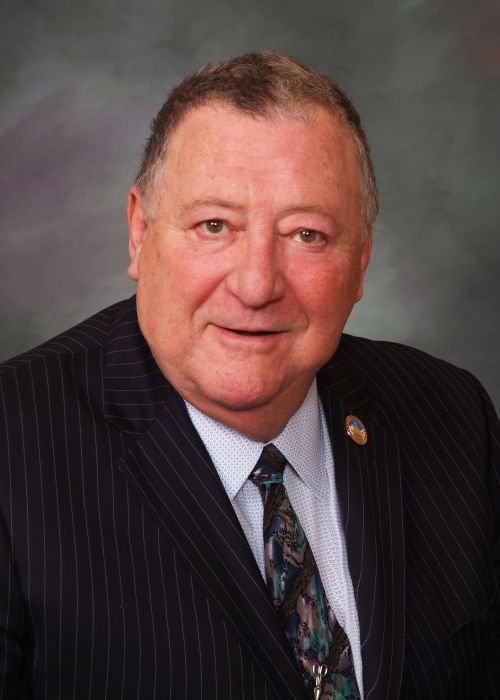
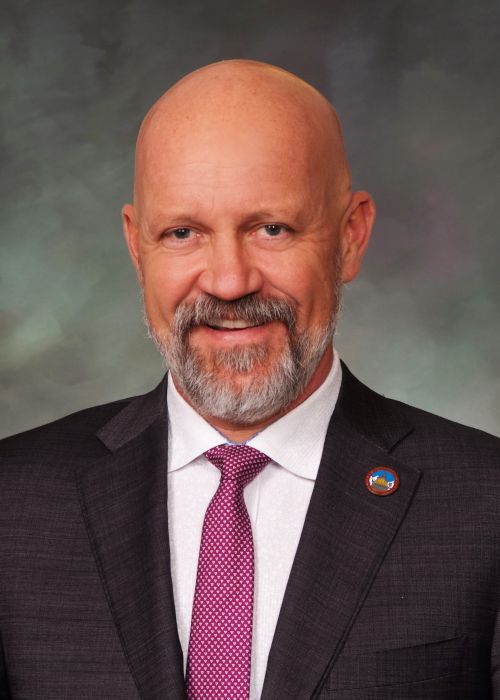
3 primary · 6 co-sponsors
Sponsors







Ask Maddy
·
AI policy assistant
Ask Maddy about HB 1253
Scope: CO
Hi! I can help you understand HB 1253. What would you like to know?
Try one of these
i
Maddy answers using official bill text and legislative records. Always verify before sharing.
Sources cited inline