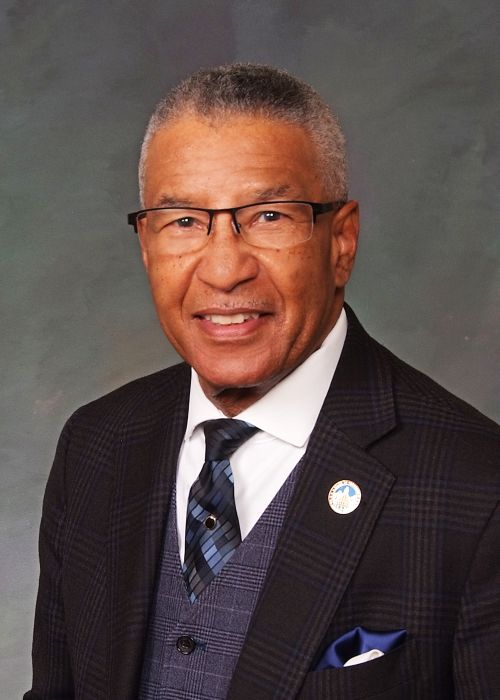
Photo of Tony Exum
D Colorado Senate · District 11 On the 2026 ballot

Sen. Tony Exum

Compare
Total votes
3,266
all sessions
Attendance
98%
74 missed
Near the chamber average
With party
98%
of cast votes
Higher than 80% of chamber peers
Bipartisan score
1%
crosses aisle rarely
Lower than 78% of chamber peers
Sponsored
543
bills & resolutions
Higher than 77% of chamber peers
Committees
6
assignments
543 bills and resolutions

Sponsored bills

Total
543
Primary
95
Co-sponsor
448
This page
543
matching current filters
Co-sponsor HB 25-1122
Vetoed · Colorado House · Co-sponsor
Automated Driving System Commercial Motor Vehicle

The act prohibits using an automated driving system to drive a commercial motor vehicle unless an individual who holds a commercial driver's license is in the vehicle, is in the driver's seat if the vehicle is transporting hazardous materials, monitors the vehicle's driving, and intervenes, if necessary, to avoid illegal or unsafe driving. The penalty is $1,000 for a first offense, is $2,000 for a second offense, and doubles for each subsequent offense. The act does not apply to light-duty vehicles. VETOED by Governor 5/29/2025(Note: This summary applies to this bill as enacted.)

Vetoed May 29, 2025 1 co-sponsor
Co-sponsor SB 25-186
Signed into law · Colorado Senate · Co-sponsor
Sunset Workers' Compensation Providers Accreditation Program

The act implements the recommendations of the department of regulatory agencies in its 2024 sunset review of the workers' compensation accreditation of health-care providers program (program), including extending the program for 11 years to September 1, 2036, and authorizing any health-care professional regulated by the division of professions and occupations and listed in the utilization standards established by the director of the division of workers' compensation (division) who provides treatment in the workers' compensation system to obtain level I accreditation from the division. (Note: This summary applies to this bill as enacted.)

Signed into law May 29, 2025 1 co-sponsor
Co-sponsor HB 25-1088
Vetoed · Colorado House · Co-sponsor
Costs for Ground Ambulance Services

For ground ambulance services (ambulance services), the act: Allows a political subdivision or an ambulance service providing ambulance services on behalf of the political subdivision to submit to the division of insurance (division) the established rates for the ambulance services, if the rates meet specified conditions; Requires the division to publish reimbursement rates on the division's public-facing website; Establishes reimbursement rates for ambulance services that are out of network; and Prohibits an out-of-network ambulance service from billing an individual covered under a health insurance coverage plan (covered person) any outstanding balance for a covered service not paid for by an insurance carrier, except for any coinsurance, deductible, or copayment amount required to be paid by the covered person. If a covered person makes a payment for an out-of-network ambulance service, the payment must be applied to the covered person's in-network deductibles and in-network out-of-pocket maximum amounts. For the 2025-26 state fiscal year, $38,149 is appropriated from the division of insurance cash fund to the department of regulatory agencies for use by the division to implement the act. VETOED by Governor 5/29/2025(Note: This summary applies to this bill as enacted.)

Vetoed May 29, 2025 1 co-sponsor
Primary HB 25-1294
Signed into law · Colorado House · Lead sponsor
Court Costs Assessed to Juveniles

Current law requires a court to vacate any court costs and fees assessed to a juvenile under the jurisdiction of the juvenile court prior to July 6, 2021, however, this requirement repeals on June 30, 2025. The act removes the June 30, 2025 repeal. (Note: This summary applies to this bill as enacted.)

Signed into law May 29, 2025 0 co-sponsors
Co-sponsor SB 25-007
Signed into law · Colorado Senate · Co-sponsor
Increase Prescribed Burns

Section 1 of the act creates the prescribed fire claims cash fund (fund) in the state treasury and requires the state treasurer to transfer $250,000 from the general fund to the fund on July 1, 2025. Subject to annual appropriation by the general assembly, the division of fire prevention and control (division) shall expend money from the fund to pay claims for damages related to prescribed burns that are certified by the division in accordance with new guidelines as specified in the act and as adopted by the director of the division. The division shall authorize a payment in the amount certified in a claim; except that the maximum payment that the division may authorize for a singular burn is equal to the greater of $20,000 or 10% of the amount of money in the fund at the time the claim is filed. Subject to annual appropriation by the general assembly of money for the division to administer the fund, the division shall certify a claim that meets the following guidelines: The claim demonstrates, in sufficient detail, the costs or damages that resulted from the prescribed burn; The prescribed burn that resulted in the costs or damages was conducted in full compliance with statutory and regulatory requirements for prescribed burning; Before conducting the prescribed burn, the certified prescribed burn manager registered the written prescription plan for the prescribed burn with the division and paid an administrative fee; and No more than 60 days have passed between the completion of the prescribed burn and the date upon which costs and damages were incurred. The act authorizes the director of the division to adopt rules and guidelines for the implementation and administration of the program and permits the division to contract with a third party to administer, certify, and pay the claims. The act also requires a claimant who accepts a payment that covers the full amount certified in the claim to waive all future claims related to the prescribed burn against the certified prescribed burn manager that conducted the burn; any organization, entity, or individual with whom the certified prescribed burn manager worked to conduct the burn; any individual or entity that provided funding for the burn; and any landowner on whose behalf the burn was conducted. Sections 2 and 3 expand the definition of a "certified burner" in the state to include an individual who has not completed the Colorado division's training and certification program but who meets reciprocity requirements and possesses a valid Colorado certification number. An individual seeking certification through reciprocity may receive a certification number from the division by: Applying for certification to the division, according to the rules and standards of the division, including the payment of any associated fee; and Submitting evidence to the division, according to the rules and standards of the division, that the individual holds a valid certification from a state government or other entity. The required rules and standards adopted by the director of the division, in consultation with the Colorado state forest service, pertaining to the qualification for and the terms and durations of certification, are required to include certification through reciprocity. Section 4 adds pretax costs associated with the implementation of an approved program or project to mitigate the effects of extreme weather, wildfires, climate change, or other hazards to the definition of Colorado energy impact costs. For the 2025-26 fiscal year: $250,000 is appropriated from the fund to the department of public safety for use by the division for prescribed fire claims; and $153,025 is appropriated from the general fund to the department of public safety for implementation of the act.(Note: This summary applies to this bill as enacted.)

Signed into law May 29, 2025 1 co-sponsor
Co-sponsor SB 25-190
Signed into law · Colorado Senate · Co-sponsor
Offender Release from Custody

Under current law, a sheriff may allow an individual to choose to stay in jail overnight after release when extenuating circumstances exist. The act makes facilitation of a connection to a service provider an extenuating circumstance. If an individual chooses to remain in jail overnight, the individual must be released by 10 a.m. the next morning. Under current law, to qualify for special needs parole, there is a distinction between inmates who are 55 years of age or older and those who are under 55 years of age. The act changes that distinction. The act makes an inmate eligible for special needs parole if the inmate suffers from a diagnosed severe cognitive impairment or serious impairment that limits the person's ability to function. If the inmate is under 55 years of age, the act provides for special needs parole if the inmate has served at least 25% of the inmate's sentence and is eligible for parole after serving 50% of their sentence including earned time; has served at least 35% of the inmate's sentence and is eligible for parole after serving 75% of their sentence including earned time; has served at least 40% of the inmate's sentence and is eligible for parole after serving 75% of the sentence; or has been diagnosed by a licensed health-care provider as having a terminal illness that is irreversible, unlikely to be cured, and likely to cause death; and has not incurred a class I code of penal discipline violation within the 12 months before the date of the application for special needs parole. An inmate who is 64 years of age or older and has served at least 20 years of their sentence and was not convicted of a class 1 or class 2 felony, unlawful sexual behavior, a crime that includes domestic violence, or stalking is eligible for special needs parole. The act makes a person eligible for special needs parole if the person has a condition such as advanced or metastatic cancer; end-stage renal disease; end-stage chronic obstructive pulmonary disorder; end-stage heart disease; end-stage liver disease; progressive neurodegenerative disease such as Huntington's disease, Parkinson's disease, and amyotrophic lateral sclerosis; intractable seizure disorder; severe dementia; or Alzheimer's disease. The act provides that when a health-care provider who is providing care or recently provided care to the person makes a determination that the person's medical condition meets the standard for special needs parole, then a referral must be made to the parole board. The department of corrections is required to include in each contract with a licensed health-care provider involved in providing inmate care a requirement that the provider screen for eligibility for special needs parole. The act requires legislative council staff to conduct a study of options for releasing aging and seriously ill offenders from secure custody to appropriate care or placing offenders in alternative programs that can better provide the offender's needed medical care. (Note: This summary applies to this bill as enacted.)

Signed into law May 29, 2025 1 co-sponsor
Co-sponsor HB 25-1004
Vetoed · Colorado House · Co-sponsor
No Pricing Coordination Between Landlords

The act prohibits the sale or distribution for consideration of an algorithmic device if: The algorithmic device is sold or distributed with the intent that it will be used by 2 or more landlords in the same market or a related market to set or recommend the amount of rent, level of occupancy, or other commercial term associated with the occupancy of a residential premises; and The device sets or recommends the amount of rent, level of occupancy, or other commercial term associated with the occupancy of a residential premises based on data or a formula that is similar for each landlord. The act also prohibits the use of an algorithmic device by a person to set or recommend the amount of rent, level of occupancy, or other commercial term associated with the occupancy of a residential premises if: The person knew or should have known that another person used the algorithmic device to set or recommend the amount of rent, level of occupancy, or other commercial term associated with the occupancy of a residential premises; and The circumstances suggest that the person adhered to or participated in a scheme to fix the amount of rent, level of occupancy, or other commercial term associated with the occupancy of a residential premises. The act also prohibits a person engaged in the business of providing algorithmic device services or products that are used to set or recommend the amount of rent, level of occupancy, or other commercial term associated with the occupancy of a residential premises from using nonpublic competitor data pertaining to residential properties in Colorado in setting or recommending the amount of rent, level of occupancy, or other commercial term associated with the occupancy of a residential premises for residential properties in Colorado. A violation is deemed to be an illegal restraint of trade or commerce and is punishable in accordance with the "Colorado State Antitrust Act of 2023". VETOED by Governor 5/29/2025(Note: This summary applies to this bill as enacted.)

Vetoed May 29, 2025 1 co-sponsor
Co-sponsor HB 25-1219
Signed into law · Colorado House · Co-sponsor
Requirements for Better Understanding Metropolitan Districts

The act requires that, in addition to notice requirements under the Colorado open meetings law, notice of annual public meetings held by metropolitan districts be mailed, at the lowest-cost option, to eligible electors within the metropolitan district or sent by email to any email addresses that eligible electors have provided to the metropolitan district for the purpose of receiving communication from the metropolitan district. Additionally, notice of the annual meeting must be either posted on the homepage of the metropolitan district's website or accessible by a link on the homepage. The act also requires, for any special district, that, if the annual meeting is held at a physical location and in a year immediately preceding a year in which a regular special district election will be held, there be available hard copies of self-nomination and acceptance forms, which are forms required to be filed for an eligible elector to be a candidate for a board position at a special district election. The act also requires that metropolitan districts that are required to have a publicly accessible website must establish a system or a process for residents to contact someone associated with the metropolitan district during regular business hours to address any questions or concerns regarding services of the metropolitan district. Further, these metropolitan districts must establish a system or process for residents to contact someone associated with the metropolitan district outside of regular business hours or when metropolitan district personnel are otherwise unavailable or unreachable to address emergent matters that cannot wait to be addressed until regular business hours resume. For a metropolitan district that is required to have a publicly accessible website, the act requires the following additional information to be provided on the website: The date, time, and location of the annual public meeting; An explanation of what a metropolitan district is, its services, debt, and public infrastructure, and how a resident can serve on its board; The names of the governmental entities that overlap the metropolitan district's boundaries; The name of the county or municipality with which the metropolitan district must file its annual report; and The name and contact information of someone who residents can contact with questions or concerns about the services of the district during regular business hours and outside of regular business hours or when district personnel are otherwise unavailable or unreachable for emergent matters. The act also specifies that the following information must be provided on the home page of the metropolitan district's website: The names, terms, and contact information of individuals serving on the board of directors and of any manager of the metropolitan district; The date, time, and location of scheduled regular meetings, including the annual meeting; The call for nominations for candidates to run for election to the board of directors; The names of the governmental entities that overlap the metropolitan district's boundaries; and The name and contact information of who residents can contact with questions or concerns about the services of the district during regular business hours and outside of regular business hours or when district personnel are otherwise unavailable or unreachable for emergent matters. The act adds to the requirements of what a metropolitan district must include in its service plan when seeking approval of the service plan a requirement to include the maximum term for imposing a debt service mill levy on any property developed for residential purposes after the initial year of imposition of such debt service mill levy. The act requires certain disclosures be made by all sellers of any residential real property located within the boundaries of a metropolitan district, including access to the annually required notice to electors and the metropolitan district's service plan; information on the authority the metropolitan district has to issue debt, levy property taxes, and impose fees, rates, tolls, penalties, or other charges; an estimate of property taxes levied by the metropolitan district for collection during the year the sale occurs; and a copy of the most current certificate of taxes due or tax statement to provide an estimate of the sum of additional mill levies levied by other taxing entities that overlap the property. Additionally, the act requires a written statement be included in the required disclosures that certain actions that the metropolitan district is authorized to take may increase costs to residents living in the metropolitan district, and the property tax estimate disclosure requirement is modified to require that the estimate be given in a dollar amount. (Note: This summary applies to this bill as enacted.)


Signed into law May 29, 2025 1 co-sponsor
Co-sponsor HB 25-1293
Signed into law · Colorado House · Co-sponsor
Drug Overdose Education & Opioid Antagonists in Schools

The act requires the state board of education (board) to adopt high school health education standards regarding drug overdose risks, identification of a drug overdose event, and drug overdose prevention and response. The act authorizes the board to seek, accept, and expend gifts, grants, or donations for the purpose of adopting these standards. The board must adopt the standards on or before July 1, 2028, if, the board receives by July 1, 2026, $20,000 from gifts, grants, or donations to adopt the standards. If sufficient money is not received, the board is required to adopt the standards on or before July 1, 2032, pursuant to the general standards schedule. Under current law, a school district, the state charter school institute (institute), or the governing board of a nonpublic school may adopt and implement a policy allowing an employee or agent of the school to furnish an opioid antagonist to any individual, including a student, but only if the student has received appropriate school-sponsored training. The act repeals the required condition that a student must receive appropriate school-sponsored training. The act authorizes a school district, the institute, a public school, or a nonpublic school to seek, accept, and expend gifts, grants, or donations for purposes related to acquiring, maintaining, and providing training for administering opioid antagonists. (Note: This summary applies to this bill as enacted.)
Signed into law May 29, 2025 1 co-sponsor
Co-sponsor SB 25-128
Signed into law · Colorado Senate · Co-sponsor
Agricultural Worker Service Providers Access Private Property

Current law states that an employer shall not interfere with an agricultural worker's reasonable access to key service providers (KSP) at any location when the worker is not performing compensable work and with respect to health-care providers at any time. The act exempts an employer's property from this provision; except that the act prohibits an employer from interfering with a worker's access to KSP through remote channels on the employer's property. The act also removes language referring to health-care providers. Current law states that the division of labor standards and statistics (division) may adopt rules regarding additional times that an employer may not interfere with a worker's reasonable access to KSP. The act clarifies that such rules must apply only to locations other than the employer's property. Lastly, the act states the division shall not adopt rules that: Infringe upon an employer's private property rights; or Conflict with the common law rights of an individual to access private property in a time of emergency.(Note: This summary applies to this bill as enacted.)

Signed into law May 29, 2025 1 co-sponsor
Showing 321 to 330 of 543 bills
Previous 1 … 32 33 34 … 55 Next