Maddy summaryThis House Resolution recognizes Earth Day and the International Day of Zero Waste while reaffirming Colorado's commitment to environmental stewardship. It encourages citizens, businesses, and organizations to participate in sustainability events on March 30 and April 22, 2026, and to adopt waste-reducing practices in their daily lives. The resolution also calls for the state to evaluate its own operations for greater efficiency and sustainability, though it does not create new laws or funding.
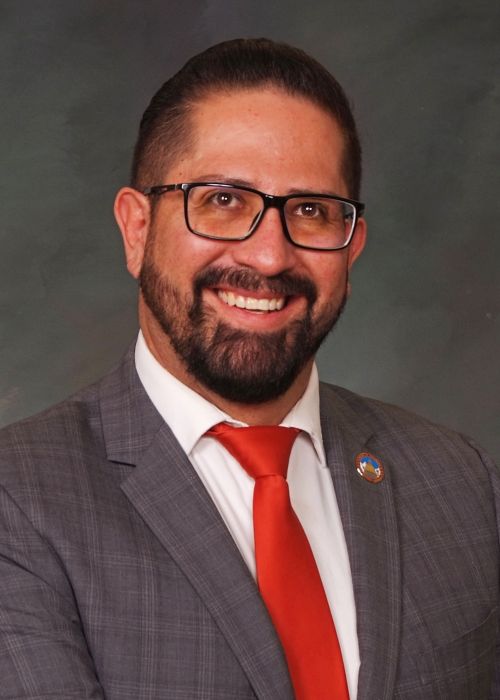
Rep. Matt Martinez
Sponsored bills
As defined in the 'Colorado Charitable Solicitations Act', a 'paid solicitor' is a person that, for monetary compensation, performs a service in which contributions are solicited in Colorado for a charitable purpose or for the benefit of a charitable organization. The act excludes from the definition of 'paid solicitor' an auctioneer who provides auctioneer services to a charitable organization. As a result, the auctioneer is exempted from the requirements of the 'Colorado Charitable Solicitations Act' for paid solicitors. The exemption applies regardless of whether the auctioneer is contracted or paid to provide their auctioneer services to the charitable organization or is volunteering their auctioneer services to the charitable organization without compensation. However, for the exemption to apply, an auctioneer who provides auctioneer services to a charitable organization may not directly receive or handle contributions or charitable funding on behalf of the charitable organization for which the auctioneer is contracted or volunteering.(Note: This summary applies to this bill as enacted.)
The act prohibits sterilization of a person with an intellectual and developmental disability without the person's informed consent if the person has decision-making capacity. The act prohibits sterilization of a person with an intellectual and developmental disability without the person's informed consent if the person does not have decision-making capacity, except in accordance with processes in existing law that allow another person with legal authority to make medical decisions for the person to consent on the person's behalf. The act repeals provisions that:Explain what happens when there is a disagreement about whether an adult with an intellectual and developmental disability is capable of consenting to sterilization;Set forth a process for a person to petition a court for, and a court to order, sterilization of a person with an intellectual and developmental disability who either cannot consent or is a minor; andRequire all records, hearings, and proceedings related to a decision to sterilize a person with an intellectual and developmental disability to remain confidential.(Note: This summary applies to this bill as enacted.)
Maddy summaryThis bill is a House Joint Resolution that formally recognizes Latino/a Advocacy Day in Colorado, an annual event celebrating two decades of Latino/a community engagement in state policy-making. The resolution honors the contributions of Latinas and Latinos to Colorado's political history and acknowledges participants who travel to the state capitol to advocate for equitable treatment of Latino/a communities. It directs copies of the resolution to the organizations that convene the event, the Colorado Organization for Latina Opportunity and Reproductive Rights and Voces Unidas de las Montanas. The measure does not create new laws or policies but serves as a ceremonial acknowledgment of the Latino/a community's role in Colorado's democracy.
Maddy summaryThis bill officially designates a specific section of Arapahoe Road in Boulder County, Colorado, as the "Road of Remembrance" to honor local World War I veterans. It authorizes the Colorado Department of Transportation to accept donations for placing commemorative signs along the road and to explore agreements with Boulder County for maintaining those signs. The legislation also acknowledges the historical significance of the nearby stone pillars, known as the Gateway, which were originally built in 1928 to mark the entrance to a planned memorial roadway that was never fully completed.
The bill creates an expanded sales room permit, which authorizes a manufacturer, limited winery, or wholesaler that manufactures beer (producer) to:Operate a restaurant at the producer's sales room; orSell or provide alcohol beverages that are not manufactured by the permit holder by the drink for consumption at the sales room if the alcohol beverage is a craft product.A producer must obtain a separate expanded sales room permit for each location. To obtain an expanded sales room permit, a producer must apply to the state licensing authority. To operate an expanded sales room, the producer must:Have sandwiches and light snacks available for consumption on the premises; andNot sell at the sales room the authorized alcohol beverages in an amount in excess of 50% of the total sales of alcohol beverages.The state licensing authority will establish the application fee for an expanded sales room permit.The bill authorizes a vintner's restaurant licensee to sell and ship wine directly to an individual who has joined a winery club. To create a winery club, the vintner's restaurant licensee must obtain and retain, for as long as the club is active, each member's name, address, and age and a record of how the member's age was verified. To join a winery club, an individual must apply to the vintner's restaurant that created the winery club. To ship wine to an address, a vintner's restaurant licensee must verify the recipient is a member of the club and that the delivery address is the same address on file for the member.Under current law, a distillery pub licensee may sell its spirits at wholesale in an amount up to 2,700 liters per product per year. The bill raises the limit to 8,100 liters per product per year.(Note: This summary applies to this bill as introduced.)

The act repeals the veterinary pharmaceutical advisory committee as recommended in the department of regulatory agencies' 2025 sunset report.(Note: This summary applies to this bill as enacted.)
Current law establishes the youthful offender system (system) in the department of corrections (department) as a sentencing option that provides a continuum of services. The act:Updates references to the juveniles and young adults who are eligible for or participating in the system;Revises certain legislative intent provisions to emphasize lasting behavioral changes in preparation for reentry, trauma-informed care, addressing criminogenic risk, accountability, healthy relationship building, and system participant and staff safety;Expresses the general assembly's intent that juveniles and young adults with physical, intellectual, mental, or behavioral health disabilities or conditions receive equitable treatment in sentencing to the system and reasonable accommodations once in the system;Adds certain data related to system completion rates to an existing annual reporting requirement for the department;Adds requirements for evidence-informed rehabilitative treatment and life skills programming and for individual therapy, family therapy, or substance use disorder treatment;Establishes requirements for system participant evaluations, plans for addressing participants' needs and skills, and case manager duties;Requires the department, in consultation with relevant experts, to make and publish on its website recommendations for integrating a trauma-informed standard of care with current system practices to promote the health and safety of system participants; andExpands certain procedural protections for system participants with mental or behavioral health conditions or intellectual and developmental disabilities.(Note: This summary applies to this bill as enacted.)
The executive committee of the legislative council (executive committee) is authorized to adopt policies regarding the ability of members of the general assembly to remotely participate in interim committee meetings and in legislative proceedings during a disaster emergency. The act expands the executive committee's authority to adopt policies to allow remote participation in meetings of any joint committees comprised of members from both chambers that are held at any time of the year.(Note: This summary applies to this bill as enacted.)
Maddy summaryThis House Memorial honors the life and service of former Colorado Representative Carl Miller, who passed away in August 2025. The document formally recognizes his contributions to Colorado through his work in local government, the mining industry, and public service, including his role in establishing the National Mining Hall of Fame and Museum. It extends condolences to Miller's family and pays tribute to his dedication to his community and state during his career as a state representative and public utility commissioner.