

Maddy summaryThis House Resolution establishes March 31, 2026, as Farm Workers Day in Colorado to honor the contributions of agricultural workers to the state's economy and food supply. The measure recognizes that farm workers make up a significant portion of Colorado's rural workforce, including many immigrant and Latina women who face unique challenges in the industry. The resolution acknowledges the historical efforts of farm worker organizations that fought for better pay, safety, and union rights, while celebrating the dignity and hard work of those who grow and harvest food. Copies of the resolution will be sent to state officials and the UFW Foundation to commemorate this observance.
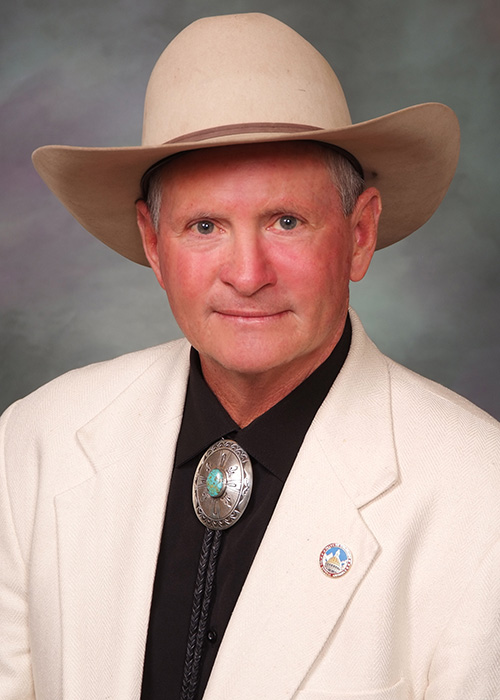
Rep. Larry Suckla
Sponsored bills
As defined in the 'Colorado Charitable Solicitations Act', a 'paid solicitor' is a person that, for monetary compensation, performs a service in which contributions are solicited in Colorado for a charitable purpose or for the benefit of a charitable organization. The act excludes from the definition of 'paid solicitor' an auctioneer who provides auctioneer services to a charitable organization. As a result, the auctioneer is exempted from the requirements of the 'Colorado Charitable Solicitations Act' for paid solicitors. The exemption applies regardless of whether the auctioneer is contracted or paid to provide their auctioneer services to the charitable organization or is volunteering their auctioneer services to the charitable organization without compensation. However, for the exemption to apply, an auctioneer who provides auctioneer services to a charitable organization may not directly receive or handle contributions or charitable funding on behalf of the charitable organization for which the auctioneer is contracted or volunteering.(Note: This summary applies to this bill as enacted.)
The act prohibits sterilization of a person with an intellectual and developmental disability without the person's informed consent if the person has decision-making capacity. The act prohibits sterilization of a person with an intellectual and developmental disability without the person's informed consent if the person does not have decision-making capacity, except in accordance with processes in existing law that allow another person with legal authority to make medical decisions for the person to consent on the person's behalf. The act repeals provisions that:Explain what happens when there is a disagreement about whether an adult with an intellectual and developmental disability is capable of consenting to sterilization;Set forth a process for a person to petition a court for, and a court to order, sterilization of a person with an intellectual and developmental disability who either cannot consent or is a minor; andRequire all records, hearings, and proceedings related to a decision to sterilize a person with an intellectual and developmental disability to remain confidential.(Note: This summary applies to this bill as enacted.)
Maddy summaryThis bill officially designates a specific section of Arapahoe Road in Boulder County, Colorado, as the "Road of Remembrance" to honor local World War I veterans. It authorizes the Colorado Department of Transportation to accept donations for placing commemorative signs along the road and to explore agreements with Boulder County for maintaining those signs. The legislation also acknowledges the historical significance of the nearby stone pillars, known as the Gateway, which were originally built in 1928 to mark the entrance to a planned memorial roadway that was never fully completed.
The act repeals the veterinary pharmaceutical advisory committee as recommended in the department of regulatory agencies' 2025 sunset report.(Note: This summary applies to this bill as enacted.)
Maddy summaryThis House Memorial honors the life and service of former Colorado Representative Carl Miller, who passed away in August 2025. The document formally recognizes his contributions to Colorado through his work in local government, the mining industry, and public service, including his role in establishing the National Mining Hall of Fame and Museum. It extends condolences to Miller's family and pays tribute to his dedication to his community and state during his career as a state representative and public utility commissioner.
Maddy summaryThis bill approves specific updates to eligibility lists for two Colorado water funding programs. It adds new drinking water projects (like Delta County's distribution system) and modifies existing entries (such as adding "green infrastructure" to Loveland's project), while deleting completed projects (like Kiowa's). These changes determine which local water districts, municipalities, and property associations can access financial assistance from the Drinking Water Revolving Fund and Water Pollution Control Revolving Fund. The bill does not create new funding rules but formally adopts the Commission's proposed list adjustments.
The bill defines "noncompliant state agency" with respect to the implementation date for an audit recommendation and requires the legislative audit committee (committee) to determine, by majority vote, whether or not a noncompliant state agency has made a good faith effort to comply with an audit recommendation by the implementation date. If the committee determines that the noncompliant state agency has made a good faith effort, the committee may accept an extended implementation date provided by the noncompliant state agency. If the committee determines there has not been a good faith effort, the committee may direct the state auditor to notify the state controller of the noncompliant state agency. The bill also requires the state controller to, upon receipt of notice from the state auditor, restrict, in an amount equal to 3% of the total amount of the noncompliant state agency's general fund appropriations, the noncompliant state agency's appropriations for the fiscal year following the fiscal year in which the state controller receives the notice from the state auditor. This restriction may only be released if the general assembly enacts a bill to do so, or if the committee directs the state auditor to notify the state controller to rescind the restriction. (Note: This summary applies to this bill as introduced.)
Maddy summarySJR 11 is a commemorative resolution designating a specific segment of U.S. Highway 34 (between Wilson Ave. and North County Rd. 23H) as the "Sgt. John 'Jack' Thurman Memorial Highway" in honor of a World War II Marine Corps veteran. The bill, which has no policy or funding provisions, simply names the highway section to recognize Sergeant Thurman's service at Iwo Jima, his military awards, and his post-war contributions as an architect and community leader in Colorado. It authorizes the Colorado Department of Transportation to accept donations for signage and explore maintenance agreements with local governments. This is a ceremonial designation with no direct impact on residents or new laws.
Current law restricts the annual amount of property tax revenue that a local government or a special district may collect to the amount of property tax revenue collected in the previous year plus 5.5%, with certain adjustments. This statutory limit does not apply to school districts or home rule municipalities. The limit may be waived by voter approval of the voters of the taxing entity (waived jurisdictions).Current law also restricts the annual amount of property tax revenue that a waived jurisdiction may collect to the greatest amount of qualified property tax revenue collected by the taxing entity in a previous property tax year increased by 5.25% multiplied by the number of property tax years in a reassessment cycle. Similarly, the annual amount of property tax revenue that a school district may collect is limited to the greatest amount of the local share of statewide total program property tax revenue collected by a school district in a previous property tax year increased by the greater of 6% multiplied by the number of property tax years in a reassessment cycle or the sum of the percentage by which the general assembly annually increases the statewide base per pupil funding for public education from kindergarten through twelfth grade and the percentage increase in pupil enrollment for both the relevant property tax year and the other property tax year in the same reassessment cycle. Both of these statutory property tax revenue limits may also be waived by voters, except that individual school districts are not able to locally waive their individual property tax limits and, instead, must seek statewide voter approval to waive the school district limit.The bill temporarily reduces the operative percentage adjustments in these 3 statutory property tax revenue limits to 4% for property tax years beginning on or after January 1, 2027, but before January 1, 2033.(Note: This summary applies to this bill as introduced.)