

Maddy summarySJR 4 designates September 20-26, 2026, as "Frontotemporal Degeneration (FTD) Awareness Week" in Colorado. This symbolic resolution recognizes FTD - a terminal, incurable neurodegenerative disease affecting speech, behavior, and motor skills - and aims to increase public awareness of the condition. It directly supports Coloradans living with FTD, their families, and advocacy groups like the Association for Frontotemporal Degeneration, which focuses on research and care. The bill has no funding or regulatory provisions, as it is purely a recognition measure.
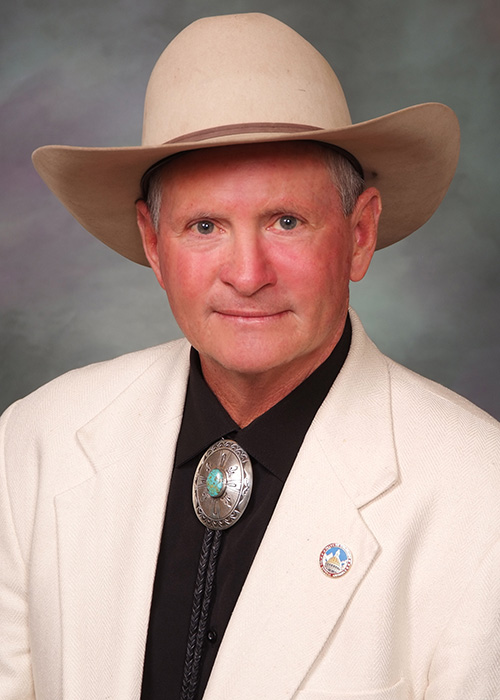
Rep. Larry Suckla
Sponsored bills
Maddy summarySJR 14 is a symbolic resolution declaring February 28, 2026, as "Rare Disease Day" in Colorado. It recognizes over 500,000 Coloradans living with rare diseases - conditions affecting fewer than 200,000 people - and highlights challenges like limited treatments and high costs. The resolution encourages public awareness through events (like lighting Denver's City and County Building) and acknowledges the resilience of affected individuals. It does not create new laws, funding, or services, but formally supports the rare disease community through recognition.
Current law provides that a person may not submit an application for subdivision approval to a local authority unless the subdivision plan or plat provides that all lots and parcels created by the subdivision will have access to the state highway system. The bill removes this restriction and specifies that, on or after January 1, 2027, a person may submit, and a local authority may approve, an application for a subdivision plan or plat that does not provide that all lots and parcels created by the subdivision will have access to the state highway system.(Note: This summary applies to this bill as introduced.)
Maddy summarySJR 10 is a symbolic resolution celebrating Lunar New Year 2026 in Colorado, not a new law. It formally recognizes the cultural significance of Lunar New Year and honors Asian American contributions to the state, building on Colorado’s existing 2024 observed holiday (established by HB 23-1271). The resolution urges Coloradans to attend community events and acknowledges the holiday’s historical roots and global celebration by over two billion people. It has no direct policy impact or legal effect, as it serves purely ceremonial and commemorative purposes.
Maddy summarySJR 9 is a procedural resolution that officially designates February 4 of each year as "Missing Persons Day" in Colorado. It raises public awareness about the issue of missing persons, acknowledges the emotional and practical challenges faced by families, and supports existing efforts to locate missing individuals. The resolution does not create new laws or programs but encourages community engagement and highlights Colorado's commitment to addressing this issue. It directly affects all Coloradans, particularly families of missing persons, by providing a designated day for advocacy and support.
Maddy summarySJR 8 is a symbolic resolution passed by the Colorado General Assembly to honor Colorado athletes who qualified for the 2026 Winter Olympics and Paralympics. It commends the athletes for representing Colorado and the United States with distinction on the global stage and expresses appreciation to their families, coaches, and communities for their support. The resolution does not create new laws or policies but serves as a formal gesture of recognition, with copies sent to each listed athlete. It specifically acknowledges 24 Colorado athletes across sports like skiing, snowboarding, and figure skating, including names like Mikaela Shiffrin and Red Gerard.
Maddy summaryHJR 1011 is a commemorative resolution honoring Colorado's World War II veterans on the 81st anniversary of the war's end. It recognizes the service of approximately 250,000 Colorado residents who served during 1941-1945, including over 3,500 who died in combat. The resolution formally acknowledges Colorado's historical military contributions, such as the 10th Mountain Division and the 157th Infantry Regiment, and references the Colorado Freedom Memorial. As a procedural resolution, it has no legal effect - it expresses legislative recognition and encourages support for honoring veterans, but does not create new laws or allocate funds.
Maddy summaryHJR 1010 is a symbolic joint resolution recognizing Colorado veterans who served in the Vietnam War. It formally honors the service of over 623 Coloradans who died and 24 who remain unaccounted for during the conflict, while acknowledging the challenges faced by veterans upon return. The resolution expresses appreciation for their fortitude, activism, and community contributions through four specific points of recognition. It does not create new policies or benefits but encourages all Coloradans to remember these sacrifices, with copies sent to veterans' organizations and state officials. This is a commemorative measure, not a legislative change.
Maddy summaryHJR 1013 is a Colorado legislative resolution commemorating Persian Gulf War veterans, specifically honoring the 3 Coloradans who died during the 1990-1991 conflict. The resolution directs the state to acknowledge veterans' service, honor those who died in action, express gratitude to families of fallen service members, and encourage Coloradans to remember these sacrifices. It includes no new laws or funding but sends copies to veterans' organizations, the Colorado Department of Military and Veterans Affairs, and state officials for public awareness. This symbolic gesture focuses on recognition rather than policy change.
Maddy summaryHJR 1005 is a ceremonial resolution recognizing the historical contributions and challenges faced by African American veterans throughout U.S. military history. It acknowledges their service from the Revolutionary War to modern conflicts, highlighting segregation, discrimination, and their pivotal roles in events like the Civil War, World Wars, and the Red Ball Express during WWII. The resolution contains no new policy provisions, funding, or direct benefits - it solely serves to formally honor their legacy and sacrifices. As a non-binding resolution, it does not affect any specific individuals or create legal changes.