

For construction of multifamily, attached housing of 2 or more units, the act creates the multifamily construction incentive program (program). A builder may chose to participate in the program by: Providing a warranty that covers any defect and damage at no cost to the homeowner for specified periods; Having a third-party inspection performed on the property; and Recording a notice of election to participate in the program in the real property records before the property is offered for sale. For construction defect claims brought for the construction of housing for which the builder is a participant in the program, the act: Requires a claimant to file a certificate of review with the complaint, if the complaint is against an architect or engineer; Limits actions to claims that have resulted in: Actual damage to real or personal property; actual loss of the use of real or personal property; actual bodily injury or wrongful death; an unreasonable reduction in the capability of, or an actual failure of, a building component to perform an intended function or purpose; or an unreasonable risk of bodily injury or death to, or a threat to the life, health, or safety of, the occupants of the residential property; and Requires that a construction professional must send or deliver to the claimant an offer to settle the claim or a written response that identifies the standards that apply to the claim and explains why the defect does not require repair. For all construction defect claims, the act: Establishes a claimant's duty to mitigate an alleged construction defect and specifies how a claimant may satisfy this duty and the consequences to a claimant that fails to satisfy this duty; Requires a construction professional who is the defendant in a construction defect action to submit specified information to the claimant; Prohibits an insurer from cancelling, denying, or reducing coverage based on any claim for benefits covered by an existing liability insurance policy issued to a construction professional based on the construction professional's offer to repair or settle a construction defect claim; Tolls the statute of limitations or repose during a claimant's mitigation of an alleged construction defect; Increases the percentage of owners that an executive board of a unit owners' association (executive board) must obtain approval from before initiating a construction defect claim on behalf of the owners from a majority to 65%; and Requires an executive board that is successful in a construction defect claim or settlement to first use the net monetary damages or net proceeds received as a result of the claim to repair the construction defect. The act requires a local government to establish a fast-track approval process for an application for for-sale multifamily condominium projects in order to qualify for assistance from the state affordable housing fund. (Note: This summary applies to this bill as enacted.)
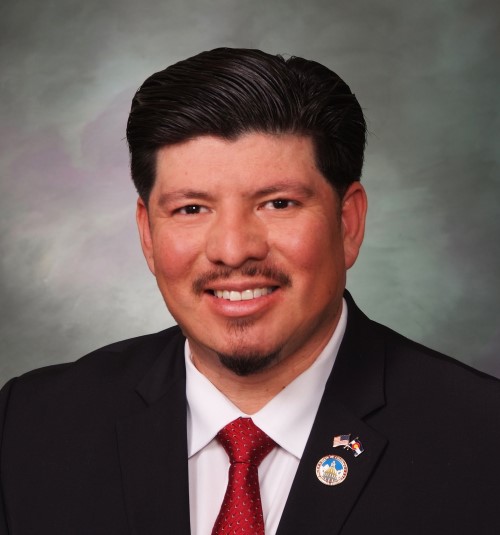
Rep. Carlos Barron
Sponsored bills
A kei vehicle is the smallest road-legal, 4-wheeled vehicle in Japan and is imported into the United States as a used vehicle. The act defines a kei vehicle as a motor vehicle for the purposes of the "Uniform Motor Vehicle Law" and the "Certificate of Title Act". These acts govern issuing a certificate of title, registering a motor vehicle, and the rules of the road for motor vehicles. The act authorizes a kei vehicle to operate on the roads and requires a kei vehicle to be issued a certificate of title, be registered, and obey motor vehicle traffic laws. Driving a kei vehicle on a roadway that has a speed limit greater than 55 miles per hour or on a limited-access highway is prohibited. For emissions testing, a kei vehicle is tested not using a dynamometer but using a 2-speed idle test. The vehicle must pass the emissions standards for the year it was manufactured. The department of revenue, the Colorado state patrol, and the agents or contractors of these agencies may not require a vehicle to have an inspection because it is a kei vehicle or has the design or manufacturing parameters of a kei vehicle. And a kei vehicle may not be declared not roadworthy because of its design or manufacturing parameters. Kei vehicles are included in the motor vehicle dealer and powersports vehicle dealer statutes, and this requires a person to be licensed as a dealer to sell kei vehicles at retail. (Note: This summary applies to this bill as enacted.)
Maddy summaryHJR 25-1028 designates Friday, April 25, 2025, as "Sportsmen's Day" in Colorado. This resolution aims to recognize the contributions of Colorado's sportsmen and women to conservation efforts and the state's economy. It also encourages members of the General Assembly to join the Colorado Legislative Sportsmen's Caucus and urges public and private institutions to work with the caucus.
Maddy summaryHouse Joint Resolution 25-1027 designates a specific portion of Colorado State Highway 1 in Larimer County, from East County Road 60 to Interstate 25, as the "Commissioner Lew Gaiter III Memorial Highway." It authorizes the Colorado Department of Transportation (CDOT) to accept donations for the initial placement of signs and to explore a cooperative agreement with Larimer County for sign maintenance.
Maddy summaryHouse Joint Resolution 25-1030 expresses the State of Colorado's strong opposition to the use of forced labor in the production of goods. The resolution states that Colorado will use its purchasing power to support businesses that ethically source or manufacture products without forced labor. It also encourages state and local economic development offices to attract businesses that avoid these labor practices. This joint resolution aims to influence state and local government purchasing decisions and promote ethical business standards.
Maddy summaryHJR 25-1026 designates Colorado State Highway 402, from United States Highway 287 to Interstate 25, as the "Rep. Hugh McKean Memorial Highway." It also authorizes the Colorado Department of Transportation (CDOT) to accept donations for the initial placement of signs and to explore agreements with Larimer County for sign maintenance.
Maddy summarySenate Joint Resolution 25-015 designates a specific portion of Colorado State Highway 58 as the "Officer Evan A. Dunn Memorial Highway." This action honors Officer Evan A. Dunn, a Golden Police Department officer who died in the line of duty. The bill authorizes the Colorado Department of Transportation to accept donations for the initial placement of memorial signs and to explore a cooperative agreement with the City of Golden for their maintenance.
The act suspends legislative interim committee activities during the 2025 legislative interim (interim). Specifically, the act: Prohibits the legislative council of the general assembly from prioritizing any requests for interim committees, including task forces, for the 2025 interim; For an interim committee that meets during 2025 interim, limits the number of bills the committee can request to be drafted to 5 and can recommend for introduction to 3; Prohibits meetings, field trips, and legislative recommendations and reports by, and suspends for one year certain reports required to be submitted to, existing interim committees, including the legislative emergency preparedness, response, and recovery committee; legislative oversight committee for Colorado jail standards; statewide health care review committee; Colorado health insurance exchange oversight committee; opioid and other substance use disorders study committee; pension review commission and pension review subcommittee; legislative oversight committee concerning tax policy; and sales and use tax simplification task force; and Prohibits members serving on statutorily created interim committees from receiving per diem and travel expenses for attending interim committee meetings during the 2025 interim except for attendance at a meeting of the wildfire matters review committee, the water resources and agriculture review committee, and the transportation legislation review committee. The act removes the authority of the Colorado youth advisory council review committee to recommend legislation through the interim committee process. The act reduces appropriations made in the legislative department's budget bill by $272,355. (Note: This summary applies to this bill as enacted.)
The act requires the department of corrections (department) to search all information available to the department to determine whether an offender held at a correctional facility is subject to an outstanding warrant or if the offender has a pending case in a Colorado court. The department is required to conduct the search when the department conducts the initial comprehensive evaluation of the offender's sentence and 3 to 8 months prior to the offender's community correction eligibility date. The act requires the department to establish guidelines and policies that address requests for additional searches as may be needed by the public defender liaison to the department. If the department determines that an offender is subject to a warrant or has a pending case in a Colorado court, the department shall notify the offender, the public defender liaison to the department, and the court that issued the warrant or in which the case is pending, as applicable. The general assembly encourages a court to ensure the offender appears before the court, is assigned counsel if the defendant is eligible for court-appointed counsel, allows the offender to resolve the warrant in a timely manner, and facilitates virtual appearance for the offender. The act does not prohibit the department from searching for outstanding warrants at any other time. The act requires the office of state public defender to designate an email address for the public defender liaisons to the department of corrections to receive notifications from the department. (Note: This summary applies to this bill as enacted.)
Maddy summarySenate Joint Resolution 25-022 is a commemorative resolution concerning the remembrance of the Holocaust. It declares the General Assembly's commitment to remembering the Holocaust and encourages school districts and universities to promote antibias, bullying prevention, and Holocaust and genocide education programs to prevent antisemitic incidents, particularly those targeting Jewish students.