Maddy summarySJR 25-004 designates January 22 of each year as "Reproductive Rights and Justice Day" in Colorado. This symbolic resolution does not create new laws or policies but commemorates the anniversary of the Roe v. Wade decision (January 22, 1973) and acknowledges Colorado's legislative actions to protect reproductive rights, including the Reproductive Health Equity Act and the Safe Access to Protected Health Care Package. The designation serves as a formal observance without imposing legal obligations or altering existing rights.
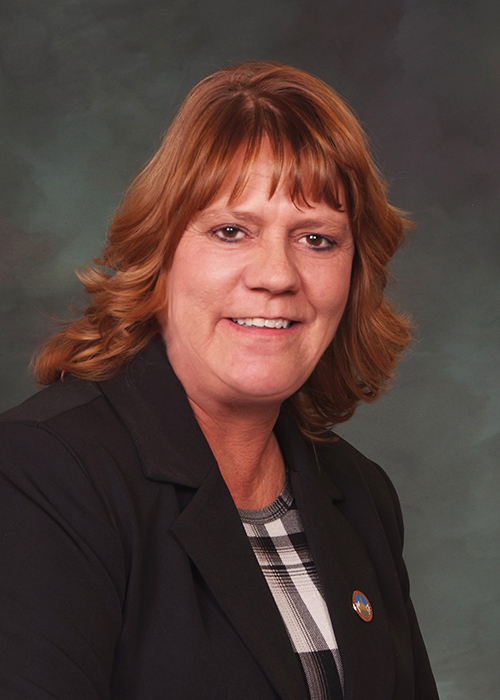
Rep. Tisha Mauro
Sponsored bills
Maddy summaryHJR 25-1003 is a procedural resolution that schedules a joint session of the Colorado General Assembly for January 16, 2025, to hear a message from representatives of the Ute Mountain Ute Tribe and Southern Ute Indian Tribe tribal councils. It directs the appointment of a committee consisting of three House members and three Senate members to escort tribal representatives to the session. The resolution does not create new laws or alter policies but formalizes a ceremonial meeting to recognize the tribes' historical and cultural contributions to Colorado. This is a standard procedural step for legislative recognition events, not a substantive policy change.
Maddy summaryHJR 25-1005 is a ceremonial resolution encouraging Colorado communities to observe Martin Luther King Jr. Day on January 20, 2025 - the 41st anniversary of the state holiday. It does not create new laws or alter existing policies but urges cities, schools, counties, and local governments to hold commemorative events. The resolution honors Dr. King’s legacy, noting Colorado’s early adoption of the holiday in 1985 and its ongoing observance through events like the annual Marade. This is a non-binding call for community engagement, not a substantive legislative change.
Maddy summaryThis procedural joint resolution (HJR 25-1002) schedules a ceremonial session for January 10, 2025, where Colorado's House and Senate will hear a message from Chief Justice Monica M. Marquez of the Colorado Supreme Court. It directs the appointment of a six-member committee (three from each chamber) to escort the Chief Justice to the session. The bill has no substantive policy impact - it solely establishes a formal procedure for this annual judicial communication event. It directly affects the legislative leadership and the Chief Justice's office by outlining the process for this specific ceremonial meeting.
Maddy summaryThis bill (HR 25-1002) is a procedural measure concerning House officers and employees. The provided context includes no bill text, summary, or specific provisions describing its content or effects. Without the actual text or a substantive description of the bill's requirements, mechanisms, or who it directly affects, a factual summary cannot be generated. The recent actions (introduced, passed, signed) only confirm procedural steps, not the bill's policy content.
The act creates the waste tire management enterprise (enterprise) in the department of public health and environment (department). Under current law, when a consumer buys new tires, the retailer charges the consumer a waste tire fee that is then collected by the department and distributed into 2 separate cash funds: The waste tire administration, enforcement, market development, and cleanup fund; and The end users fund. The act amends the fee collection and distribution system used under current law by establishing 2 different fees that will be collected and deposited into 3 separate funds. The waste tire enterprise fee (enterprise fee) is collected by the enterprise, and the revenues from that fee are deposited into the waste tire management enterprise fund and the end users fund. The waste tire management enterprise fund is used to cover the costs of operating the enterprise. The end users fund is used to fund the end-user rebate program. The enterprise fee amount is set by the enterprise and capped at $2.50 per tire, adjusted for inflation. The department is responsible for collecting the waste tire administration fee (administration fee), and the revenue from that fee is deposited into the waste tire administration fund. The administration fee amount is set by the department and is at minimum $0.50 cents per tire, but must not exceed half of the amount of the enterprise fee. The waste tire administration fund is used by the department for conducting regulatory and administrative functions of the department, such as: Inspecting new motor vehicle tire and new trailer tire retailers; Coordinating with law enforcement, fire departments, and citizens to ensure the enforcement of rules related to the waste tire management; Reimbursing certain departments that may assist the department; Inspecting waste tire collection facilities, waste tire processors, and waste tire monofills; Training and providing grants to various entities involved in waste tire management; and Registering and regulating waste tire haulers, waste tire generators, used tire managers, waste tire collection facilities, waste tire processors, mobile processors, waste tire monofills, and end users. Both the enterprise fee and the administration fee are charged by retailers of new motor vehicles and new trailer tires at the point of sale. The enterprise's primary powers and duties are: Collecting the enterprise fee; Managing the waste tire management enterprise fund and the end users fund; Issuing rebates to end users; Issuing revenue bonds; Developing waste tire recycling, beneficial reuse, and management strategies and contracting with public or private entities for services related to the waste tire recycling, beneficial reuse, and management strategies; Administering the waste tire management grant program; and Preparing and submitting an annual financial report to the general assembly. The enterprise is operated by a board of directors appointed by the executive director of the department. The act extends the end user rebate program that exists under current law until December 31, 2041. The act extends the operation of a waste tire monofill for 10 years, until July 1, 2034. The enterprise administers the waste tire management grant program that is funded by the enterprise fee to provide economic and technical assistance to eligible entities related to the recycling, beneficial reuse, and management of waste tires. Eligible entities may be awarded grants for the purchase of equipment or infrastructure, staffing at waste tire facilities, marketing and communications, policy and research development, and community engagement projects. For the 2024-25 state fiscal year, the act appropriates $60,208 to the department from the waste tire administration, enforcement, market development, and cleanup fund. The act appropriates $51,208 to the department of law from the money appropriated to the department. APPROVED by Governor June 6, 2024 PORTIONS EFFECTIVE June 6, 2024 PORTIONS EFFECTIVE July 1, 2025(Note: This summary applies to this bill as enacted.)

The underfunded courthouse facility cash fund commission (commission) is set to repeal on September 1, 2024. The act continues the commission until September 1, 2035. APPROVED by Governor June 4, 2024 EFFECTIVE August 7, 2024(Note: This summary applies to this bill as enacted.)

The act modifies the fees collected by county clerk and recorders to be a flat $40 fee instead of a fee per page, unless otherwise specified. No fee is allowed for the filing or recording of a certificate of death, a verification of death document, or a certified copy thereof, which are public records if recorded into the real estate records of a county clerk and recorder. The act also extends filing surcharge fees collected by county clerk and recorders by 3 years to 2029. The act modifies existing practice regarding the redaction of the first 5 digits of an individual's social security number on a public document recorded with a county clerk and recorder. Previously, redaction occurred upon request of the individual or the individual's representative. The act changes this practice so that redaction is automatic unless the individual or individual's representative requests that the social security number remain unredacted. The act also delays the repeal and sunset review of the electronic recording technology board (board) by 3 years to 2029, so that the board's sunset review will take place 13 years after the board's creation in 2016. The deadlines for the board's annual and final reports are modified accordingly. For the 2024-25 state fiscal year, $10,444 is appropriated to the department of revenue from the Colorado DRIVES vehicle services account in the highway users tax fund, of which $1,188 is reappropriated to the office of the governor for use by the office of information technology. APPROVED by Governor June 4, 2024 EFFECTIVE July 1, 2025(Note: This summary applies to this bill as enacted.)
The act implements the legislative recommendations of the fraudulent filings working group as identified in the working group's February 2023 report. These recommendations make the following changes: On and after July 1, 2025, a registered agent who is an individual and not a business entity is required to hold a valid Colorado driver's license, state identification, or otherwise verify the individual's residency status; A registered agent that is a business entity is required to be in good standing in the Colorado business registry; A registered agent is prohibited from using a United States or commercial post office box as the registered agent's address; The secretary of state is authorized to change a business entity's status to delinquent in the business registry immediately following a finding or concession that the entity was created or registered without authorization or for fraudulent purposes; A law enforcement agency is allowed to initiate a fraudulent filing complaint regarding a business entity; A business entity that has been delinquent for 5 years or longer can cure its delinquency only after the filing of an affidavit and photographic identification in addition to the already required statement; A business entity that has been dissolved for 2 years or longer can be reinstated only after the filing of an affidavit and photographic identification in addition to the already required articles of reinstatement; and The perjury statement affirmed by all persons when delivering a document to be filed with the secretary of state is simplified. For the 2024-25 state fiscal year, $464,310 is appropriated from the department of state cash fund to the department of state for use by the business and licensing division and the information technology division for personal services and operating expenses. APPROVED by Governor June 3, 2024 EFFECTIVE August 7, 2024(Note: This summary applies to this bill as enacted.)
Colorado law authorizes the public utilities commission (commission) to deny or refuse to renew a towing carrier permit (permit) if: The towing carrier was convicted within the last 5 years of a felony or a towing-related offense or has failed to satisfy a civil penalty imposed by the commission; or The commission determines that it is not in the public interest for the towing carrier to hold a permit. The act: Authorizes the commission to suspend or revoke a permit for each of these specified violations; Authorizes the commission to suspend or revoke a permit if it is not in the public interest for the towing carrier to hold a permit; and Sets a rebuttable presumption that it is not in the public interest for a towing carrier to hold a permit if the towing carrier has willfully and repeatedly violated the towing laws. The act prohibits a member of the towing task force in the department of regulatory agencies, which advises the commission on towing matters, from voting on a matter if the matter concerns a rate-setting recommendation that will financially benefit the member or if the member is the subject of a complaint about which the task force is advising the commission. Colorado law requires the commission to report certain towing issues and financial information to certain committees of the senate and house of representatives of the general assembly. The act requires the commission to promulgate a rule to require towing carriers to provide any information needed to prepare the report as part of the towing carrier permitting process. The information required by rule may include the annual volume of tows by category, the current pricing per category of tow for all fees charged, and the number of tow trucks each towing carrier operates. A towing carrier is forbidden from patrolling or monitoring property to enforce parking restrictions on behalf of the property owner. If a motor vehicle is towed in violation of the rights granted in state statute, the towing carrier must, within 48 hours after the determination of a statutory violation, return the vehicle to the place it was towed from unless otherwise requested or if not practical, as determined by the commission. Colorado law prohibits a towing carrier from nonconsensually towing a vehicle from private property unless the carrier has received permission from the property owner or an agent of the owner within the last 24 hours. A towing carrier may not be the agent of the property owner. The act requires the permission to be documented and signed and prohibits automated or preapproved permission. If the property owner would earn income from the nonconsensual tow, the towing carrier is prohibited from making the tow but may authorize another towing carrier to make the tow. The act repeals the ability of the agent to authorize the tow and replaces it with authorization by an employee of the property owner or a property management service, except that employees that have a financial interest in or relationship with the towing carrier may not authorize the tow. Before the act, Colorado law required certain nonconsensual tows to occur only after the vehicle owner has been given 24-hours' notice, unless the vehicle is parked without displaying valid authorization in a parking lot used exclusively for residents. The act removes the requirement that the vehicle display valid authorization and replaces it with a requirement that the vehicle have valid authorization and broadens the type of parking lot to include a parking lot for invited guests. The sign requirement for conducting a nonconsensual tow is changed to require the sign to include certain lettering and placement requirements and to require print in both English and Spanish. Colorado law authorizes the owner of a nonconsensually towed vehicle to retrieve the vehicle without paying the full fees for the nonconsensual tow. The act prohibits a towing carrier from requiring a person to undergo an approval process other than signing the appropriate form to retrieve the vehicle. The act requires a towing carrier to be responsible for the security and safety of a towed vehicle, regardless of whether the vehicle was nonconsensually towed. A violation of the towing laws is made a deceptive trade practice in violation of the "Colorado Consumer Protection Act", which authorizes the attorney general or a district attorney to file a civil action for penalties of $10,000 or more. The sunset repeal of the commission's regulation of towing carriers is moved from September 1, 2025, to September 1, 2030. The act makes a violation of the towing laws an independent cause of action, which is not subject to administrative exhaustion, against the towing carrier. To implement the act, $165,629 is appropriated for the 2024-25 state fiscal year to the department of regulatory agencies from the public utilities commission motor carrier fund. APPROVED by Governor May 30, 2024 EFFECTIVE August 7, 2024(Note: This summary applies to this bill as enacted.)