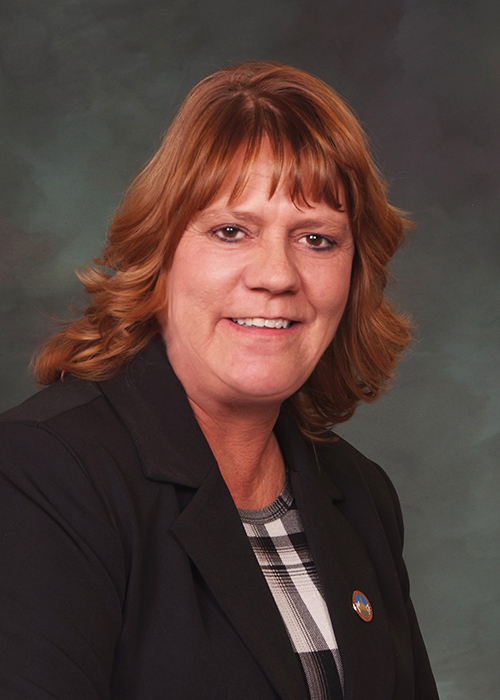
Photo of Tisha Mauro
D Colorado House · District 46 On the 2026 ballot

Rep. Tisha Mauro

Compare
Total votes
3,526
all sessions
Attendance
90%
351 missed
Higher than 93% of chamber peers
With party
97%
of cast votes
Near the chamber average
Bipartisan score
2%
crosses aisle rarely
Near the chamber average
Sponsored
266
bills & resolutions
Near the chamber average
Committees
3
assignments
266 bills and resolutions

Sponsored bills

Total
266
Primary
58
Co-sponsor
208
This page
266
matching current filters
Co-sponsor SJR 5
Passed · Colorado Senate · Co-sponsor
Colorado 4-H Day

Maddy summarySJR 5 designates January 26, 2026, as "Colorado 4-H Day" to recognize the 4-H program's work with Colorado youth. The resolution honors the program's role in developing leadership and life skills through hands-on learning in areas like health, agriculture, and citizenship. It does not create new laws or requirements but formally acknowledges the efforts of 4-H volunteers and staff who serve over 110,000 youth annually in Colorado.

Passed Jan 28, 2026 1 co-sponsor
Co-sponsor HJR 1003
Passed · Colorado House · Co-sponsor
National Blood Donor Month

Maddy summaryHJR 1003 is a ceremonial joint resolution designating January as National Blood Donor Month in Colorado. It formally recognizes voluntary blood donors and urges all eligible Coloradans to donate regularly, while encouraging businesses and organizations to sponsor community blood drives with centers like Vitalant. The resolution has no binding legal effect - it expresses support and promotes awareness but does not create new laws, funding, or requirements. It directly affects Colorado residents (especially eligible donors), blood collection organizations, and local businesses through its non-binding recommendations.

Passed Jan 26, 2026 1 co-sponsor
Co-sponsor HJR 1001
Passed · Colorado House · Co-sponsor
General Assembly Positions & Salary Ranges

Maddy summaryHJR 1001 establishes salary ranges for various positions within the state legislature, including clerks, sergeants-at-arms, communications staff, and chaplains. The bill specifies pay grades (e.g., H1B5 for Chief Clerk) and fixed rates (like $25 per visit for the Chaplain) for over 30 legislative roles. It directly affects legislative staff members by defining their compensation structures without altering job duties or creating new policies. This procedural resolution sets standardized pay levels for existing positions in both the Senate and House of Representatives.

Passed Jan 21, 2026 1 co-sponsor
Co-sponsor HR 1001
Passed · Colorado House · Co-sponsor
House Officers & Employees

Maddy summaryHouse Resolution 1001 appoints specific staff members to roles within the Colorado House of Representatives for the 75th General Assembly's Second Regular Session. It names individuals to positions including Chief Clerk, Assistant Chief Clerk, Journal Clerk, sergeants-at-arms, and leadership support staff for both majority and minority parties, plus student interns from Arrupe Jesuit High School. The resolution was approved without amendments on January 20, 2026, and serves as routine staffing for legislative operations. This procedural resolution does not create new laws or affect public policy.

Passed Jan 20, 2026 1 co-sponsor
Co-sponsor SJR 3
Passed · Colorado Senate · Co-sponsor
Joint Session Address by Tribal Councils

Maddy summarySJR 3 is a procedural resolution scheduling a joint meeting of Colorado's Senate and House of Representatives on January 16, 2026, to hear a message from representatives of the Ute Mountain Ute Tribal Council and Southern Ute Tribal Council. It directs the appointment of a six-member committee (three from each chamber) to escort tribal representatives to the session. The resolution recognizes the tribes' historical and cultural contributions to Colorado but does not create new laws or policies. This is a formal procedural step to facilitate the tribal message, not a substantive legislative change.

Passed Jan 15, 2026 1 co-sponsor
Co-sponsor HB 25-1108
Signed into law · Colorado House · Co-sponsor
Prohibitions in Rental Agreements Due to Death

The act prohibits residential rental agreements, in relation to a tenant's death, from requiring acceleration of rent beyond the end of the month or more than 10 business days after the dwelling unit is vacated after notice to the landlord of the tenant's death, whichever is later. Further, the act prohibits the enforcement of terms in rental agreements that authorize liquidated damages or other penalties if the rental agreement is terminated before the end of its term due to the death of a tenant. The act authorizes a landlord to take possession of the dwelling unit without filing an eviction action or otherwise obtaining a court order if the personal representative of the tenant's estate notifies the landlord of the surrender of the premises or,30 days after the death of the tenant, rent remains unpaid or substantially all of the tenant's property has been removed. In addition, a landlord may retain a security or damages deposit sufficient to cover costs of damages caused by the death of the tenant. (Note: This summary applies to this bill as enacted.)

Signed into law Jun 4, 2025 1 co-sponsor
Co-sponsor SB 25-162
Signed into law · Colorado Senate · Co-sponsor
Railroad Safety Requirements

The act requires that, immediately after a railroad notifies the state's watch center in the department of public safety (watch center) of an emergency involving a train, the watch center must notify the public utilities commission (commission) and the office of rail safety (office) of the incident. The commission is required to submit a report to specified committees of the general assembly on the information reported by railroads regarding an emergency involving a train. A crew member of a train operated by a railroad may communicate with first responders during an emergency situation after notifying the railroad dispatch. A crew member has discretion in determining the appropriate response to the emergency situation, including cutting the railroad crossing. A railroad employee or a crew member is immune from civil liability and is not liable in civil damages for actions taken in good faith in the course of a response to an emergency situation involving a train. The act eliminates the shared authority that the commission, the department of public safety, and the department of transportation had to inspect and investigate railroads and grants the commission alone the authority to engage in inspection, investigation, and enforcement activities regarding the following railroads: A class I railroad; A railroad operating on any line that was used by class I railroads as of July 1, 2024; and A passenger railroad. The act requires the office to gather, analyze, and assess information, including: Data to create a more comprehensive understanding of railroad safety; Wayside detector information; Information regarding blocked public crossing locations; Information regarding railroad maintenance activity; An assessment of the state's ability to respond to a large-scale release of hazardous materials from railroad transportation; The best practices for ensuring financial responsibility for response, cleanup, and damages from major rail events, including reviewing best practices from other states; and Communication issues impacting railroad lines in the state. Beginning on or before July 1, 2027, a railroad regulated by the commission is required to pay a fee to cover the costs incurred by the commission and the office in relation to the act. The commission shall determine a methodology for calculating the fee by rule, and the commission may include specified criteria in the calculation. The total amount collected pursuant to the annual fee must not exceed $2,900,000 in a calendar year. A railroad regulated by the commission must pay the fee in equal quarterly installments and is subject to penalties and interest if they fail to timely pay the fee. (Note: This summary applies to this bill as enacted.)

Signed into law Jun 4, 2025 1 co-sponsor
Co-sponsor SB 25-122
Signed into law · Colorado Senate · Co-sponsor
Extending Organ & Tissue Donation Fund

The act extends the Emily Keyes - John W. Buckner organ and tissue donation awareness fund indefinitely. (Note: This summary applies to this bill as enacted.)

Signed into law Jun 4, 2025 1 co-sponsor
Co-sponsor SB 25-167
Signed into law · Colorado Senate · Co-sponsor
Invest State Funds to Benefit Communities

Section 1 of the act requires, in addition to othr existing uses, that interest and income earned on the investment of the money in the public school fund to be used to pay for the costs of administering a newly created shared equity down payment assistance program. Section 2 requires at least one member of the public school fund investment board (board) to have expertise in community investments, requires the board to direct the state treasurer to securely invest money deposited in the public school fund in a manner that prioritizes specified new investment objectives, and authorizes the board to enter into contracts with investment advisors or other investment professionals to provide advice on community investments. Section 3 extends the time frame under which the state treasurer may make up a loss of principal to the public school fund by taking actions which lead to gains in the fund from 18 to 24 months. Section 4 creates a new community investment portfolio (portfolio) within the public school fund, and requires the state treasurer to invest at least 20% of the public school fund's value into the community investment portfolio by July 1, 2032. Money in the portfolio must be invested in community investments, and allowable community investments include: Bonds issued by Colorado school districts and charter schools; Certificates of participation issued by Colorado school districts and charter schools; Mortgage pass-through securities and collateralized mortgage obligations secured by residential real estate, the majority of which is owned by public school employees; Loans to the Colorado middle income housing authority for a revolving loan fund that funds rental housing developments that include preferences for public school employees; Bonds issued by the middle income housing authority that fund rental housing developments which include preferences for public school employees; Bonds or mortgage-backed securities issued by the Colorado housing and finance authority that fund rental housing developments that include preferences for public school employees or mortgages secured by residential real estate, the majority of which is owned by public school employees; Mortgage revenue bonds that support public school employee mortgages with interest rates of 3% or less; Loans to community development financial institutions or nonprofits with a history of providing affordable home ownership financing that fund: Housing that includes preferences for public school employees; or Low-interest mortgages secured by residential real estate that is owned by public school employees; Down payment shared appreciation products secured by residential real estate that is owned by public school employees; and Other investments that support public purpose of the portfolio. The educator first home ownership program (program) is created within the portfolio. Subject to a specified limitation, the treasurer shall invest the following amounts in the program by the following dates: By July 1, 2028, the greater of 6% of the fund's value or $100 million; and By July 1, 2030, the greater of 12% of the fund's value or $200 million. The treasurer shall aim to invest a target of 75% of the money in the program into the shared equity down payment assistance program for public school employees. The shared equity down payment assistance program must be established by July 1, 2026. Once the shared equity down payment assistance program is established: The public school fund investment board shall purchase from the program manager the mortgage products created through the shared equity down payment assistance program; and The public school investment board may provide notice of any discontinuation of future investments that the program manager has not already committed to the shared equity down payment assistance program, which notice must be provided at least 6 months prior to discontinuation. The treasurer shall aim to invest a target of 25% of the money in the program into allowable community investments. The program manager shall establish underwriting criteria and other guidelines for the shared equity down payment assistance program so that the shared equity down payment assistance program: Prioritizes first-time home buyers that use the home as a primary residence; Provides shared equity down payment assistance to public school employees and aims to help as many public school employees as possible achieve affordable home ownership; and Allows appreciation-sharing between the shared equity down payment assistance program and the borrower. Unless investments in the shared equity down payment assistance program have been discontinued and there is no fund money invested in the shared equity down payment assistance program, the program administrator shall present an annual report to the board on program outcomes. For the 2025-26 state fiscal year, section 5 appropriates $375,900 from interest or income earned on the investment of the money in the public school fund to the department of the treasury. (Note: This summary applies to this bill as enacted.)

Signed into law Jun 4, 2025 1 co-sponsor
Co-sponsor SB 25-305
Signed into law · Colorado Senate · Co-sponsor
Water Quality Permitting Efficiency

Current law requires the division of administration (division) within the department of public health and environment to report annually to the water quality control commission (commission) and to include in the report any regulatory or legislative recommendations the division may have. The act requires the report to also include: Information on the division's timing in considering and issuing water quality permits (permits); and For the report submitted in 2026, a detailed discussion of how the division has prioritized reducing the permit backlog, implemented recommendations from water quality permittees (permittees) for permitting efficiency, and increased safe drinking water program inspections. The act requires the division, upon receipt of an application to modify a permit, to limit its review and its approval or denial of the application to the scope of the specific requests contained in the application. The act requires the commission to adopt rules on or before December 31, 2026, that establish procedures whereby the division, prior to giving public notice of a complete permit application for an individual permit and the division's preliminary analysis of the application, may provide a period of public notice and review of a preliminary draft prepared by the division. If a period of public notice and review is required by rules of the commission, the period of public notice and review may not exceed 14 days, and the purpose of the review is limited to identifying errors in the division's preliminary draft. On or before December 31, 2027, the division must propose rules to the commission that establish a time frame during which the division will either grant or deny applications for each type of permitting action. On or before June 30, 2028, the commission shall adopt rules based on the division's proposal. The rules must establish the time frames for permitting actions. The act requires the division to consider current debt service on existing local government water infrastructure when developing schedules of compliance for new effluent limits in local government permits. Any schedule of compliance for new effluent limits in local government permits must, consistent with state and federal law, consider the local government's financial capability to repay existing debt on water infrastructure or to fund water infrastructure upgrades before requiring new water infrastructure upgrades. To the extent allowable under federal law, the division may issue compliance schedules in a local government permit for a new effluent limit in excess of 20 years. The act states that, on and after May 1, 2026, after an application for permit modification or permit renewal has been pending before the division for 60 days, or for any application for permit modification or permit renewal that is pending before the division as of May 1, 2026, or if the division informs an applicant that the division will not process an application for preliminary effluent limitations, the applicant and the division may mutually agree to use a qualified and independent nongovernmental contractor (contractor) under the direction of the division to provide the division with technical assistance in completing the permit action. An applicant shall bear the contractor's costs for any technical assistance provided by the contractor and shall pay the contractor for such costs. The division may charge an applicant an additional fee in an amount not exceeding 10% of the contract amount for contract administration, technical review, and additional permit processing, which fee is credited to the clean water cash fund. The act requires the division, upon a permittee's request, to make available to the permittee all documents, data, and information the division relied upon in developing the permittee's permit modification or permit renewal, except to the extent that such materials are protected by an applicable privilege or exception. The act makes the following transfers of money: On July 1, 2025, $111,000 from the water quality improvement fund to the drinking water cash fund; On July 1, 2025, $3,518,564 from the perfluoroalkyl and polyfluoroalkyl substances cash fund to the clean water cash fund; On July 1, 2026, $3,002,435 from the perfluoroalkyl and polyfluoroalkyl substances cash fund to the clean water cash fund; and On July 1, 2026, $516,129 dollars from the perfluoroalkyl and polyfluoroalkyl substances cash fund to the drinking water cash fund. For the 2025-26 state fiscal year, the act appropriates $2,904,599 to the department of public health and environment. This appropriation consists of $446,315 from the drinking water cash fund and $2,458,284 from the clean water cash fund. For the 2025-26 state fiscal year, the act appropriates $160,611 to the department of law. This appropriation is from reappropriated funds received from the department of public health and environment. The act also makes and reduces certain appropriations as adjustments to the 2025 general appropriations act. (Note: This summary applies to this bill as enacted.)


Signed into law Jun 4, 2025 1 co-sponsor
Showing 121 to 130 of 266 bills
Previous 1 … 12 13 14 … 27 Next