

The act implements certain recommendations of the department of regulatory agencies (department), as specified in the department's sunset review of the "Bingo and Raffles Law" (law), as follows: Continues the regulation of charitable gaming under the law for 7 years, until September 1, 2031; Modifies the secretary of state's (secretary's) fining authority by increasing the maximum fine amount to $250 per violation and eliminating the provision for a fine in lieu of license suspension or revocation; and Makes technical changes to the law, including the use of gender-neutral language. The act also modifies the structure, powers, and duties of the Colorado bingo-raffle advisory board, recreated in the act as the Colorado charitable gaming board (board). The board's membership is reduced and one member must be the secretary's designee. All members who are licensees under the law are appointed by the governor. In addition to the secretary's designee, the secretary must appoint the member who is a registered elector with no connection to charitable gaming. The board must meet at least 6 times each year and fulfill the following duties: Conduct a continuous study of charitable gaming in Colorado to improve such gaming and ascertain any defects in existing laws or rules; Advise the secretary regarding subjects such as licensing requirements, qualifications, and special conditions; license revocations, suspensions, and summary suspensions; a schedule of fines and the amounts of fees to be imposed pursuant to the "Bingo and Raffles Law"; criteria and training for licensees, games managers, and other individuals involved in the conduct of charitable gaming; and standard licensee audit procedures; and At the board's discretion, submit an annual report to the general assembly including recommendations for legislation related to charitable gaming. The secretary is encouraged to collaborate with the board on proposals developed by the board related to existing and potential future types of charitable gaming activities and all charitable gaming rules. The act also clarifies the requirements and limitations for a strip bingo game. The act appropriates $226,445 for the 2024-25 state fiscal year from the department of state cash fund to the department of state for implementation of the act. APPROVED by Governor June 5, 2024 EFFECTIVE June 5, 2024(Note: This summary applies to this bill as enacted.)
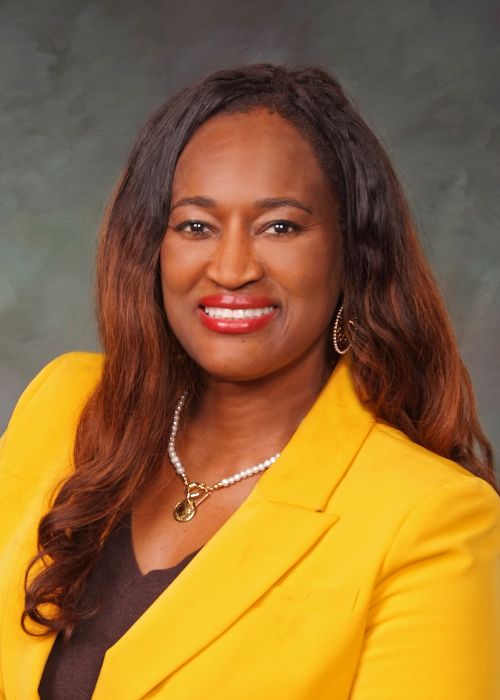
Rep. Naquetta Ricks
Sponsored bills
The act establishes the Black Coloradan racial equity commission (commission) in the legislative department to conduct a study to determine, and make recommendations related to, any historical and ongoing effects of slavery and subsequent systemic racism on Black Coloradans that may be attributed to Colorado state practices, systems, and policies. The study includes historical research conducted by the state historical society (society), commonly known as history Colorado, and an economic analysis conducted by a third party. The society may enter into an agreement with a third-party entity to conduct all or parts of the historical research. The society shall conduct at least 2 community engagement sessions for members of the public to provide input to the society. The society shall provide the commission with quarterly updates about the status of its research. The society is required to submit a report to the commission with the results of its research and any recommendations. The commission shall enter into an agreement with a third party to conduct an economic analysis of the financial impact of systemic racism on historically impacted Black Coloradans utilizing the findings of the society's historical research. The third party shall deliver the results of its economic analysis to the commission. At the conclusion of the study, the commission shall submit a report to the general assembly and the governor about the study and make the report available on a publicly accessible webpage of the general assembly's website. The report must include a description of the study's goals, the results of the historical research and economic analysis, and the commission's recommendations. After the commission submits the report, the commission shall work with any parties necessary to implement the recommendations in the report. The study is contingent upon the commission receiving $785,000 of gifts, grants, or donations for the purpose of conducting the study. The act creates the Black Coloradan racial equity study cash fund to accept the gifts, grants, or donations received for the study. The money in the cash fund is continuously appropriated to legislative council for use by the commission and to the society for conducting the historical research. APPROVED by Governor June 4, 2024 EFFECTIVE August 7, 2024(Note: This summary applies to this bill as enacted.)
The act modifies the amount of per diem a member of the general assembly is entitled to for expenses incurred during sessions of the general assembly. Beginning with state fiscal year 2025-26, and for each state fiscal year thereafter, a member who resides within the Denver metropolitan area is entitled to an amount equal to 25% of the federal per diem rate for the city and county of Denver as of October 1 of the calendar year immediately preceding the fiscal year the rate is used in, rounded up to the nearest whole dollar, and a member who does not reside within the Denver metropolitan area is entitled to an amount equal to 90% of that rate, rounded up to the nearest whole dollar. The act also creates the independent state elected official pay commission (commission) to set compensation for members of the general assembly, the governor, the lieutenant governor, the attorney general, the secretary of state, and the state treasurer (state elected officials). The initial commission will: Be appointed on or before July 31, 2025; Hold its first meeting on or before September 1, 2025; and Submit its report on or before December 15, 2025. The compensation set by the initial commission, unless rejected or modified by the general assembly, will go into effect on January 1, 2027. After a commission submits its report, the commission expires. After the initial commission, subsequent commissions will meet every 4 years after 2025 so that the effective date of future recommendations is in alignment with the election cycle of the governor, the lieutenant governor, the attorney general, the secretary of state, and the state treasurer. A subsequent commission will: Be appointed on or before July 31 of each year in which the commission meets; Hold its first meeting on or before September 1 of each year in which the commission meets; and Submit its report on or before December 15 of each year in which the commission meets. The compensation set by commissions subsequent to the initial commission, unless rejected or modified by the general assembly, will go into effect on January 1 of the first year of each subsequent 4-year gubernatorial term. Additionally, the director of research of the legislative council must annually adjust the compensation levels set by the commission for inflation except in the year in which a commission's recommendations take effect. APPROVED by Governor June 4, 2024 EFFECTIVE August 7, 2024(Note: This summary applies to this bill as enacted.)
In 2020, the general assembly enacted the "CROWN Act of 2020", which specified that, for purposes of anti-discrimination laws in the context of public education, employment and housing practices, public accommodations, and advertising, discrimination on the basis of one's race includes discrimination on the basis of traits commonly or historically associated with race, such as hair texture, hair type, and protective hairstyles. The act adds hair length that is commonly or historically associated with race to the list of traits associated with one's race. APPROVED by Governor June 3, 2024 EFFECTIVE June 3, 2024(Note: This summary applies to this bill as enacted.)
The act relocates the "Colorado Loans for Increasing Main Street Business Economic Recovery Act" and renames it the "Colorado Loans for Increasing Main Street Business Economic Resiliency Act" (CLIMBER Act). The administration of the CLIMBER Act small business recovery and resiliency loan program (loan program) is moved and the powers, duties, and functions associated with the administration of the CLIMBER Act are transferred from the department of the treasury to the office of economic development (office). Along with this relocation, the act makes the following changes to the CLIMBER Act: Removes the requirement for the loan program that at least 90% of the money in any prior tranche be invested in small business loans before the office can provide another tranche to a loan program or to the Colorado credit reserve; Allows the office to accept and expend gifts, grants, donations, and federal funds to support the CLIMBER Act and credits this money to the existing small business recovery and resiliency fund; and Removes the future repeal of the CLIMBER Act. APPROVED by Governor June 3, 2024 EFFECTIVE September 1, 2024(Note: This summary applies to this bill as enacted.)
The act implements recommendations of the department of regulatory agencies (DORA) in its 2023 sunset review of the state plumbing board (board). The act: Continues the board for 8 years to September 1, 2032; Authorizes the board to discipline plumbers who aid or abet a person in violating the plumbing practice act or other statutes that apply to plumbers; Removes the political affiliation requirement for the board, which requires that a major political party not have more than one member more than the other major political party; Clarifies that the licensed categories of plumbers, plumbing apprentices, and registered plumbing contractors can work on water conditioning systems without being required to register with the board as a water conditioning contractor, principal, or installer; Modernizes the term "journeyman" by changing it to "journeyworker" throughout the plumbing practice act, effective July 1, 2025; Modifies the license period for licenses issued or renewed on or after March 1, 2027, to be 3 years or as otherwise determined by the director of the division of professions and occupations in DORA (director); Modifies the grounds for discipline of a licensee regarding habitual or excessive use or abuse of controlled substances or alcohol and removes "substance use disorder" as a ground for discipline; Requires a plumbing contractor to display the plumbing contractor's and attached master plumber's registration information on the plumbing contractor's vehicle or in other locations and makes a plumbing contractor's failure to display the required information grounds for discipline; Repeals the requirement that the board send a letter of admonition by certified mail; Requires persons who are engaged in the business of installing, removing, inspecting, testing, and repairing backflow prevention devices to be licensed, except when installing or testing a stand-alone fire suppression sprinkler system; and Makes technical changes, including to replace the word "administrator" with the word "director" where appropriate and to replace references to "he or she" with gender-neutral terms. APPROVED by Governor June 3, 2024 PORTIONS EFFECTIVE July 1, 2024 PORTIONS EFFECTIVE July 1, 2025(Note: This summary applies to this bill as enacted.)
The office of e-health innovation in the governor's office is required to convene a working group to determine the feasibility of creating a centralized digital consent repository that allows patients to provide, extend, deny, and revoke consent for sharing their medical data and information between physical and behavioral health-care providers, family members, community organizations, payers, and state agencies at any time. By January 1, 2026, the working group is required to submit a report including recommendations regarding the feasibility of creating the centralized digital consent repository to specified committees of the general assembly. On or before July 1, 2025, the behavioral health administration in the department of human services (department) is required to create a friends and family input form to allow an individual to provide a treating professional or a licensed or designated facility or organization with information related to a patient receiving mental health or substance use services. For the 2024-25 state fiscal year, $50,604 is appropriated to the department to implement the act. APPROVED by Governor May 28, 2024 EFFECTIVE May 28, 2024(Note: This summary applies to this bill as enacted.)
The bill establishes licensure requirements for business entities that perform community association management for common interest communities in the state and makes it unlawful, on and after July 1, 2025, for a business entity to perform community association management duties without a license. The division of real estate (division) in the department of regulatory agencies (department) is tasked with administering the regulatory program for community association managers (CAMs). To be licensed, a business entity must: Demonstrate compliance with insurance requirements specified by the director of the division (director) by rule; Designate an individual as the business entity's controlling manager who is responsible for the community association management activities of the business entity and its employees; Pay a fee based on a schedule of fees determined by the director through rule-making; and Obtain criminal history record checks for its controlling manager and each individual that performs community association management on behalf of the business entity. The director shall establish by rule education requirements for controlling managers and any employees of a licensed business entity (licensed entity) who perform community association management on behalf of the licensed entity. The bill sets forth various grounds for disciplining a licensed entity and directs the director to establish a points-based disciplinary system for determining the appropriate level of discipline to impose on a licensed entity based on the level of violation. The bill repeals the licensure of CAMs on September 1, 2029, and directs the department to conduct a sunset review of the licensure program before that date. (Note: This summary applies to this bill as introduced.)
Sections 1 and 2 of the bill eliminate the liquor-licensed drugstore license, effective January 1, 2025. All active liquor-licensed drugstore licenses will convert to a fermented malt beverage and wine retailer license on that date; except that a licensee with a single location may choose to convert the liquor-licensed drugstore license to a retail liquor store license. Section 3 of the bill prohibits the state and local licensing authorities from issuing new liquor-licensed drugstore licenses. The state and local licensing authorities may renew liquor-licensed drugstore licenses that are in effect on the effective date of the bill. Sections 18 21 through 29 make conforming amendments to account for the removal of the liquor-licensed drugstore license prohibition on the issuance of new liquor-licensed drugstore licenses . Sections 3 and 4 require 4 and 5 prohibit fermented malt beverage and wine retailers to display from displaying alcohol beverages for sale in a single location in certain locations on the licensed premises and prohibit fermented malt beverage and wine retailers from selling alcohol fermented malt beverages with greater than 14% 17% alcohol by volume. Sections 5 and 6 6 and 7 expand on a wholesaler's duty not to discriminate when selling products to retailers and allows the state licensing authority to recover the cost of enforcing the anti-discrimination laws from a person found in violation of the anti-discrimination laws. Current law limits the amount of alcohol beverages certain retailers can purchase from retail liquor stores, liquor-licensed drugstores, and fermented malt beverage and wine retailers to $2,000 dollars' worth of alcohol beverages each calendar year . Sections 7 through 17 remove 8 through 18 and 22 increase the cap as it applies purchases by certain retailers from retail liquor stores to $5,000 worth of alcohol beverages each calendar month . Section 22 allows retail liquor stores to purchase $5,000 worth of alcohol beverages from other licensed retail stores each calendar month. For the delivery of alcohol beverages: Section 4 5 prohibits fermented malt beverage and wine retailers from delivering alcohol beverages to another person licensed to sell alcohol beverages; and Section 24 22 removes the prohibition on a retail liquor store delivering alcohol beverages to another retail liquor store. Section 18 19 allows automated teller machine (ATM) cards associated with public assistance programs to be used at ATMs in grocery stores. (Note: Italicized words indicate new material added to the original summary; dashes through words indicate deletions from the original summary.) (Note: This summary applies to the reengrossed version of this bill as introduced in the second house.)
The bill prohibits a person from advertising a price for a product, good, or service that does not include all mandatory or nondiscretionary fees or charges. A violation of this prohibition is a deceptive trade practice enforceable by the attorney general or a district attorney. The bill exempts: Advertisements for which a person is required to provide disclosures in compliance with certain federal or state laws or regulations or rules promulgated pursuant to those federal or state laws; Advertisements made in connection with the provision of workers' compensation insurance; Advertisements made by a licensed real estate broker; Air carriers; and Certain professions regulated by the motor vehicle dealer board. (Note: Italicized words indicate new material added to the original summary; dashes through words indicate deletions from the original summary.) (Note: This summary applies to the reengrossed version of this bill as introduced in the second house.)