

Section 1 of the act amends the state public financing cash fund (fund) statute in 2 ways. First, the act removes the limit on the amounts included in the issuance or incurrence of certain financial obligations by the state that the state treasurer credits to the fund. Second, the act modifies the fund so that bond counsel approval is no longer needed before money in the fund is used to reimburse the state treasurer for certain verifiable costs. Section 2 allows the state treasurer to use a security token offering for state capital financing and adopt rules as necessary to do so. Section 3 creates a new special purpose authority: The building urgent infrastructure and leveraging dollars authority (authority). The authority's primary purpose is to finance infrastructure projects that are ready for construction or commencement. As used in this context, an infrastructure project includes the development, construction, repair, improvement, operation, maintenance, decommissioning, or ownership of: A transportation infrastructure project, an infrastructure project in a transit-oriented community, a county courthouse facility, a transportation facility; utility infrastructure; renewable energy infrastructure; recycling infrastructure; energy efficiency infrastructure; an education facility; water infrastructure; information technology capital construction; affordable and accessible housing infrastructure; or digital, social, or other infrastructure related to economic development. The powers of the authority are vested in a 13-member board with the following membership: The state treasurer or the state treasurer's designee; The state architect or the state architect's designee; The chair of the capital development committee of the general assembly or any successor committee; A member of the capital development committee of the general assembly or any successor committee who is the longest serving member on the committee and who is a member of the major political party other than the party of the chair of the committee; A representative of a statewide organization representing counties, appointed by the governor; A representative of a statewide organization representing municipalities, appointed by the governor; The executive director of the Colorado education and cultural facilities authority or their designee; A representative of a statewide organization of general and specialty commercial construction contractors, appointed by the governor; A representative of a statewide employee organization representing building and construction trade workers, appointed by the president of the senate; An individual representing service employees, appointed by the state treasurer; An individual with a background in finance who has experience with pension fund management, appointed by the state treasurer; and An individual with a background in commercial lending representing an institution insured by the federal deposit insurance corporation, appointed by the state treasurer. The state treasurer or the state treasurer's designee serves as the chair of the board and is required to call the first meeting of the board no later than January 1, 2026. Among other powers, the authority may: Make and execute agreements, contracts, and other instruments as necessary to achieve the authority's purposes, including contracting with the officers, personnel, and consultants of the state treasurer to achieve its purposes; Charge to and collect from state agencies and persons fees and charges in connection with the authority's loans or other services; Issue and sell building urgent infrastructure and leveraging dollars bonds, payable solely from the building urgent infrastructure and leveraging dollars bonding fund created within the authority; Invest and deposit money; Finance or participate in the financing of eligible projects or any interest in such a project; except for projects that are within the statutory authority of the Colorado housing and finance authority; and Facilitate the funding of infrastructure projects. The infrastructure and long-term development assistance program (program) is created in the authority to allow the authority to provide financing for eligible projects. The act requires the authority to develop policies and procedures necessary to implement the program. At a minimum, the policies and procedures must specify application criteria, an application process, and a selection process for the authority to determine which eligible projects it will finance or assist in financing through the program. The authority must pay for such financing out of the eligible project revolving fund created in the authority. The act also requires that the authority allow the Colorado educational and cultural facilities authority a right of first refusal for the financing of eligible projects. (Note: This summary applies to this bill as enacted.)
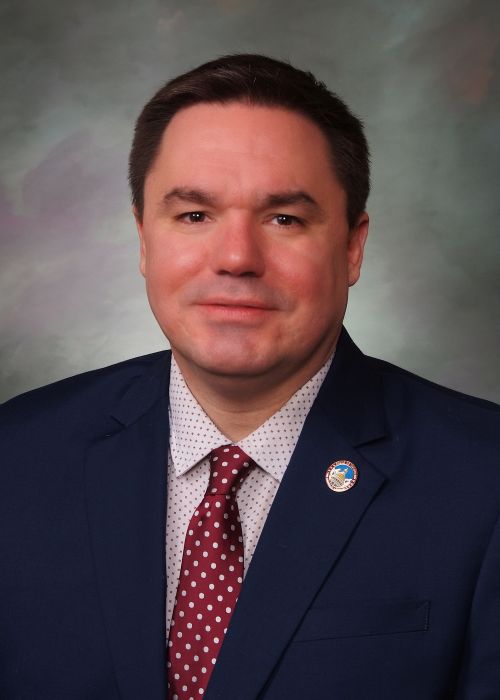
Rep. Chad Clifford
Sponsored bills
Under current law, the statute of limitations to bring certain claims against a real estate appraiser does not start until the party filing the claim has discovered, or should have discovered, an alleged defect in the appraisal. The act requires a claimant to bring an action against a real estate appraiser (appraiser) within 5 years after the date the appraisal report is completed and transmitted to a client. The 5-year limitation does not apply to an action against an appraiser for a defective appraisal report or service if the action is brought by: A consumer who is an original party to a residential mortgage loan or residential real estate transaction; or A mortgage originator who must repurchase a loan. The 5-year limitation also does not apply to an action for fraud, for misrepresentation, or for a discriminatory housing practice brought against an appraiser. (Note: This summary applies to this bill as enacted.)
The act repeals an obsolete provision that: Authorized the department of public health and environment to award grants to 3 state institutions of higher education in state fiscal year 2006-07; and Required each recipient of a grant award to report to committees of the general assembly on or before March 15, 2007, regarding the use of the grant money awarded.(Note: This summary applies to this bill as enacted.)
The act clarifies that, under current law, the department of public health and environment may use up to 10% of appropriated money to administer and manage project grants concerning public water systems and wastewater treatment works in small communities. (Note: This summary applies to this bill as enacted.)
The act creates 2 income tax subtractions for income tax years commencing on or after January 1, 2027, but before January 1, 2038. The first subtraction is for an amount equal to state capital gains that are realized by a taxpayer, who is the owner of a qualified business, during the taxable year for the conversion by an increment of at least 20% ownership to a qualified employee-owned business. The taxpayers that are eligible for this subtraction are the same taxpayers that would be eligible for the tax credit for conversion costs for employee business ownership. The total amount of capital gains that a taxpayer may subtract is set by and may be annually adjusted by the Colorado office of economic development (office), and is required to be posted on the office's website. The second subtraction is allowed to worker-owned cooperatives in an amount equal to the worker-owned cooperative's federal taxable income for the tax year not to exceed $1 million. The act also makes changes to the tax credit for conversion or expansion costs for employee business ownership (credit), which has been available through income tax year 2026. The act extends the credit through income tax years commencing in 2031. The act also specifies that the aggregate amount of credits that can be claimed for each income tax year commencing on or after January 1, 2026, but before January 1, 2032, is $3 million. The act also increases the percentage of conversion or expansion costs that are eligible to be claimed for the credit from 50% to 75% beginning in tax year 2026 while maintaining the existing dollar caps for the different methods of conversion. Additionally, the act revises several definitions to expand eligibility for the credit and allows for qualified support entities, which are businesses or nonprofit organizations that provide services to businesses that qualify under the credit so that those businesses can convert or expand to employee ownership, to be eligible to receive the credit for up to 75% of the costs incurred for providing such support, not to exceed $167,000, including for staff salaries and benefits, marketing and outreach, and consulting and technical assistance. Support costs exclude any costs that are considered conversion or expansion costs that can be claimed in the credit for employee business ownership. (Note: This summary applies to this bill as enacted.)
The act requires the department of personnel (department), in partnership with the office of new Americans, to conduct or contract to conduct a statewide language access assessment of the readiness of principal departments to meet the language access standards outlined in the language access universal policy (assessment). The assessment covers all principal departments except the department of state, the department of the treasury, and the department of law (principal departments). The assessment must identify: The needs of principal departments to meet the language access standards outlined in the language access universal policy, including requests for guidance, training, and technical assistance; Relevant language access materials from principal departments, including language access plans, position descriptions related to language access, procedures related to language access, and technical assistance or training materials; Information on current language services contracts, expenditures, and funding sources related to language access; The public-facing responsibilities of principal departments, including designating which principal departments and their subcontractors do and do not have frequent contact with linguistically diverse individuals; and Other covered entities that may be subject to the standards outlined in the language access universal policy. The department may enter into an agreement with a third-party entity to conduct all or part of the assessment. The third-party entity must have demonstrated expertise in working with state governments on language access initiatives, such as developing language access policies or plans. At the conclusion of the assessment and not later than December 31, 2026, the department, the office of new Americans, or the third-party entity is required to create a report that summarizes the findings of the assessment and makes recommendations concerning: Improving efficiency, increasing quality of service, reducing cost, avoiding duplicative work, building on existing best practices, and minimizing administrative burden with respect to the provision of linguistically accessible government services and programs to linguistically diverse individuals; Addressing gaps and improving meaningful service through changes to language access services, practices, and procedures; Evaluating potential technological options for increasing language access, such as artificial intelligence; and Determining what infrastructure is needed to ensure full and sustainable implementation of the standards outlined in the language access universal policy. The department must also maintain a community of practice to focus on implementing the language access universal policy with ongoing observation of best practices in the principal departments. The department must include a summary of the report and assessment in its January 2027 presentation to legislative oversight committees required by the "State Measurement for Accountable, Responsive, and Transparent (SMART) Government Act". For the 2025-26 state fiscal year, $100,000 is appropriated from the general fund to the department for use by the Colorado equity office for personal services. Any money not expended by July 1, 2026, is further appropriated to the Colorado equity office through December 31, 2026. (Note: This summary applies to this bill as enacted.)
The act authorizes the legislative council to approve agreements between the director of research of the legislative council and nonpartisan organizations to place nonpartisan legislative policy fellows (fellows) in the legislative council staff. The act also specifies the types of work that fellows may do, requires the director of research to retain supervisory authority over fellows, including over the terms and conditions of the fellowship, and requires any work product produced by a fellow during the fellowship to remain the property of the general assembly during and after the conclusion of the fellowship. The legislative council is prohibited from approving any agreement between the director of research of the legislative council and a nonpartisan organization that is registered as a lobbyist with the secretary of state to place a fellow in the legislative council staff. (Note: This summary applies to this bill as enacted.)
Current law limits to 10 years the time a school district can lease district property not needed for its purposes. The act allows a school district to lease district property for any term of years for purposes of a solar field, energy storage system, or affordable housing. If a board of education of a school district leases or rents property for the purposes of an affordable housing project, the board of education shall develop a policy that defines affordable housing for the project. (Note: This summary applies to this bill as enacted.)
Current law gives a trial court judge 91 days from the day a conviction enters in a criminal case to order restitution, which is the monetary loss a victim suffers due to a defendant's criminal conduct, in a criminal case. The act grants the prosecuting attorney 63 days to submit restitution information to the trial court judge following a conviction if the information is not available on the day a conviction enters, and then grants the trial court judge an additional 63 days following the submission of restitution information to order restitution after it receives the information from the prosecuting attorney. The act applies to defendants sentenced on or after the act's effective date. (Note: This summary applies to this bill as enacted.)
The act adds statutory protections for in vitro fertilization and other assisted reproductive health-care procedures. Current law requires gamete banks and fertility clinics (donor banks) to maintain donor identifying information and update it every 3 years. The act requires donor banks to encourage donors to inform the donor banks of significant updates to the donor's medical history after the donor made a donation. The donor bank is then required to document that significant medical history update. Current law prohibits donor banks from interfering with an adult donor-conceived person communicating about the gamete donor with the donor-conceived person's friends, family, or other third parties. The act encourages donor banks to provide information to donor-conceived persons regarding the physical and emotional risks associated with releasing a donor's private information to outside parties. The act repeals certain provisions relating to gamete donor record stewardship in the event of donor bank dissolution, bankruptcy, or insolvency and eliminates the requirement that donor banks inform a recipient parent about future implications about a gamete donor's medical history or other persons conceived using the same gamete donor. Current law requires the department of public health and environment (department) to draft written materials that must be provided to individuals prior to donating or receiving gametes. The act maintains that requirement, but does not require donor banks to use the department's written material. Donor banks are permitted to develop their own written materials to meet the statutory requirement of providing certain information to an individual prior to donating or receiving gametes. The act eliminates the department's ability to perform on-site inspections or perform in-person investigations on donor banks located outside the state. (Note: This summary applies to this bill as enacted.)