

The bill removes the authority of a board of education of a school district, a charter school, an institute charter school, and a school operated by a board of cooperative services (local education provider) to withhold records required for enrollment in another school or institution of higher education or a student's grades, transcripts, or diploma for failure to pay any fine or fee assessed by the local education provider, to return or replace textbooks or library resources, or to return other school property. The local education provider shall make reasonable efforts to obtain payment of an assessed fee or fine or payment for lost or damaged textbooks, library resources, or other school property. (Note: This summary applies to the reengrossed version of this bill as introduced in the second house.)
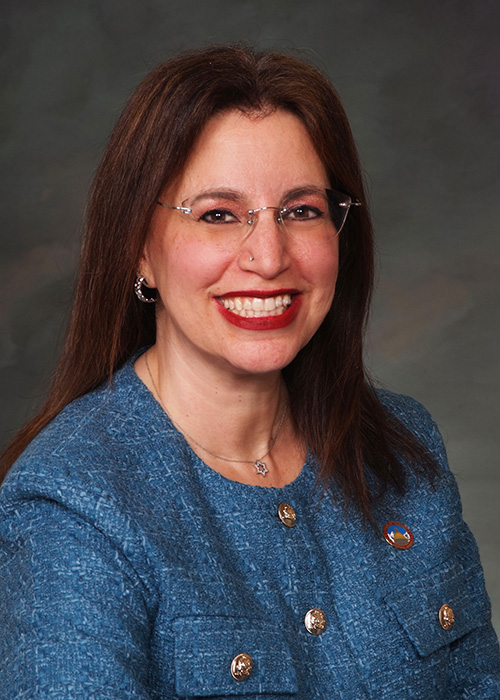
Rep. Dafna Michaelson Jenet
Sponsored bills
No later than January 1, 2018, the bill requires the property tax administrator to make available a tool to estimate residential property taxes on the division of property taxation's website. (Note: This summary applies to the reengrossed version of this bill as introduced in the second house.)
The bill lowers the age of consent from 15 years of age and older to 12 years of age and older for a minor to seek and obtain outpatient psychotherapy services from a licensed mental health professional. The bill allows a minor 10 years of age or older to receive such outpatient psychotherapy services without the consent of his or her parent or guardian. The licensed mental health professional is immune from civil or criminal liability for providing outpatient psychotherapy services unless he or she acts negligently or outside the scope of his or her practice. The bill adds a provision stating that if a minor who is receiving psychotherapy services without parental notification or consent communicates to the mental health professional a clear and imminent intent or threat to inflict serious bodily harm on himself or herself or others, the mental health professional has a statutory duty to warn and shall immediately notify the minor's parent, parents, legal guardian, or any other person having custody or decision-making responsibility of the minor of such communication. The bill clarifies that the age of consent for a minor seeking inpatient psychotherapy or other inpatient mental health services without the consent of a parent or legal guardian remains 15 years of age or older. (Note: This summary applies to the reengrossed version of this bill as introduced in the second house.)
The bill changes the name of the 'legislative oversight committee concerning the treatment of persons with mental illness in the criminal and juvenile justice systems' to the 'legislative oversight committee concerning the treatment of persons with mental health disorders in the criminal and juvenile justice systems'. The bill makes a corresponding change to the associated task force and cash fund. The bill also modernizes terminology related to mental health disorders. (Note: This summary applies to the reengrossed version of this bill as introduced in the second house.)
Interim Study Committee on Communication Between the Department of Health Care Policy and Financing (HCPF) and Medicaid Clients. The bill requires the administrative law judge hearing medicaid appeals to review the legal sufficiency of the notice of action from which the recipient is appealing at the commencement of the appeal hearing if the notice of action concerns the termination or reduction of an existing benefit. If the notice is legally insufficient, the judge shall advise the appellant that he or she may waive the defense of insufficient notice and proceed to a hearing on the merits or may ask the judge to decide the appeal based on the judge's finding of insufficiency. The judge shall advise the appellant that a legally sufficient notice may be issued in the future and that the state may recoup benefits from the appellant. The provisions of the bill apply to hearings conducted on and after a certain date. (Note: This summary applies to the reengrossed version of this bill as introduced in the second house.)
Currently, the department of revenue issues special license plates to members and veterans of the United States Army special forces. The plates are restricted to people whose orders or DD214 form show an awarded prefix '3' or suffix 'S' or a designation of '5G', 18/180 series MOS, special forces tab, OSS, or UNPIK-8240. The bill removes the ability to get the special license plate based on an awarded 'S' suffix. (Note: This summary applies to the reengrossed version of this bill as introduced in the second house.)