

The bill creates a new article 7.4 in title 23, Colorado Revised Statutes, with the article heading "Military Members, Veterans, and Dependents", in order to locate physically within the same article, whenever practicable, higher education provisions relating to the military. Part 1 of article 7.4 includes general provisions, including cross references to provisions relating to the military in other articles of title 23. Part 2 of article 7.4 includes relocated provisions from article 7 of title 23 relating to in-state tuition classification relating to the military. Part 3 of article 7.4 includes a relocated provision relating to financial assistance for Colorado National Guardsmen and a cross reference to financial assistance programs in another article of title 23. The bill repeals the provisions that have been relocated to article 7.4 of title 23. (Note: This summary applies to the reengrossed version of this bill as introduced in the second house.) , Read More
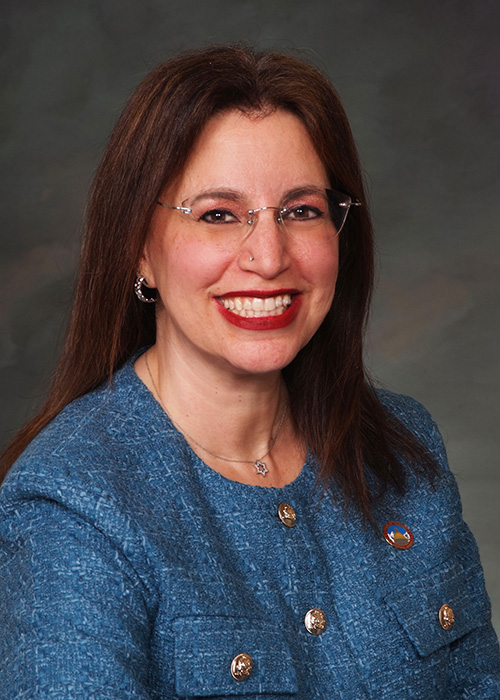
Rep. Dafna Michaelson Jenet
Sponsored bills
Currently, several statutes require a person to donate to a nonprofit organization to qualify for a special license plate. The fee is sometimes set in statute, and sometimes the fee is limited by statute. The bill authorizes the organization to increase by $10 the minimum donation for the issuance of the plate. Beginning July 1, 2019, this amount may be adjusted annually for inflation. (Note: This summary applies to the reengrossed version of this bill as introduced in the second house.) , Read More
The bill creates a program to help persons with disabilities participating in the state aid to the needy disabled program navigate the application process for federal disability benefits, including supplemental security income and social security disability insurance. The program is provided by county departments of human or social services (county departments) and is administered by the state department of human services (state department). Funding for the program is distributed to county departments pursuant to an allocation formula determined by state department rules, after receiving input from counties, county representatives, and other relevant stakeholders. The bill includes the services that may be provided by county departments participating in the program. The services may include assistance with compiling and drafting supporting documentation for the application for federal disability benefits and in completing and submitting the application. The state department shall evaluate the program pursuant to the time frame set forth in the bill to determine if the program is meeting the program goals described in the bill. The bill creates the disability benefits application assistance fund (fund) and requires the state treasurer and controller to annually transfer to the fund money appropriated for the aid to the needy disabled programs that remains unencumbered and unexpended at the end of the fiscal year. (Note: This summary applies to this bill as introduced.) , Read More
, Read More
The medical marijuana system is a vertically integrated regulatory scheme, meaning a medical marijuana center must grow the marijuana that it sells. There is one exception to the vertically integrated market: A medical marijuana center can sell to or buy from other medical marijuana licensees up to 30% of its inventory. The bill eliminates the statutory limit and requires the limit to be set in rule by the state licensing authority as long as it is not set below 30%. The bill states that a medical marijuana center may transfer medical marijuana to another medical marijuana licensee if the licensees have a common owner without the medical marijuana counting towards the limit set in rule. (Note: This summary applies to the reengrossed version of this bill as introduced in the second house.)
The bill subjects a provider of medicaid services to a civil monetary penalty if the provider improperly bills or seeks collection from a medicaid recipient or the estate of a medicaid recipient. The provider is also liable for a refund to the recipient of any amount unlawfully received from the recipient, including statutory interest, and for all amounts submitted to a collection agency in the name of the recipient. If, within 30 days, a provider voids the bill, returns any amounts unlawfully received, and makes every effort to resolve the collection action for the recipient, the provider is not subject to the penalties outlined in the bill. A provider is not subject to the penalties outlined in the bill if a person knowingly misrepresents his or her medicaid coverage status to the provider and the provider submits documentation relating to the misrepresentation. A provider may appeal the imposition of a civil monetary penalty. In addition, the bill allows the department of health care policy and financing (department) to require a corrective action plan from any provider who fails to comply with rules, manuals, or bulletins issued by the department, the medical services board, or the department's fiscal agent or from a provider whose activities endanger the health, safety, or welfare of a medicaid recipient. (Note: This summary applies to the reengrossed version of this bill as introduced in the second house.)
The bill requires the governing board of each institution of higher education to adopt, make public, and implement a prior learning assessment policy for awarding academic credit for college-level learning acquired while in the military. The policy adopted by the governing board must require each campus to use the American Council on Education's recommendations on the joint services transcript and, at its discretion, assign appropriate credit. Further, the institutions shall provide specific guidance to active duty and veteran military members in selecting a program of study and optimizing prior learning assessment credit. Finally, the institutions shall accept in transfer from other state institutions prior learning assessment credit awarded for courses with guaranteed-transfer designation. During the 2018 legislative session, the department of higher education shall report to certain committees of the general assembly concerning the policies adopted by the institutions. (Note: This summary applies to the reengrossed version of this bill as introduced in the second house.)
Sunset Process - Senate State, Veterans, and Military Affairs Committee. The bill implements the recommendations of the sunset review and report on the Colorado board of commissioners of veterans community living centers by eliminating the repeal date of the board and extending the board indefinitely.(Note: This summary applies to the reengrossed version of this bill as introduced in the second house.)
The bill conforms Colorado statutory language relating to the creation of a disability trust to conform to the language established in the federal '21st Century Cures Act'. Specifically, it clarifies that the individual who is the beneficiary of a disability trust can also be the person who establishes such trust. (Note: This summary applies to the reengrossed version of this bill as introduced in the second house.)