

Early Childhood and School Readiness Legislative Commission. The bill directs the department of human services (department) to design, implement, and operate a statewide program of early childhood mental health consultation (program). The purpose of the program is to support mental health care across the state in a variety of early childhood settings and practices. Specifically, the program must be designed to: Increase the number of qualified and appropriately trained early childhood mental health consultants (mental health consultants) for on-site consultations; and Utilize the mental health consultants, through on-site visits, to support a variety of early childhood settings and practices from the prenatal period through 8 years of age. The program must also include a: Model of consultation for mental health consultants (model) that includes job qualifications and expectations, expected outcomes, and guidance on ratios of mental health consultants and the settings they support. The model must include standards and guidelines for mental health consultants developed from evidence-based programs. Professional development plan for mental health consultants; Certification process for mental health consultants; and A published list of certified mental health consultants. The bill requires the department to actively collect data related to the program and make regular reports on the program to the joint budget committee of the general assembly and as part of its annual "State Measurement for Accountable, Responsive, and Transparent (SMART) Government Act" hearing. The department, in collaboration with the department of health care policy and financing, is directed to explore additional funding options for the program. (Note: This summary applies to this bill as introduced.)
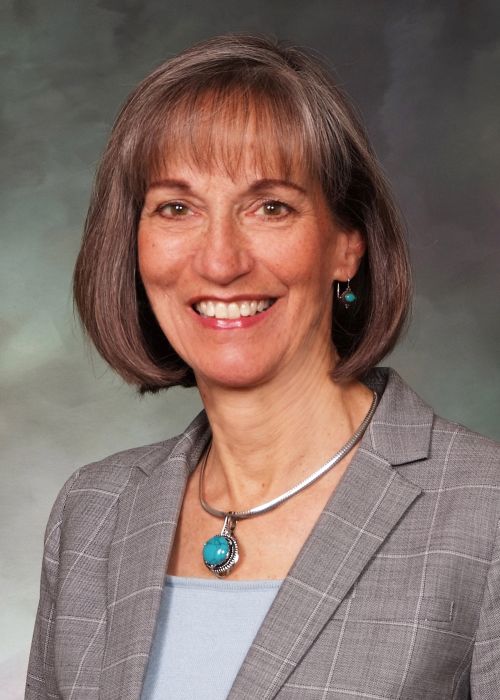
Rep. Tammy Story
Sponsored bills
Early Childhood and School Readiness Legislative Commission. The bill creates the "Helping Others Manage Early (HOME) Childhood Act" (HOME Act). The HOME Act consists of 3 components: A public awareness campaign (campaign), implemented by a third-party entity contracted by the department of human services (department). The campaign will target those persons connected with early childhood in some fashion, from families to providers, and inform them on what is expected from early childhood providers, what is expected from children by the time they enter kindergarten, and what resources are available throughout the state. A series of multicounty workshops directed at early childhood providers to provide information on best practices for effective early childhood education. The multicounty workshops will also provide information on the requirements and procedures for licensure. A series of regional workshops designed to educate interested providers on how to start an early child care center or preschool, as well as any requirements and procedures for licensure. The bill directs that the department provide adequate child care for the multicounty and regional workshops to allow for maximum attendance. The bill includes a repeal date of 2023 with a provision for a mandatory prior review of the effectiveness of the 3 components. (Note: This summary applies to this bill as introduced.)
The bill establishes the higher education student transition pilot program (pilot program) in the department of higher education (department) to provide grants to partnering 2-year and 4-year institutions of higher education that establish a transition program that allows students to enroll in courses and access student services at both of the partnering institutions. Grants are awarded for one year and are renewed annually if the partnering institutions continue to operate a transition program. The pilot program is repealed, effective June 30, 2026. In order to be eligible for a grant, a 2-year institution and a 4-year institution must enter into a memorandum of understanding to establish a transition program. An individual institution is not eligible for a grant. Participation in the transition program must be free for each student, though students are responsible for tuition and fees for enrolling in courses and using student services. A transition program must: Classify each participating student as a student of both partnering institutions and allow the student to enroll in courses at either partnering institution; Provide participating students with access to the same student services and benefits available to a student enrolled in either partnering institution and offer wraparound support services; and Include a comprehensive advising program to ensure that the courses students are taking satisfy the requirements for a degree at both the 2-year institution and the 4-year institution.(Note: This summary applies to this bill as introduced.)
Making Higher Education Attainable Interim Study Committee. The bill creates the improve student success innovation pilot program (pilot program) in the department of higher education (department) to implement a program designed to incentivize collaboration among multiple institutions of higher education to improve student success and increase the number of students who complete postsecondary education. When selecting a program or programs for the pilot program, the department and commission on higher education (commission) shall prioritize program proposals that address common barriers to student success and the completion of postsecondary education, as well as other factors. The department and commission shall submit an annual report to the joint budget committee of the general assembly and the education committees of the house of representatives and the senate regarding the efficacy of the program. The general assembly shall appropriate $20 million each year for the 2020-21, 2021-22, and 2022-23 fiscal years, from the general fund to the department to distribute to the state institutions of higher education selected to implement their projects. The pilot program repeals on July 1, 2024. (Note: This summary applies to this bill as introduced.)
The bill updates various provisions of the "Colorado Children's Trust Fund Act", including renaming it the "Colorado Child Abuse Prevention Trust Fund Act" (act). Changes include: Expanding the membership on the Colorado child abuse prevention board (board) from the current 9 members to 17 members; Expanding the powers and duties of the board to include advising and making recommendations to the governor, state agencies, and other entities regarding child maltreatment prevention; developing strategies to decrease the incidences of child maltreatment and other adverse childhood experiences; and implementing and monitoring the ongoing development of local child maltreatment prevention plans throughout the state; and Extending the repeal of the act from 2022 to 2026.(Note: This summary applies to this bill as introduced.)
Effective January 1, 2022, the bill prohibits a retail food establishment from distributing an expanded polystyrene product for use as a container for ready-to-eat food in this state. The executive director of the department of public health and environment or the executive director's designee may, through the attorney general, seek injunctive relief against a retail food establishment that violates the prohibition.(Note: This summary applies to this bill as introduced.)
The bill creates the outdoor recreation industry office in the office of economic development. The director of the outdoor recreation industry office is designated by and reports to the director of the office of economic development. The outdoor recreation industry office serves as a central coordinator of outdoor recreation industry matters. (Note: This summary applies to the reengrossed version of this bill as introduced in the second house.)
The American Red Cross Colorado disaster response, readiness, and preparedness fund voluntary contribution is currently scheduled to appear on the state income tax return form for income tax years beginning on or after January 1, 2015, but prior to January 1, 2020. The bill extends by 5 years the period during which the voluntary contribution will appear on the form. The fund will continue to appear on the form unless the fund does not receive the minimum contribution required by statute in a certain tax year. (Note: Italicized words indicate new material added to the original summary; dashes through words indicate deletions from the original summary.) (Note: This summary applies to the reengrossed version of this bill as introduced in the second house.)
The federal "Tax Cuts and Jobs Act", which became law in December 2017, added distributions for elementary or secondary school expenses for tuition in connection with enrollment or attendance at an elementary or secondary public, private, or religious school as qualified distributions from a qualified state tuition program, also known as a 529 account, thereby allowing, on the federal level, income tax-free distributions for elementary and secondary school such expenses in addition to already authorized income tax-free distributions for higher education expenses. The bill amends Colorado law to ensure that a taxpayer may not claim a deduction for contributions to qualified state tuition programs for elementary or secondary school expenses for tuition in connection with enrollment or attendance at an elementary or secondary public, private, or religious school and clarifies that such expenses are not qualified distributions. The bill includes an appropriation to the department of revenue for $11,040 from the general fund. (Note: Italicized words indicate new material added to the original summary; dashes through words indicate deletions from the original summary.) (Note: This summary applies to the reengrossed version of this bill as introduced in the second house.)
Current law includes ambiguities regarding the existence and powers of the Moffat County Affiliated Junior College District (MCAJCD) and the Rangely Junior College District (RJCD). The statutes do not allow the ownership or transfer of certain real estate held by the MCAJCD and the RJCD. Prior statutes that granted the MCAJCD and the RJCD broad authority, including the authority to own and convey real estate, were inadvertently repealed in 2009. The act allows the MCAJCD to hold and sell its current real estate holdings, provided: The sale is for fair market value as determined by an independent appraiser; and The proceeds are used for the benefit of the Colorado Northwestern Community College (CNCC). The act authorizes the transfer of the Rangely and Craig campuses of CNCC to the state board for community colleges and occupational education consistent with the original plan and statutory authority of the RJCD and the MCAJCD prior to the inadvertent repeal of statutes. (Note: This summary applies to this bill as enacted.)