

The act specifies that the money credited to the capital construction fund pursuant to House Bill 20-1377, concerning a requirement that a portion of the proceeds of the Senate Bill 17-267 lease-purchase agreement that will be executed in state fiscal year 2019-20 be credited to the capital construction fund and appropriated only for controlled maintenance projects, including controlled maintenance projects that are capital renewal projects, must be appropriated in the following priority: $34,098,768 for current year and out year level 1 controlled maintenance projects; $3,779,372 for the capital renewal project at University of Northern Colorado for the Boiler #3 Replacement; $2,819,630 for the capital renewal project at Adams State University for the Plachy Hall HVAC Upgrade and Replacement; and Any remaining money is appropriated to the emergency controlled maintenance account. The act also specifies that in the event there is insufficient money credited to the capital construction fund to fully fund the first 3 appropriations, no partial projects may proceed with partial appropriations. Any partial appropriation must instead be appropriated to the emergency controlled maintenance account. The act takes effect upon passage only if House Bill 20-1377 becomes law and takes effect either upon the effective date of this act or House Bill 20-1377, whichever is later. (Note: This summary applies to this bill as enacted.)
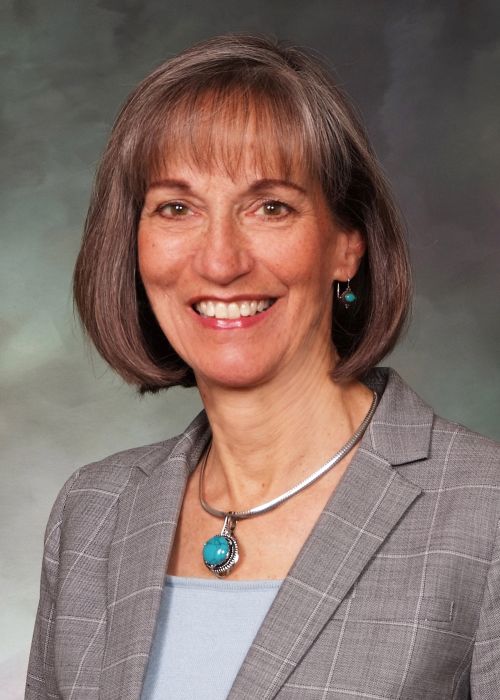
Rep. Tammy Story
Sponsored bills
The act requires the department of higher education to conduct a study concerning awarding academic credit for prior learning within all state institutions of higher education (institutions). An existing council charged with examining general education courses shall implement a plan for determining and awarding academic credit for postsecondary education based on work-related experience. The plan must not be created, adopted, or implemented unless sufficient money is available from gifts, grants, or donations to cover the costs of creating, adopting, and implementing a plan. Beginning in the 2022-23 academic year, unless a plan is implemented prior to then, institutions shall accept and transfer academic credit awarded for work-related experience as courses with guaranteed-transfer designation or part of a statewide degree transfer agreement. Beginning March 1, 2024, and each year thereafter, the council shall report to the education committees of the senate and house of representatives, or any successor committees, regarding the implementation of the credit for work-related experience plan. (Note: This summary applies to this bill as enacted.)
The governing board of an institution of higher education may, but is not required to, require a national assessment test score as an eligibility criterion for admission for first-time freshman students who graduate from high school in 2021. (Note: This summary applies to this bill as enacted.)
The act directs the state board of human services (state board) in the department of human services (DHS) to establish licensing standards that will allow an early care and education program to be licensed for a period of time determined by the state board if one or more early childhood educators have pursued DHS-approved early childhood credentials but have not yet completed the credential and other state-board-determined quality, safety, and supervision conditions are met. The state board shall also promulgate rules allowing an early childhood educator to earn points toward an early childhood credential based on the candidate's prior experience and demonstrated competency. DHS and the department of education (CDE) shall streamline and align the early childhood professional credential, child care program licensing, and educator licensing to make requirements clear and consistent and to reduce the administrative and paperwork burden relating to credentialing and licensing of early childhood educators. DHS shall analyze and prepare a written report every year, starting in 2022, concerning Colorado's current supply of qualified early childhood educators. DHS, CDE, and the department of higher education shall direct resources to support concurrent enrollment opportunities and career pathways for high school students and other nontraditional students interested in earning college credit toward becoming an early childhood educator. The act authorizes DHS to provide technical assistance and financial incentives to programs that are rated at a level one or 2 in the Colorado shines system to support the programs in advancing to a level 3 or higher quality level, and to programs at a level 3, 4, or 5 to support the programs in maintaining a high-quality level or advancing to a higher quality level. The early childhood council (council) may support DHS by providing local community outreach and engagement strategies. A council seeking school-readiness quality improvement funding must describe how the council will target and recruit programs that are rated at a level one or higher and target and recruit programs to increase access and availability of quality care. The act directs DHS to design, implement, and operate a statewide voluntary program of early childhood mental health consultation (program) by July 1, 2022. The purpose of the program is to support mental health care across the state in a variety of early childhood settings and practices. Specifically, the program must be designed to increase the number of qualified and appropriately trained early childhood mental health consultants (mental health consultants) for on-site consultations and to utilize the mental health consultants, through on-site visits, to support a variety of early childhood settings and practices from the prenatal period through 8 years of age. The program must also include a model of consultation for mental health consultants (model) that includes job qualifications and expectations, expected outcomes, and guidance on ratios of mental health consultants and the settings they support. Further, the model must include standards and guidelines for mental health consultants developed from evidence-based programs and a professional development plan for mental health consultants. (Note: This summary applies to this bill as enacted.)
The act allows a homeowner in a community organized under the "Colorado Common Interest Ownership Act" to operate a licensed family child care home, as defined in state laws governing child care facilities, notwithstanding anything to the contrary in the community's governing documents. The community's regulations concerning architectural control, parking, landscaping, noise, and other matters continue to apply, but the community must make reasonable accommodations for any requirements pertaining to fences under the state's family child care home licensing laws. The owner or operator of the child care home may also be required to carry additional liability insurance. The act does not apply to a community qualified as housing for older persons under federal law. (Note: This summary applies to this bill as enacted.)
The voluntary contributions to the American Red Cross Colorado disaster response, readiness, and preparedness fund, Colorado domestic abuse program fund, Habitat for Humanity of Colorado fund, pet overpopulation fund, and Special Olympics Colorado fund are currently scheduled to appear on the state income tax return form for income tax years beginning prior to January 1, 2020. The contributions are set to repeal unless they are continued. The act reauthorizes the funds to remain on the form so long as they meet the existing statutory requirement that a voluntary contribution fund must receive at least $50,000 in contributions each tax year. (Note: This summary applies to this bill as enacted.)
The act continues the HOA information and resource center for 5 years, until 2025. The act also precludes an HOA governed by the "Colorado Common Interest Ownership Act" from prohibiting the display of a religious item or symbol on the entry door or entry door frame of a home or condominium, subject to the right of the HOA to limit such displays to a reasonable size or to prohibit displays that are obscene or unlawful or that threaten public health or safety. (Note: This summary applies to this bill as enacted.)
From money given to the state pursuant to the federal "Coronavirus Aid, Relief, and Economic Security Act", commonly referred to as the "CARES Act", the bill allocates $10 million from the care subfund in the general fund to the energy outreach Colorado low-income energy assistance fund administered by the Colorado energy office for use by energy outreach Colorado on or before December 30, 2020, to provide direct utility bill payment assistance to households facing economic hardship due to the COVID-19 pandemic. (Note: Italicized words indicate new material added to the original summary; dashes through words indicate deletions from the original summary.) (Note: This summary applies to the reengrossed version of this bill as introduced in the second house.)
The act creates the food pantry assistance grant program (grant program) to aid Colorado food pantries and food banks in the purchase of foods to meet the needs of their clientele, which has expanded significantly as a result of the COVID-19 public health emergency. A secondary purpose of the grant program is to create new market opportunities for Colorado's agricultural producers. Food purchased by a grant recipient using grant money from the grant program must be designated as a Colorado agricultural product. The department of human services (department) is directed to administer and monitor the grant program. The act repeals the grant program, effective June 30, 2022. The act authorizes an allocation of money from the "Coronavirus Aid, Relief, and Economic Security Act" (CARES Act) subfund in the general fund to the department for the grant program to meet expenses not approved as of March 27, 2020, and are necessary to respond to the COVID-19 public health emergency. The appropriations must be expended on or before December 30, 2020. For the 2019-20 state fiscal year, $500,000 is appropriated to the department of human services from the care subfund in the general fund. The department of human services may use this appropriation for the food pantry assistance grant program. Any money appropriated not expended prior to July 1, 2020, is further appropriated to the department of human services for the period from July 1, 2020, through December 30, 2020, for the same purpose. (Note: This summary applies to this bill as enacted.)
The act grants the state historical society the authority to sell a vacant lot located in Georgetown, Colorado. The act specifies that the proceeds of the sale must be credited to the state museum cash fund to be used for capital outlay, capital construction, or controlled maintenance at museums statewide. (Note: This summary applies to this bill as enacted.)