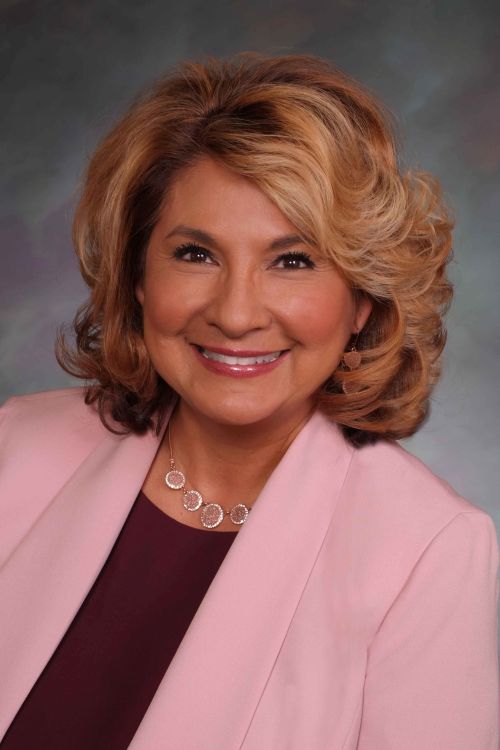
Photo of Monica Duran
D Colorado House · District 23

Rep. Monica Duran

Compare
Total votes
5,399
all sessions
Attendance
99%
44 missed
Higher than 93% of chamber peers
With party
98%
of cast votes
Near the chamber average
Bipartisan score
1%
crosses aisle rarely
Near the chamber average
Sponsored
837
bills & resolutions
Higher than 98% of chamber peers
Committees
2
assignments
837 bills and resolutions

Sponsored bills

Total
837
Primary
210
Co-sponsor
627
This page
837
matching current filters
Primary HB 1333
Signed into law · Colorado House · Lead sponsor
Fiscal Year 2026-27 Legislative Appropriation Bill

The bill makes appropriations for matters related to the legislative department for the 2026-27 state fiscal year.(Note: This summary applies to this bill as enacted.)

Signed into law May 4, 2026 0 co-sponsors
Co-sponsor SB 153
Signed into law · Colorado Senate · Co-sponsor
Licensed School Counselor Credit Hour Requirements

Maddy summaryThis bill establishes new educational requirements for individuals seeking to become licensed school counselors in Colorado. To qualify for an initial school counselor license, applicants must now hold a master's degree or higher specifically in school counseling from an accredited institution, with the program requiring at least 48 graduate semester credit hours. The legislation aims to ensure that school counselors entering the profession have comprehensive graduate-level preparation in counseling practices, student development, and strategies to support students facing behavioral and academic challenges. This change directly affects current and future school counselor candidates in Colorado who must meet these updated academic standards to obtain their professional license.

Signed into law May 4, 2026 1 co-sponsor
Co-sponsor HB 1208
Signed into law · Colorado House · Co-sponsor
Sunset Compliance Advisory Panel Air Pollution

The act continues the compliance advisory panel to the air pollution control division in the department of public health and environment for 10 years, until September 1, 2036, pursuant to the provisions of the sunset law.(Note: This summary applies to this bill as enacted.)

Signed into law May 4, 2026 1 co-sponsor
Co-sponsor SB 104
Signed into law · Colorado Senate · Co-sponsor
Require Key Boxes at Schools

The act requires each school district or, for an institute charter school or nonpublic school, the school, (local education provider) to install an exterior key box that contains keys and other access control devices necessary for law enforcement agencies to access each building and room located on the school grounds. A local education provider is not required to install an exterior key box at a school if:The school has a key box that does not satisfy the requirements in the act and has an alternative plan and procedures to provide emergency access for local law enforcement; orThe local education provider applied for but does not receive a disbursement from the school security disbursement program that may be used to install an exterior key box at the school.     The contents of an exterior key box and the information contained therein are not a public record for the purposes of the 'Colorado Open Records Act'.(Note: This summary applies to this bill as enacted.)

Signed into law May 4, 2026 1 co-sponsor
Co-sponsor HB 1234
Signed into law · Colorado House · Co-sponsor
Access to Records of Child Abuse or Neglect

The act prohibits a person who possesses a record or report (record) of child abuse or neglect from releasing identifying data or information contained in the record to a person who is not authorized to receive the information or data.     The act clarifies what constitutes identifying data in a record. The act adds an assigned designee of a person named in a record who is acting on the person's behalf as a person who may have access to child abuse or neglect records if the assigned designee presents a valid release of information signed by an authorized person.     The act allows a person named in a record as an alleged abused or neglected child who is in possession of a record in which they are named or, with the person's consent, the person's attorney or guardian ad litem, to disclose and make use of the record, including for the purpose of litigation or to obtain treatment or services. Except as expressly authorized in law, a criminal defendant may only access a record after an in camera review by the court in which the court finds that access to the record is necessary for the resolution of an issue.     The act requires each county department of human or social services to establish and submit to the state department of human services a process current and former clients may use to obtain access to their case records.     The act repeals the penalties associated with a person who improperly releases or willfully permits or encourages the release of data or information contained in the records to a person not permitted to access the information and makes it a petty offense for the department of education or a school district, charter school, or nonpublic school to release data or information contained in a record to a person not permitted to access the information.(Note: This summary applies to this bill as enacted.)

Signed into law May 4, 2026 1 co-sponsor
Co-sponsor SB 121
Signed into law · Colorado Senate · Co-sponsor
Overtime Threshold for Agricultural Employees

Beginning January 1, 2027, the act requires an agricultural employer to pay certain agricultural employees overtime pay for time worked in excess of 56 hours in a workweek. The act also increases penalties for an agricultural employer who commits wage theft and repeals the authority of the director of the division of labor standards and statistics to adopt rules concerning overtime pay for agricultural employees.(Note: This summary applies to this bill as enacted.)

Signed into law May 4, 2026 1 co-sponsor
Co-sponsor HB 1257
Signed into law · Colorado House · Co-sponsor
Local Regulation of Massage Facilities

Current law defines illicit massage businesses as businesses that engage in massage but also engage in human-trafficking-related offenses. The act expands the definition of 'illicit massage business' to include a massage business that engages in crimes other than human-trafficking-related offenses.     Current law states that if a local government adopts a resolution or ordinance to establish business licensure requirements or to prohibit unlawful activities relating to illicit massage businesses, the resolution or ordinance must not be more restrictive than the requirements set forth in state law. The act removes this limitation. The act clarifies that a local government may adopt a resolution or ordinance for the purposes of deterring illicit massage businesses; preventing human trafficking; protecting legitimate massage therapy businesses; and safeguarding public health, safety, and welfare. The act also allows a local government to impose local licensing requirements in addition to those requirements prescribed in state law.     Current law allows a local government to impose an administrative fee not to exceed $150 for issuing or renewing a license. The act removes the $150 cap on such fees. If a local government imposes an administrative fee, the amount of the fee must be reasonably related to the costs of the local government in administering the resolution or ordinance and the licensing of massage facilities. The fee must not exceed $500 unless necessary to cover the local government's costs of administering the resolution or ordinance and licensing the massage facilities in its jurisdiction. The fee may be adjusted yearly for inflation or deflation. Current law exempts businesses that held licenses before August 10, 2022, from the administrative fees. The act removes this exemption.     The act allows a local government to establish additional grounds to deny, revoke, or suspend a license. The act provides that, if a local government establishes business licensure requirements for massage facilities, the resolution or ordinance adopted by the local government must prohibit ownership of massage facilities by the types of persons that are prohibited from ownership in current law.     Current law states that preventing the operation of illicit massage businesses is a matter of statewide concern, and licensing and regulation of massage facilities is a matter of mixed statewide and local concern. The act states that preventing the operation of illicit massage businesses is a matter of mixed statewide and local concern.     The act requires a local government that adopts a resolution or ordinance related to the local regulation of massage facilities on or after August 13, 2026, to consider the impacts of the resolution or ordinance on legitimate massage therapy businesses and conduct outreach to massage therapists and massage therapy businesses in the local government's jurisdiction and statewide organizations of massage therapists.(Note: This summary applies to this bill as enacted.)

Signed into law May 4, 2026 1 co-sponsor
Co-sponsor HB 1127
Signed into law · Colorado House · Co-sponsor
Reporting After Fatal Car Crash

The act repeals the requirement for coroners, or other officials performing like functions, to report to the department of transportation (department) deaths resulting from traffic accidents on a monthly basis. The act requires coroners, or other officials performing like functions, to report all available toxicology results to the department for each deceased party who has died as a result of a motor vehicle crash. The report must be submitted by the final business day of each quarter of the calendar year.     If a participant in a crash dies within 30 days as a result of a crash, the act requires the law enforcement officer who was notified of, or investigated, the crash to submit an amended report to the department within five days after receiving a notification of the death.(Note: This summary applies to this bill as enacted.)

Signed into law May 4, 2026 1 co-sponsor
Co-sponsor HB 1107
Signed into law · Colorado House · Co-sponsor
Health Care in Regulated Facilities

The act establishes information disclosure requirements for a licensed facility that offers on-site and residential services for individuals with dementia and dementia-related conditions, including Alzheimer's disease ('dementia care facility' or 'facility').     The act requires the department of public health and environment (department), in consultation with the state long-term care ombudsman or the ombudsman's designee, to create a dementia care services information form (form) by July 1, 2027. The form must include certain specified fields for the disclosure of information regarding a dementia care facility's dementia care services, including the facility's:Dementia training requirements for staff that are in addition to statutory training requirements;Guidelines for using restraints;Security features and procedures for addressing the needs of residents with dementia; andCriteria and processes to determine placement, transfer, or discharge of residents living with dementia.     The department may review and update the form to ensure that it facilitates the disclosure of the required information. After creating or updating the form, the department must provide the form to every dementia care facility in the state.     A dementia care facility must complete the form with responsive, accurate, and complete information regarding the facility's dementia care services. Beginning October 1, 2027, every dementia care facility shall:Provide its completed form to every individual who contacts the facility seeking dementia care services;Review and update the form when the facility's information changes to ensure the information on the form is current, complete, and correct;Publish the facility's current completed form on the facility's website; andMaintain on the facility's premises and have available for inspection a copy of the facility's current completed form, and produce the form upon request by the department during a survey or inspection of the facility.     The act requires the department to issue a citation to a facility that fails to maintain on its premises and have available for inspection its completed form or that fails to produce the form upon request by the department during a survey or inspection.     The department may adopt rules, as necessary, to implement the act's requirements concerning the form; except that the rules adopted by the department must not exceed applicable national standards. The department may use money from the assisted living residence improvement cash fund for the purposes of creating the form and adopting related rules.(Note: This summary applies to this bill as enacted.)


Signed into law May 4, 2026 1 co-sponsor
Co-sponsor HB 1098
Signed into law · Colorado House · Co-sponsor
Public Trustee Act Foreclosure Procedures

The act modifies the 'Colorado Public Trustee Act' to:Set the salary of the public trustee in counties where the county treasurer serves as the public trustee to a fixed amount of $12,500 annually to be paid monthly from the county general fund as part of the county's standard payroll process. On a quarterly basis, the public trustee is required to reimburse the county general fund for the monthly salaries from the fees collected by the public trustee or from the public trustee special reserve account.Eliminate the requirement that a public trustee make and file a full statement of all transactions of the office of the public trustee to the board of county commissioners under oath;Repeal the requirement that a public trustee appointed by the governor be subject to the state 'Procurement Code' for any purchase of more than $20,000;Repeal the definition of 'certified copy' and references thereto;Define 'nonmaterial misstatement' as a minor or inconsequential error, inaccuracy, or omission that does not significantly affect the understanding, validity, or enforceability of a document;Clarify the date by which the public trustee or sheriff conducting a foreclosure (officer) must mail the combined notice of sale, right to cure, and right to redeem to persons on an amended mailing list;Clarify that a junior lienor is entitled to cure the default if the junior lienor files with the officer;Specify that an unclaimed remaining amount for which a property is sold at a foreclosure sale that is in excess of the bid amount must either be transferred to the state treasurer for disposition in accordance with the 'Revised Uniform Unclaimed Property Act' or held by the county treasurer pursuant to the terms of a county resolution regarding unclaimed funds;Add a requirement regarding redemption that specifies that if a lien is assigned, the holder's rights are valid only if the assignment of the lien is duly recorded at least 15 calendar days prior to the date of sale; andSpecify the conditions under which an omitted party's interest may be terminated.(Note: This summary applies to this bill as enacted.)
Signed into law May 4, 2026 1 co-sponsor
Showing 211 to 220 of 837 bills
Previous 1 … 21 22 23 … 84 Next