

Wildfire Matters Review Committee. Section 1 of the bill authorizes the Colorado cooperative extension service (extension) to expand and implement outreach programs and initiatives recommended by the Colorado forest health council for the purpose of increasing awareness of and interest in areas of forestry, wildland fire, and natural resources (forest health) in youth and young adults. The outreach programs and initiatives may be implemented for the 2025-26 state fiscal year through the 2027-28 state fiscal year and may include, in part: The expansion of 4-H programs and curricula in forest health; Partnerships with the forest health industry, local school districts, higher education institutions, conservation districts, the Colorado state forest service, the division of fire prevention and control in the department of public safety (division), and others to facilitate career and workforce readiness and entry into forest health careers; Outreach and support to youth and young adults relating to 2- and 4-year programs and certificates in forest health; Industry partnerships and scholarships for forest health certifications, such as wildland fire or chain saw certifications; Paid natural resources summer internships focused on forestry for high school students, including the potential to earn high school credit for completing the internship; and Paid internships in forest health careers offered by the extension, with mentoring of young adults by the extension, Colorado state university, the Colorado state forest service, and the division. The bill requires the extension to report annually to the department of natural resources and the house of representatives agriculture, water, and natural resources committee and the senate agriculture and natural resources committee on the implementation and outcomes of the outreach programs and initiatives. Section 2 authorizes the division to use money in the local firefighter safety and disease prevention fund to: Provide need-based grants to fire service governing bodies and volunteer fire departments for the cost of certain firefighter certification courses, course materials, textbooks, instructors, and written testing and to provide fire instructor I or equivalent certification for instructors who want to participate in a train-the-trainer program created by the division; Subject to appropriations by the general assembly, create a train-the-trainer program to ensure that all instructors providing grant-funded certification classes described in the bill teach a consistent curriculum; and Subject to appropriations by the general assembly, create a statewide outreach program to promote fire service careers, including marketing materials targeted to youth, an online portal to access career pathways and resources, and marketing materials that include social media. The bill requires the state treasurer to make an interest-free loan of $50 million from the unclaimed property trust fund (UPTF loan) to the department of local affairs (department). The department shall use the UPTF loan to create a zero-interest revolving loan program (loan program) to benefit fire departments. Eligible fire departments include town, city, county, and city and county fire protection organizations, fire protection districts, or other districts that provide fire protection, as well as volunteer fire departments. Eligible uses of loans made to fire departments under the loan program may include: The purchase of rolling stock, such as fire trucks, brush trucks, and fast attack vehicles, and associated apparatus; Capital improvements for existing or new facilities; The purchase of other facilities, infrastructure, or equipment for the state's firefighter workforce to respond to emergencies and ensure public safety; and Temporary bridge loans to cover unusual costs in response to emergencies. Prior to making loans to fire departments, the department shall consult with statewide associations representing fire chiefs and firefighters and the division of fire prevention and control in the department of public safety. The department may charge an administrative fee of up to one-half of one percent on the principal amount of the loans made to fire departments and may use earnings from the investment of the UPTF loan to administer the loan program. The bill creates a fund in the state treasury for use by the department for the UPTF loan and requires the department to pay the UPTF loan back to the UPTF not later than July 1, 2065. In addition, the bill creates the firefighter first homeownership program (homeownership program) and, if implemented, authorizes the state treasurer to invest money from the UPTF in the homeownership program. If implemented, the Colorado housing and finance authority or another entity selected by the state treasurer will serve as the program manager. The state treasurer shall purchase from the program manager mortgage products in tranches of reasonable amounts. The program manager shall establish guidelines and underwriting criteria that: Prioritize first-time homebuyers who use the home as a primary residence; Provide shared equity down payment assistance to firefighters; Allow appreciation-sharing benefits between the homeownership program and homeowner; If the program manager is the Colorado housing and finance authority, pair a borrower with a mortgage loan provided through the program manager's network of lenders that bears an interest rate at or below market rate; and Serve homebuyers across diverse geographic areas and housing markets. The program manager is entitled to normal and customary fees for managing the homeownership program and other costs related to the homeownership program, and shall annually report to the state treasurer concerning the homeownership program. (Note: Italicized words indicate new material added to the original summary; dashes through words indicate deletions from the original summary.) (Note: This summary applies to the reengrossed version of this bill as introduced in the second house.)
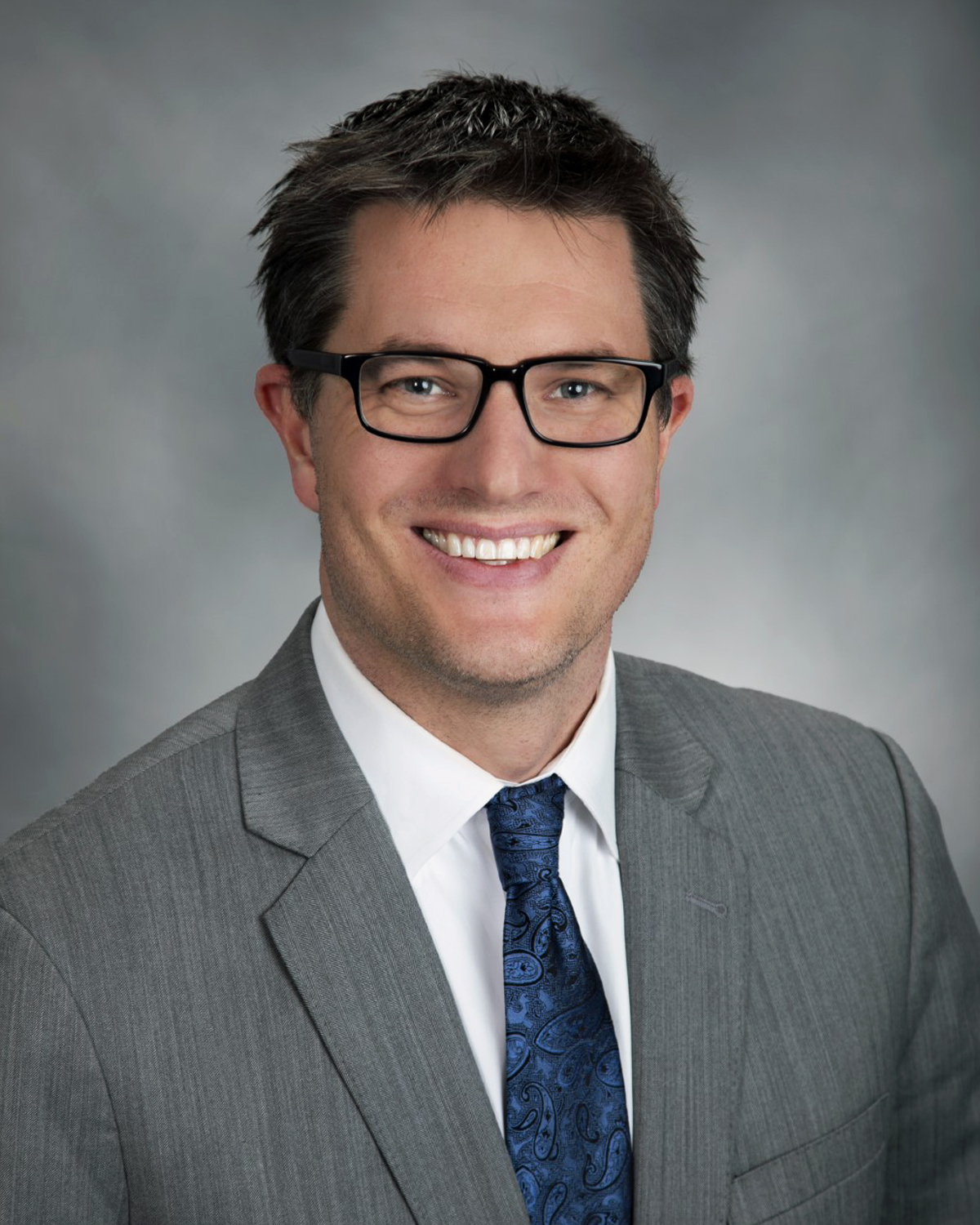
Rep. Kyle Brown
Sponsored bills
The bill creates 2 enterprises in the division of insurance (division) in the department of regulatory agencies. The bill creates the strengthen Colorado homes enterprise (strengthen homes enterprise), which is a state-owned business that imposes and collects a fee from insurance companies (insurers), including the FAIR plan association, that offer on policyholders of homeowner's insurance policies issued by insurance companies (insurers) and the fair access to insurance requirements (FAIR) plan association in the admitted market covering property located in or risks in Colorado. which The fee is collected on a per-policy basis and is equal to 1.5% of one-half percent on the dollar amount percentage of the total premiums that the insurer collects in the immediately preceding calendar year from homeowners for issuing homeowner's insurance policies ( insurer fee); except that an insurer shall not collect the fee on policyholders that have resilient roof systems. With the insurer fee revenue, the strengthen homes enterprise board administers a grant program (grant program) to strengthen homes against the risk of future damage claims caused by high winds, wildfire, hail, and other extreme weather events (extreme weather events) by allowing a homeowner to use grant money to upgrade their roof system with certain resilient roof materials. By paying the insurer fee to support the grant program to retrofit homes with resilient roofs, policyholders may defray the cost of retrofitting their property to resist losses due to common perils, including windstorms, wildfire, and other extreme weather events, and insurers reduce their overall risk in the market due to hail and other extreme weather events, in order to promote insurance market stability throughout the state. The bill also creates the wildfire catastrophe reinsurance enterprise (reinsurance enterprise), which is a state-owned business implementing and administering the wildfire catastrophe reinsurance program (reinsurance program). The reinsurance program makes reinsurance payments to insurers that offer homeowner's insurance on properties located in the state to partially mitigate losses in the event of a state or federally declared wildfire-related disaster (wildfire-related disaster). The purpose of the reinsurance program is to stabilize the homeowner's insurance market in the state and to attract and retain homeowner's insurers. In exchange for access to the reinsurance program, the reinsurance program requires insurers to sell homeowner's insurance in areas of the state that are at high risk for wildfires. To pay for the reinsurance program, the reinsurance enterprise: Issues revenue bonds secured by the reinsurance enterprise; Issues a catastrophe bond to a person that purchases the bond but pays the principal to cover costs of a wildfire-related disaster if it occurs; May impose and collect an insurer fee on insurers to cover a shortfall if a wildfire-related disaster does not occur during the bond term and the reinsurance enterprise has insufficient money to redeem the bonds at maturity; and Beginning in the 2026 calendar year, impose and collect a fee on a per-policy basis on each policyholder of a homeowner's insurance policy issued in the admitted market covering property in or risks in the state. The amount of the fee is equal to one-half percent on the percentage of total premiums collected by each insurer in the immediately preceding calendar year. Invests the revenue from the revenue bonds and insurer fees. In addition, the bill sets the loss ratio for homeowner's insurance by presuming that the rates charged to purchasers are excessive if the insurer's loss ratio is less than 75% over a 3-year period and, if rates are in excess of the loss ratio, requires insurers in the admitted market participating in the reinsurance program to submit rates that are at least 5% less than the previous year one set of rates taking into consideration the reinsurance program and one set without. In addition to offering a replacement-cost policy in accordance with current law, an insurer may offer a replacement-cost policy that has a reasonable coverage limit or percentage cap for additional living expenses if the insurer provides a premium decrease for the coverage limit or replacement cap that is approved by the division. For the 2025-26 state fiscal year, the bill appropriates $7,410,037 to the department of regulatory agencies from the strengthen homes enterprise and also appropriates money to the department of law for legal services to implement the reinsurance program. (Note: Italicized words indicate new material added to the original summary; dashes through words indicate deletions from the original summary.) (Note: This summary applies to the reengrossed version of this bill as introduced in the second house.)
Beginning in 2026, the bill authorizes an increase to the health insurance affordability fee assessed and collected from insurance carriers (carriers) by up to one percentage point to implement and administer the health insurance affordability enterprise (HIAE). The bill includes objectives for the commissioner of insurance (commissioner) to consider in determining whether to increase the HIAE fee, including, in part, maintaining HIAE programs to achieve a premium reduction in the reinsurance program and to provide subsidies for individuals with low income who purchase insurance on the Colorado health benefit exchange. The commissioner shall notify carriers of the amount of the HIAE fee for the upcoming calendar year. The bill changes the allocation of the HIAE fee assessed for 2026, dedicating up to 40% each to state-subsidized individual health coverage plans purchased by qualified individuals and to the reinsurance program cash fund, with the remaining revenue allocated for other purposes specified in the bill, including new and emerging health insurance affordability initiatives. The bill authorizes the enterprise to seek, accept, and expend gifts, grants, or donations for the purposes of the HIAE. (Note: This summary applies to this bill as introduced.)
The bill requires the Colorado energy office (office) to establish a state utility an on-bill repayment program to help finance certain gas and electric utilities' on-bill repayment programs (on-bill repayment program programs ), which are programs through which energy efficiency measures, electrification measures, and energy upgrades installed at utility customers' premises are financed through loans that and repaid by the customers repay through their monthly utility bill payments. The bill requires gas or electric investor-owned utilities that serve more than 500,000 customers to propose a plan to the public utilities commission for establishing or expanding an existing on-bill repayment program for the commission to review and approve, disapprove, or modify. The bill requires the state treasurer , on July 1, 2025, to make an 3 interest-free loan in the amount of $100 loans totaling $50 million from the unclaimed property trust fund to the state utility on-bill repayment program cash fund, which fund is created in the bill, to support the financing of the on-bill repayment programs. The office is required to pay back the loan by July 1, 2045 January 1, 2046 . As an alternative financing mechanism for the on-bill programs, the bill authorizes the department of the treasury to offer on-bill financing tax credits (tax credits) to insurance companies authorized to do business in Colorado, which insurance companies have premium tax liability owing to the state (qualified taxpayers). The tax credits will only be offered if the relevant quarterly state revenue forecast shows that the state's nonexempt revenue will be at least $50 million under the limit on state fiscal year spending authorized under section 20 of article X of the state constitution, as modified by Referendum C. The bill creates a building decarbonization enterprise (enterprise) to: Provide financing assistance, technical assistance, and other programmatic assistance to covered building owners to effectively and efficiently implement building decarbonization measures, including energy efficiency measures, electrification measures, and energy upgrades; and Provide technical assistance and other programmatic support to utilities that accept financing from the office for the purpose of establishing or expanding an on-bill program. The enterprise is authorized to impose and collect from covered building owners an annual building decarbonization fee and impose and collect from participating utilities an annual on-bill program administration fee to cover the enterprise's costs in providing financial, technical, and programmatic assistance to covered building owners and participating utilities. (Note: Italicized words indicate new material added to the original summary; dashes through words indicate deletions from the original summary.) (Note: This summary applies to the reengrossed version of this bill as introduced in the second house.)
The bill sets the reimbursement rates that a health insurance carrier (carrier) may reimburse a health-care provider (provider) for covered services for the state employee group benefit plans (state group benefit plans) and for small employer group benefit plans (small group plans). The bill prohibits a provider that is subject to the reimbursement limitations from billing or collecting payment from a person covered under a state group benefit plan or small group plan for any outstanding balance for covered services that is not reimbursed by the carrier, except for the applicable in-network coinsurance, copayment, or deductible amounts. The bill requires a carrier to provide cost and quality of care information to the commissioner of insurance (commissioner) in the case of small group plans and to the director of the department of personnel (director) in the case of state group benefit plans, at the request of the commissioner or director, as applicable, and prohibits a carrier from entering into an agreement with a provider or third party that would restrict the carrier from providing the information. By September 1, 2027, and by September 1 each year thereafter, the director is required to provide a report to the governor's office, the state treasurer's office, and the joint budget committee that states the amount of calculated savings in general fund expenditures (calculated savings), if any, for health plan reimbursement for the prior fiscal year as a result of the reimbursement limits for state group benefit plans. The director is also required to include in the report the cost to the department in determining the calculated savings. By September 15, 2027, and by September 15 each year thereafter, of the money from the calculated savings, the state treasurer is required to transfer an amount equal to the department's costs in determining the calculated savings to the group benefit plans expenditure savings cash fund (expenditure savings cash fund), which is created in the bill, and specified percentages of the calculated savings from the general fund to the primary care fund and to the expenditure savings cash fund. The bill also requires the executive director of the department of health care policy and financing (state department) to conduct a study, in collaboration with specified state agencies, to determine the feasibility of establishing a similar reimbursement limit for group benefit plans offered to school district, higher education, and local government employees. The executive director is required to complete the study and report the findings to the general assembly on or before January 1, 2028. The bill allocates $500,000 from the calculated savings to a health care reimbursement feasibility study cash fund created in the bill and authorizes the state department to use the money to conduct the study. (Note: This summary applies to this bill as introduced.)
The bill affords a plaintiff and defendant the right to trial by jury to decide all issues of fact in any action brought for unlawful detention of real property; except that, an action brought against a defendant who is a tenant of public housing that is owned or operated by a public housing agency must be tried by the court. The bill requires at least one attempt on 3 2 separate days of personal service on the defendant in an action for unlawful detention of real property. The bill requires an affidavit of service to be filed with the court. The bill requires a defendant who demands a trial by jury to make the demand in accordance with the Colorado rules of civil procedure or file a separate jury demand with the defendant's answer. The bill requires the court to set the date for trial no sooner than 10 days after the answer is filed. The bill authorizes the court to continue the trial if a party demands a trial by jury. The bill authorizes the court, upon its own motion or the motion of either party, to strike a jury demand and set the action for a trial by the court if the court determines that the defendant's answer only asserts equitable defenses and there is no dispute as to any material fact regarding the plaintiff's claim for possession of the premises or damages. The bill authorizes the court to allow either party, counsel for either party, and any witness to appear remotely by phone or video at a jury trial as an accommodation for a person with a disability or upon adequate assurances that the remote participation will not cause unreasonable delay. If either party requests a delay in a trial longer than 14 days, the bill authorizes the court, in the court's discretion upon a showing of a party's substantial likelihood of suffering serious economic harm, to require either party to give bond or other security to the opposite party for the sum that the party may be harmed due to the delay. The party required to make payment to the court must be given at least 7 days after the court's order to make the payment. If the party fails to make payment within the time required, the bill authorizes the court to extend the time for compliance or reset the hearing or trial for the next available date, but the court is prohibited from entering a default against the party. Upon a showing of indigency by the party required to make payment, the bill requires the court to waive or reduce the bond or other security, provide additional time to make payment, and permit the party to make multiple partial payments. Current law prohibits a written rental agreement from including a waiver of the right to a jury trial, except when the parties agree to a waiver of a jury in a hearing to determine possession of a dwelling unit. The bill removes this exemption. (Note: Italicized words indicate new material added to the original summary; dashes through words indicate deletions from the original summary.) (Note: This summary applies to the reengrossed version of this bill as introduced in the second house.)
The act continues the early childhood leadership commission (commission) housed in the department of early childhood for 5 years, repealing on September 1, 2030. Before its repeal, the commission is subject to a sunset review. (Note: This summary applies to this bill as enacted.)
The act requires the state board of health (board) to allow the Colorado youth advisory council (council) to present to the board twice a year on issues regarding the youth opioid epidemic and other health issues. The act also allows the council to consult the prevention services division within the department of public health and environment during the stakeholding process for rule-making regarding opioid antagonists. Under current law, a school district, the state charter school institute, or a governing board of a nonpublic school may adopt and implement a policy that allows: A school to acquire and maintain a stock supply of opioid antagonists on school grounds or on a school bus; A school employee or agent who has received relevant training to administer an opioid antagonist to a person who is at risk of experiencing an opioid-related overdose; and A school employee or agent to furnish an opioid antagonist to any individual, including a student, if the student has received relevant training. The act: Permits a school to maintain an opioid antagonist in an automated external defibrillator or defibrillator cabinet in the school or on a school bus; Repeals the requirement that a school employee or agent must receive training prior to administering an opioid antagonist; and Creates an exception that a school employee or agent may furnish an opioid antagonist to a student who has not received relevant training if the employee or agent believes that the student is in a position to assist an individual who is suffering from an opioid-related drug overdose event or who is at risk of experiencing an opioid-related drug overdose event. Current law provides a specific list of eligible entities that a prescriber may prescribe or dispense an opioid antagonist to. The act eliminates the specific list and instead requires the state board of health to establish a list of eligible entities that a prescriber may prescribe or dispense an opioid antagonist to. The act permits a standing order allowing all eligible entities to distribute opioid antagonists. The act requires the department of public health and environment to furnish a report detailing youth overdose prevention during "SMART Act" hearings. (Note: This summary applies to this bill as enacted.)
The act makes changes to the "Dental Practice Act" (act) by: Continuing the act for 9 years, until 2034; Updating and adding definitions; Changing the membership of the Colorado dental board (board); Adding to and updating the grounds for which the board may take disciplinary action against an applicant for licensure or a licensee; Allowing a licensee's submission to a mental or physical examination to satisfy the requirement to notify the board of a condition that may impair the licensee's ability to practice; Adding as exemptions to the act the volunteer practice of dental therapy and dental hygiene under specific conditions; Subjecting dentistry practiced by a professional service corporation to certain limits and requirements; Repealing exceptions that allow a dental therapist, dental hygienist, or dental assistant to perform certain dentistry practices and including additional tasks in the practice of dentistry; Clarifying that a dental assistant, dental hygienist, or dental therapist may perform tasks consistent with rules adopted by the board; Requiring a provider who performs itinerant surgery to develop and maintain protocols for emergency follow-up care; Clarifying the authority of a licensed dentist to prescribe orders electronically; Requiring a peer health assistance program selected as a designated provider for the dentist peer health assistance program to provide training to dentists who practice monitoring services; Authorizing a dentist to self-refer to participate in a peer health assistance program or be referred by the board; Removing a requirement that dental therapy education schools and programs must be accredited or approved by a specific entity; Requiring the board to adopt rules that allow for expedited, temporary licensure during a declared disaster emergency; Regulating anesthesia inspectors and requiring the board to design and implement expedited permitting of dentists with certain anesthesia or sedation training; Updating the business information a licensee must provide to the board and the circumstances under which providing the information is required; Repealing specific tasks that are currently authorized to be performed by a dental hygienist; Updating procedures for the construction of dental devices by an unlicensed technician; Updating the list of practices that are considered to be the practice of unsupervised dental hygiene; Repealing the specific dosages of certain drugs that a dental hygienist may prescribe; Authorizing the board to adopt rules that identify safe prescribing alternatives to silver diamine fluoride as a treatment for strengthening teeth and preventing tooth decay; Identifying tasks that constitute practicing supervised dental hygiene; Requiring a dental hygienist performing an interim therapeutic restoration to confirm a referral for follow-up care with a dentist; Limiting the number of dental hygienists or dental therapists that a dentist may supervise; and Authorizing a dental therapist to perform specific tasks.(Note: This summary applies to this bill as enacted.)
The act includes a performance metric related to workplace violence in determining quality incentive payments made to hospitals. No later than September 1, 2025, the act requires the department of health care policy and financing (state department) and the quality incentives payments subcommittee of the Colorado healthcare affordability and sustainability enterprise board (board) to consult with a group of named stakeholders to develop recommended workplace violence metrics, determine whether any federal or private funds are available to assist hospitals in lowering the number of incidents of workplace violence, and develop legislative recommendations. The act requires the state department to include a progress report on developing workplace violence metrics during its 2026 "SMART Act" hearing. The act requires the board to include legislative recommendations it develops as part of its January 2027 report to the general assembly, the governor, and the medical services board. Beginning July 1, 2026, and each July thereafter, the act requires the state department to assess whether each hospital has adopted a formal policy to address workplace violence and submitted the reporting requirements to the department of public health and environment for the next federal fiscal year. The act exempts hospitals with fewer than 100 beds from the reporting requirements. (Note: This summary applies to this bill as enacted.)