Issue · Healthcare

Healthcare

Every healthcare bill, vote, and legislator stance in Colorado, automatically classified by Maddy, our AI policy reader.

Total bills
89
2026 Regular Session
Top supporter
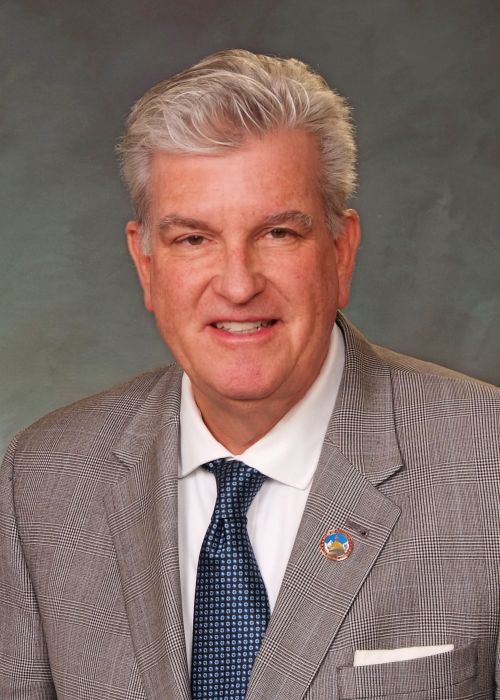
James Coleman
100% support rate
Top opponent
Ken DeGraaf
12% support rate
Ranked legislators
10
5 support · 5 oppose
Key legislators

Who's moving healthcare in Colorado

Legislators moving healthcare in Colorado
Legislator Party Stance Support rate Votes
James Coleman
James Coleman Senate · District 33
D
Strong +
100% 7
Nick Hinrichsen
Nick Hinrichsen Senate · District 3
D
Strong +
100% 15
Julie Gonzales
Julie Gonzales Senate · District 34
D
Strong +
93% 27
Jeff Bridges
Jeff Bridges Senate · District 26
D
Strong +
92% 25
Chris Kolker
Chris Kolker Senate · District 16
D
Strong +
92% 36
Ken DeGraaf
Ken DeGraaf House · District 22
R
Strong −
12% 82
John Carson
John Carson Senate · District 30
R
Strong −
20% 13
Ron Weinberg
Ron Weinberg House · District 51
R
Oppose
21% 99
Max Brooks
Max Brooks House · District 45
R
Oppose
25% 117
Scott Bottoms
Scott Bottoms House · District 15
R
Oppose
25% 111
Showing 11–20 of 89 bills

All healthcare bills

passed · Colorado · Senate May 8, 2026

SB 162: Sensitive Test Results in Health Care

Beginning July 1, 2027, the bill prohibits the immediate release of a patient's sensitive test results to the patient's electronic health record or through a patient portal. Instead, the bill requires that sensitive test results, once they are finalized, not be released as part of the patient's electronic health record or through a patient portal for 3 business days.     The bill establishes 2 exceptions one exception to this requirement: Sensitive test results may be immediately released as part of the patient's electronic health record or through a patient portal immediately and without delay if the patient's health-care provider authorizes immediate release of the results or if the patient requests to receive the sensitive test results of a particular test without delay the sensitive test results to be released before the end of the three 3-business-day period .     The bill defines 'sensitive test results' as:A pathology or radiology report that is ordered for the purpose of diagnosing or monitoring a patient for cancer; orTest results that may reveal a genetic marker that relates to a cancer condition.     The bill specifies that a custodian of person that administers and controls a patient's electronic health record that contains sensitive test results is responsible for implementing the requirements of the bill. The bill states that compliance with the requirements of the bill is not information blocking under the federal '21st Century Cures Act'. A person that fails to comply with the requirements of the bill is not subject to civil, criminal, or administrative liability or professional disciplinary action.(Note: Italicized words indicate new material added to the original summary; dashes through words indicate deletions from the original summary.)(Note: This summary applies to the reengrossed version of this bill as introduced in the second house.)
signed · Colorado · House Jun 2, 2026

HB 1382: Support of Coloradans with Disabilities

The act relocates in statute the disability support fund (fund), which finances the work of the Colorado disability opportunity office (office). The fund receives revenue from fees paid for license plates in a retired style and from the sale of unique vehicle registration numbers. The act makes the office responsible for administering the sale of these unique vehicle registration numbers, which was previously a duty of the Colorado disability funding committee (committee) housed within the office. The act repeals the committee on July 1, 2027. The fund is subject to annual appropriation to support the office and, for state fiscal year 2026-27 only, the fund is also subject to annual appropriation by the general assembly to the department of labor and employment (department) for vocational rehabilitation. Beginning on October 1, 2026, the $25 annual fee paid for license plates in a retired style is replaced by a one-time and annual fee of $2.50 credited to the fund and a one-time and annual donation of $22.50 remitted to the Colorado disability funding authority (authority), which is a newly created special purpose authority.     The authority is governed by a board of 13 members appointed by the governor, the majority of whom are individuals with disabilities, individuals with immediate family members with disabilities, or individuals who are caregivers to a family member with a disability. In making the appointments, the governor must ensure that the authority board has members with experience in or knowledge of:Business and business management;Nonprofit entities and managing nonprofit entities;Advocacy for individuals with disabilities;The practice of medicine, with experience working with individuals with disabilities; andThe practice of law, with experience working with individuals with disabilities.     The authority is required to invite nonprofit entities, independent living centers, county departments of human services, county departments of social services, and other state and county agencies to submit proposals for programs to aid individuals with disabilities in accessing disability benefits. Beginning on July 1, 2027, the authority is required to award a contract or grant to one or more of the entities that submitted program proposals. When adequate funding is available, the authority may also:Accept and review proposals to fund projects or programs that study or pilot new and innovative ideas that will lead to an improved quality of life or increased independence for individuals with disabilities; andMake grants or develop, implement, or deliver education programs concerning reserved parking that is available to an individual with a disability affecting mobility.     On or before December 1, 2027, and on or before each December 1 thereafter, the authority is required to prepare and submit a financial and performance report to the joint budget committee. In addition to this annual report, the state auditor may also be required to conduct or cause to be conducted postaudits of the authority.     By October 1, 2026, the state treasurer is required to issue a warrant in the amount of $523,343 from the fund to the authority. On June 30, 2026, the state treasurer is required to transfer $21 million from the fund to the general fund.     For the 2026-27 state fiscal year, the act decreases by $100,000 the appropriation from the disabled parking education and enforcement fund to the department for use by the office for operating expenses.     For the 2026-27 state fiscal year, $1 million is appropriated from the fund to the department for use by the division of vocational rehabilitation and independent living services.     For the 2026-27 state fiscal year, $27,000 is appropriated from the fund to the department of revenue for use by the division of motor vehicles for DRIVES maintenance and support.(Note: This summary applies to this bill as enacted.)
Sub-Topics Appropriations Audits & Accountability State Budget Tags People with Disabilities
signed · Colorado · House May 29, 2026

HB 1375: Repeal County Administration Funding Model

Under current law, the department of human services (CDHS) was required to enter into an agreement with an outside entity no later than January 2, 2024, to develop a county administration of public and medical assistance programs funding model (funding model) to determine the amount of money necessary to fund the administration of public and medical assistance programs in each county. CDHS is required to enter into an agreement with an outside entity to annually update and modify the funding model. Before November 1 of each year, CDHS is required to submit the results of the funding model to the joint budget committee, the department of health care policy and financing, and the county departments of human or social services (county departments).     The act repeals the funding model and the requirement to annually update and submit the results of the funding model to the joint budget committee, the department of health care policy and financing, and county departments.     The act reduces the appropriations made to CDHS and the department of health care policy and financing in the annual general appropriation act for the 2026-27 state fiscal year.(Note: This summary applies to this bill as enacted.)
signed · Colorado · House Jun 4, 2026

HB 1414: Medical Record Requests

The act caps at $400 the amount that a health-care entity or health-care provider may charge for a record request made by a patient's attorney or the attorney of the patient's personal representative pursuant to an authorization in compliance with the federal 'Health Insurance Portability and Accountability Act of 1996', a valid subpoena, or a valid court order, if the requested record exceeds 664 pages. The health-care entity or health-care provider may charge a reasonable fee above the cap if the record request requires the health-care facility or health-care provider to segregate, withhold, or redact protected health information in order to comply with applicable law or the scope or limitations of the authorization in compliance with the federal 'Health Insurance Portability and Accountability Act of 1996', a valid subpoena, or a valid court order.     Beginning January 1, 2028, and every even-numbered year thereafter, the act requires the $400 limit to be adjusted for inflation.     The act requires the requested medical records to be delivered in electronic format if the requestor requests electronic format, the original records are stored in electronic format, and the records are readily producible in electronic format.     The act requires the health-care facility or health-care provider to provide the requestor with an invoice for the records provided in response to the record request within 30 days of receiving the request, and the health-care facility or health-care provider must provide the records upon payment of the invoice.     If the health-care facility or health-care provider is unable to comply with the request for records within 30 days after the request, the health-care facility or health-care provider must send written notice of a 30-day extension to the requestor. The health-care facility or health-care provider must provide the records to the requestor at no cost if the records were not provided within 30 days or without written notice of an extension, unless the delay is due to a force majeure event. In the case of a force majeure event, the health-care facility or health-care provider must provide written notice to the requestor within 5 business days of becoming aware of the force majeure event. The 30-day time frame to respond to a request for records commences upon resolution of the force majeure event.(Note: This summary applies to this bill as enacted.)
Sub-Topics Insurance
signed · Colorado · House May 28, 2026

HB 1366: Denver Health Federal Funds for Physician Services

The act allows money collected from the hospital provider fee to be used to maximize reimbursement through state-directed payments for physician services at Denver health and hospital authority.     The act appropriates $3,527,482 from the healthcare affordability and sustainability hospital provider fee cash fund to the department of health care policy and financing to implement the act.(Note: This summary applies to this bill as enacted.)
Sub-Topics Hospitals
signed · Colorado · House May 27, 2026

HB 1389: Comprehensive Human Sexuality Education Grant Appropriation

The act eliminates the requirement that the general assembly annually appropriate money to the department of public health and environment for the comprehensive human sexuality education grant program.(Note: This summary applies to this bill as enacted.)
signed · Colorado · Senate Jun 2, 2026

SB 178: Health Insurance Affordability Measures

The act:Authorizes the health insurance affordability enterprise (enterprise), on or after January 1, 2027, to issue revenue bonds of up to $100 million to fund enterprise programs, secured by the enterprise's revenues, and require the enterprise to pay bond obligations before allocating revenues for enterprise programs;Allows the enterprise to invest specified money in the health insurance affordability cash fund (cash fund) without regard to otherwise applicable requirements for such investments and to contract with private professional fund managers to advise on investment strategies;Modifies the allocation of enterprise revenue among authorized purposes and allows the enterprise to reallocate unexpended amounts for specified purposes;Directs the enterprise to require qualified individuals who are enrolled in state-subsidized individual health coverage plans eligible for subsidies from the enterprise to pay premiums established in rules adopted by the commissioner, in consultation with the health insurance affordability board (board);Requires the enterprise to adjust the statewide average premium reduction under the reinsurance program to 18% and to reduce the amount of bonds issued to account for the reduced costs for the reinsurance program;Directs the board, in recommending parameters for implementing subsidies for state-subsidized individual health coverage plans, to recommend coverage that prioritizes enrollment stability and customer predictability; when seeking input on its recommendations regarding plans, coverage, and the number of eligible slots, to enable feedback in at least English and Spanish and in other languages upon request; and to indicate how it incorporated such feedback into its final recommendations;Directs the enterprise to conduct or contract a third party to conduct a study to evaluate the feasibility of restructuring the enterprise programs to increase health insurance affordability and maximize enrollment in health insurance plans;Requires the enterprise to submit 3 written reports and make one in-person presentation to the joint budget committee each year regarding the status of the cash fund and, as part of its in-person presentation in January 2027, to provide an analysis of the effects of changing the statewide average premium reduction under the reinsurance program to 15% and of creating a tiered, income-based, structure for premium assistance for individuals who purchase insurance on the Colorado health benefit exchange (exchange);Repeals the tax credit for contributions to the exchange and replaces it with a tax credit for contributions to the enterprise; andDirects the state treasurer to transfer $40 million from the marijuana tax cash fund to the cash fund by June 30, 2026, reduces to $60 million the designation of money in the marijuana tax cash fund as the state emergency reserve for the 2025-26 and 2026-27 state fiscal years, and increases by $40 million the value of the capitol annex building for purposes of the state emergency reserve for the 2025-26 and 2026-27 state fiscal years.(Note: This summary applies to this bill as enacted.)
Sub-Topics Tax Credits Insurance
signed · Colorado · House May 27, 2026

HB 1385: Public Defender & Prosecutor Behavioral Health Program

The public defender and prosecutor behavioral health support program (program) is funded through any appropriation made for the program and any gifts, grants, and donations received for the program. Current law splits the program allocation to direct 50% of the money to the Colorado district attorneys' council to award grants to district attorneys' offices and 50% to the office of the state public defender.     For state fiscal year 2026-27, the program allocation split is altered to direct 100% of program money to the office of the state public defender.(Note: This summary applies to this bill as enacted.)
in committee · Colorado · Senate Apr 30, 2026

SB 179: Public Health Employee Whistleblower Rights

Current law prohibits a principal from discriminating, taking adverse action, or retaliating against a worker who, in good faith, raises a reasonable concern about workplace violations of government health or safety rules.     The bill adds the university of Colorado hospital authority and the Denver health and hospital authority to the definition of 'principal'. The bill further clarifies that any action or potential action arising under the law regarding worker rights related to health and safety is not subject to the limitations, notice requirements, procedural requirements, or liability restrictions set forth in the 'Colorado Governmental Immunity Act'. (Note: This summary applies to this bill as introduced.)
vetoed · Colorado · Senate Jun 3, 2026

SB 184: Firefighter Cancer Benefits & Workers' Compensation

Currently, the 'Workers' Compensation Act of Colorado' provides that certain cancers contracted by firefighters are considered occupational diseases presumed to have been a result of the firefighters' employment. A firefighter's employer or an insurer may rebut this presumption by showing by a preponderance of the medical evidence that the cancer did not occur on the job.     The act expands the types of cancer that are considered occupational diseases and strengthens the rebuttable presumption to require an employer to show clear and convincing evidence that the cancer did not occur on the job.     The act exempts firefighters who are employed by the state.(Note: This summary applies to this bill as enacted.)
Showing 11 to 20 of 89 bills
Previous 1 2 3 9 Next