This measure would urge the Congress and President of the United States to permit states to extend burial and memorial benefits in state cemeteries to Republic of Korea veterans who served in the Vietnam War and who subsequently became United States citizens.
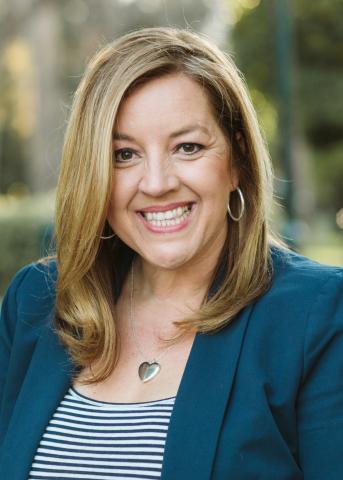
Sen. Angelique Ashby
Sponsored bills
This measure would acknowledge and celebrate 50 years of coastal protection and affirm the state's longstanding commitment to protecting its coastal waters, as specified.
This measure would request that the federal Bureau of Ocean Energy Management hold public hearings in California on the proposed 2026–2031 National Outer Continental Shelf Oil and Gas Leasing Program, prepare an environmental impact statement to accompany the program, and provide the public the opportunity to comment on a draft programmatic environmental impact statement for potential offshore oil and gas leasing in California. The measure would strongly and unequivocally oppose any new offshore drilling and declare unequivocal support for the current federal prohibition on new oil or gas drilling in federal waters offshore of the Pacific coast.
Maddy summaryThis Senate Resolution commemorates the 250th anniversary of the Declaration of Independence in 2026 and encourages Californians to participate in civic initiatives celebrating this milestone. It honors the founding principles of life, liberty, and the pursuit of happiness while acknowledging California's role in advancing American democracy. The resolution directs the Secretary of the Senate to distribute copies of the document for public distribution. It serves as a ceremonial acknowledgment of history rather than establishing new laws or policies.
Maddy summarySCR 84 designates May 2025 as "California Rail Month" through a symbolic recognition. It does not create new laws, allocate funding, or change existing policies. The bill directly affects the state legislature and public awareness efforts related to rail transportation. This is a purely ceremonial measure with no concrete policy changes or direct impact on residents or rail services.
Existing law authorizes a court to grant pretrial diversion to a defendant suffering from a mental disorder, on an accusatory pleading alleging the commission of a misdemeanor or felony offense, in order to allow the defendant to undergo mental health treatment. Existing law provides that a defendant is eligible for diversion if they have been diagnosed with certain mental disorders and the court finds that the mental disorder was a significant factor in the commission of the charged offense, unless there is clear and convincing evidence that the disorder was not a motivating, causal, or contributing factor to the defendant's involvement in the alleged offense. Existing law prohibits defendants charged with specified offenses, including murder, from being placed in this diversion program. This bill would require that the diagnosis or rediagnosis with a mental disorder be within 5 years before the alleged offense. Existing law makes a defendant suitable for this diversion program if, among other criteria, a qualified mental health expert opines that the defendant's symptoms of the mental disorder that caused, contributed to, or motivated the criminal behavior, would respond to mental health treatment and the defendant will not pose an unreasonable risk of danger to public safety if treated in the community, as specified. The bill would revise that standard and instead require the court to find that the defendant will not pose a substantial and undue risk to the physical safety of another person if treated in the community. The bill would require the mental health expert's opinion to include that the proposed mental health diversion plan is clinically appropriate to address the symptoms of the defendant's mental disorder, as specified. The bill would require the court to state the reasons for denial on the record.
Under existing law, there are programs providing assistance for, among other things, emergency housing, multifamily housing, farmworker housing, home ownership for very low and low-income households, and downpayment assistance for first-time home buyers. Existing law also authorizes the issuance of bonds in specified amounts pursuant to the State General Obligation Bond Law and requires that proceeds from the sale of these bonds be used to finance various existing housing programs, capital outlay related to infill development, brownfield cleanup that promotes infill development, and housing-related parks. Existing law, the Veterans and Affordable Housing Bond Act of 2018, authorized, the issuance of bonds in the amount of $4,000,000,000 to finance various existing housing programs, as well as infill infrastructure financing and affordable housing matching grant programs, as well as financing for a specified program for farm, home, and mobilehome purchase assistance for veterans, pursuant to the State General Obligation Bond Law. This bill would enact the Veterans and Affordable Housing Bond Act of 2026, which, if adopted, would authorize the issuance of bonds in the amount of $11,250,000,000, pursuant to the State General Obligation Bond Law. Of the proceeds from the sale of these bonds, $10,000,000,000 would be used to finance programs to fund affordable rental housing and home ownership programs, including, among others, the Multifamily Housing Program, the CalHome Program, and the Joe Serna, Jr. Farmworker Housing Grant Program, and $1,250,000,000 would be used to provide additional funding for the above-described program for farm, home, and mobilehome purchase assistance for veterans, as provided. This bill would provide for submission of the bond act to the voters at the November 3, 2026, statewide general election, in accordance with specified law. This bill would declare that it is to take effect immediately as an urgency statute.

This measure would declare that the Legislature honors the life and legacy of Justice Ruth Bader Ginsburg and proclaims March 15, 2026, as Justice Ruth Bader Ginsburg Day, a day of remembrance and education to ensure that all Californians always honor and remember a vibrant guardian of equality for all.
This measure would affirm the important role of small businesses and workplaces as vital pathways for addressing the mental health crisis, reducing stigma, promoting early intervention, and expanding culturally responsive care. The measure would recognize May 2026 as National Small Business Month in California and encourage the people of the State of California to support small businesses. The measure would also recognize the CalAsian Foundation and its members for their courage, innovation, and commitment to advancing mental health awareness, prevention, healing, and care across small business communities statewide.
This measure would declare May 20, 2026, as California Nonprofits Day in recognition of the importance of nonprofit organizations to the economy and well-being of this state.