

Existing law prescribes requirements for the disposal of surplus land by a local agency. Existing law defines "surplus land" for these purposes to mean land owned in fee simple by any local agency for which the local agency's governing body takes formal action in a regular public meeting declaring that the land is surplus and is not necessary for the agency's use. Existing law provides that an agency is not required to follow the requirements for the disposal of surplus land for "exempt surplus land," except as provided. Existing law defines "exempt surplus land" to include certain types of land, including surplus land that the local agency is exchanging for another property necessary for the agency's use. This bill would define "exempt surplus land" to include land that: (1) is being or will be developed for a health facility, as defined and specified; (2) is located at one of certain sites within the City of Sacramento; (3) is not identified in the sites inventory in the applicable housing element for lower income households; and (4) will be subject to a recorded deed restriction for a period of 55 years, as specified. The bill would provide that the owner of a health facility that fails to meet certain of these requirements is liable for a civil penalty, as specified. This bill would make legislative findings and declarations as to the necessity of a special statute for the City of Sacramento.
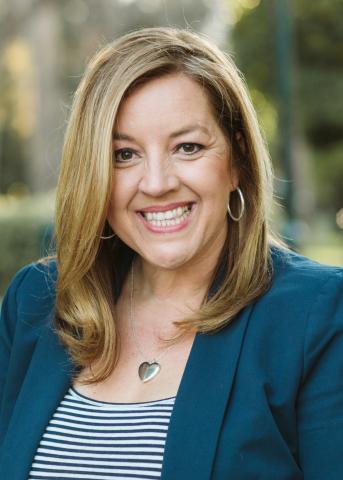
Sen. Angelique Ashby
Sponsored bills
Existing law authorizes a probation officer who, after investigation of an application for a petition or any other investigation the probation officer is authorized to make, concludes that a minor is within the jurisdiction of the juvenile court, or will probably soon be within that jurisdiction, to, in lieu of filing a petition to declare a minor a dependent child of the court or a ward of the court, or requesting that a petition be filed by the prosecuting attorney to declare a minor a ward of the court, as specified, with consent of the minor and the minor's parent or guardian, delineate specific programs of supervision for the minor, not to exceed 6 months, and attempt to adjust the situation that brings the minor within the jurisdiction of the court or creates the probability that the minor will soon be within that jurisdiction. In lieu of filing a petition, existing law also authorizes the probation officer, with the consent of the minor and the minor's parent or guardian, to provide or contract for services including sheltered-care facilities, crisis resolution homes, or counseling and educational centers. For certain offenses, this bill would additionally authorize a probation officer, with the consent of the minor and the minor's parent, to refer an offense to youth court, as specified.
Existing law authorizes a court to issue a restraining order to a person to prevent abuse, as specified, based on reasonable proof of a past act or acts of abuse. Existing law authorizes the order to be issued solely on the affidavit or testimony of the person requesting the restraining order. Existing law requires a manufacturer of a connected device to equip the device with a reasonable security feature or features that are appropriate to the nature and function of the device, appropriate to the information it may collect, contain, or transmit, and designed to protect the device and information contained in the device from unauthorized access, destruction, use, modification, or disclosure. This bill would, commencing January 1, 2026, require an account manager, as defined, to terminate or disable a covered device or account access to a perpetrator, as defined, commencing no later than 2 days after a device protection request is submitted to the account manager by a survivor of that perpetrator, and would specify the requirements for a survivor to submit a device protection request and the requirements that an account manager make the request available, subject to specified exceptions. By providing that a survivor may include a copy of a signed affidavit to submit a device protection request, and thus expanding the crime of perjury, this bill would impose a state-mandated local program. This bill would require the account manager to notify the survivor of specified information and require an account manager and any officer, director, employee, vendor, or agent thereof to treat any information submitted by a survivor as confidential and securely dispose of the information, as provided. This bill would authorize enforcement of these provisions by injunction or civil penalty in any court action by any person injured by a violation of those provisions, the Attorney General, a district attorney, county counsel, a city attorney or a city prosecutor, against an account manager or perpetrator, as provided. The bill would prohibit a waiver of these prohibitions and would declare that these provisions are severable. Existing law authorizes a court to issue an ex parte order for, among other things, disturbing the peace of the other party. Existing law provides that disturbing the peace of the other party may be committed directly or indirectly, including through the use of a third party, and by any method or through any means including, but not limited to, telephone, online accounts, text messages, internet-connected devices, or other electronic technologies. This bill would provide that, for purposes of those provisions, an internet-connected device includes a connected device as described in the bill. Existing law establishes various privacy requirements applicable to vehicle manufacturers, including limitations on the usage of images or video recordings from in-vehicle cameras in new motor vehicles equipped standard with one or more in-vehicle cameras. This bill would, among other things, require a vehicle manufacturer that offers a vehicle for sale, rent, or lease in the state that includes remote vehicle technology to do certain things, including ensuring that the remote vehicle technology can be immediately manually disabled by a driver of the vehicle while that driver is inside the vehicle. The bill would require a vehicle manufacturer to offer secure remote means via the internet for a survivor to submit a vehicle separation notice that meets specified requirements. This bill would require a survivor to submit a vehicle separation notice through the secure remote means within 7 days of the date on which the survivor used the method of manually disabling remote vehicle technology and would require the notice to include prescribed information. The California Constitution requires the state to reimburse local agencies and school districts for certain costs mandated by the state. Statutory provisions establish procedures for making that reimbursement. This bill would provide that no reimbursement is required by this act for a specified reason.
Existing law authorizes the State Water Resources Control Board, on and after January 1, 2024, to issue informational orders pertaining to water production, water use, and water conservation to an urban retail water supplier that does not meet its urban water use objective, as provided. Existing law authorizes the board, on and after January 1, 2025, to issue a written notice to an urban retail water supplier that does not meet its urban water use objective. Existing law authorizes the board, on and after January 1, 2026, to issue a conservation order to an urban retail water supplier that does not meet its urban water use objective. This bill would instead authorize the board to issue the informational orders on and after January 1, 2026, the written notice on and after January 1, 2027, and the conservation order on and after January 1, 2028. Existing law requires an urban retail water supplier to annually, by January 1, submit a report to the Department of Water Resources that includes, among other things, its calculated urban water use objective and its calculated actual urban water use, along with relevant supporting data, as provided. This bill would require an urban retail water supplier to submit one report to the department and the board annually based on the urban retail water supplier's water use conditions for the previous calendar or fiscal year, as provided. The bill would require that report to be due on or before January 1st and to include all water use calculations required of urban retail water suppliers for sustainable water use and demand reduction. The bill would authorize the department and board to update regulations adopted for urban water use objectives and water use reporting to address changes in statutory reporting requirements. The bill would also authorize the board to adopt an enforcement policy to guide its enforcement of regulations adopted for urban water use objectives and water use reporting, as provided. Existing law, the Administrative Procedure Act, sets forth the requirements for the adoption, publication, review, and implementation of regulations by state agencies. This bill would authorize the board to enact emergency regulations, as specified, in accordance with the provisions of the act.
(1) Existing law establishes various programs to provide assistance to homeless youth, including, among others, homeless youth emergency service pilot projects and the Runaway Youth and Families in Crisis Project. This bill, subject to an appropriation by the Legislature for this purpose, would require the State Department of Social Services to establish the California Success, Opportunity, and Academic Resilience (SOAR) Guaranteed Income Program. The program would award public school pupils who are in grade 12 and are homeless children or youths, as defined, a guaranteed income of $1,000 each month for 4 months from May 1, 2025, to August 1, 2025, inclusive, as provided. The bill would establish the California SOAR Guaranteed Income Fund as the initial depository of all moneys appropriated, donated, or otherwise received for the program, and upon appropriation by the Legislature, would provide moneys in the fund to counties that opt in to the program for distribution to eligible participants. (2) Existing federal law, the McKinney-Vento Homeless Assistance Act, provides grants to states to carry out activities relating to the education of homeless children and youths, as defined, including, among others, providing services and activities to improve the identification of homeless children and youths and to enable them to enroll in and succeed in school. Existing law requires local educational agency liaisons, as defined, to ensure that homeless children and youths are identified by school personnel through outreach and coordination activities, as specified. This bill would require, in counties participating in the California SOAR Guaranteed Income Program, local educational agency liaisons to provide all known eligible participants with program information and enrollment forms, as specified. (3) Existing law, beginning on or after January 1, 2015, in modified conformity with federal income tax law, allows an earned income tax credit, the California Earned Income Tax Credit, against personal income tax. The Personal Income Tax Law also allows, for each taxable year beginning on or after January 1, 2019, a young child tax credit and, for each taxable year beginning on or after January 1, 2022, a foster youth tax credit against the taxes imposed under that law. This bill, for the taxable years beginning on or after January 1, 2025, and before January 1, 2030, would exclude from gross income, for purposes of the personal income tax, any amount received as an award pursuant to the California SOAR Guaranteed Income Program. The bill, for the taxable years beginning on or after January 1, 2025, and before January 1, 2030, would additionally provide that the amount awarded is not earned income for purposes of eligibility for the California Earned Income Tax Credit, the young child tax credit, or the foster youth tax credit. (4) Existing law establishes various public social services programs to provide eligible recipients with certain benefits, including, but not limited to, cash assistance under the California Work Opportunity and Responsibility to Kids (CalWORKs) program, nutrition assistance under the CalFresh program, and health care services under the Medi-Cal program. Under existing law, those programs, among others, are in part federally funded and governed by federal eligibility criteria, including specified income or resource limits. This bill would prohibit any award received by a student through the California SOAR Guaranteed Income Program from being considered income or resources for purposes of determining the student's, or any member of their household's, eligibility for benefits or assistance, or the amount or extent of benefits or assistance, under any state or local means-tested program, including certain public social services programs. The bill would condition implementation of this provision on not conflicting with federal law, or receipt of any necessary federal waivers or exemptions and the availability of any applicable federal financial participation, as specified. This bill would require the State Department of Social Services, in consultation with stakeholders and the Legislature, to identify the CalWORKs, CalFresh, and Medi-Cal programs and any other state program that implements a federal means-tested program and that would require an exemption or waiver. The bill would require a state department or agency that administers a program identified by the State Department of Social Services or by the department or agency itself, to approve an exemption or waiver or to seek one from the federal government. If the state fails to receive the necessary federal exemption or waiver, the bill would authorize the State Department of Social Services to consider alternatives to prevent adverse consequences for California SOAR Guaranteed Income Program participants. (5) This bill would repeal these provisions on January 1, 2028, except as provided. (6) Existing law requires any bill authorizing a new tax expenditure to contain, among other things, specific goals, purposes, and objectives that the tax expenditure will achieve, detailed performance indicators, and data collection requirements. This bill would include the additional information required for a bill authorizing a new tax expenditure.
Maddy summaryThis Senate Resolution recognizes Dr. Claudia Sheinbaum as the first female president of Mexico, highlighting her historic election and background in science and public service. The measure celebrates her achievements, including her work on climate change and transportation, and notes her status as the first female president elected in North America. It expresses the California Senate's support for her leadership and looks forward to strengthening ties between California and Mexico. The resolution is a formal acknowledgment rather than a law that changes policy or imposes new requirements.
Existing law requires the adopted course of study for grades 1 to 6, inclusive, and the adopted course of study for grades 7 to 12, inclusive, to include certain areas of study, including, among others, social sciences. Existing law requires instruction in social sciences to provide a foundation for understanding, among other things, the history, resources, development, and government of California and the United States of America. This bill, with respect to both of the above-referenced adopted courses of study, would explicitly require instruction in social sciences to also include civic engagement experiences with governmental institutions and instruction in principles of democracy and the State and Federal Constitutions. To the extent that this bill would create new duties for local educational agencies or local officials, it would constitute a state-mandated local program. The California Constitution requires the state to reimburse local agencies and school districts for certain costs mandated by the state. Statutory provisions establish procedures for making that reimbursement. This bill would provide that, if the Commission on State Mandates determines that the bill contains costs mandated by the state, reimbursement for those costs shall be made pursuant to the statutory provisions noted above.
Maddy summarySenate Resolution 114 is a non-binding tribute from the California State Senate honoring President Joseph Biden for his extensive public service career. The resolution details his background, legislative achievements, and leadership roles as a senator, vice president, and president, specifically highlighting his work on infrastructure, climate action, and pandemic response. It concludes by formally thanking the President for stepping down to allow new leaders to take office and directs the Senate Secretary to distribute copies of the resolution.
Existing law provides for the licensure and regulation of health facilities, including general acute care hospitals, administered by the State Department of Public Health. A violation of these provisions is a misdemeanor. Existing law authorizes the department to approve, as prescribed, a general acute care hospital to offer specified special services, including, but not limited to, cardiac catheterization laboratory services, in addition to the basic services offered under the facility's license. Existing law authorizes the expansion of a cardiac catheterization laboratory service if specified requirements are met, including that the department, at a minimum, adopt standards and regulations that specify that only diagnostic services, and what diagnostic services, may be offered by a general acute care hospital or a multispecialty clinic. This bill would remove the requirement that the department adopt standards and regulations that specify that only diagnostic services may be offered and instead require the department to adopt standards and regulations that specify the type of servicing, including diagnostic servicing, that may be offered by a general acute care hospital or a multispecialty clinic. Existing law creates the Elective Percutaneous Coronary Intervention (PCI) Program in the State Department of Public Health to certify general acute care hospitals that are licensed to provide urgent and emergent cardiac catheterization laboratory service in California, and that meet prescribed, additional criteria, to perform scheduled, elective PCI. This bill would remove the specification that the described certified general acute care hospitals are licensed to provide urgent and emergent cardiac catheterization laboratory service, and instead license general acute care hospitals that do not offer cardiac surgery services but are licensed to provide cardiac catheterization service. Because this bill would expand the definition of a crime, it would impose a state-mandated local program. The California Constitution requires the state to reimburse local agencies and school districts for certain costs mandated by the state. Statutory provisions establish procedures for making that reimbursement. This bill would provide that no reimbursement is required by this act for a specified reason.
(1) The Sacramento Regional Transit District Act provides for the formation of the Sacramento Regional Transit District, with specified powers and duties related to providing public transit services. The act authorizes the district to comprise the Cities of Citrus Heights, Davis, Elk Grove, Folsom, Rancho Cordova, Roseville, Sacramento, West Sacramento, and Woodland, the territory of the County of Sacramento that is the same area as the urban service area of the county, and other specified portions of the County of Yolo, provided those cities and counties have agreed to annexation by the district, as specified. This bill would authorize the district to also comprise the Cities of Galt and Isleton, and the unincorporated portions of the County of Sacramento where the county has declared a need for the district to operate, provided the cities and county agree to annexation, as specified. (2) The act establishes a board of directors and vests the board with government of the district. The act requires the composition of the first board of directors to consist of 4 members appointed by the City Council of the City of Sacramento and 3 members appointed by the Board of Supervisors of the County of Sacramento. The act requires the number of members of the board of directors to be increased, as provided. This bill would reduce the number of members that may be appointed to the board of directors by the City Council of the City of Sacramento from 4 to 3, would delete obsolete provisions referring to the first board of directors, and would make conforming changes.