

(1) Existing law establishes the Bureau of Security and Investigative Services (bureau) within the Department of Consumer Affairs (department) for purposes of regulating locksmiths, repossessors, private investigators, proprietary security services, private security services, and alarm company operators and alarm agents, under various acts. Under existing law, the powers and duties of the bureau under each of those acts are subject to review by the appropriate policy committees of the Legislature. Existing law requires the review to be performed as if the act were scheduled to be repealed on January 1, 2025. This bill would extend that date to January 1, 2029. (2) Existing law, the Collateral Recovery Act, imposes duties related to the licensure and regulation of repossession agencies on the bureau under the supervision and control of the Director of Consumer Affairs (director) . A violation of the Collateral Recovery Act is a crime. Existing law requires a licensee under the Collateral Recovery Act to serve a debtor with a specified notice of seizure after the licensee recovers collateral. Existing law provides the repossession agency with the option of giving the notice by personal service or by regular mail addressed to the last known address of the debtor. This bill would revise the option to mail the notice by requiring the mail to be addressed, instead, to the current address of the debtor, and would make that option contingent on the current address being known. By imposing new requirements on repossession agencies under the Collateral Recovery Act, the violation of which is a crime, the bill would impose a state-mandated local program. Existing law authorizes various boards under the department to establish a system to issue citations that may include an order of abatement or to pay an administrative fine if a licensee is in violation of the applicable licensing act, as specified. Existing law provides an exception to this authority with respect to persons regulated under the Collateral Recovery Act. This bill would delete that exception, thereby authorizing the bureau to establish a system to issue citations to licensees under the Collateral Recovery Act for violations of that act. (3) Existing law, the Private Investigator Act (PIA) , requires the director to administer and enforce its provisions relating to the licensure and regulation of private investigators, and imposes certain duties on the bureau in this regard. Existing law makes a violation of the PIA, as specified, a crime. This bill, beginning July 1, 2025, would require an agreement for the provision of a service regulated by the PIA to be in writing and to contain specified information, including a description of the scope of the investigation or services to be provided. The bill would prohibit the performance of those services and the accrual of charges before written authorization to proceed is obtained from the client. The bill would require a licensee to maintain a legible copy of the signed agreement and investigative findings for a minimum of 2 years and to make those records available for inspection by the bureau upon demand. By imposing new requirements under the PIA, the violation of which is a crime, this bill would impose a state-mandated local program. The PIA authorizes the bureau to issue a private investigator license to a limited liability company and imposes various requirements on a limited liability company as a condition for licensure, including maintaining liability insurance, as specified. Existing law repeals these provisions on January 1, 2025. This bill would extend that date to January 1, 2030. (4) Existing law, the Proprietary Security Services Act, prohibits a person from engaging in the business of a proprietary private security officer or a proprietary private security employer unless registered with the department under that act. The Proprietary Security Services Act makes a violation of the prohibition on engaging in unregistered business as a private security officer an infraction, as specified. Existing law, the Private Security Services Act (PSSA) , prohibits a person from engaging in the business of private security services, as specified, unless the person is licensed under the PSSA by the bureau. The PSSA makes a violation of that prohibition an infraction, as specified. Other existing law lists specified provisions relating to the registration, licensure, certification, or authorization required to engage in certain businesses and professions, and makes a violation of any of those listed provisions punishable as infractions, as specified. This bill would revise that other existing law by adding to that list the above-described provisions of the Proprietary Security Services Act and the PSSA prohibiting unlicensed or unregistered activity. By making the unregistered engagement in the business of a proprietary private security employer a crime, this bill would impose a state-mandated local program. (5) The Proprietary Security Services Act and the PSSA except from their provisions certain entities, including a charitable philanthropic society or association and a person engaged solely in the business of securing information about persons or property from public records, as specified. This bill would delete several of those entities included in those exceptions, including those specified above. The bill would additionally except from the Proprietary Security Services Act a federally recognized tribe, as defined, that has one or more employees who provide unarmed security services only for the federally recognized tribe, as specified. (6) The PSSA requires an application for licensure to be verified and prescribes additional requirements if the applicant is, among others, an individual, a qualified manager, a partner of a partnership, or an officer of a corporation as specified. Existing law limits the investigations of a person licensed as a private patrol operator to those that are incidental to what they have been hired or engaged to protect, guard, or watch, as provided. Under existing law, the failure of a person licensed to do business as a corporation in this state to be registered and in good standing with the Secretary of State and the Franchise Tax Board after notice from the bureau, as specified, results in the automatic suspension of the licensee. This bill would require the bureau to license a federally recognized tribe that applies for licensure under the PSSA, as specified. The bill would prescribe additional requirements for licensure for the tribe, including that the application state the names and business addresses of those individuals authorized to submit the application on behalf of the tribe, as specified. The bill would make the above-described limitation on private patrol operator investigations not applicable to any federally recognized tribe performing investigative functions, as specified, consistent with federal or tribal law. This bill would also exempt a tribe or a tribe's business that is chartered under tribal or federal law from the above-described requirement to be registered and in good standing with the Secretary of State and the Franchise Tax Board. The PSSA requires an institution, firm, or individual to complete an application for certification, as specified, to receive approval from the bureau to offer certain training courses in the carrying and usage of firearms or batons. This bill would apply that requirement to a federally recognized tribe. The PSSA requires the bureau to issue a firearm permit or a baton permit when certain conditions are satisfied. Among the conditions for the firearm permit is that a bureau-certified firearms training instructor has certified that the applicant has successfully completed a written examination prepared by the bureau and training course in the carrying and use of firearms approved by the bureau. Among the conditions for the baton permit is that the applicant has completed a specified course of training in the carrying and use of a baton. This bill would require the above-specified conditions to be met within 6 months before submitting the application to the bureau. The PSSA requires a licensee, qualified manager of a licensee, or security guard, before carrying a firearm, to complete a course of training in the carrying and use of firearms and to receive a firearms qualification card or be otherwise qualified to carry a firearm, as specified. The PSSA exempts a peace officer or federal qualified law enforcement officer, as those terms are defined, from the course of training requirement if the officer has completed a course of study in the use of firearms. The PSSA requires an applicant for a renewed firearms qualification card to, among other things, requalify on the range and pass a specified written examination. Under the PSSA, a peace officer or federal qualified law enforcement officer is exempt from the above-specified requalification requirements if the officer is authorized to carry a firearm in the course of the officer's duties and has completed requalification training. This bill would limit the exemption from the course of study in the use of firearms requirement by requiring the officer to have completed the course within the 24 months preceding the date of application. The bill would also limit the exemption from the requalification training requirement by requiring the officer to have completed the training within the 12 months preceding the month of the permit's expiration. (7) Existing law, the Alarm Company Act, imposes additional requirements for an alarm company operator license if the applicant is a limited liability company, including requiring the application to be subscribed, verified, and signed by a duly authorized member of the applicant under penalty of perjury. Existing law repeals those provisions on January 1, 2025. This bill would extend the operation of those provisions until January 1, 2030. Under the Alarm Company Act, the director is required to issue a firearms permit when certain conditions exist. Existing law requires a firearm permit to be automatically revoked if the Department of Justice notifies the bureau that the holder of the permit is prohibited from possessing, receiving, or purchasing a firearm, as specified. Existing law requires the bureau to seek an emergency order, as prescribed, against the holder of the firearms permit if the bureau determines that the holder presents an undue hazard to public safety, as specified. This bill would, instead, authorize the bureau to automatically revoke a firearms permit or seek an emergency order, as described above. (8) This bill would incorporate additional changes to Section 146 of the Business and Professions Code proposed by AB 2148 to be operative only if this bill and AB 2148 are enacted and this bill is enacted last. (9) The California Constitution requires the state to reimburse local agencies and school districts for certain costs mandated by the state. Statutory provisions establish procedures for making that reimbursement. This bill would provide that no reimbursement is required by this act for a specified reason.
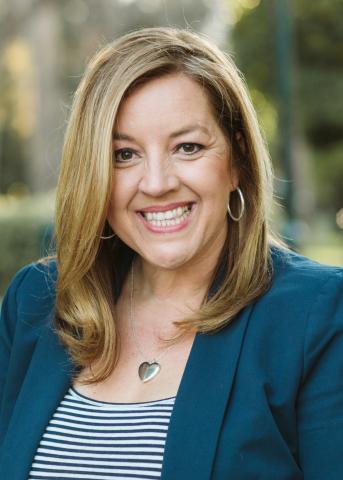
Sen. Angelique Ashby
Sponsored bills
Existing law, the Architects Practice Act, establishes the California Architects Board in the Department of Consumer Affairs until January 1, 2025, for the licensure and regulation of persons engaged in the practice of architecture, and makes specified violations of those provisions a crime. The board is also responsible for the licensure and regulation of landscape architects. This bill would extend the operation of the California Architects Board until January 1, 2029, and make related conforming changes. By extending the operation of these provisions, the bill would impose a state-mandated local program. The bill would also make nonsubstantive changes to various provisions of existing law relating to licensees of the board. Existing law requires, before taking the examination for a license to practice architecture, a person to file their application for examination with the board and pay a specified application fee. This bill would authorize the board to extend a candidate's application or examination process beyond the 5-year period, as specified, if a state of emergency is proclaimed by the Governor. The bill would require any extension granted to be an amount of time sufficient to supplement the time lost due to the state of emergency. Existing law relating to architecture and landscape architecture requires each licensee to file their current mailing address and the current name and address of the entity through which they provide architectural services with the board and notify the board of any change, as specified. This bill would require each licensee to also file with the board their current email address. The bill would require the board to post the above-described information obtained from licensees to its internet website, except for email addresses. The bill would also require each applicant for examination or licensure as an architect or a landscape architect who has a valid email address, as defined, to report to the board that email address at the time of application. The bill would require each licensee who has a valid email address to report to the board or verify that email address at the time of renewal. The bill would require each applicant or licensee to notify the board within 30 days of any change to their email address on file with the board. Under the bill, email addresses provided to the board pursuant to the bill would not be considered a public record and the bill would prohibit the public disclosure of those email addresses pursuant to specified law, except as provided. The bill would provide that information sent from an email account of the board to a valid email address provided by an applicant or licensee is presumed to have been delivered to the email address provided. Existing law prescribes the time in which an issued or renewed license expires. Existing law requires the board to give written notice by registered mail 90 days in advance of the expiration of the 5th year that a renewal fee has not been paid. Existing law authorizes an architecture or landscape architecture license that has expired to be renewed at any time within 5 years after its expiration on filing of an application for renewal on a form prescribed by the board, and payment of all accrued and unpaid renewal fees, except as otherwise provided. Existing law provides that a license which is not renewed within 5 years after its expiration may not be renewed, restored, reissued, or reinstated thereafter. Existing law applicable to landscape architects authorizes the holder of the expired license to apply for and obtain a new license if no fact, circumstance, or condition exists which, if the license were issued, would justify its revocation or suspension, the holder of the expired license pays the fees required of new applicants, and the holder of the expired license takes and passes the current California Supplemental Examination. This bill would prescribe the expiration of an issued or renewed license to be 2 years from the last day of the month in which the license was issued or 2 years from the date on which the renewed license last expired. The bill would remove the above-described requirement that the board give written notice by registered mail. The bill would instead authorize the holder of the expired landscape architecture license to apply for and obtain a new license if they pay all of the fees and meet all of the requirements for obtaining the original license. Existing law imposes various fees on licensees and applicants, which are deposited in the California Architects Board Fund, a continuously appropriated fund. Under existing law, these fees are prohibited from exceeding certain amounts, including, among others, that the fee for any section of the examination administered by the board is prohibited from exceeding $100. This bill would instead prescribe various amounts of dollars that fees are required to be and would authorize the board to adopt regulations to set the fee at a higher amount, up to a prescribed maximum. The bill would establish a fee for a license certification and would prohibit the fee from exceeding $40. By increasing moneys deposited into a continuously appropriated fund, this bill would make an appropriation. Existing constitutional provisions require that a statute that limits the right of access to the meetings of public bodies or the writings of public officials and agencies be adopted with findings demonstrating the interest protected by the limitation and the need for protecting that interest. This bill would make legislative findings to that effect. The California Constitution requires the state to reimburse local agencies and school districts for certain costs mandated by the state. Statutory provisions establish procedures for making that reimbursement. This bill would provide that no reimbursement is required by this act for a specified reason.
Existing law, the Dental Practice Act, establishes the Dental Board of California to license and regulate the practice of dentistry, and establishes requirements for meetings of the board, admission to, and practice of, dentistry, licensure and regulation of dental auxiliaries, the use of anesthesia and sedation, and the use of fictitious business names by dental corporations. Existing law requires that the board consist of 8 practicing dentists, a registered dental hygienist, a registered dental assistant, and 5 public members. Existing law also makes certain violations of the act a crime, including engaging in the practice of dentistry without causing to be displayed in a conspicuous place in their office the name of each person employed there in the practice of dentistry. This bill, among other changes to the act, would remove the requirement that the board include a registered dental hygienist and, instead, require the inclusion of 2 registered dental assistants. The bill would delete a provision requiring the board to meet regularly once each year in the San Francisco Bay Area and once each year in southern California. The bill would revise application, examination, and continuing education requirements and requirements for the application and issuance of an elective facial cosmetic surgery permit. Existing law governs the use of deep sedation, general anesthesia, moderate sedation, oral conscious sedation for adults, and pediatric minimal sedation. This bill would revise and recast the requirements for obtaining authorization for, and the administration of, general anesthesia and sedation, including requirements relating to the physical presence of a dentist administering or ordering general anesthesia or deep sedation. The bill would make certain patient records submitted to the board confidential and not subject to disclosure pursuant to the California Public Records Act. The bill would provide for the expiration of a pediatric endorsement, and would revise requirements for the administration of general anesthesia by a physician and surgeon. This bill would make it a crime, punishable as a misdemeanor, for a person to engage in the practice of dentistry without causing to be displayed in an area that is likely to be seen by all patients who use the facility, the original or copy of the current license, permit, or registration of each person employed at the facility to practice dentistry. The bill would authorize the board to post an administrative citation issued for a violation of certain provisions on the board's internet website. The bill would also revise requirements and conditions for obtaining a permit for, and practicing under, a fictitious name. The bill would revise provisions affecting the cancellation of expired licenses, and would establish a fee for a pediatric endorsement for a general anesthesia permit or moderate sedation permit of up to $1,000, and a renewal fee for a pediatric endorsement not to exceed $600, which would be deposited into the State Dentistry Fund. Existing law provides for the licensure and regulation of dental auxiliaries, including registered dental assistants, registered dental assistants in extended functions, orthodontist assistants, and dental sedation assistants, and sets forth duties and functions that those dental auxiliaries are authorized to perform. This bill would, among other changes, revise requirements and conditions of supervision of dental assistants by employers and licensed dentists, training and education requirements for dental assistants, and the functions and duties a dental assistant is authorized to perform. The bill would establish requirements for courses in radiation safety and infection control for certain unlicensed dental assistants. Existing law establishes requirements for obtaining an orthodontist assistant permit or a dental sedation assistant permit from the board, including licensure as a registered dental assistant, and sets forth the duties and functions that a person holding an orthodontic assistant permit or a dental sedation assistant permit may perform. The bill would revise and recast the requirements to obtain an orthodontic assistant permit or a dental sedation assistant permit, and would revise the duties and functions that a person holding an orthodontic assistant permit or dental sedation assistant permit is authorized to perform. The bill would revise requirements for licensure and practice as a registered dental assistant and a registered dental assistant in extended functions, and would revise specified requirements for applying for and receiving a license as a registered dental hygienist, registered dental hygienist in alternative practice, or registered dental hygienist in extended functions. The bill would revise the requirements on a provider of specified educational programs or courses that require board approval, and would authorize the board to issue an administrative citation if the board has probable cause to believe that a person, company, or association is advertising with respect to offering or provision of an educational program or course that requires board approval without being properly approved by the board. The bill would make other related and conforming changes. By expanding the scope of a crime under the act, the bill would impose a state-mandated local program. Existing constitutional provisions require that a statute that limits the right of access to the meetings of public bodies or the writings of public officials and agencies be adopted with findings demonstrating the interest protected by the limitation and the need for protecting that interest. This bill would make legislative findings to that effect. The California Constitution requires the state to reimburse local agencies and school districts for certain costs mandated by the state. Statutory provisions establish procedures for making that reimbursement. This bill would provide that no reimbursement is required by this act for a specified reason.
(1) Existing law establishes the Department of Consumer Affairs, which is composed of boards that license and regulate various professions. Existing law imposes certain requirements on those boards to expedite licensure processes, waive specified licensing fees, or issue temporary licenses, depending on the criteria that the applicant satisfies. One of those provisions requires, among other things, the applicant to be, or to have been, an active duty member of the Armed Forces of the United States, as specified. Another provision requires that the applicant hold an out-of-state license in that profession or vocation and be married to, or in a domestic partnership or other legal union with, an active duty member of the Armed Forces, as specified. Under a third provision's criteria, the applicant must have been admitted to the United States as a refugee, have been granted asylum, or have a special immigrant visa, as specified. This bill would specify that the term "applicant," for purposes of the above-described provisions, refers to an applicant for an individual license and does not refer to applicants for business or entity licenses. The bill would prohibit a board from charging a fee for the issuance of a temporary license for an applicant who holds an out-of-state license in that profession or vocation and who is married to, or in a domestic partnership or other legal union with, an active duty member of the Armed Forces, as specified. The bill would make conforming changes. (2) Existing law, the Dental Practice Act, establishes the Dental Hygiene Board of California to license and regulate dental hygienists. Existing law requires the dental hygiene board to submit recommendations regarding dental hygiene scope of practice issues to the Dental Board of California for approval, modification, or rejection, and authorizes the dental hygiene board to request the dental board to provide its reasons in writing for rejecting or significantly modifying the recommendation. Existing law authorizes a registered dental hygienist in alternative practice to perform specified duties in dental health professional shortage areas, as certified by the Department of Health Care Access and Information, in accordance with specified guidelines. This bill would delete the provision requiring the Dental Board of California to approve, modify, or reject, and, if requested by the dental hygiene board, to provide reasons for rejecting or significantly modifying, the above-described recommendations submitted by the dental hygiene board. The bill would authorize a registered dental hygienist in alternative practice with an existing practice in a dental health professional shortage area to continue to provide dental hygiene services if certification by the department is removed and the registered dental hygienist in alternative practice annually provides specified information to certain patients. (3) Existing law, the Medical Practice Act, establishes the Medical Board of California for the licensure and regulation of physicians and surgeons. Existing law sets the expiration for a physician's and surgeon's license at 12 midnight on the last day of the month in which the license was issued during the second year of a two-year term commencing from the date of issuance. Existing law requires a physician and surgeon issued a license on or after January 1, 2022, at the time of initial license renewal, to show evidence that the licensee has received at least 36 months of board-approved postgraduate training. Existing law authorizes the board to grant an additional 60 days to the expiration date of that initial license. This bill would instead require an initial physician's and surgeon's license issued on or after January 1, 2025, to be for a period of 26 months. The bill would also authorize a physician's and surgeon's certificate issued on or after January 1, 2022, to be renewed for the first time if the board receives evidence that the licensee is enrolled in a California board-approved postgraduate training program at the time the license expires, and would require evidence at the time of their second renewal that the licensee has received credit for at least 36 months of board-approved postgraduate training. The bill would require the relevant postgraduate training program director to report to the board within 30 days if a licensee who renews their license for the first time pursuant to these provisions is disenrolled from their training program, as specified. Existing law makes it a misdemeanor for a person who is not licensed as a physician and surgeon under the act, except as specified, to use certain words, letters, and phrases or any other terms that imply that the person is authorized to practice medicine as a physician and surgeon. This bill would add the initials "D.O." to the list of prohibited terms under that provision. The bill would also prohibit a person from using the words "doctor" or "physician," the letters or prefix "Dr.," the initials "M.D." or "D.O.," or any other terms or letters indicating or implying that the person is a physician and surgeon, physician, surgeon, or practitioner in a health care setting that would lead a reasonable patient to determine that the person is a licensed "M.D." or "D.O." By expanding the scope of a crime, this bill would impose a state-mandated local program. The bill would also authorize certain persons to use the words "doctor" or "physician," the letters or prefix "Dr.," or the initials "M.D." or "D.O." (4) Existing law, the Nursing Practice Act, provides for the licensure and certification of nurse practitioners by the Board of Registered Nursing. Existing law requires the Office of Professional Examination Services in the Department of Consumer Affairs, or an equivalent organization, to perform an occupational analysis of nurse practitioners performing specified functions, and requires the board and the office to assess the alignment of competencies tested in the national nurse practitioner certification examination with the occupational analysis. This bill would make the provision requiring the assessment of the alignment of competencies inapplicable to a national nurse practitioner certification examination discontinued before January 1, 2017. (5) Existing law establishes the Nurse Practitioner Advisory Committee to advise and give recommendations to the board on matters relating to nurse practitioners. Existing law requires the board, by regulation, to define minimum standards for transition to practice, as defined, and provides that clinical experience may include experience obtained before January 1, 2021, if the experience meets requirements established by the board. This bill would specify that, for purposes of transition to practice, clinical experience shall not be limited to experience in a single category in which a nurse practitioner may practice, as specified, and would prohibit experience obtained before a person is certified as a nurse practitioner from being considered clinical experience for purposes of transition to practice requirements. Existing law authorizes a nurse practitioner to perform specified functions without standardized procedures if the nurse practitioner satisfies certain requirements, including having completed a transition to practice in California of 3 full-time equivalent years of practice, or 4,600 hours. This bill would deem a nurse practitioner who has been practicing as a nurse practitioner in direct patient care for 3 full-time equivalent years or 4,600 hours within the last 5 years, as indicated on the application, to have satisfied this requirement. The bill would require proof of completion of one transition to practice to be provided to the board as an attestation from either a licensed physician and surgeon or a nurse practitioner. The bill would prohibit the board from requiring a nurse practitioner practicing under those provisions to tell a patient that the patient has a right to see a physician and surgeon, and would delete a provision requiring the nurse practitioner to use a certain phrase to inform Spanish language speakers that the nurse practitioner is not a physician and surgeon. (6) Existing law, the Pharmacy Law, establishes the California State Board of Pharmacy to license and regulate the practice of pharmacy. Existing law authorizes a pharmacist to provide consultation to a patient about, among other things, drug therapy, disease management, and disease prevention. Existing law, until January 1, 2025, authorizes a pharmacist to furnish COVID-19 oral therapeutics, as defined, following a positive test for SARS-CoV-2, the virus that causes COVID-19, in accordance with specified requirements. This bill would require a pharmacist who dispenses or furnishes a dangerous drug pursuant to a veterinary prescription to include, as part of the consultation, the option for a representative of an animal patient to also receive drug documentation specifically designed for veterinary drugs. The bill would extend the operation of the provisions authorizing a pharmacist to furnish COVID-19 oral therapeutics until January 1, 2026. (7) Existing law, the Respiratory Care Practice Act, establishes the Respiratory Care Board of California to license and regulate the practice of respiratory care. Existing law authorizes a licensed vocational nurse who is employed by a home health agency to perform respiratory tasks and services identified by the board if, on or before January 1, 2025, the licensed vocational nurse has completed patient-specific training satisfactory to their employer, and, on and after January 1, 2025, the licensed vocational nurse has completed that training in accordance with guidelines promulgated by the Respiratory Care Board of California, in collaboration with the Board of Vocational Nursing and Psychiatric Technicians of the State of California. This bill would extend those dates to January 1, 2028. The bill, on and after January 1, 2028, would also authorize a licensed vocational nurse to perform respiratory care services identified by the board while practicing in certain settings identified in the bill if the licensed vocational nurse has completed patient-specific training satisfactory to their employer and holds a current and valid certification of competency for each respiratory task to be performed, as specified. (8) Existing law, the Massage Therapy Act, until January 1, 2027, provides for the voluntary certification of massage therapists by the California Massage Therapy Council, a private nonprofit entity. The council is governed by a board of directors composed of 13 members, of which 10 members are appointed by various organizations and associations, as specified. The appointing entities are not required to exercise the right to appoint. The 10 appointed members, at a duly held board meeting in accordance with the board's bylaws, are required to appoint 3 additional members with specified qualifications. Board member terms are 4 years. This bill would modify those terms to be for 4 years and until the appointment and qualification of a board member's successor or until one year from the expiration of the term for which the member was appointed, whichever occurs first. A board member who has served 2 terms would not be eligible for reappointment to the board regardless of the appointing authority. The bill would require a board member who, as of January 1, 2025, has served on the board for 8 out of the preceding 10 years, regardless of the appointing authority, to vacate their appointment no later than July 1, 2025. Under the bill, a decision to change the appointing authority of any member appointed to the board would not be effective unless the current member has completed their term under these provisions or the appointment is vacant. The bill would provide that a board member may be removed only by their appointing authority under prescribed conditions. This bill would move the repeal date of the act to January 1, 2026. (9) Existing law, the Barbering and Cosmetology Act, establishes the State Board of Barbering and Cosmetology to license and regulate barbering and cosmetology, and establishes a hairstylist application and examination fee of $50 or a fee determined by the board, not to exceed the reasonable cost of developing, purchasing, grading, and administering the examination. This bill would instead require the hairstylist application and examination fee to be the actual cost to the board for developing, purchasing, grading, and administering the examination, and would establish that an initial licensee fee for a hairstylist shall be not more than $50. (10) Existing law establishes the Structural Pest Control Board in the Department of Consumer Affairs to license and regulate structural pest control operators, structural pest control field representatives, and structural pest control applicators. Existing law requires those licensees, as a condition of license renewal, to submit proof to the board that they have informed themselves of the developments in the field of pest control by completing continuing education courses or equivalent activity approved by the board, or taking and completing an examination given by the board, as specified. This bill would delete the authorization for a licenseholder to take and complete an examination given by the board to satisfy that requirement. (11) Existing law, the Automotive Repair Act, establishes the Bureau of Automotive Repair under the supervision and control of the Director of Consumer Affairs for the registration and regulation of automotive repair dealers. Existing law defines terms for purposes of the act, including defining "automotive repair dealer" to mean a person who, for compensation, engages in the business of repairing or diagnosing malfunctions of motor vehicles, or engages in the business of collecting compensation for automotive repair services that are referred or sublet to someone other than the dealer or their employees. The act further defines "person" to include a firm, partnership, association, limited liability company, or corporation. A violation of the act is a crime. This bill would require the bureau to license a federally recognized tribe, as defined, that applies for licensure and is otherwise compliant with the act for the purpose of engaging in a business regulated by the act. The bill would expand the term "person" to include a participating tribe and would further define "participating tribe" to mean a federally recognized tribe that formally applies for licensure from the bureau pursuant to the bill. The bill would exempt a participating tribe from any requirement to register with the Secretary of State, maintain good standing with the Secretary of State, provide a corporate number issued by the Secretary of State, or any other associated requirement. (12) Existing law, the Household Movers Act, provides for the licensure and regulation of household movers by the Division of Household Movers within the Bureau of Household Goods and Services. The act prohibits a household mover from engaging in the business of specified transportation of used household goods and personal effects by motor vehicle in the state without a permit issued by the bureau. The act also prohibits a household mover from engaging in the business of the interstate transportation of those items into or out of this state without a valid operating authority issued by the Federal Motor Carrier Safety Administration. The act prohibits the issuance of a permit unless the applicant establishes their knowledge and ability to engage in business as a household mover by examination. The act requires a permit applicant to meet certain residence requirements, as specified. This bill would exempt an applicant whose principal place of business is not in this state from the residency requirements but would require that the applicant file with the bureau a designation of persons upon whom court or agency process may be served in this state made pursuant to specified federal regulations. The bill would exempt an applicant from examination if they only conduct interstate household moves, but would require the applicant to file an affidavit with the bureau stating it shall not conduct any intrastate household moves in this state. The bill would require the bureau to identify household movers that are authorized to conduct intrastate and interstate moves in the state on its internet website. (13) The California Constitution requires the state to reimburse local agencies and school districts for certain costs mandated by the state. Statutory provisions establish procedures for making that reimbursement. This bill would provide that no reimbursement is required by this act for a specified reason.
Existing law, the Boxing Act, also known as the State Athletic Commission Act, the violation of which is a misdemeanor, grants the State Athletic Commission jurisdiction over all professional and amateur boxing, professional and amateur kickboxing, all forms and combinations of forms of full contact martial arts contests, including mixed martial arts, and matches or exhibitions conducted, held, or given within this state. Existing law prescribes the composition of the commission and requires the commission to appoint an executive officer. Existing law authorizes the commission to employ other personnel for the administration of the act, as specified. Existing law repeals these provisions establishing the commission, requiring it to appoint an executive officer, and authorizing it to employ other personnel on January 1, 2025. This bill would extend that repeal date to January 1, 2029. Existing law establishes the Advisory Committee on Medical and Safety Standards within the commission and requires the committee to consist of 6 licensed physicians and surgeons appointed by the commission. This bill would require the committee to include at least one licensed physician and surgeon certified in neurology by a specialty board that is a member board of the American Board of Medical Specialties. Existing law prohibits a person from engaging in the promotion of, or participating in, a boxing or martial arts contest, match, or exhibition without a license, and requires the commission to prescribe standards as necessary for the licensure of those persons, as specified. Existing law requires an applicant for a license as a professional athlete or contestant, or for renewal of a license, to be examined by a licensed physician and surgeon, as specified. Existing regulations generally require an applicant for a license or renewal to complete various medical examinations, including specified blood tests. This bill would require the commission to establish a review and approval process for applicants or licensees who test positive for hepatitis C, as specified. The bill would preclude the applicant or licensee from being prohibited from competing on the basis of testing positive for hepatitis C if they have been approved by the commission under that review and approval process. Existing law requires a promoter to have a licensed physician approved by the commission in attendance at every contest, as specified. Existing regulations generally require the continued presence of at least 2 commission-appointed ringside physicians at all matches and an onsite ambulance staffed by at least one paramedic, as specified. This bill would require the onsite ambulance to transport to a trauma center without delay a professional or amateur fighter who requires immediate medical care as ordered by a ringside physician. Existing law requires the commission to recognize and enforce contracts between boxers or martial arts fighters and managers and between boxers or martial arts fighters and licensed clubs, as specified. Existing regulations require all contestants to be paid in full according to their contracts and prohibits the contracted purse amount paid to a boxer from being less than $100 per round. This bill would require a professional fighter licensed under the act to be entitled to a minimum purse of $200 per round fought and would authorize the commission to raise the minimum purse amount by regulation. Existing law requires the commission to establish a pension plan for professional boxers in this state and to establish the method by which the pension plan will be financed, as specified. To finance the pension plan, existing regulations require the promoter to contribute $0.88 on every ticket, except as specified, up to a maximum contribution of $4,600 per show. Existing law requires all contributions to finance the pension plan to be deposited in the State Treasury and credited to the Boxers' Pension Fund, which is continuously appropriated to be used exclusively for the purposes and administration of the pension plan. This bill would revise the above-referenced statutory provisions governing the method of financing the pension plan by, among other things, including an assessment in the amount of $1 on each ticket sold for a professional boxing contest held in the state, up to a maximum contribution of $10,000 per contest. Because the bill would increase the amount of moneys to be deposited in a continuously appropriated fund, the bill would make an appropriation. By imposing additional requirements under the act, the violation of which is a crime, this bill would impose a state-mandated local program. The California Constitution requires the state to reimburse local agencies and school districts for certain costs mandated by the state. Statutory provisions establish procedures for making that reimbursement. This bill would provide that no reimbursement is required by this act for a specified reason.
Existing law creates the Office of Farm to Fork within the Department of Food and Agriculture, and requires the office, to the extent that resources are available, to work with various entities, as prescribed, to increase the amount of agricultural products available to underserved communities and schools in the state. Existing law requires the office, among other things, to identify distribution barriers that affect limited food access and work to overcome those barriers through various actions and to coordinate with school districts and representatives to increase the nutritional profile of foods provided in schools. This bill would create the Food Desert Elimination Grant Program under the administration of the department for the purpose of expanding access to healthy foods in food deserts, as defined, in the state, and areas at risk of becoming food deserts, by providing grants to grocery store operators, as specified. The bill would create the Food Desert Elimination Fund in the General Fund and would authorize the fund to be expended by the department, upon appropriation by the Legislature, for purposes of the program. The bill would authorize the department to collect nonstate, federal, and private funds, require those funds to be deposited into the California Equitable Food Access Account within the Food Desert Elimination Fund, and continuously appropriate moneys in the account to the department for purposes of the program, thereby making an appropriation. The bill would authorize the department to award grants to grocery store operators seeking to locate grocery stores in food deserts and to award grants, totaling no more than 20% of the total program funding, to grocery store operators for equipment upgrades for grocery stores located in food deserts to expand or provide healthy foods for sale. The bill would authorize the department to adopt guidelines to implement these provisions. The bill would make the implementation of these provisions contingent upon an appropriation by the Legislature. The bill would repeal these provisions on December 31, 2030.
Existing federal law, the Indian Gaming Regulatory Act of 1988, provides for the negotiation and execution of tribal-state gaming compacts for the purpose of authorizing certain types of gaming on Indian lands within a state. The California Constitution authorizes the Governor to negotiate and conclude those compacts, subject to ratification by the Legislature. Existing law expressly ratifies a number of tribal-state gaming compacts, and amendments to tribal-state gaming compacts, between the State of California and specified Indian tribes. The California Environmental Quality Act (CEQA) requires a lead agency to prepare, or cause to be prepared, and certify the completion of, an environmental impact report on a project, as defined, that it proposes to carry out or approve that may have a significant effect on the environment, as defined, or to adopt a negative declaration if it finds that the project will not have that effect. This bill would ratify the tribal-state gaming compacts entered into between the State of California and the Campo Band of Diegueno Mission Indians of the Campo Indian Reservation, California, the La Posta Band of Diegueno Mission Indians of the La Posta Indian Reservation, California, the Timbisha Shoshone Tribe, and the Elem Indian Colony of Pomo Indians of the Sulphur Bank Rancheria, California, and amendments to the tribal-state gaming compacts entered into between the State of California and the Augustine Band of Cahuilla Indians, California, the Picayune Rancheria of Chukchansi Indians of California, and the Cher-Ae Heights Indian Community of the Trinidad Rancheria, California. The bill would provide that, in deference to tribal sovereignty, certain actions related to these compacts are not projects for the purposes of CEQA. This bill would declare that it is to take effect immediately as an urgency statute.
Existing law, the California Age-Appropriate Design Code Act, requires, beginning July 1, 2024, a business that provides an online service, product, or feature likely to be accessed by children to comply with certain requirements. The act requires the business to complete a data protection impact assessment addressing, among other things, whether the design could harm children and whether and how the online product, service, or feature uses system design features to increase, sustain, or extend use of the online product, service, or feature by children, including the automatic playing of media, rewards for time spent, and notifications. Existing law prohibits the business from using the personal information of any child in a way that the business knows, or has reason to know, is materially detrimental to the physical health, mental health, or well-being of a child. Existing law, the Privacy Rights for California Minors in the Digital World, prohibits an operator of an internet website, online service, online application, or mobile application from specified conduct when minors are involved, including the marketing or advertising of alcoholic beverages, firearms, or certain other products or services. Existing law sets forth other related protections for minors, including under the California Consumer Privacy Act of 2018 and the California Privacy Rights Act of 2020. This bill, the Protecting Our Kids from Social Media Addiction Act, would make it unlawful for the operator of an addictive internet-based service or application, as defined, to provide an addictive feed to a user, unless the operator does not have actual knowledge that the user is a minor; commencing January 1, 2027, has reasonably determined that the user is not a minor; or has obtained verifiable parental consent to provide an addictive feed to the user who is a minor. The bill would define "addictive feed" as an internet website, online service, online application, or mobile application, in which multiple pieces of media generated or shared by users are recommended, selected, or prioritized for display to a user based on information provided by the user, or otherwise associated with the user or the user's device, as specified, unless any of certain conditions are met. The bill would make it unlawful for the operator of an addictive internet-based service or application, between the hours of 12 a.m. and 6 a.m., in the user's local time zone, and between the hours of 8 a.m. and 3 p.m., Monday through Friday from September through May in the user's local time zone, to send notifications to a user if the operator has actual knowledge that the user is a minor or, commencing January 1, 2027, has not reasonably determined that the user is not a minor, unless the operator has obtained verifiable parental consent to send those notifications, as specified. The bill would set forth related provisions for certain access controls determined by the verified parent through a mechanism provided by the operator. Under the bill, a parent's provision of consent or use of a mechanism, as described above, would not waive, release, otherwise limit, or serve as a defense to, any claim that the parent, or that the user who is a minor or was a minor at the time of using the internet-based service or application, might have against the operator regarding any harm to the mental health or well-being of the user. The bill would require an operator to annually disclose the number of minor users of its addictive internet-based service or application, and of that total the number for whom the operator has received verifiable parental consent to provide an addictive feed, and the number of minor users as to whom the access controls are or are not enabled. Under the bill, these provisions would only be enforced in a civil action brought in the name of the people of the State of California by the Attorney General. The bill would require the Attorney General to adopt regulations to further the purposes of these provisions, including regulations regarding age assurance and parental consent by January 1, 2027. The bill would authorize the Attorney General to adopt regulations that provide for exceptions to these provisions, but only if those exceptions further the purpose of protecting minors. The bill would require the Attorney General, in promulgating regulations, to solicit public comment regarding the impact that any regulation might have based on certain nondiscrimination characteristics set forth in existing law. The bill would make these provisions severable.
Existing law requires the State Board of Education to adopt at least 5 basic instructional materials in specified subject areas, including, among others, social science, for use in kindergarten and grades 1 to 8, inclusive, as specified. Existing law establishes the Instructional Quality Commission, as specified, and requires the commission to, among other things, develop criteria for evaluating instructional materials. This bill would require the commission, when the state board adopts new instructional materials for history-social science on or after January 1, 2025, to consider providing for inclusion, in its evaluation criteria, content on the case of Mendez v. Westminster School District of Orange County. This bill would incorporate additional changes to Section 51226.3 of the Education Code proposed by AB 1821 to be operative only if this bill and AB 1821 are enacted and this bill is enacted last.
This measure would recognize August 26, 2024, as Women's Equality Day and its historic importance to women's rights, including the battle to attain those rights in the past, present, and future.