

Passed Aug 31, 2015
1 co-sponsor
Total votes
26,098
all sessions
Attendance
98%
455 missed
Near the chamber average
With party
99%
of cast votes
Near the chamber average
Bipartisan score
0%
crosses aisle rarely
Lower than 76% of chamber peers
Sponsored
951
bills & resolutions
Lower than 78% of chamber peers
Committees
0
assignments
951 bills and resolutions
Sponsored bills
Total
951
Primary
341
Co-sponsor
610
This page
951
matching current filters
Relative to the Americans with Disabilities Act.
This measure would recognize the 25th anniversary of the Americans with Disabilities Act.
Signed into law Aug 28, 2015
0 co-sponsors
Mitsuye Endo Tsutsumi: Presidential Medal of Freedom nomination.
This measure would state the Legislature's support of the nomination of Mitsuye Endo Tsutsumi for the Presidential Medal of Freedom.
Signed into law Aug 28, 2015
0 co-sponsors
Juveniles: solitary confinement.
(1) Existing law permits minors who are detained in juvenile hall for habitual disobedience, truancy, or curfew violation to be held in the same facility as minors who are detained for violating any law or ordinance defining a crime, if they do not come or remain in contact with each other. Existing law also permits the detention of minors in jails and other secure facilities for the confinement of adults if the minors do not come or remain in contact with confined adults and other specified conditions are met. Existing law, the Lanterman-Petris-Short Act, authorizes the involuntary detention for a period of 72 hours for the evaluation of a person, including a minor who is dangerous to himself or herself or others, or gravely disabled, as defined. This bill would prohibit a person confined in a juvenile facility who is an imminent danger to himself, herself, or others as a result of a mental disorder, or who is gravely disabled, from being subject to solitary confinement. The bill would also prohibit a person, other than a person described above, who is detained in any secure state or local juvenile facility from being subject to solitary confinement unless certain conditions are satisfied, including that the person poses an immediate and substantial risk of harm to the security of the facility, to himself or herself, or to others that is not the result of a mental disorder. The bill would permit, if those conditions are satisfied, the person to be held in solitary confinement only in accordance with specified guidelines, including that the person be held in solitary confinement only for the minimum time required to address the risk, and that does not compromise the mental and physical health of the person, but no longer than 4 hours. The bill would require each local and state juvenile facility to document the usage of solitary confinement, as prescribed. The bill would authorize a person confined in a juvenile facility to request a voluntary time out, as defined, for no longer than 2 hours in a 24-hour period and would require voluntary time outs to be documented. By increasing the duties of local juvenile facilities, the bill would impose a state-mandated local program. (2) Existing law establishes a juvenile justice commission in each county, but authorizes the boards of supervisors of 2 or more adjacent counties to agree to establish a regional juvenile justice commission in lieu of a county juvenile justice commission. Existing law specifies the membership of these commissions, including that 2 or more members shall be persons who are 14 to 21 years of age, inclusive, and that a regional juvenile justice commission shall consist of not less than 8 citizens. This bill would increase the membership of a regional juvenile justice commission to no less than 10 members. The bill would also require that 2 or more members of a juvenile justice commission or a regional juvenile justice commission be parents or guardians of previously incarcerated youth, and one member be a licensed psychiatrist, licensed psychologist, or licensed clinical social worker with expertise in adolescent development. Existing law requires a juvenile justice commission to annually inspect any jail or lockup that, in the preceding calendar year, was used for confinement for more than 24 hours of any minor, and to report the results of the inspection, together with its recommendations based thereon, in writing, to the juvenile court and the Board of State and Community Corrections. This bill would instead require a juvenile justice commission to inspect any jail, lockup, or facility that, in the preceding calendar year, was used for confinement for more than 24 hours of any minor and would require, as a part of that inspection, a review of the records of the jail, lockup, or facility relating to the use of solitary confinement. The bill would require the commission to report the results of the inspection, together with its recommendations based thereon, in writing, to the juvenile court, the Board of State and Community Corrections, and the county board of supervisors. The bill would require the commission to annually present its report at a regularly scheduled public meeting of the county board of supervisors, and to publish the report on the county government's Internet Web site. The bill also would authorize a commission to publicize its recommendations made to any person charged with administration of the Juvenile Court Law on the county government's Internet Web site or other publicly accessible medium. By increasing the duties of local commissions and county boards of supervisors, this bill would impose a state-mandated local program. (3) Existing constitutional provisions require that a statute that limits the right of access to the meetings of public bodies or the writings of public officials and agencies be adopted with findings demonstrating the interest protected by the limitation and the need for protecting that interest. This bill would make legislative findings to that effect. (4) The California Constitution requires the state to reimburse local agencies and school districts for certain costs mandated by the state. Statutory provisions establish procedures for making that reimbursement. This bill would provide that, if the Commission on State Mandates determines that the bill contains costs mandated by the state, reimbursement for those costs shall be made pursuant to these statutory provisions.
Passed Aug 27, 2015
1 co-sponsor
Statewide open data portal.
Existing law, the California Public Records Act, requires state and local agencies to make their records available for public inspection, unless an exemption from disclosure applies. The act declares that access to information concerning the conduct of the people's business is a fundamental and necessary right of every person in this state. Existing law also requires every public agency to comply with the California Public Records Act and with any subsequent statutory enactment amending the act, or enacting or amending any successor act. This bill would require a Chief Data Officer to be appointed by the Governor, on or before July 1, 2016, subject to Senate confirmation. The Chief Data Officer would report to the Secretary of Government Operations. The bill would require the Chief Data Officer to, among other things, create the statewide open data portal, as defined, to provide public access to data sets from agencies within the state. The bill would require each agency, as defined, to publish a summary listing of all of its available data sets on the portal. The bill would also require state agencies identified by the Chief Data Officer to appoint a data coordinator who would be responsible for compliance with these provisions. The bill would require any data published on the statewide open data portal or other open data portal operated by an agency to comply with all state and federal privacy laws and regulations. The bill would prohibit these provisions from affecting the obligation of an agency to provide notices or information to the public.
Passed Aug 27, 2015
0 co-sponsors
University of California: alternative investment information.
Existing provisions of the California Constitution establish the University of California as a public trust under the administration of the Regents of the University of California. The University of California system includes 10 campuses, which are located in Berkeley, Davis, Irvine, Los Angeles, Merced, Riverside, San Diego, San Francisco, Santa Barbara, and Santa Cruz. This bill would require the University of California to obtain certain information regarding alternative investments from each private equity fund, venture fund, hedge fund, or absolute return fund in which the University of California provides or has provided funds for investment.
Passed Aug 27, 2015
0 co-sponsors
Relative to 2015 California Invasive Species Action Week.
This measure would declare June 6, 2015, to June 14, 2015, inclusive, as the 2015 California Invasive Species Action Week and would urge all Californians to participate in activities that raise awareness of invasive species issues and to take action to prevent their spread.
Signed into law Aug 26, 2015
1 co-sponsor
Relative to the centennial of the founding of Locke, California.
This measure would commemorate the centennial of the founding of Locke, California, would recognize and honor Locke, California, as the last remaining Chinatown in North America, and would urge all Californians to learn about the important history of Locke, California, and its inhabitants.
Signed into law Aug 26, 2015
0 co-sponsors
Health facilities: epidural and enteral feeding connectors.
Existing law, as of January 1, 2016, prohibits a health facility, as defined, from using an epidural connector or an enteral feeding connector, that would fit into a connector other than the type it was intended for, unless an emergency or urgent situation exists and the prohibition would impair the ability to provide health care. Existing law also requires a health facility to develop a patient safety plan and, until January 1, 2016, requires that plan to include measures to prevent adverse events associated with misconnecting enteral feeding and epidural lines. Violation of these provisions is a misdemeanor. This bill would make the provisions relating to an epidural connector operative as of January 1, 2017, and would make the provisions relating to an enteral feeding connector operative as of July 1, 2016. The bill would make conforming changes.
Signed into law Aug 13, 2015
1 co-sponsor
Firearms: gun violence restraining orders.
Existing law allows an immediate family member or a law enforcement officer to request a court to issue a gun violence restraining order to enjoin a person from owning or possessing a firearm or ammunition for a period of one year upon a showing that the person poses a significant danger of personal injury to himself, herself, or another and that a gun violence restraining order is necessary to prevent that injury. Existing law requires a person who is subject to a gun violence restraining order to surrender his or her firearms and ammunition immediately upon request of any law enforcement officer. If no request is made, existing law requires the person to surrender his or her firearms or ammunition to a local law enforcement agency or to sell his or her firearms or ammunition to a licensed firearms dealer within 24 hours. Existing law allows any person who is prohibited from owning or possessing a firearm to transfer his or her firearms to a licensed firearms dealer for the duration of the prohibition. This bill would allow a person who is subject to a gun violence restraining order to transfer his or her firearms or ammunition to a licensed firearms dealer for the duration of the prohibition. If the firearms or ammunition have been surrendered to a law enforcement agency, the bill would entitle the owner to have them transferred to a licensed firearms dealer. The bill would additionally provide for the transfer of ammunition to a licensed firearms dealer by any person who is prohibited from owning or possessing ammunition. By imposing additional duties on local law enforcement, this bill would impose a state-mandated local program. Existing law allows a city, county, or city and county to impose a charge relating to the seizure, impounding, storage, or release of a firearm, which may not exceed the actual costs incurred for expenses directly related to taking possession of a firearm, storing the firearm, and surrendering possession of the firearm to a licensed firearm dealer or to the owner. This bill would extend the authority to impose this charge for the above specified activities in regard to ammunition. The California Constitution requires the state to reimburse local agencies and school districts for certain costs mandated by the state. Statutory provisions establish procedures for making that reimbursement. This bill would provide that no reimbursement is required by this act for a specified reason.
Signed into law Aug 13, 2015
1 co-sponsor
Ask Maddy
·
AI policy assistant
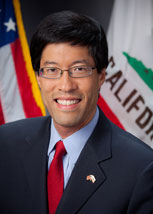
Ask Maddy about Richard Pan
Scope: california
Hi! I can help you understand Richard Pan's legislative record. What would you like to know?
Try one of these
i
Maddy answers using official bill text and legislative records. Always verify before sharing.
Sources cited inline