

Passed Jan 23, 2014
0 co-sponsors
Total votes
41,589
all sessions
Attendance
98%
701 missed
Near the chamber average
With party
99%
of cast votes
Near the chamber average
Bipartisan score
0%
crosses aisle rarely
Near the chamber average
Sponsored
1,496
bills & resolutions
Higher than 97% of chamber peers
Committees
0
assignments
1,496 bills and resolutions
Sponsored bills
Total
1,496
Primary
401
Co-sponsor
1,095
This page
1,496
matching current filters
Passed Jan 9, 2014
0 co-sponsors
Passed Jan 6, 2014
0 co-sponsors
Wrongful convictions.
Existing law provides that any person who, having been convicted of any crime against the state amounting to a felony and imprisoned in the state prison for that conviction, is granted a pardon by the Governor for specified reasons, and having served the term or any part thereof for which he or she was imprisoned, may present a claim against the state to the California Victim Compensation and Government Claims Board for the pecuniary injury sustained by him or her through the erroneous conviction and imprisonment, as specified. This bill would extend those provisions to a person who was incarcerated in county jail for a felony conviction. The bill would provide that in a contested proceeding, if the court grants a writ of habeas corpus concerning a person who is unlawfully imprisoned or restrained, or when the court vacates a judgment on the basis of new evidence, as defined, concerning a person who is no longer unlawfully imprisoned or restrained, and if the court finds that the new evidence on the petition points unerringly to innocence, the court's finding would be binding on the California Victim Compensation and Government Claims Board for a claim presented to the board. The bill would provide that, upon application by the petitioner, the California Victim Compensation and Government Claims Board would, without a hearing, be required to recommend to the Legislature that an appropriation be made, and the claim be paid, as specified. The bill would require, in a hearing before the board, that the factual findings and credibility determinations establishing the court's basis for granting the writ of habeas corpus, a motion for new trial, or an application for a certificate of factual innocence be binding on the Attorney General, the factfinder, and the board. The bill would also provide that if the district attorney or Attorney General stipulates to or does not contest the factual allegations underlying one or more of the grounds for granting a writ of habeas corpus or a motion to vacate a judgment, the facts underlying the basis for the court's ruling or order shall be binding on the Attorney General, the factfinder, and the board. The bill would also require the district attorney to provide notice to the Attorney General prior to entering into a stipulation of facts that will be the basis for the granting of a writ of habeas corpus or a motion to vacate a judgment. The bill would also provide that the express factual findings, as defined, made by the court, as specified, shall be binding on the Attorney General, the factfinder, and board. Existing law requires a claim for wrongful imprisonment be presented by the claimant to the California Victim Compensation and Government Claims Board within a period of 2 years after judgment of acquittal or discharge given, or after pardon granted, or after release from imprisonment in order to be considered by the board. This bill would revise those provisions to extend the time period to be 2 years from release from custody. The bill would define release from custody for those purposes as release from imprisonment from state prison or from incarceration in county jail, where there is no subsequent parole jurisdiction or postrelease jurisdiction exercised by the Department of Corrections and Rehabilitation or community corrections program, respectively, or where there is a parole period or postrelease period subject to jurisdiction of a community corrections program, when that period ends. Existing law requires the California Victim Compensation and Government Claims Board to, upon presentation of a claim, fix a time and place for the hearing of the claim, and to mail notice thereof to the claimant and to the Attorney General at least 15 days prior to the time fixed for the hearing. This bill would instead require the Attorney General to respond to the claim within 60 days or to request an extension of time, upon a showing of good cause, except as specified. The bill would require the board to fix a time and place for the hearing of the claim, to mail notice to the claimant at least 15 days prior to the time fixed for the hearing, and, if the period for response lapses without a request for extension or a response from the Attorney General, to make a recommendation based on the claimant's verified claim and any evidence presented by him or her. The bill would also require the board, in cases involving a finding of factual innocence, as specified, or a finding by the court that the facts point unerringly to innocence, to calculate the compensation for the claimant within 30 days of presentation of the claim, as specified, and recommend to the Legislature the payment of that sum, as specified. Existing law provides that at the hearing set by the board, the claimant is required to prove, among other things, the fact that he or she did not, by any act or omission on his or her part, intentionally contribute to the bringing about of his or her arrest or conviction for the crime with which he or she was charged. Existing law also provides that when determining whether the claimant intentionally contributed to the bringing about of his or her arrest or conviction, the factfinder shall not consider statements obtained from an involuntary false confession or involuntary plea, and that the claimant bears the burden of proving by a preponderance of the evidence that the statements were obtained from an involuntary false confession or involuntary plea. This bill would delete those provisions. The bill would require the board to deny a claim if the board finds by a preponderance of the evidence that a claimant pled guilty with the specific intent to protect another from prosecution for the underlying conviction for which the claimant is seeking compensation. Existing law provides that if the evidence shows that the crime with which the claimant was charged was either not committed at all, or, if committed, was not committed by the claimant, and that the claimant did not, by any act or omission, intentionally contribute to the bringing about of his or her arrest or conviction for the crime with which he or she was charged, and that the claimant has sustained pecuniary injury through his or her erroneous conviction and imprisonment, the California Victim Compensation and Government Claims Board shall report the facts of the case and its conclusions to the next Legislature, with a recommendation that an appropriation be made by the Legislature for the purpose of indemnifying the claimant for the pecuniary injury. This bill would remove the requirement on the claimant to prove that he or she did not, by any act or omission, intentionally contribute to the bringing about of his or her arrest or conviction for the crime with which he or she was charged.
Signed into law Oct 13, 2013
1 co-sponsor
Public works: charter cities.
Existing law requires that, except as specified, not less than the general prevailing rate of per diem wages, determined by the Director of Industrial Relations, be paid to workers employed on public works projects. Existing law defines "public works" to include, among other things, construction, alteration, demolition, installation, or repair work done under contract and paid for, in whole or in part, out of public funds, and street, sewer, or other improvement work done under the direction and supervision or by the authority of any officer or public body of the state, or of any political subdivision or district thereof, whether the political subdivision or district operates under a freeholder's charter or not. This bill would prohibit a charter city from receiving or using state funding or financial assistance for a construction project if the city has a charter provision or ordinance that authorizes a contractor to not comply with prevailing wage provisions on any public works contract. The bill would, except as specified, prohibit a charter city from receiving or using state funding or financial assistance for a construction project if the city has awarded, within the prior 2 years, a public works contract without requiring the contractor to comply with prevailing wage provisions. This bill would authorize charter cities to receive or use state funding or financial assistance if the city has a local prevailing wage ordinance, applicable to all of its public works contracts, that includes requirements that are equal to or greater than the state's prevailing wage requirements, as specified. This bill would exclude contracts for projects of $25,000 or less for construction work, or projects of $15,000 or less for alteration, demolition, repair, or maintenance work. This bill would require the Director of Industrial Relations to maintain a list of charter cities that may receive and use state funding or financial assistance for their construction projects. This bill would provide that it does not restrict a charter city from receiving or using state funding or financial assistance that was awarded to the city prior to January 1, 2015, or from receiving or using state funding or financial assistance to complete a contract that was awarded prior to January 1, 2015, and that a charter city would not be disqualified from receiving or using state funding or financial assistance for its construction projects based on the city's failure to require a contractor to comply with prevailing wage provisions in performing a contract the city advertised for bid or awarded prior to January 1, 2015.
Signed into law Oct 13, 2013
0 co-sponsors
California Tahoe Regional Planning Agency.
(1) Existing law ratified the "Tahoe Regional Planning Compact," a bilateral agreement between the States of Nevada and California to regulate development in the Lake Tahoe basin. The compact established the Tahoe Regional Planning Agency as a separate legal entity, comprised of members from the States of Nevada and California, responsible for implementing a "regional plan," as defined, regulating development in the Lake Tahoe region, as defined. Existing law also creates the California Tahoe Regional Planning Agency as a separate legal entity and as a political subdivision of the State of California, and prescribes the membership, functions, and duties of the agency, as specified. Existing law requires the agency, within 18 months of its formation, to prepare, adopt, and review and maintain a comprehensive long-term general plan for the development of the Tahoe region, referred to as the "regional plan," as prescribed. This bill would make legislative findings and declarations relating to an agreement between the Governors of the States of Nevada and California covering the implementation of the Tahoe Regional Planning Compact that was jointly announced by the governors of these states on May 14, 2013, which is proposed to be codified in specified legislation in Nevada and California. The bill would declare that the State of Nevada has agreed to repeal its 2011 statutory provisions requiring its withdrawal from the Tahoe Regional Planning Compact and proposing a change in the voting structure of the Tahoe Regional Planning Agency. Existing law, contained in the bistate Tahoe Regional Planning Compact in the Government Code, requires that within one year after adoption of environmental threshold carrying capacities for the Tahoe region, the Tahoe Regional Planning Agency amend its regional plan so that, at a minimum, the plan and all of its elements, as implemented through agency ordinances, rules, and regulations, achieves and maintains the adopted environmental threshold carrying capacities, and requires that the advisory planning commission appointed by the agency and the governing body of the agency continuously review and maintain the regional plan. This bill would revise the compact to require that, in reviewing and maintaining the plan, the planning commission and the governing body also ensure that the regional plan reflects changing economic conditions and the economic effect of regulation on commerce. The bill would further revise the compact to require that, when adopting or amending a regional plan or taking an action or making a decision, the agency act in accordance with the requirements of the compact and its implementing ordinances, rules, and regulations and to place upon a party challenging any element of the regional plan, or an action or decision of the agency, the burden of showing that the regional plan is not in conformance with those requirements. This bill would require the Tahoe Regional Planning Agency, until January 1, 2018, to annually prepare and submit to the Department of Finance and the appropriate legislative budget committees a report, in a format established by the department, of the revenues provided to the agency by the States of Nevada and California, including a complete summary and explanation of the expenditure of the revenues received and expended by the agency. (2) Under existing law, the State Lands Commission may administer, sell, lease, or dispose of public lands owned or controlled by this state. Under existing law, with specified exceptions, all rental income received for surface uses upon lands under the jurisdiction of the commission is required to be deposited in the General Fund. This bill would additionally exclude from the requirement for deposit of this rental income in the General Fund the rental income from surface uses for lands at Lake Tahoe. The bill would require this income to be deposited in the Lake Tahoe Science and Lake Improvement Account, which this bill would create in the General Fund. The bill would authorize the moneys in the account to be expended by the Natural Resources Agency, upon appropriation by the Legislature, and would require that information regarding finding activity be annually available on a publicly accessible Internet Web site. The bill would allow the funds in the account to be expended for activities and projects that include, but are not limited to, aquatic invasive species prevention projects, projects to improve public access to sovereign land in Lake Tahoe, and projects to improve near-shore water quality monitoring, as specified. The bill would also authorize the moneys in the account to be expended for the costs associated with establishing and operating a bistate science-based advisory council, and would authorize the Secretary of the Natural Resources Agency to enter into a memorandum of agreement with the Nevada Department of Conservation and Natural Resources to establish the council. The bill would require the agency, or another agency designated by it, to annually make certain information available regarding any activity funded from the account.
Signed into law Oct 12, 2013
1 co-sponsor
Hunting: nonlead ammunition.
(1) Existing law requires the Fish and Game Commission, by July 1, 2008, to establish by regulation a public process to certify centerfire rifle and pistol ammunition as nonlead ammunition, and to define by regulation nonlead ammunition as including only centerfire rifle and pistol ammunition in which there is no lead content. Existing law requires the commission to establish and annually update a list of certified centerfire rifle and pistol ammunition. Existing law requires that nonlead centerfire rifle and pistol ammunition, as determined by the commission, be used when taking big game with a rifle or pistol, as defined by the Department of Fish and Wildlife's hunting regulations, and when taking coyote, within specified deer hunting zones, but excluding specific counties and areas. A violation of these provisions is a crime. Existing law requires the commission to establish a process, to the extent that funding is available, that will provide hunters in these specified deer hunting zones with nonlead ammunition at no or reduced charge. This bill would instead require, as soon as is practicable, but by no later than July 1, 2019, the use of nonlead ammunition for the taking of all wildlife, including game mammals, game birds, nongame birds, and nongame mammals, with any firearm. The bill would require the commission to certify, by regulation, nonlead ammunition for these purposes. The bill would require that the list of certified ammunition include any federally approved nontoxic shotgun ammunition. The bill would make conforming changes. The bill would provide that these provisions do not apply to government officials or their agents when carrying out a statutory duty required by law. The bill would require the commission to promulgate regulations by July 1, 2015, that phase in the requirements of these provisions. The bill would require that these requirements be fully implemented statewide by no later than July 1, 2019. The bill would require the commission to implement any of these requirements that can be implemented practicably, in whole or in part, in advance of July 1, 2019. The bill would also require that the commission not reduce or eliminate any existing regulatory restrictions on the use of lead ammunition in California condor range, as described, unless or until the additional requirements for use of nonlead ammunition as required by these provisions are implemented. By expanding and changing the definition of a crime, the bill would impose a state-mandated local program. (2) Existing federal law restricts the importing, manufacturing, or sale of armor-piercing ammunition, as specified. This bill would temporarily suspend the required use of nonlead ammunition for a specific hunting season and caliber upon a finding by the Director of Fish and Wildlife that nonlead ammunition of a specific caliber is not commercially available from any manufacturer because of federal prohibitions relating to armor-piercing ammunition. The bill would require, notwithstanding a suspension, that nonlead ammunition be used when taking big game mammals, nongame birds, or nongame mammals in the California condor range. (3) The California Constitution requires the state to reimburse local agencies and school districts for certain costs mandated by the state. Statutory provisions establish procedures for making that reimbursement. This bill would provide that no reimbursement is required by this act for a specified reason.
Signed into law Oct 11, 2013
1 co-sponsor
Health and care facilities.
Existing law establishes the State Department of Public Health and sets forth its powers and duties, including, but not limited to, the licensure and regulation of primary care clinics and specialty clinics. Violation of these provisions is a crime. This bill would, until the department adopts regulations relating to the provision of services by a chronic dialysis clinic, a surgical clinic, or a rehabilitation clinic, require those clinics to comply with prescribed federal certification standards in effect immediately preceding January 1, 2013. Because a violation of that requirement would be a crime, the bill would impose a state-mandated local program. The bill would require the department, by July 1, 2017, to conduct a public hearing and submit a prescribed report to the appropriate legislative committees. These provisions would become inoperative on January 1, 2018. Existing law requires the State Department of Public Health and the State Department of Developmental Services to jointly develop and implement licensing regulations appropriate for an intermediate care facility/developmentally disabled-nursing and an intermediate care facility/developmentally disabled-continuous nursing. This bill would, until the departments adopt those regulations, require that the facilities comply with applicable federal certification standards for intermediate care facilities for individuals with intellectual disabilities in effect immediately preceding January 1, 2013. These provisions would become inoperative on January 1, 2018. Existing law provides for the licensure and regulation by the State Department of Public Health of congregate living health facilities. Under existing law, a congregate living health facility is a residential home with a capacity of no more than 12 beds, except as provided, that provides inpatient care to persons with prescribed conditions, including persons who have a diagnosis of terminal illness or who are catastrophically and severely disabled. Existing law requires that a congregate living health facility be freestanding, but specifies that this does not preclude its location on the premises of a hospital. This bill would authorize the establishment of multiple congregate living health facilities in one multifloor building if certain requirements are met, including, among others, that each facility is separated by a wall, floor, or other permanent partition, and is located on former McClellan Air Force Base, as specified. This bill would make legislative findings and declarations as to the necessity of a special statute for these congregate living facilities. The California Constitution requires the state to reimburse local agencies and school districts for certain costs mandated by the state. Statutory provisions establish procedures for making that reimbursement. This bill would provide that no reimbursement is required by this act for a specified reason.
Signed into law Oct 10, 2013
1 co-sponsor
Public postsecondary education: credit by examination.
Existing law establishes 3 segments of public postsecondary education in the state, the California State University, administered by the Trustees of the California State University, the California Community Colleges, administered by the Board of Governors of the California Community Colleges, and the University of California, administered by the Regents of the University of California. This bill would require the California Community Colleges and the California State University, and request the Regents of the University of California, to provide information about credit by examination opportunities wherever course and class information is available. By imposing additional requirements on community college districts, the bill would impose a state-mandated local program. The California Constitution requires the state to reimburse local agencies and school districts for certain costs mandated by the state. Statutory provisions establish procedures for making that reimbursement. This bill would provide that, if the Commission on State Mandates determines that the bill contains costs mandated by the state, reimbursement for those costs shall be made pursuant to these statutory provisions.
Signed into law Oct 10, 2013
1 co-sponsor
Health care coverage: pervasive developmental disorder or autism.
Existing law provides for the licensure and regulation of health care service plans by the Department of Managed Health Care. Existing law provides for the regulation of health insurers by the Department of Insurance. Existing law requires health care service plan contracts and health insurance policies to provide benefits for specified conditions, including coverage for behavioral health treatment, as defined, for pervasive developmental disorder or autism, except as specified. A willful violation of these provisions with respect to health care service plans is a crime. These provisions are inoperative on July 1, 2014, and are repealed on January 1, 2015. This bill would extend the operation of these provisions until January 1, 2017. By extending the operation of provisions establishing crimes, the bill would impose a state-mandated local program. The California Constitution requires the state to reimburse local agencies and school districts for certain costs mandated by the state. Statutory provisions establish procedures for making that reimbursement. This bill would provide that no reimbursement is required by this act for a specified reason.
Signed into law Oct 9, 2013
0 co-sponsors
Ask Maddy
·
AI policy assistant
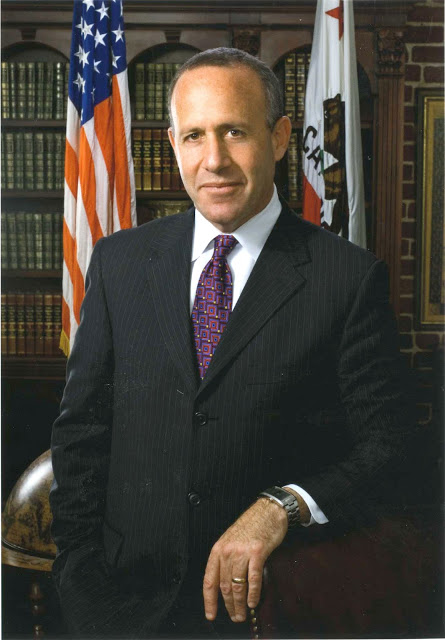
Ask Maddy about Darrell Steinberg
Scope: california
Hi! I can help you understand Darrell Steinberg's legislative record. What would you like to know?
Try one of these
i
Maddy answers using official bill text and legislative records. Always verify before sharing.
Sources cited inline