

Existing law establishes the State Department of Public Health and sets forth its powers and duties pertaining to, among other things, protecting, preserving, and advancing public health. Existing law requires the department, in consultation with specified stakeholders, to develop a plan, addressing specified issues, with recommendations and guidelines for counties to use in the case of a significant air quality event caused by wildfires or other sources. This bill, the Wildfire Smoke and Health Outcomes Data Act, would require the State Department of Public Health, in consultation with the Department of Forestry and Fire Protection and the Wildfire and Forest Resilience Task Force, to create, operate, and maintain a statewide integrated wildfire smoke and health data platform no later than July 1, 2026, that, among other things, would integrate wildfire smoke and health data from multiple databases. Under the bill, the purposes for the data platform would include providing adequate information to understand the negative health impacts on California's population caused by wildfire smoke and evaluating the effectiveness of investments in forest health and wildfire mitigation on health outcomes in California. This bill would require the State Department of Public Health, in consultation with the Department of Forestry and Fire Protection and the Wildfire and Forest Resilience Task Force, to develop, among other things, protocols for data sharing, documentation, quality control, and promotion of open-source platforms and decision support tools related to wildfire smoke and health data. This bill would authorize the State Department of Public Health, the Department of Forestry and Fire Protection, and the Wildfire and Forest Resilience Task Force, where appropriate, to utilize data from existing sources, including open source data and other external data, for purposes of implementing the act. This bill would create the Wildfire Smoke and Health Administration Fund. Under the bill, moneys in the fund would be available, upon appropriation, to the State Department of Public Health, the Department of Forestry and Fire Protection, and the Wildfire and Forest Resilience Task Force for the collection, management, and improvement of wildfire smoke and health data for the purposes of the act. The bill would make related findings and declarations.
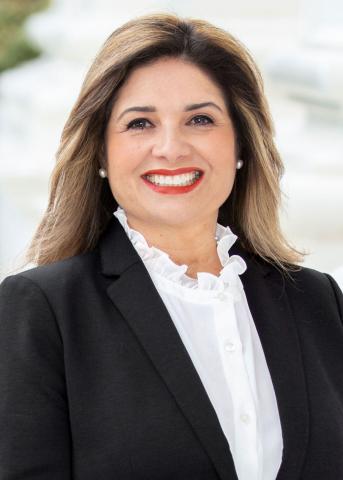
Sen. Marie Alvarado-Gil
Sponsored bills
The Control, Regulate and Tax Adult Use of Marijuana Act (AUMA) , an initiative measure approved as Proposition 64 at the November 8, 2016, statewide general election, authorizes a person who obtains a state license under AUMA to engage in commercial adult-use cannabis activity pursuant to that license and applicable local ordinances. Existing law, the Medicinal and Adult-Use Cannabis Regulation and Safety Act (MAUCRSA) , among other things, consolidates the licensure and regulation of commercial medicinal and adult-use cannabis activities. MAUCRSA establishes the Department of Cannabis Control within the Business, Consumer Services, and Housing Agency to administer the act, and requires the department to be under the supervision and control of a director. MAUCRSA provides that a person engaging in commercial cannabis activity without a license is subject to civil penalties, as specified. The bill would, subject to specified exceptions, authorize the department or a local jurisdiction, after obtaining an inspection warrant, to seize specified property in the place or building, or within any yard or enclosure, where commercial cannabis activity is conducted without a license required by MAUCRSA. The bill would also authorize the department or a local jurisdiction to seize a vehicle used to conceal, convey, carry, deliver, or transport cannabis or cannabis products by or for a person engaging in commercial cannabis activity without that license, except as specified. The bill would impose requirements for notice of seizure, forfeiture proceedings, and the sale and distribution of proceeds upon a judgment in favor of the forfeiture.
Existing law establishes, within the office of the Governor, the Office of Emergency Services (OES) , under the direction of the Director of Emergency Services. Existing law charges the OES with coordinating various emergency activities within the state. The California Emergency Services Act, contingent upon an appropriation by the Legislature, requires the OES to enter into a joint powers agreement pursuant to the Joint Exercise of Powers Act with the Department of Forestry and Fire Protection to develop and administer a comprehensive wildfire mitigation program relating to structure hardening and retrofitting and prescribed fuel modification activities. Existing law authorizes the joint powers authority to establish financial assistance limits and matching funding or other recipient contribution requirements for the program, as provided. This bill would, contingent on funding being appropriated pursuant to a bond act, as specified, establish the Rural Water Infrastructure for Community Wildfire Protection Program within the OES for the distribution of state matching funds to communities within the Wildland Urban Interface in designated high fire hazard severity zones or very high fire hazard severity zones to improve water system infrastructure, as prescribed. The bill would require the OES to work in coordination with the Department of Water Resources, the State Water Resources Control Board, the Office of the State Fire Marshal, and other state entities as the office determines to be appropriate, to achieve the purposes of the program. The bill would require the office to develop criteria and a scoring methodology to prioritize the distribution of state matching funds provided under the program to rural communities based upon specified criteria.
Existing law requires a tax return filed with the California Department of Tax and Fee Administration (CDTFA) that reports gross receipts for sales and use tax purposes to segregate the gross receipts of the seller and the sales price of the property on a line or a separate form when the place of sale in this state or for use in this state is on or within the real property of a state-designated fair, as defined, or any real property of a state-designated fair that is leased to another party. Existing law requires, on or before November 1 of each year, the CDTFA to report to the Department of Finance the amount of the total gross receipts segregated on these tax returns for the prior fiscal year, and that 34 of 1% of the total gross receipts be included in the next annual Governor's Budget for use by the Department of Food and Agriculture for allocation to fairs and that those funds be transferred by the Controller to the Fair and Exposition Fund, which is continuously appropriated, as prescribed. This bill would instead increase the amount of the total gross receipts required to be included in the next annual Governor's Budget for use by the Department of Food and Agriculture and transferred to the Fair and Exposition Fund, as specified, from 34 of 1% to 3%. The bill would make other nonsubstantive changes regarding appropriations to the department for fairs.
Existing law requires an urban retail water supplier to calculate its urban water use objective no later than January 1, 2024, and by January 1 every year thereafter, and to be composed of the sum of specified data, including aggregate residential water use. Existing law requires each urban retail water supplier's water use objective to be composed of the sum of specified aggregate estimates, including efficient outdoor irrigation of landscape areas with dedicated irrigation meters or equivalent technology in connection with water used by commercial water users, industrial water users, institutional water users, and large landscape water users (CII) . Existing law requires an urban retail water supplier to submit reports to the Department of Water Resources, as provided, by the same dates. This bill would require the department to, no later than January 1, 2035, conduct necessary studies and investigations regarding the efficiency performance of newly constructed residential landscapes and landscape areas with dedicated irrigation meters in connection with CII water use, as specified. The bill would require the department, if appropriate, to recommend to the State Water Resources Control Board for adoption a revised standard for existing residential landscapes and landscape areas with dedicated irrigation meters in connection with CII water use regarding an ongoing performance standard for those water uses. This bill would require the department to update methodologies and criteria for calculating residential and CII landscape areas and to determine landscape area measurements within each urban retail water supplier's service area by January 1, 2028, and once every 5 years thereafter, as specified, and post the data on its internet website. The bill would specify that an urban retail water supplier, in its calculations of its urban water use objectives, shall include aggregate indoor and outdoor residential water use. The bill would require, as part of the report to be submitted in 2026, each urban retail water supplier to provide a narrative that describes the water demand management measures that the supplier plans to implement to achieve its urban water use objective by January 1, 2030. Existing law authorizes the board, on or after January 1, 2024, to issue informational orders pertaining to water production, water use, and water conservation to an urban retail water supplier that does not meet its urban water use objective. Existing law authorizes the board, on and after January 1, 2025, to issue a written notice to an urban retail water supplier that does not meet its urban water use objective. Existing law authorizes the board, on and after January 1, 2026, to issue a conservation order to an urban retail water supplier that does not meet its urban water use objective. This bill would instead extend the time until the board is authorized to issue informational orders to on or after January 1, 2026, issue a written notice to on or after January 1, 2027, and issue a conservation order to on or after January 1, 2028. Existing law requires the department, in coordination with the board, to submit a report to the Legislature on the progress of urban retail water suppliers towards achieving their urban water use objective on or before January 1, 2028. The bill would instead require the report to be submitted to the Legislature on or before January 1, 2030. Existing law provides that it is the intent of the Legislature that the chairperson of the board and the director of the department appear before the appropriate policy committees of both houses of the Legislature on or around January 1, 2026, and report on the implementation of the water use efficiency standards and water use reporting. This bill would extend this date to not later than July 1, 2031. Existing law provides that an urban retail water supplier who violates certain regulations after November 1, 2027, may be liable for specified penalties, as provided. This bill would instead provide that urban retail water suppliers may be liable for specified penalties for violating those regulations after November 1, 2029. Existing law, the Administrative Procedure Act, sets forth the requirements for the adoption, publication, review, and implementation of regulations by state agencies. This bill would require the board to enact emergency regulation, as specified, in accordance with the provisions of the act.
Existing law establishes the California Work Opportunity and Responsibility to Kids (CalWORKs) program, under which each county provides cash assistance and other benefits to qualified low-income families and individuals. If a family does not include a needy child qualified for aid under CalWORKs, existing law requires aid to be paid to a pregnant person as of the date of the application for aid, as specified. Existing law, subject to an appropriation in the annual Budget Act, requires the State Department of Social Services to award funds to participating counties in order to provide voluntary evidence-based home visiting services to assistance units that meet specified requirements. Existing law establishes the CalWORKs Home Visiting Program, a voluntary program for the purpose of supporting positive health, development, and well-being outcomes for pregnant and parenting people, families, and infants born into poverty. Existing law requires the program to provide high-quality, evidence-based, culturally competent services to pregnant people, parents or caretaker relatives, and children for 24 months or until the child's 2nd birthday, whichever is later, that meet the needs of at-risk assistance units, as specified. This bill would extend those provisions to apply to children for at least 24 months, and not to exceed the duration of the applicable home visiting program model. Existing law requires a voluntary participant in the program to meet specified criteria, including that the individual is either a member of a CalWORKs assistance unit, a parent or caretaker relative for a child-only case, or an individual who is apparently eligible for CalWORKs aid, and that the individual is pregnant or the individual is a parent or caretaker relative of a child less than 24 months of age at the time the individual enrolls in the program, except as specified. This bill would revise that requirement to apply to a child less than 36 months of age. The bill would authorize a voluntary participant whose participation would otherwise be terminated because the participant no longer meets CalWORKs income, eligibility, or need criteria to continue through the duration of the home visiting program or for up to an additional 12 months.
Existing law provides for the civil commitment of a person who is determined to be a sexually violent predator. Existing law establishes a procedure by which a person committed as a sexually violent predator may petition for conditional release and requires the court, if it makes a specified determination, to place the person on conditional release. Existing law generally requires that a person released on conditional release pursuant to these provisions be placed in the person's county of domicile prior to their incarceration unless extraordinary circumstances exist requiring placement outside the county, as specified. Existing law also prohibits the placement of a person released on conditional release within 14 mile of any public or private school, as specified. Existing law defines a sexually violent predator as a person who has been convicted of a sexually violent offense and has a diagnosed mental disorder that makes the person a danger to others in that they are likely to engage in sexually violent criminal behavior. Existing law requires the State Department of State Hospitals to notify the sheriff or chief of police, or both, the district attorney, or the county's designated counsel under specific circumstances, including when it makes a recommendation to the court for community outpatient treatment for a person committed as a sexually violent predator. This bill, the Sexually Violent Predator Accountability, Fairness, and Enforcement Act, would require the State Department of State Hospitals to ensure department vendors consider public safety in the placement of a conditionally released sexually violent predator and approve a potential placement before a department employee or vendor signs a lease or rental agreement for the placement of a sexually violent predator, as specified. This bill would declare that it is to take effect immediately as an urgency statute.
Existing law establishes the Governor's Office of Business and Economic Development, known as "GO-Biz," within the Governor's office to serve the Governor as the lead entity for economic strategy and the marketing of California on issues relating to business development, private sector investment, and economic growth. Existing law establishes, within GO-Biz, the Energy Unit to accelerate the planning, financing, and execution of critical energy infrastructure projects that are necessary for the state to reach its climate, energy, and sustainability policy goals, including by identifying barriers, making recommendations, creating a working group, coordinating between the state's climate and energy agencies, and cooperating with local, regional, federal, and California public and private businesses and investors. Existing law requires the Energy Unit to submit a report to the Legislature on its activities on or before February 1 of each year, as specified. This bill would require the Energy Unit to identify, among other things, nonratepayer-funded energy industry resources, including grants, tax credits, loans, and technical assistance, across local, state, and federal departments and agencies that are available to assist businesses and workers in the transition to a net-zero-powered economy. The bill would require the Energy Unit to work with specified agencies to identify workforce development programs specific to the energy industry and gather data on how education and outreach is conducted to disadvantaged communities, as defined. The bill would also require the Energy Unit, in collaboration with the Small Business Advocate, to identify the participation levels in those energy industry resources by businesses owned by women, minorities, disabled individuals, and veteran-owned businesses, as well as individuals from disadvantaged communities. This bill would require the Energy Unit to hold at least 3 public workshops and engage with stakeholders and specified representatives to develop recommendations on addressing barriers to access to those energy industry resources faced by business-owner groups and individuals who live in disadvantaged communities and how to increase their participation levels to the extent that there are disparities, as specified. The bill would also require the Energy Unit to convene a technical advisory group for related purposes, as specified. The bill would require the Energy Unit to include those findings and recommendations and other related information in its annual report to the Legislature. The bill would also make related legislative findings and declarations.
Existing law makes it a crime to willfully threaten to commit a crime that will result in death or great bodily injury to another person, with the specific intent that the statement is to be taken as a threat that, on its face and under the circumstances in which it is made, is so unequivocal, unconditional, immediate, and specific as to convey to the person threatened a gravity of purpose and an immediate prospect of execution of the threat, and thereby reasonably causes the threatened person to be in sustained fear for their own safety or the safety of their immediate family, as defined. Under existing law, this crime is punishable by imprisonment in a county jail for no more than one year for a misdemeanor, or by imprisonment in state prison for a felony. This bill would make a person who willfully threatens to commit a crime which will result in death or great bodily injury to any person who may be on the grounds of a school or place of worship, with specific intent and under certain circumstances, and if the threat causes a person or persons reasonably to be in sustained fear for their own safety or the safety of another person, guilty of a misdemeanor or felony punishable by imprisonment in a county jail for a specified term, except that if the person is under 18 years of age, the bill would make the person guilty of a misdemeanor. By creating a new crime, this bill would impose a state-mandated local program. The California Constitution requires the state to reimburse local agencies and school districts for certain costs mandated by the state. Statutory provisions establish procedures for making that reimbursement. This bill would provide that no reimbursement is required by this act for a specified reason.
Existing law classifies certain substances, including cocaine, heroin, and fentanyl, as controlled substances and generally prohibits the possession, sale, transportation, and use of these substances. Existing law additionally prohibits the possession of certain of these controlled substances including cocaine, heroin, and methamphetamine while armed with a loaded and operable firearm. A violation of this prohibition is punishable as a felony punishable by incarceration in the state prison. This bill would additionally prohibit the possession of fentanyl, as specified, while armed with a loaded and operable firearm if the person has knowledge that the specific controlled substance is fentanyl. By expanding the application of an existing crime, this bill would impose a state-mandated local program. The California Constitution requires the state to reimburse local agencies and school districts for certain costs mandated by the state. Statutory provisions establish procedures for making that reimbursement. This bill would provide that no reimbursement is required by this act for a specified reason.