

Existing federal law, the Indian Gaming Regulatory Act of 1988, provides for the negotiation and execution of tribal-state gaming compacts for the purpose of authorizing certain types of gaming on Indian lands within a state. The California Constitution authorizes the Governor to negotiate and conclude those compacts, subject to ratification by the Legislature. Existing law expressly ratifies a number of tribal-state gaming compacts, and amendments to tribal-state gaming compacts, between the State of California and specified Indian tribes. The California Environmental Quality Act (CEQA) requires a lead agency to prepare, or cause to be prepared, and certify the completion of, an environmental impact report on a project, as defined, that it proposes to carry out or approve that may have a significant effect on the environment, as defined, or to adopt a negative declaration if it finds that the project will not have that effect. This bill would ratify the tribal-state gaming compacts entered into between the State of California and the Campo Band of Diegueno Mission Indians of the Campo Indian Reservation, California, the La Posta Band of Diegueno Mission Indians of the La Posta Indian Reservation, California, the Timbisha Shoshone Tribe, and the Elem Indian Colony of Pomo Indians of the Sulphur Bank Rancheria, California, and amendments to the tribal-state gaming compacts entered into between the State of California and the Augustine Band of Cahuilla Indians, California, the Picayune Rancheria of Chukchansi Indians of California, and the Cher-Ae Heights Indian Community of the Trinidad Rancheria, California. The bill would provide that, in deference to tribal sovereignty, certain actions related to these compacts are not projects for the purposes of CEQA. This bill would declare that it is to take effect immediately as an urgency statute.
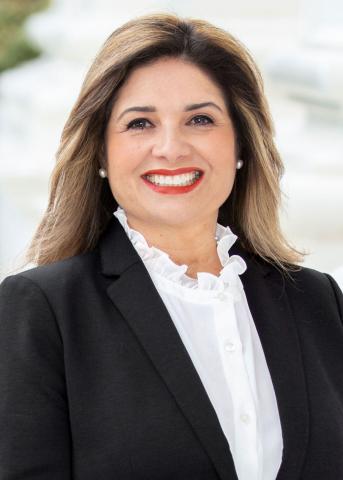
Sen. Marie Alvarado-Gil
Sponsored bills
Existing law requires the State Board of Education to adopt at least 5 basic instructional materials in specified subject areas, including, among others, social science, for use in kindergarten and grades 1 to 8, inclusive, as specified. Existing law establishes the Instructional Quality Commission, as specified, and requires the commission to, among other things, develop criteria for evaluating instructional materials. This bill would require the commission, when the state board adopts new instructional materials for history-social science on or after January 1, 2025, to consider providing for inclusion, in its evaluation criteria, content on the case of Mendez v. Westminster School District of Orange County. This bill would incorporate additional changes to Section 51226.3 of the Education Code proposed by AB 1821 to be operative only if this bill and AB 1821 are enacted and this bill is enacted last.
Existing law, the Licensed Physicians and Dentists from Mexico Pilot Program, allows up to 30 licensed physicians and up to 30 licensed dentists from Mexico to practice medicine or dentistry in California for a period not to exceed 3 years, in accordance with certain requirements. Existing law requires the Medical Board of California and the Dental Board of California to provide oversight pursuant to these provisions. Existing law requires appropriate funding to be secured from nonprofit philanthropic entities before implementation of the pilot program may proceed. Existing law requires physicians participating in the Licensed Physicians and Dentists from Mexico Pilot Program to be enrolled in English as a second language classes, to have satisfactorily completed a 6-month orientation program, and to have satisfactorily completed a 6-month externship at the applicant's place of employment, among various other requirements. This bill would repeal the provisions regarding the Licensed Physicians and Dentists from Mexico Pilot Program, and would instead establish two bifurcated programs, the Licensed Physicians from Mexico Program and the Licensed Dentists from Mexico Pilot Program. Within these 2 programs, the bill would generally revise and recast certain requirements pertaining to the Licensed Physicians and Dentists from Mexico Pilot Program, including deleting the above-described requirement that Mexican physicians participating in the program enroll in adult English as a second language classes. The bill would instead require those physicians to have satisfactorily completed the Test of English as a Foreign Language or the Occupational English Test, as specified. The bill would remove the requirement that the orientation program be 6 months, and would further require the orientation program to include electronic medical records systems utilized by federally qualified health centers and standards for medical chart notations. The bill would also delete the requirement that the physicians participate in a 6-month externship. The bill would further delete provisions requiring an evaluation of the pilot program to be undertaken with funds provided from philanthropic foundations, and would make various other related changes to the program. The bill would require the Dental Board of California to, notwithstanding existing requirements to provide specified federal taxpayer information, issue a 3-year nonrenewable permit to an applicant who has not provided an individual taxpayer identification number or social security number if the applicant meets specified conditions. Commencing January 1, 2025, the bill would authorize the Medical Board of California to issue a limited number of active licenses to eligible applicants to participate in the Licensed Physicians from Mexico Program, as specified. Under the bill, each additional physician selected for the program would not be eligible to renew their 3-year license. The bill would require the federally qualified health centers employing physicians pursuant to the program to continue specified peer review protocols and procedures and to work with an approved medical school or an approved residency program, as provided. The bill would also require specified entities to be the points of contact involved in securing required documents, recruiting and vetting candidates, assisting candidates to meet all program requirements, selecting appropriate federally qualified health centers throughout California, ensuring compliance with program provisions, developing policy and clinical workshops, monitoring productivity and increased access to medical care, and assessing the necessity of policy and programmatic improvements. The bill would impose fees in connection with both programs, as specified. This bill would make legislative findings and declarations as to the necessity of a special statute.
Existing law, the Alfred E. Alquist Hospital Facilities Seismic Safety Act of 1983, establishes, under the jurisdiction of the Department of Health Care Access and Information, a program of seismic safety building standards for certain hospitals constructed on and after March 7, 1973. Existing law requires that, by January 1, 2030, owners of these hospitals must either demolish, replace, or change to nonacute care use all hospital buildings that are not in compliance with these standards or seismically retrofit all acute care inpatient hospital buildings so they are in substantial compliance with these standards, unless subject to an abeyance. This bill would authorize a hospital owner or operator to submit an application, by specified dates, to the department for additional extensions to the compliance deadline. The bill would require the department to grant or deny an extension of the deadline for substantial compliance with seismic safety regulations or standards up to January 1, 2035. The bill would require the application to contain a seismic compliance plan, a specified evaluation report, a financial plan, and an attestation to the department that the appropriate governing board of that hospital is aware that the hospital building is required to be in substantial compliance with the seismic safety regulations or standards. By imposing the above-described attestation, this bill would expand the crime of perjury and impose a state-mandated local program. This bill would require the hospital and the department to identify specified milestones that are used for determining whether the hospital is making progress towards meeting the hospital's seismic compliance deadline. The bill would require the hospital to demonstrate efforts to comply with the seismic compliance deadline by providing the department with a plan outlining how seismic construction costs and other financial responsibilities will be met and what funding sources will be used if the hospital fails to meet an agreed-upon milestone due to circumstances that were within the hospital owner's or operator's control. The bill would require the owner or operator of that hospital to submit to the department an attestation that the appropriate governing board of that hospital is aware of the hospital's responsibility to comply with the associated construction costs to meet the seismic compliance deadlines. By requiring the owner or operator of a hospital to submit to the department an attestation, this bill would expand the crime of perjury and impose a state-mandated local program. This bill would require the department, before granting an extension past January 1, 2030, to provide public notice of a hospital's request for an extension, provide copies, upon request, of any publicly available material submitted by the hospital in support of their extension to interested parties, and allow the public to submit written comments on the extension proposal, as specified. The bill would require the department, beginning January 1, 2027, to post on the department's internet website specified information, including, among other things, its decision to grant or deny any extension. The bill would require the department to notify the county board of supervisors, the city council, and the Assembly and Senate representative in writing and electronically if a hospital within their district has been granted or denied an extension. This bill would require the department, on or before January 1, 2026, to adopt regulations and standards or revise regulations and standards, or both, to extend the deadlines for meeting the structural performance and nonstructural performance requirements. The bill would specify that regulatory submissions made by the department to the California Building Standards Commission are deemed to be emergency regulations and that the adoption of these regulations are to be deemed an emergency and necessary for the immediate preservation of the public peace, health and safety, and general welfare. Existing law requires, before January 1, 2024, the owner of an acute care inpatient hospital that includes a building that does not substantially comply with seismic safety regulations or standards to post in a lobby or waiting area generally accessible to patients or the public a notice provided by the department that the hospital is not in compliance with the seismic safety requirements the hospital is required to meet by January 1, 2030. Existing law requires, on or before January 1, 2024, and annually thereafter, the owner of an acute care inpatient hospital that includes a building that does not substantially comply with seismic safety regulations or standards to provide an annual status update on the Structural Performance Category ratings of the buildings and the services provided in each hospital building on the hospital campus to specified entities until each of the hospital buildings owned by that hospital building owner is compliant. This bill would require, before January 1, 2025, the owner or operator of an acute care inpatient hospital that includes a building that does not substantially comply with the seismic safety regulations or standards to post in any lobby or waiting area generally accessible to patients or the public the notice mentioned above. The bill would also require, on or before January 1, 2025, and annually thereafter, the owner or operator to provide an annual status update, as specified. This bill would specify that the provisions of this act are severable. The California Constitution requires the state to reimburse local agencies and school districts for certain costs mandated by the state. Statutory provisions establish procedures for making that reimbursement. This bill would provide that no reimbursement is required by this act for a specified reason.
Existing law requires all law enforcement agencies to maintain a use of force policy, as specified, and requires the Commission on Peace Officer Standards and Training (POST) to implement courses of instruction for the training of law enforcement officers in the use of force. This bill would require the commission, on or before July 1, 2026, to study and issue recommendations to the Legislature on the use of canines by law enforcement, as specified. Existing law requires each law enforcement agency to monthly provide a report of, among other things, all instances of a peace officer involved in a use of force against a civilian that results in serious bodily injury or death to the Department of Justice, and requires the department to yearly post a summary of those reports on the department's OpenJustice Web portal. This bill would require each law enforcement agency with a canine unit to annually publish a report of the use of canines, as specified, on its internet website. Because the bill would impose additional duties on local law enforcement agencies, the bill would impose a state-mandated local program. The California Constitution requires the state to reimburse local agencies and school districts for certain costs mandated by the state. Statutory provisions establish procedures for making that reimbursement. This bill would provide that, if the Commission on State Mandates determines that the bill contains costs mandated by the state, reimbursement for those costs shall be made pursuant to the statutory provisions noted above. This bill would make the operation of its provisions contingent upon the enactment of AB 2042 of the 2023–24 Regular Session.
This measure would proclaim the month of November 2024 as California Runaway and Homeless Youth Prevention Month to recognize the need for individuals, schools, communities, businesses, local governments, and the state to take action on behalf of runaway and homeless youth in California.
This measure would recognize August 26, 2024, as Women's Equality Day and its historic importance to women's rights, including the battle to attain those rights in the past, present, and future.
This measure would urge the President and the Congress of the United States to address, with effective policies, the issue of servicemembers who were unjustly discharged under "Don't Ask, Don't Tell" or predecessor provisions, in order to unify efforts to upgrade discharges issued under the DADT policy, and to restore benefits.
Existing law authorizes the Governor to appoint and commission individuals designated by a railroad company to serve as police officers. Existing law, until January 1, 2026, requires the Department of the California Highway Patrol to coordinate with the Department of Justice to convene a regional property crimes task force to identify geographic areas experiencing increased levels of property crimes and assist local law enforcement with resources, such as personnel and equipment. This bill would require the task force to assist railroad police and would specify cargo theft as a property crime for consideration by the regional property crimes task force. This bill would declare that it is to take effect immediately as an urgency statute.
Existing law establishes various rental housing finance programs administered by the Department of Housing and Community Development. Existing law authorizes the department to monitor and fund various multifamily housing loans. With respect to these programs and loans, existing law authorizes the department to approve an extension of a department loan, the reinstatement of a qualifying unpaid matured loan, the subordination of a department loan to new debt, or an investment of tax credit equity pursuant to specified rental housing finance programs and multifamily housing loans administered, monitored, or funded by the department, subject to specified requirements. This bill would additionally authorize the department to forgive the full amount of the principal, interest, fees, and other outstanding balances of the above-described loans if the borrower makes specified showings. The bill would require that projects receiving loan forgiveness meet specified requirements, including that the projects maintain the same number of affordable units at the same affordable housing cost as provided in the project's regulatory agreement, except as specified. The bill would authorize borrowers to appeal a loan forgiveness decision to the Secretary of Business, Consumer Services, and Housing for reconsideration. This bill would make findings and declarations related to a gift of public funds.