

Existing law establishes the Medi-Cal program, which is administered by the State Department of Health Care Services and under which qualified low-income individuals receive health care services. The Medi-Cal program is in part governed by, and funded pursuant to, federal Medicaid program provisions. Existing federal law, enacted on July 4, 2025, sets forth various changes to different health care programs, including certain requirements for Medicaid eligibility with regard to work or community engagement reporting, redeterminations, and cost sharing, among other factors, for certain Medicaid populations pursuant to a specified implementation timeline. This bill would create the California Health Access Fund, to be administered by the department. Under the bill, moneys in the fund would include deposits, through any applicable transfers made by the Legislature, equal to the amount of any savings to the state resulting from decreased enrollment in the Medi-Cal program caused by enrollment barriers created by the above-described federal law. Under the bill, moneys in the fund would, upon appropriation, be used to ensure that California residents losing health care coverage due to the impacts of the federal law or due to any other divestments from the health care system can continue to receive health care services and that health care providers are reimbursed for these services.
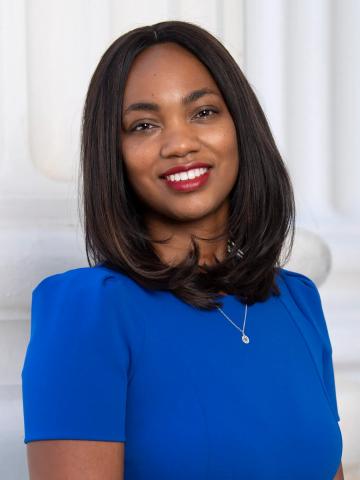
Sen. Akilah Weber Pierson
Sponsored bills
Existing law, the California Street Terrorism Enforcement and Prevention Act (act) , provides specified punishments for certain crimes committed for the benefit of, at the direction of, or in association with a criminal street gang, as specified. The act defines a "shared gang database" as a database accessed by a law enforcement agency that designates a person as a gang member or associate, or includes or points to information, including, but not limited to, fact-based or uncorroborated information, that reflects a designation of that person as a gang member or associate that is accessed by an agency or person outside of the agency that created the records that populate the database. Existing law requires the Department of Justice to regulate and oversee any shared gang databases in which California law enforcement agencies, participate, as specified. This bill would remove the term "shared gang database" and make the provisions under the act applicable to all gang databases, regardless of whether a gang database is accessed by an agency or person outside of the agency that created the database. The bill would make specified regulations applicable to all gang databases beginning on January 1, 2027.
Maddy summaryThis Senate Resolution designates the week of May 10 to May 16, 2026, as Hospital Week in California to honor the state's hospitals and their staff. The measure recognizes the vital role hospitals play in providing care, training medical professionals, and supporting the local economy across rural, suburban, and urban areas. By officially acknowledging these institutions, the resolution aims to highlight their importance during National Hospital Week without changing any laws or policies.
Maddy summaryThis bill designates April 2, 2026, as World Autism Awareness Day within the state of California. It directly affects state agencies and the general public by officially recognizing this specific date for awareness activities. The primary mechanism is a simple legislative declaration that adds this observance to the state calendar without creating new laws or funding requirements. Once enacted, the resolution serves as a formal record of the state's acknowledgment of the global observance.
Existing law gives a person the right of protection from bodily harm and the right to possess and use property. If a person suffers bodily harm or a loss of their property because of the unlawful act or omission of another, existing law authorizes them to recover compensation from the person at fault, which is known as damages. Existing law authorizes the Attorney General to bring various civil actions due to damage or loss. This bill would authorize the Attorney General to bring a civil action against specified fossil fuel companies for climate-attributable damage to recover costs and losses suffered by the California FAIR Plan Association, funds borrowed from the California Infrastructure and Economic Development Bank, or costs and losses incurred by insurance policyholders. The bill would make those companies strictly liable without regard to fault for any relief granted. The bill would authorize the court and jury to use market share and alternate liability principles to determine proportionate liability of those companies for the climate-attributable damage, as described. This bill would make it an unlawful business practice for the company or affiliated entity to recover from California consumers, through retail or wholesale prices, charges, fees, surcharges, or any other adjustment to the price of gasoline or other motor fuels, for any costs and expenses incurred in connection with such a civil action, as defined. This bill would create the Attorney General Climate Disaster Fund into which the monetary relief recovered by the Attorney General would be deposited, and would set forth specified uses for the account upon appropriation by the Legislature. The bill would make related findings and declarations.
This measure would recognize March 26, 2026, as Women's Equal Pay Day in California, in recognition of the need to eliminate the gender gap in earnings by women and to promote policies to ensure equal pay for all.
This measure would proclaim the month of March 2026 as California Down Syndrome Awareness Month. The measure would also proclaim March 21, 2026, as California Down Syndrome Awareness Day, and would encourage all Californians to support and participate in related activities.
Existing law designates specific days as holidays in this state, including Cesar Chavez Day on March 31, and requires the Governor to annually proclaim March 31 as Cesar Chavez Day. This bill would instead designate March 31 as Farmworkers Day and would require the Governor to annually proclaim March 31 as Farmworkers Day. This bill would declare that it is to take effect immediately as an urgency statute.
This measure would recognize February 2026 as the centennial anniversary of Black History Month, urge all citizens to join in celebrating the accomplishments of African Americans during Black History Month, and encourage the people of California to recognize the many talents of African Americans and the achievements and contributions they make to their communities to create equity and equality for education, economics, and social justice. The measure would recognize the significance in protecting the fundamental human rights enshrined in the United States Constitution and its Amendments, the United States Bill of Rights, and the California Constitution, as specified. The measure would also affirm the commitment of the Legislature all people are equal and shall be treated with respect and dignity and shall enjoy the equal application of the law for which the Legislature has been entrusted.
Maddy summaryThis bill designates the third week of May 2026 as Mental Health Peer Appreciation Week in California. The measure does not create new laws or funding but serves to formally acknowledge the contributions of peer support specialists in the state's mental health system. By establishing this specific timeframe, the legislation aims to raise awareness and highlight the importance of peer-to-peer support services.