

Existing law provides that 8 hours of labor constitute a day's work unless it is otherwise expressly stipulated in a collective bargaining agreement, and requires that any work in excess of specified hours in one workday or one workweek be compensated at a rate higher than the regular rate of pay for the employee, as specified. Existing law authorizes, upon the proposal of an employer, employees of an employer to adopt a regularly scheduled alternative workweek that authorizes work by the affected employees for no longer than 10 hours per day within a 40-hour workweek without the payment to the affected employees of an overtime rate of compensation, as specified. Existing law prohibits an employer from employing an employee for a work period of more than 5 hours per day without providing the employee with a meal period, as specified, but, notwithstanding these provisions, existing law authorizes the Industrial Welfare Commission to adopt a working condition order permitting a meal period to commence after 6 hours of work if specified conditions are met. Under existing law, the Industrial Welfare Commission issues wage orders that regulates wages, hours, and working conditions in various occupations, including Wage Order No. 10-2001, which regulates the amusement and recreation industry. This bill would provide that these provisions do not apply to a person who is covered by a contract to play baseball at the minor league level with a labor organization that has at least 10 years of experience representing baseball players and who is compensated pursuant to the terms of a valid collective bargaining agreement that expressly provides for the wages, hours of work, working conditions of employees, payment for time worked during the off-season and spring training, and final and binding arbitration of disputes. The bill would require the Department of Industrial Relations to amend and republish Wage Order No. 10-2001 to provide that specified provisions of the wage order do not apply to a person subject to these provisions, as specified. Existing law requires an employer, semimonthly or at the time of payment of wages, to furnish an employee an accurate, itemized, written statement containing specified information regarding the amounts earned, hours worked, and the employee's identity, among other things, subject to certain variations. Existing law provides that an itemized wage statement furnished by an employer pursuant to these provisions is not required to show total hours worked by the employee if, among other things, the employee is exempt from the payment of minimum wage and overtime under specified law. This bill would provide that an itemized wage statement furnished by an employer pursuant to these provisions is not required to show total hours worked by an employee if the employee is exempt from the payment of minimum wage and overtime under the bill's provisions described above. Existing law, the Administrative Procedure Act, governs, among other things, the procedures for the adoption, amendment, or repeal of regulations by state agencies. Existing law also describes procedures for the promulgation of regulations by the Industrial Welfare Commission. This bill would exempt these provisions from the rulemaking procedures described above. Existing constitutional provisions require that a statute that limits the right of access to the meetings of public bodies or the writings of public officials and agencies be adopted with findings demonstrating the interest protected by the limitation and the need for protecting that interest. This bill would make legislative findings to that effect. This bill would declare that it is to take effect immediately as an urgency statute.
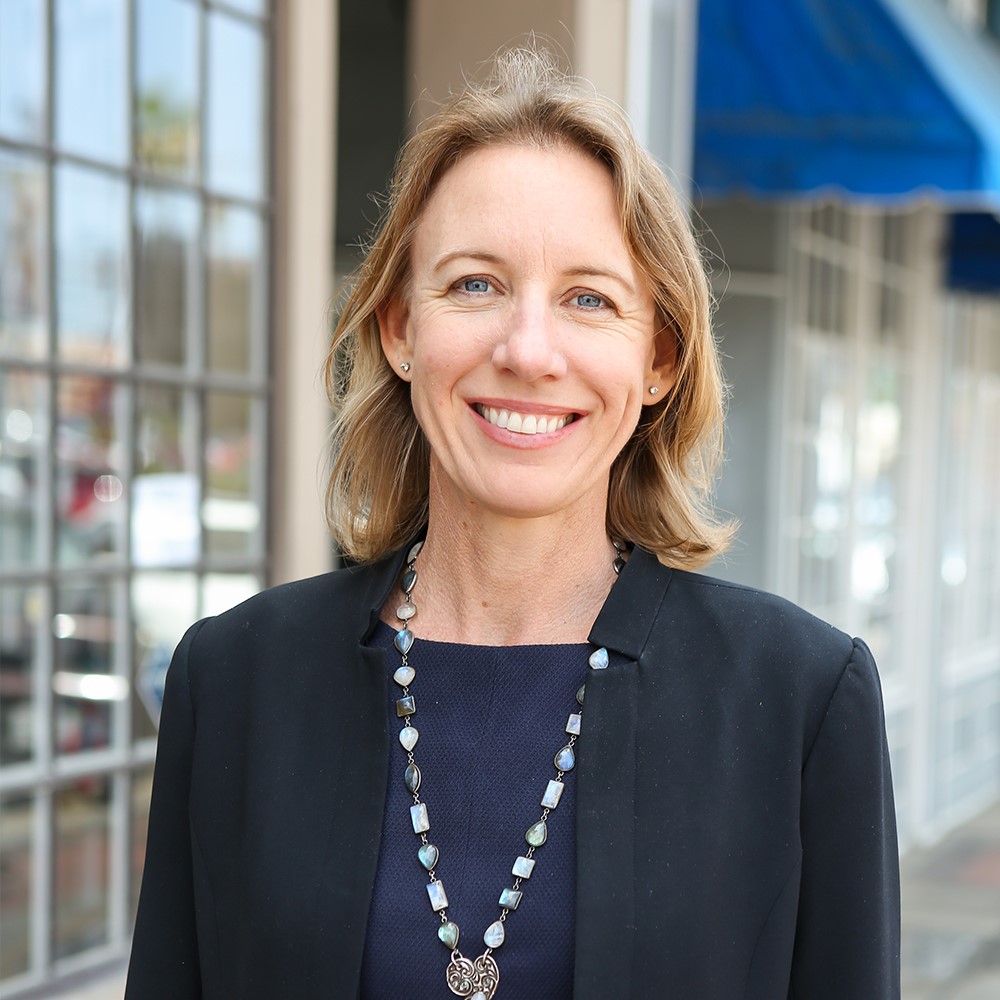
Sen. Catherine Blakespear
Sponsored bills
(1) Existing law establishes the Safe Drinking Water Account to be available to the State Water Resources Control Board, upon appropriation by the Legislature, for the purpose of providing funds necessary to administer the California Safe Drinking Water Act. This bill would expand the use of available funds in the account to be used by the state board, upon appropriation by the Legislature, to include the administration of the Water Shutoff Protection Act. The bill would, subject to the availability of funding, require the state board to make funds available for providing training statewide to community water systems with between 15 and 200 service connections to assist in compliance with the Water Shutoff Protection Act. (2) Existing law, the Water Shutoff Protection Act, prohibits an urban and community water system, defined as a public water system that supplies water to more than 200 service connections, from discontinuing residential service for nonpayment, as specified, and requires specified procedures before it can discontinue residential service for nonpayment. Existing law defines a community water system as a public water system that serves at least 15 service connections used by yearlong residents or regularly serves at least 25 yearlong residents of the area served by the system. Existing law requires an urban and community water system to have a written policy on discontinuation of residential service for nonpayment available in English, other designated languages, and any other language spoken by at least 10% of the people residing in its service area. This bill would expand the scope of the Water Shutoff Protection Act by requiring that it instead apply to a covered water system, defined to include specified water systems and suppliers, including a community water system. The bill would require a community water system, that is not otherwise required to comply, to comply with the act's provisions on and after August 1, 2024. The bill would instead apply the above-described language requirements for the written policy of discontinuation of residential service for nonpayment to a covered water system that serves 200 or more service connections. The bill would require a covered water system that serves fewer than 200 service connections to have a written policy on disconnection of residential service for nonpayment available in English, any language spoken by at least 10% of the people residing in its service area, and, upon request of a customer, other designated languages. The bill would authorize, as part of the act, the Attorney General, at the request of the board or upon the Attorney General's own motion, to bring an action in state court to restore to any person in interest any money or property, real or personal, that may have been acquired by any method, act, or practice prohibited by the act. The bill would make related changes.
Existing law establishes the Department of Housing and Community Development and requires it to administer various programs intended to promote the development of housing, including the Multifamily Housing Program, pursuant to which the department provides financial assistance in the form of deferred payment loans to pay for the eligible costs of development of specified types of housing projects. Existing law establishes eligible cost categories for the Multifamily Housing Program, which include capitalized reserves for replacement and operation. In this regard, existing law authorizes the department to allow capitalized operating reserves to be used for rent subsidies for assisted units, as specified. This bill would specify that the department may allow capitalized operating reserves to be used for eligible projects, and that assisted units may include, but not be limited to, supportive housing units, as defined. To determine project eligibility for capitalized operating reserves, the bill would authorize the department to consider specified factors, including the availability of funds and the individual financial needs of the project. The bill would require the department to offer capitalized operating reserves to supportive housing units after developers have sought capitalized reserves from other potential funding sources.
Existing law requires the Arts Council to establish criteria and guidelines for certification of state-designated cultural districts and collaborate with other public agencies and private entities to maximize the benefits of state-designated cultural districts. The Planning and Zoning Law imposes various requirements on cities and counties with regard to their review and approval of certain housing developments. This bill would authorize a city or county that requires, as a condition of approval, that a certain percentage of units of a residential development be affordable housing, as specified, to reserve for artists up to 10% of those required affordable housing units, except as provided, if certain conditions are met, including that the units reserved are located within or within one-half mile from a state-designated cultural district or within a locally designated cultural district, as specified. The bill would include findings that changes proposed by this bill address a matter of statewide concern rather than a municipal affair and, therefore, apply to all cities, including charter cities.
Existing law requires a prosecuting attorney, upon the request of a victim or a witness of a crime, to inform the victim or witness by letter of the final disposition of the case within 60 days of the final disposition. This bill would instead require the prosecuting attorney, upon the request of a victim or a witness of a crime, to inform the victim or witness by letter of the final disposition of the case within 30 days. Existing law requires all law enforcement agencies, medical facilities, crime laboratories, and any other facilities that receive, maintain, store, or preserve sexual assault evidence kits to conduct an audit of all untested sexual assault evidence kits in their possession and required these entities to report certain data to the Department of Justice by no later than July 1, 2019. Existing law required the Department of Justice to prepare and submit a report to the Legislature regarding the results of these audits by no later than July 1, 2020. Existing law requires the Department of Justice to prepare an information profile on each kit in the department's SAFE-T database, and to develop a process to allow a survivor to track and receive updates regarding their sexual assault evidence kit. This bill would require all law enforcement agencies, medical facilities, public crime laboratories, and any other facilities that receive, maintain, store, or preserve sexual assault evidence kits to conduct an audit of all untested sexual assault evidence kits in their possession. The bill would require each law enforcement agency and public crime laboratory to create a record in the SAFE-T database for every victim sexual assault kit that has not had DNA testing completed, as specified, by no later than July 1, 2026. The bill would specify that the SAFE-T database not include sexual assault evidence kits collected from suspects, but would require those kits to also be subject to the audit, as specified. The bill would require each medical facility and other non-law enforcement entity to report certain data relating to untested kits to the Department of Justice by no later than July 1, 2026. The bill would additionally require the Department of Justice to prepare and submit a report to the Legislature regarding the results of these audits by no later than July 1, 2027. By requiring local government entities to complete an audit and submit a report, this bill would impose a state-mandated local program. The bill would authorize a victim to request that a kit collected from them not be tested, and would exempt that kit from being tested. The California Constitution requires the state to reimburse local agencies and school districts for certain costs mandated by the state. Statutory provisions establish procedures for making that reimbursement. This bill would provide that, if the Commission on State Mandates determines that the bill contains costs mandated by the state, reimbursement for those costs shall be made pursuant to the statutory provisions noted above.
Existing law, the California Fair Employment and Housing Act, makes it an unlawful employment practice for an employer to refuse to grant a request by any employee to take up to 5 days of bereavement leave upon the death of a family member. This bill would additionally make it an unlawful employment practice for an employer to refuse to grant a request by an eligible employee to take up to 5 days of reproductive loss leave following a reproductive loss event, as defined. The bill would require that leave be taken within 3 months of the event, except as described, and pursuant to any existing leave policy of the employer. The bill would provide that if an employee experiences more than one reproductive loss event within a 12-month period, the employer is not obligated to grant a total amount of reproductive loss leave time in excess of 20 days within a 12-month period. Under the bill, in the absence of an existing policy, the reproductive loss leave may be unpaid. However, the bill would authorize an employee to use certain other leave balances otherwise available to the employee, including accrued and available paid sick leave. The bill would make leave under these provisions a separate and distinct right from any right under the California Fair Employment and Housing Act. The bill would make it an unlawful employment practice for an employer to retaliate against an individual, as described, because of the individual's exercise of the right to reproductive loss leave or the individual's giving of information or testimony as to reproductive loss leave, as described. The bill would require the employer to maintain employee confidentiality relating to reproductive loss leave, as specified. Existing constitutional provisions require that a statute that limits the right of access to the meetings of public bodies or the writings of public officials and agencies be adopted with findings demonstrating the interest protected by the limitation and the need for protecting that interest. This bill would make legislative findings to that effect.
The Planning and Zoning Law, among other things, provides for the creation of accessory dwelling units by local ordinance, or, if a local agency has not adopted an ordinance, by ministerial approval, in accordance with specified standards and conditions. Existing law prohibits a local agency from requiring an accessory dwelling unit to provide fire sprinklers, if they are not required for the primary residence. The State Housing Law, among other things, requires the Department of Housing and Community Development to adopt, amend, or repeal rules and regulations for the protection of the health, safety, and general welfare of the occupant and the public relating to specified residential structures, as provided, which apply throughout the state. A violation of the State Housing Law, or of the building standards or rules and regulations adopted pursuant to that law, is a misdemeanor. This bill, until January 1, 2027, would prohibit a local agency from imposing or enforcing any requirement to provide fire sprinklers for a temporary sleeping cabin that is on a site with 50 or fewer temporary sleeping cabins. The bill would define "temporary sleeping cabin" to mean a nonpermanent structure that is intended to provide temporary housing to people experiencing homelessness or at risk of homelessness, has a total floor area of less than 250 feet, and does not include plumbing. The bill would require a temporary sleeping cabin that does not include fire sprinklers to comply with alternative fire life and safety standards that include providing, among other things, a smoke alarm and carbon monoxide alarm in the unit, a fire extinguisher in the unit, and ingress and egress that facilitates rapid exit of the temporary sleeping cabin. By requiring local agencies to impose alternative fire life and safety standards for these units, the bill would impose a state-mandated local program. This bill would require violations of those alternative fire and life safety standards to be handled pursuant to specified provisions of the State Housing Law. By adding to the duties of local officials with respect to enforcement of the State Housing Law, the violation of which is a crime, this bill would impose a state-mandated local program. This bill would include findings that changes proposed by this bill address a matter of statewide concern rather than a municipal affair and, therefore, apply to all cities, including charter cities. The California Constitution requires the state to reimburse local agencies and school districts for certain costs mandated by the state. Statutory provisions establish procedures for making that reimbursement. This bill would provide that no reimbursement is required by this act for specified reasons.
Existing law requires that specified actions for recovery of damages suffered as a result of childhood sexual assault, as defined, be commenced within 22 years of the date the plaintiff attains the age of majority or within 5 years of the date the plaintiff discovers or reasonably should have discovered that psychological injury or illness occurring after the age of majority was caused by the sexual assault, whichever occurs later. Existing law prohibits certain of those actions from commencing on or after the plaintiff's 40th birthday unless the person or entity knew or had reason to know, or was otherwise on notice, of any misconduct that creates a risk of childhood sexual assault by an employee, volunteer, representative, or agent, or the person or entity failed to take reasonable steps or to implement reasonable safeguards to avoid acts of childhood sexual assault, as specified. Existing law revives claims that would otherwise have been barred as of January 1, 2020, because the applicable statute of limitations, claim presentation deadline, or any other time limit had expired and authorizes the claims to be commenced within specified time periods. This bill would eliminate time limits for the commencement of actions for the recovery of damages suffered as a result of childhood sexual assault, as specified. The bill would eliminate the prohibition on certain actions proceeding on or after the plaintiff's 40th birthday unless specified conditions are met. The bill would specify that its provisions apply to any claim in which the childhood sexual assult occurred on and after January 1, 2024.
The Unfair Competition Law (UCL) makes various unfair competition practices unlawful, including any unlawful, unfair, or fraudulent business act or practice. Existing law regulates consumer refunds specific to certain industries under specified circumstances. This bill would require a hotel, third-party booking service, hosting platform, or short-term rental, as defined, to allow a reservation for a hotel accommodation or a short-term rental located in California to be canceled without penalty for at least 24 hours after the reservation is confirmed if the reservation is made 72 hours or more before the time of check-in. This bill would require, if a consumer cancels a reservation pursuant to that provision, the hotel, third-party booking service, hosting platform, or short-term rental to issue a refund to a consumer for all amounts paid to the hosting platform, hotel, third-party booking service, or short-term rental to the original form of payment within 30 days of the cancellation of the reservation. This bill would authorize certain public attorneys, including the Attorney General, to bring an enforcement action, as provided. The bill would require a court to impose a civil penalty of not more than $10,000 for each violation pursuant to consideration of specified factors. The bill would exempt certain types of reservations from its provisions, including a reservation made for a negotiated rate that was not advertised, or otherwise made available, for booking by the general public.
Existing law authorizes the Department of Transportation, subject to approval of the Secretary of Transportation, to enter into an interagency transfer agreement under which a joint powers board assumes responsibility for administering the state-funded intercity rail service in a particular corridor, including the LOSSAN Rail Corridor, defined to mean the intercity passenger rail corridor between San Diego, Los Angeles, and San Luis Obispo. Existing law requires the agreements to cover an initial 3-year period after the transfer, and authorizes subsequent extensions by mutual agreement. Pursuant to this authority, the department entered into an interagency transfer agreement with the LOSSAN Rail Corridor Agency to administer intercity passenger rail service in the LOSSAN corridor. Existing law provides for the allocation of state funds by the secretary to a joint powers board under an interagency transfer agreement based on an annual business plan for the intercity rail corridor and subsequent appropriation of state funds. Existing law requires the joint powers board to submit the annual business plan to the secretary for review and recommendation by April 1 of each year. Existing law requires the business plan to include, among other things, a report on the performance of the corridor service, an overall operating plan, short-term and long-term capital improvement programs, funding requirements for the upcoming fiscal year, and an action plan with specific performance goals and objectives. This bill would require the LOSSAN Rail Corridor Agency, as part of the annual business plan submitted to the secretary, to include a description of the effects of climate change on the LOSSAN corridor, to identify projects planned to increase climate resiliency on the corridor, and to discuss possible funding options for those identified projects, as specified. To the extent the bill would add to the duties of the LOSSAN Rail Corridor Agency, the bill would impose a state-mandated local program. The California Constitution requires the state to reimburse local agencies and school districts for certain costs mandated by the state. Statutory provisions establish procedures for making that reimbursement. This bill would provide that, if the Commission on State Mandates determines that the bill contains costs mandated by the state, reimbursement for those costs shall be made pursuant to the statutory provisions noted above.