

Existing law provides for the licensure and regulation of clinics and health facilities, including, but not limited to, primary care and specialty clinics, by the State Department of Public Health. Under existing law, the department is also responsible for the statewide administration of various programs and policies relating to personal health, including maternal, child, and adolescent health. Existing law requires the department to develop a coordinated state strategy for addressing the health-related needs of women, including implementation of goals and objectives for women's health, as specified. This bill would require the department to conduct an awareness campaign to communicate with local health departments, health care providers, and the public regarding facilities that provide health care services, including, but not limited to, primary care and specialty clinics. The bill would require the awareness campaign to include information about the services the facilities offer, and the activities of the department, relating to pregnancy care and abortion. The bill would require the campaign to make that information available to, among others, health care professional associations and societies and health care employers. The bill would authorize the department to award grants or enter into contracts to perform the functions required to conduct the awareness campaign, as specified. The bill would repeal these provisions on January 1, 2025.
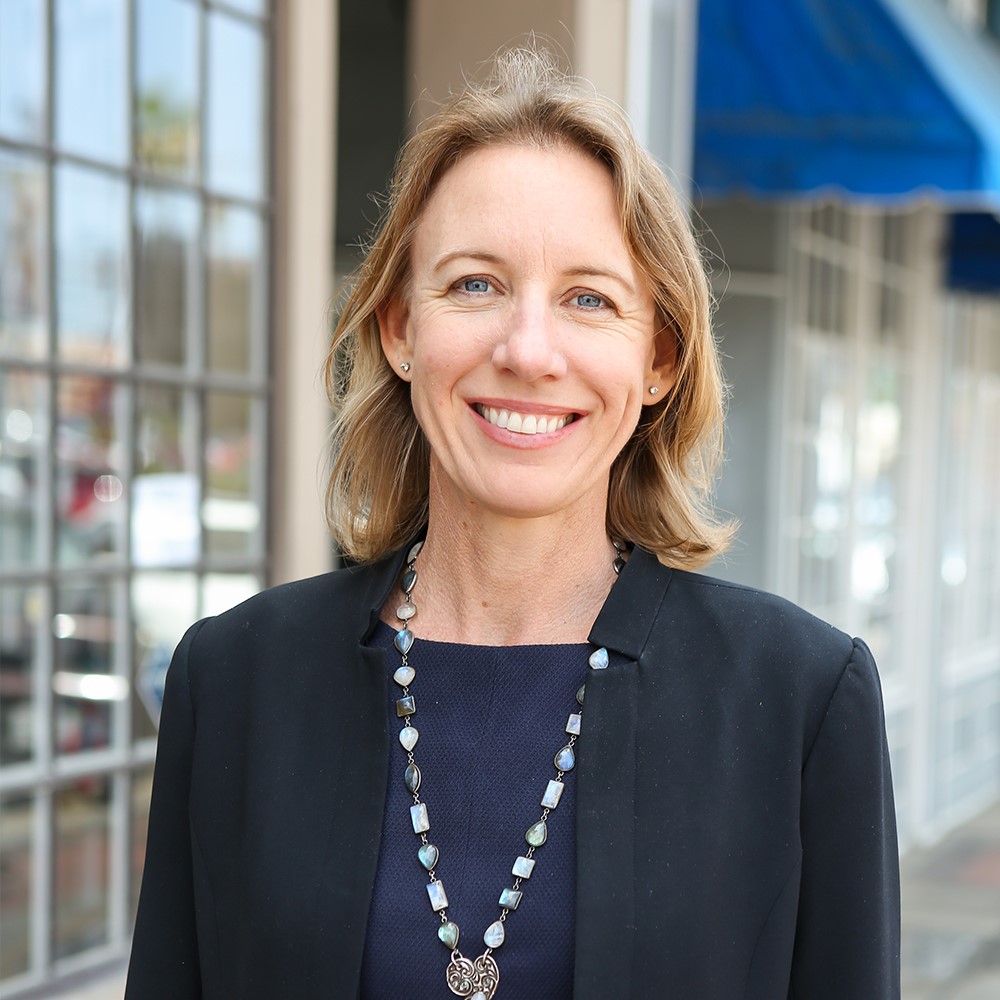
Sen. Catherine Blakespear
Sponsored bills
Existing law, the Planning and Zoning Law, requires that a Low Barrier Navigation Center development be a use by right in areas zoned for mixed uses and nonresidential zones permitting multifamily uses if it meets prescribed requirements. Existing law defines the terms "Low Barrier Navigation Center" and "use by right" for these purposes. Existing law provides that the California Environmental Quality Act (CEQA) does not apply to an action taken by a public agency to lease, convey, or encumber land owned by a public entity or to facilitate the lease, conveyance, or encumbrance of land owned by a public agency, or to provide financial assistance to, or otherwise approve, a Low Barrier Navigation Center constructed or allowed by existing law. CEQA does not apply to the ministerial approval of projects. Existing law prescribes requirements for notifying a developer that its application for a Low Barrier Navigation Center development is complete and for the local jurisdiction to complete its review of the application. Existing law declares that Low Barrier Navigation Center developments are essential tools for alleviating the homelessness crisis in this state and are a matter of statewide concern and thus applicable to charter cities. Existing law repeals these provisions as of January 1, 2027. This bill would additionally require an opportunity housing project, as defined, to be a use by right if the project has a housing transition plan for a situation when the parcel on which the project is located is no longer suitable for opportunity housing projects, as specified. The bill would also expand use by right to include sites used pursuant to Executive Order No. N-23-20 and areas zoned for medical use or faith-based use. The bill would provide that these provisions do not apply to an opportunity housing project located on a site in a nonresidential zone unless the site is located near amenities and services that serve people experiencing homelessness, as specified. The bill, by authorizing additional developments to be a use by right under certain circumstances, would expand the exemption for the ministerial approval of projects under CEQA. The bill would further expand the above-described application requirements to include opportunity housing projects and additionally declare that the projects are a matter of statewide concern. The bill would also authorize an opportunity housing project proponent to submit a request to any local agency regarding any parcel owned by the local agency to inquire whether the parcel is suitable for an opportunity housing project. The bill would require a local agency to respond to the request within 60 days, as specified. By increasing the duties of local planning officials, this bill would impose a state-mandated local program. Existing law, the California Building Standards Law, establishes the California Building Standards Commission within the Department of General Services. Existing law requires the commission to approve and adopt building standards and to codify those standards in the California Building Standards Code. Existing law, the State Housing Law, requires the Department of Housing and Community Development to propose the adoption, amendment, or repeal of building standards to the California Building Standards Commission. The bill would require the Department of Housing and Community Development, at an expedited meeting on or after January 1, 2024, to investigate possible changes to the California Building Code for health, safety, and fire standards that could unnecessarily increase project construction costs for opportunity housing projects, while ensuring housing quality. The bill would authorize the department to propose changes to those building standards for consideration by the California Building Standards Commission if the department determines that changes can be incorporated to reduce the unnecessary construction costs for opportunity housing projects. The California Constitution requires the state to reimburse local agencies and school districts for certain costs mandated by the state. Statutory provisions establish procedures for making that reimbursement. This bill would provide that no reimbursement is required by this act for a specified reason.
Existing law prohibits, beginning January 1, 2025, a person or entity from manufacturing, selling, delivering, holding, or offering for sale in commerce any cosmetic product that contains intentionally added perfluoroalkyl and polyfluoroalkyl substances (PFAS) , as defined. Existing law similarly prohibits, beginning January 1, 2025, any person from manufacturing, distributing, selling, or offering for sale in the state any new, not previously owned, textile articles that contain regulated PFAS, except as specified, and requires a manufacturer to use the least toxic alternative when removing regulated PFAS in textile articles to comply with these provisions. This bill would, beginning January 1, 2025, similarly prohibit any person from manufacturing, distributing, selling, or offering for sale in the state any menstrual products that contain regulated PFAS, and requires a manufacturer to use the least toxic alternative when removing regulated PFAS in menstrual products to comply with these provisions. The bill would require a manufacturer of a menstrual product to provide persons that offer the product for sale or distribution in the state with a certificate of compliance stating that the menstrual product is in compliance with these provisions and does not contain any regulated PFAS. The bill would make a violation of these provisions punishable by a civil penalty not to exceed $10,000 per day for each violation, as specified, and would authorize the Attorney General, a city prosecutor, a city or county attorney, a county counsel, or a district attorney to bring an action to enforce these provisions.
Existing law establishes the State Department of Public Health to implement various programs throughout the state relating to public health. This bill would require the State Department of Public Health and the Office of Emergency Services, in coordination with other state agencies as appropriate, to, upon appropriation and as necessary, establish an infant formula stockpile. The bill would require the department to establish guidelines for the procurement, management, and distribution of infant formula, taking into account, among other things, the amount of each type of infant formula that would be required to meet shortages, as specified. The bill would also establish the Infant Formula Advisory Committee to, among other things, make recommendations for the development of guidelines for the procurement, management, and distribution of infant formula, as specified, and advise the development and implementation of the program. The bill would require the committee to provide an annual report to the Legislature with feedback regarding the implementation of the program and updates regarding policy changes and public comments.
Existing law establishes a workers' compensation system, administered by the Administrative Director of the Division of Workers' Compensation, to compensate an employee for injuries sustained in the course of employment. Existing law provides, among other things, that skin cancer developing in active lifeguards, as defined, is presumed to arise out of and in the course of employment, unless the presumption is rebutted. This bill would expand the scope of those provisions to certain peace officers of the Department of Fish and Wildlife and the Department of Parks and Recreation. This bill would incorporate additional changes to Section 3212.11 of the Labor Code proposed by AB 699 to be operative only if this bill and AB 699 are enacted and this bill is enacted last.
Existing law establishes homeless youth emergency service pilot projects in the City of Los Angeles and the City and County of San Francisco providing services to homeless minors, including food and access to an overnight shelter and counseling to address immediate emotional crises or problems. Existing law also requires similar programs to be established in the Counties of San Diego and Santa Clara, and all of these programs to be operated by an agency in accordance with a grant award agreement with the Office of Emergency Services. Existing law requires the Governor to create the California Interagency Council on Homelessness and specifies the duties of the council. Existing law requires agencies and departments administering state programs to collaborate with the council to adopt guidelines and regulations to incorporate core components of Housing First, which include, among other things, a tenant screening process that accepts applicants regardless of sobriety, not rejecting applicants based on poor credit or financial history, and prohibiting participation in services or program compliance from being a requirement for permanent housing. This bill, until January 1, 2027, and upon appropriation by the Legislature for these purposes, would require the Department of Housing and Community Development to establish the Unicorn Homes Transitional Housing for Homeless LGBTQ+ Youth Program, to be administered by local community-based organizations that provide a majority of its services to the LGBTQ+ community. The bill would require the department to fund community-based organizations in the participating Counties of San Diego and Sacramento that provide transitional housing for LGBTQ+ youth, 18 to 24 years of age, inclusive, experiencing homelessness due to family rejection, with the ultimate goal of reunification with the youth's original family. The bill would require the community-based organization to place eligible youth with volunteer host families who meet specified criteria, pursuant to the results of a background check, and who are able to provide crisis intervention with a trauma-informed approach, as defined, to their care. The bill would also require the program to comply with the existing core components of Housing First. The bill would require each community-based organization to prepare and submit an annual report to the department, with the first report due on or before December 1, 2024, and a final report due on or before June 30, 2026, which would be required to include specified information, including the number of times the organization was contacted by youths, how many of those contacts became participants in the program, and how many of those initial contacts became repeat contacts. The bill would also require the department to compile the annual reports into a final report, to be submitted to the Legislature on or before December 31, 2026.
This measure would declare October 2023 as Women's Small Business Month and encourage all citizens to recognize the economic importance of women's small business in California.
Existing law makes it a crime to possess for sale or purchase for purpose of sale, transport, import, sell, furnish, administer, give away, manufacture, compound, convert, produce, derive, process, or prepare various controlled substances, including, among others, fentanyl, peyote, and various other opiates and narcotics. This bill, Alexandra's Law, would require the court to advise a person who is convicted of, or who pleads guilty or no contest to, the above crimes, as specified, of the danger of selling or administering illicit drugs and counterfeit pills and that, if a person dies as a result of that action, the defendant can be charged with homicide. The bill would require the court to read the advisory statement in a case in which the defendant exchanged a controlled substance containing fentanyl or its analogs for anything else of value, as specified. The bill would require the advisory statement to be included in a plea form, if used, and specified on the record. The bill would require that the fact the advisory was given be recorded in the abstract of conviction and would prohibit the advisement from being used as evidence in the prosecution of a minor in juvenile court.
(1) The California Beverage Container Recycling and Litter Reduction Act, of which a violation is a crime, requires a distributor to pay a redemption payment for every beverage container sold or offered for sale in the state. The act defines the term "beverage container" to mean the individual, separate bottle, can, jar, carton, or other receptacle, however denominated, in which a beverage is sold, and which is constructed of metal, glass, or plastic, or other material, or any combination of these materials, but does not include cups or other similar open or loosely sealed receptacles. The act defines "beverage" to include certain types of products in liquid, ready-to-drink form, including carbonated fruit drinks and noncarbonated fruit drinks that contain any percentage of fruit juice, but not 100% fruit juice in 46-ounce containers or larger or vegetable juice containers with more than 16 ounces. This bill would expand the application of the act to any size container of 100% fruit juice and any size container of vegetable juice, beginning January 1, 2024. Since the additional payments for the beverage containers that this bill would make subject to the act would be deposited in a continuously appropriated fund, the bill would make an appropriation. The bill would impose a state-mandated local program by creating new crimes under the act relating to the regulation of beverage containers. (2) The act defines a "beverage manufacturer" as a person who bottles, cans, or otherwise fills beverage containers, or imports filled beverage containers, for sale to distributors, dealers, or consumers. This bill would amend the definition of "beverage manufacturer" to mean the same as above, except that for a beverage container containing beer, wine, or distilled spirits, the "beverage manufacturer" would be the person who holds the license from the Department of Alcoholic Beverage Control authorizing the manufacture of the beer, wine, or distilled spirits, regardless of whether that person contracts with a third party to bottle, can, or otherwise fill the beverage container, so long as the beverage container is provided for sale to a distributor, dealer, or consumer by the holder of the license. (3) The act requires plastic beverage containers sold by a beverage manufacturer, as specified, to contain a specified average percentage of postconsumer recycled plastic. The act provides for periodic increases in the required percentage, but authorizes the Director of Resources Recycling and Recovery to lower the required percentage, based on specified criteria. The act imposes an administrative penalty on a beverage manufacturer that fails to include the required percentage of postconsumer recycled plastic in its plastic beverage containers. This bill would exempt beverage containers of 46 ounces or more of 100% fruit juice and beverage containers with more than 16 ounces of vegetable juice from consideration in calculating the required percentage of postconsumer recycled plastic for a beverage manufacturer until January 1, 2026. (4) The act requires a beverage manufacturer to label a beverage container sold or offered for sale by that beverage manufacturer in the state with one of several specified redemption value messages. The act prohibits a person from offering to sell, or selling, to a consumer a beverage container that has not been labeled as required by the act. The act exempts a beverage container included within the scope of the act beginning on January 1, 2024, from the act's labeling requirements until July 1, 2025. This bill would additionally exempt from the act's labeling requirements a beverage container included within the scope of the act beginning on January 1, 2024, that was filled and labeled before January 1, 2024, and a beverage container with 46 ounces or more of 100% fruit juice or more than 16 ounces of vegetable juice that was filled and labeled before July 1, 2024. (5) Existing law requires a dealer, as defined, to separately identify the amount of any redemption payment imposed on a beverage container on the shelf labels of the dealer's establishment, as specified. This bill would exempt from this shelf labeling requirement until January 15, 2024, a beverage container included within the scope of the act beginning on January 1, 2024. (6) The act requires a beverage manufacturer to pay to the Department of Resources Recycling and Recovery a processing fee for each beverage container sold or transferred and requires the department to distribute those fees, with other moneys, as processing payments to processors and recycling centers. The act requires the department to calculate the processing payment annually and authorizes quarterly adjustments, both based on the prior 12-month scrap value. This bill would authorize the department to adjust the processing payment quarterly, based on the lower of either the applicable preceding 12-month or 3-month average scrap value instead of only the prior 12-month scrap value. The bill would require a processing payment equal to the processing payment applied to HDPE beverage containers to be applied to a beverage container that is a box, bladder, pouch, or similar container, containing wine or distilled spirits. This bill would require the department to pay to a recycling center in a rural area, as specified, in addition to a processing payment, a transportation, operations, and logistics payment for glass beverage containers, as specified, until January 1, 2030. The bill would continuously appropriate moneys in the California Beverage Container Recycling Fund to the department for this purpose, thereby making an appropriation. (7) The act requires a beverage distributor to pay to the department a redemption payment for a beverage container sold or offered for sale in the state by the distributor, as specified. The act exempts any lodging, eating, or drinking establishment, licensed wine or distilled spirits tasting room, or soft drink vending machine operator from the definition of dealer, as specified. This bill, commencing January 1, 2024, would exempt a beverage distributor from being required to pay a redemption payment for a beverage container that is used solely to pour wine, beer, or distilled spirits at a licensed wine, beer, or distilled spirits tasting room. The bill would additionally exempt a licensed beer tasting room from the definition of dealer. (8) The act requires the department, not less than once every 6 months, to post on its internet website an updated condition statement for the California Beverage Container Recycling Fund, and other specified information, for the current fiscal year and budget year and to provide a written copy of that information to specified committees of the Legislature. This bill would instead require the department to notify certain committees of the Legislature of the posting of the above-described information. (9) Existing law provides that the Division of Recycling in the department succeeds to and is vested with specified authority, duties, powers, purposes, responsibilities, and jurisdiction that once belonged to the Department of Conservation regarding the act. This bill would provide that the department, instead of the division within the department, succeeds to and is vested with the specified authority, duties, powers, purposes, responsibilities, and jurisdiction that once belonged to the Department of Conservation regarding the act. (10) The California Constitution requires the state to reimburse local agencies and school districts for certain costs mandated by the state. Statutory provisions establish procedures for making that reimbursement. This bill would provide that no reimbursement is required by this act for a specified reason. (11) This bill would declare that it is to take effect immediately as an urgency statute.