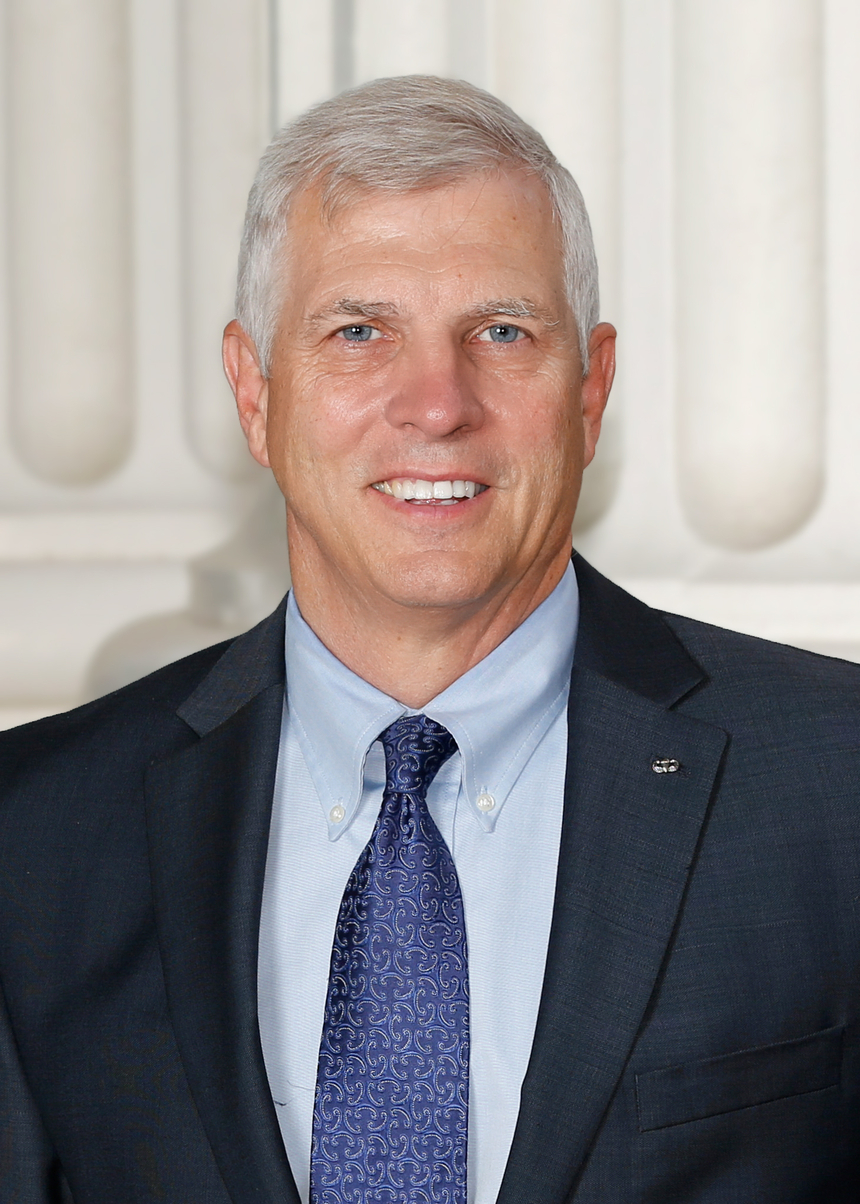
Photo of Tom Umberg
D California Senate · District 34

Sen. Tom Umberg

Compare
Total votes
17,276
all sessions
Attendance
97%
370 missed
Lower than 88% of chamber peers
With party
99%
of cast votes
Near the chamber average
Bipartisan score
0%
crosses aisle rarely
Near the chamber average
Sponsored
904
bills & resolutions
Near the chamber average
Committees
6
assignments
904 bills and resolutions

Sponsored bills

Total
904
Primary
196
Co-sponsor
708
This page
904
matching current filters
Co-sponsor SCR 80
Signed into law · California Senate · Co-sponsor
Relative to Childhood Cancer Awareness Month.

This measure would declare the month of September 2024 as Childhood Cancer Awareness Month and state the commitment of the Legislature to support efforts to find cures, and less toxic treatments, for childhood cancer.

Signed into law Sep 5, 2024 1 co-sponsor
Co-sponsor SB 89
died · California Senate · Co-sponsor
Crimes: stalking.

Existing law makes a person who willfully, maliciously, and repeatedly follows or willfully and maliciously harasses another person and who makes a credible threat with the intent to place that person in reasonable fear for the person's safety, or the safety of the person's immediate family, guilty of the crime of stalking, punishable as a misdemeanor or a felony. This bill would also make a person guilty of stalking if the person willfully, maliciously, and repeatedly follows or willfully and maliciously harasses another person and who makes a credible threat with the intent to place that person in reasonable fear for the safety of that person's pet, service animal, emotional support animal, or horse. By changing the definition of a crime, this bill would impose a state-mandated local program. The California Constitution requires the state to reimburse local agencies and school districts for certain costs mandated by the state. Statutory provisions establish procedures for making that reimbursement. This bill would provide that no reimbursement is required by this act for a specified reason.

died Aug 28, 2024 1 co-sponsor
Co-sponsor ACR 182
Signed into law · California Assembly · Co-sponsor
The Great Pacific Garbage Patch.

This measure would provide for the promotion and encouragement of solutions and resources for keeping the oceans and coastlines healthy and eliminating the Great Pacific Garbage Patch.

Signed into law Aug 26, 2024 1 co-sponsor
Co-sponsor SJR 6
Signed into law · California Senate · Co-sponsor
Don't Ask, Don't Tell: discharge characterizations.

This measure would urge the President and the Congress of the United States to address, with effective policies, the issue of servicemembers who were unjustly discharged under "Don't Ask, Don't Tell" or predecessor provisions, in order to unify efforts to upgrade discharges issued under the DADT policy, and to restore benefits.

Signed into law Aug 21, 2024 1 co-sponsor
Co-sponsor SB 905
Signed into law · California Senate · Co-sponsor
Crimes: theft from a vehicle.

Existing law defines the crime of burglary to include entering a vehicle when the doors are locked with the intent to commit grand or petit larceny or a felony. Existing law makes the burglary of a vehicle punishable as a misdemeanor or a felony. This bill would make forcibly entering a vehicle, as defined, with the intent to commit a theft or a felony therein a crime punishable by imprisonment in a county jail for a period not to exceed one year or imprisonment in a county jail for 16 months, or 2 or 3 years. By creating a new crime, this bill would impose a state-mandated local program. Existing law prohibits the taking of the personal property of another, as specified, prohibits removing any part of a vehicle without the consent of the owner, and prohibits the possession or receipt of stolen property, as specified. A violation of these prohibitions is punishable as either a misdemeanor or a felony. This bill would make it a crime for a person to unlawfully possess property that was acquired through one or more acts of theft from a vehicle, unlawful entry of a vehicle, burglary of a locked vehicle, or vehicle tampering, if the property is not possessed for personal use and the person has the intent to sell or exchange the property, or the intent to act with another person to sell or exchange the property, and the value of the possessed property exceeds $950. The bill would, for the purpose of determining the value, allow the aggregation of the value of other illegally obtained property possessed by the person within the past 2 years. The bill would make this crime punishable as a misdemeanor or a felony. By creating a new crime, this bill would impose a state-mandated local program. The California Constitution requires the state to reimburse local agencies and school districts for certain costs mandated by the state. Statutory provisions establish procedures for making that reimbursement. This bill would provide that no reimbursement is required by this act for a specified reason.

Signed into law Aug 16, 2024 1 co-sponsor
Co-sponsor SB 1487
Passed · California Senate · Co-sponsor
Vehicles: parking violations.

Existing law requires the schedule of parking penalties for parking violations and late payment penalties to be established by the governing body of the jurisdiction where the notice of violation is issued, as specified. This bill would specify that, when paid by mail, payment of a parking penalty or late payment penalty is deemed received on the date payment is postmarked. This bill would, notwithstanding any other law, prohibit a late payment penalty for a parking violation from exceeding 30% of the established parking penalty. Existing law establishes a process by which a person who has received a notice of a parking violation or a notice of a delinquent parking violation may contest the notice. Existing law requires the notice of delinquent parking violation to include information that renewal of the vehicle registration is contingent upon the registered owner paying the parking penalty or contesting the citation within 21 calendar days from the date of issuance of the citation or 14 calendar days after the mailing of the notice of delinquent parking violation, or filing a specified affidavit. Existing law prohibits the addition of additional fees, assessments, and charges if the owner complies with the above-described deadlines and requirements. Existing law authorizes a person to request an initial review of the notice by the issuing agency for a period of 21 calendar days from the issuance of the notice of the parking violation or 14 calendar days from the mailing of a notice of delinquent parking notification, exclusive of the days the processing agency receives a specified request and the day the processing agency complies with the request. This bill would extend the time for the registered owner to pay the penalty or contest the citation to 30 calendar days, and extend the time to pay following issuance of the notice of delinquent parking violation to 21 calendar days. The bill would prohibit the imposition of additional fees until after the expiration of 30 days from the date of issuance of the parking violation. The bill would prohibit governing bodies from sending citations to the Department of Motor Vehicles for registration renewal hold until after 30 days from the date of issuance of the parking citation. This bill would extend the time for the person to request an initial review to 30 calendar days from the issuance of the notice of the parking violation or 21 days from the mailing of a notice of delinquent parking notification, exclusive of the days the processing agency receives a specified request and the day the processing agency complies with the request. This bill would require its provisions to be implemented in a local jurisdiction on the first day of the local jurisdiction's first fiscal year following January 1, 2025. By creating new duties for local entities, the bill would impose a state-mandated local program. The California Constitution requires the state to reimburse local agencies and school districts for certain costs mandated by the state. Statutory provisions establish procedures for making that reimbursement. This bill would provide that, if the Commission on State Mandates determines that the bill contains costs mandated by the state, reimbursement for those costs shall be made pursuant to the statutory provisions noted above.

Passed Aug 15, 2024 1 co-sponsor
Primary SB 99
died · California Senate · Lead sponsor
Law enforcement agencies: military equipment.

Existing law requires a law enforcement agency, as defined, to obtain approval of the applicable governing body, by adoption of a military equipment use policy prior to taking certain actions relating to the funding, acquisition, or use of military equipment, as defined. Existing law requires the governing body to approve a military equipment use policy only if it determines compliance with certain standards, including that the military equipment is necessary because there is no reasonable alternative that can achieve the same objective of officer and civilian safety. This bill would add to those standards that the United States Armed Forces has not been prohibited by federal law or regulation from purchasing the military equipment from the manufacturer or seller of the military equipment. By adding to the duties of local governing bodies with respect to the acquisition of military equipment, this bill would impose a state-mandated local program. The California Constitution requires the state to reimburse local agencies and school districts for certain costs mandated by the state. Statutory provisions establish procedures for making that reimbursement. This bill would provide that, if the Commission on State Mandates determines that the bill contains costs mandated by the state, reimbursement for those costs shall be made pursuant to the statutory provisions noted above.

died Aug 15, 2024 0 co-sponsors
Co-sponsor SB 1214
Passed · California Senate · Co-sponsor
California Commission on the United States Semiquincentennial.

Existing law establishes various commissions within state government. This bill would, until January 1, 2028, establish the California Commission on the United States Semiquincentennial in state government to celebrate the 250th anniversary of the signing of the Declaration of Independence and the founding of the United States of America. The bill would require the commission to plan and coordinate commemorations and observances of the 250th anniversary of the Declaration of Independence and the American Revolution. The bill would require the commission to be solely supported by private or federal funds made available for the purpose of supporting the commission. The bill would require that these funds be deposited in the Semiquincentennial Fund, and would create that fund in the State Treasury. The bill would require funds in the Semiquincentennial Fund to be available, upon appropriation by the Legislature, as specified. The bill would require the records, files, and other memoranda of the commission, other than any private possessions, to be deposited and filed with the State Archives before January 1, 2028, and would require the State Archives to receive those materials. These provisions would become operative only if the Treasurer determines that sufficient private or federal funds have been made available.

Passed Aug 15, 2024 1 co-sponsor
Primary SB 359
died · California Senate · Lead sponsor
Automobile dismantling: enforcement.

Existing law requires the Department of Motor Vehicles to collaborate with the California Department of Tax and Fee Administration, the California Environmental Protection Agency, the Department of Toxic Substances Control, the State Water Resources Control Board, the Department of Resources Recycling and Recovery, and the State Air Resources Board to review and coordinate enforcement and compliance activity related to unlicensed and unregulated automobile dismantling, including resulting tax evasion, environmental impacts, and public health impacts. Existing law requires the department, in consultation with those agencies, on or before January 1, 2024, to submit a related report to the Legislature, including specified information. Existing law would repeal these provisions on January 1, 2025. This bill would extend the operation of these provisions indefinitely and would require the department, on or before January 1, 2027, to submit to the Legislature a report updating the data, information, and recommendations provided in the above-described report.

died Aug 15, 2024 0 co-sponsors
Co-sponsor SB 265
Passed · California Senate · Co-sponsor
Cybersecurity preparedness: critical infrastructure sectors.

Existing law, the California Emergency Services Act, among other things, creates the Office of Emergency Services (Cal OES) , which is responsible for the state's emergency and disaster response services, as specified. Existing law requires Cal OES to establish the California Cybersecurity Integration Center (Cal-CSIC) with the primary mission of reducing the likelihood and severity of cyber incidents that could damage California's economy, its critical infrastructure, or public and private sector computer networks in the state. Existing law requires Cal OES to direct Cal-CSIC to prepare, and Cal OES to submit to the Legislature on or before January 1, 2024, a strategic, multiyear outreach plan to assist the food and agriculture sector and wastewater sector in their efforts to improve cybersecurity and an evaluation of options for providing grants or alternative forms of funding to, and potential voluntary actions that do not require funding and that assist, those sectors in their efforts to improve security preparedness. This bill would require Cal OES to direct Cal-CSIC to prepare, and Cal OES to submit to the Legislature on or before January 1, 2025, a strategic, multiyear outreach plan to assist critical infrastructure sectors, as defined, in their efforts to improve cybersecurity and an evaluation of options for providing grants or alternative forms of funding to, and potential voluntary actions that do not require funding and that assist, that sector in their efforts to improve cybersecurity preparedness. The bill would make related findings and declarations.


Passed Aug 15, 2024 1 co-sponsor
Showing 221 to 230 of 904 bills
Previous 1 … 22 23 24 … 91 Next