

This measure would designate April 2011 as California Autism Awareness Month, would affirm the Legislature's commitment to the important issues related to autism spectrum disorders (ASDs) , would emphasize that each and every individual with an ASD is a valued and important member of our society, would recognize and commend the parents and relatives of individuals with ASDs for their sacrifice and dedication in providing for the special needs of individuals with ASDs, would recognize and commend the work of all nonprofit organizations that are contributing to the well-being of individuals with autism and their families, would stress the need to identify children with ASD and begin early intervention services immediately after a childhood diagnosis, and would stress the need for these intervention services, as well as supports, for individuals with ASDs and their families in an integrated, seamless, comprehensive, and competent manner that is delivered across the child's lifespan.
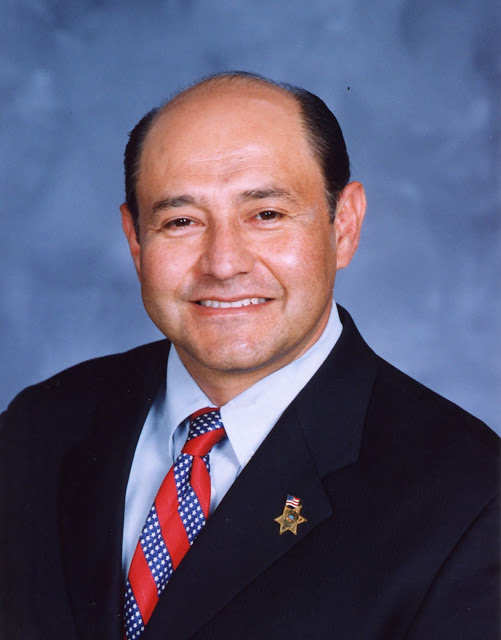
Sponsored bills
This measure would declare May 2011 and each May thereafter as "Senior Volunteer Month" to honor the contributions of California's senior volunteers.
Existing law provides that a provision of a memorandum of understanding reached between the state employer and a recognized employee organization representing state civil service employees that requires the expenditure of funds does not become effective unless approved by the Legislature in the annual Budget Act. This bill would approve provisions of memoranda of understanding entered into between the state employer and State Bargaining Units 2, 6, 7, 9, 10, and 13, and would approve addenda to memoranda of understanding entered into by the state employer and State Bargaining Units 1, 3, 4, 11, 12, 14, 15, 16, 17, 18, 19, 20, and 21, that require the expenditure of funds, and would provide that these provisions will become effective even if funds for these provisions are approved by the Legislature in legislation other than the annual Budget Act. The bill would provide that provisions of the memoranda of understanding and addenda to memoranda of understanding approved by this bill that require the expenditure of funds will not take effect unless funds for those provisions are specifically appropriated by the Legislature, and would require the state employer and the affected employee organization to meet and confer to renegotiate the affected provisions if funds for those provisions are not specifically appropriated by the Legislature. The annual Budget Act appropriates specified amounts from the General Fund, unallocated special funds, and unallocated nongovernmental cost funds, for state employee compensation. In the event that the annual Budget Act is not enacted prior to July 1 of each year covered by the memoranda of understanding for State Bargaining Units 1, 3, 4, 11, 14, 15, 17, 20, and 21, existing law provides for a continuous appropriation for the amount necessary for the payment of compensation and benefits to members of those bargaining units. This bill would expand that provision to also include members of State Bargaining Units 2, 6, 7, 9, 10, and 13. The Public Employees' Retirement Law (PERL) prescribes contribution rates for state employees who are state miscellaneous, state industrial, state safety members, patrol members, or state peace officer/firefighter members, among others, in amounts based on percentages of monthly compensation, as specified. Member contributions are deposited into the Public Employees' Retirement Fund, which is a continuously appropriated trust fund. This bill would increase the contribution rates by 5% for state miscellaneous, state industrial, or state safety members who are represented by State Bargaining Unit 13, by 3% for state miscellaneous, state industrial, or state safety members who are represented by State Bargaining Unit 2, 6, 7, 9, or 10, by 3% for state peace officer/firefighter members who are represented by State Bargaining Unit 6, and by 2% for state peace officer/firefighter members who are represented by State Bargaining Unit 7, beginning on the first day of the pay period following the operative date of the bill. By increasing member contributions into a continuously appropriated fund, this bill would make an appropriation. The bill would reduce the contribution rates by 1% for excluded state miscellaneous or state industrial members related to State Bargaining Unit 2. Existing law requires the state to pay sworn members of the California Highway Patrol who are rank-and-file members of State Bargaining Unit 5 the estimated average total compensation for each corresponding rank in specified local police departments. Existing law requires any increase in total compensation resulting from a survey of the average compensation for those departments to be implemented through a memorandum of understanding negotiated pursuant to the Ralph C. Dills Act. Existing law requires that any amount that would otherwise be used to permanently increase compensation for those members of State Bargaining Unit 5 pursuant to those provisions, effective on July 1, 2009, and on July 1, 2010, to permanently prefund postemployment health care benefits for patrol members, as provided. This bill would authorize the Director of the Department of Personnel Administration to apply the provision directing the use of those amounts to prefund postemployment health care benefits for patrol members to excluded patrol members and an officer or employee of the executive branch who is not a member of civil service. The bill would also delete duplicative provisions of law. This bill would declare that it is to take effect immediately as an urgency statute.
This measure would designate Monday, May 2, 2011, as California Peace Officers' Memorial Day and would urge all Californians to use that day to honor California peace officers.
This measure would recognize April 24, 2011, to April 30, 2011, inclusive, as Black April Memorial Week, and April 2011 as Vietnamese American month.
Existing law requires persons who have been convicted of specified crimes, and other persons as required by a court, to register as a sex offender. Existing law sets forth the procedure for doing so and provides that a violation of the sex offender registration law is a crime, punishable as specified. This bill would, in addition, make it a misdemeanor for any person who is on probation or parole for the conviction of a crime that requires him or her to register as a sex offender to use any Internet social networking Web site, as defined, during that period of probation or parole if the victim of the offense was under 18 years of age at the time of the offense or the Internet was used in the commission of the crime. The bill would authorize the person to seek an exception to the prohibition for legitimate professional purposes by applying through the appropriate parole or probation supervising agency. Approval would be valid for one year, unless revoked. The bill would authorize an annual application for renewal. By creating a new crime, this bill would impose a state-mandated local program. The California Constitution requires the state to reimburse local agencies and school districts for certain costs mandated by the state. Statutory provisions establish procedures for making that reimbursement. This bill would provide that no reimbursement is required by this act for a specified reason.
Existing law requires a school district that provides instruction to pupils in grades 7 to 12, inclusive, to provide an adopted course of study to those pupils, as specified. Existing law requires the State Board of Education to adopt content standards in certain curriculum areas. This bill would authorize a school district to provide teen dating violence prevention education consisting of age-appropriate instruction, as developed by the state board pursuant to the bill, as part of the sexual health and health education program it provides to pupils in grades 7 to 12, inclusive. The bill would authorize a school district to use school district personnel or outside consultants who are trained in the appropriate courses to provide this additional instruction. The bill would specify the required content and criteria for this additional instruction and any associated materials if a school district elects to provide it. The bill would provide that a parent or guardian of a pupil has the right to excuse his or her child from all or part of the teen dating violence prevention education and any assessments related to it, and would prescribe the procedure for a parent or guardian to exercise that right. The bill would require the state board to incorporate teen dating violence and sexual violence curriculum into the health curriculum framework at its next revision, as specified.
(1) Existing law charges the Controller with various duties, including, among others, superintending the fiscal concerns of the state. Existing law authorizes a city council to enact an ordinance providing each member of the city council a salary based on the population of the city, and to provide for other forms of compensation, as specified. This bill would require the Controller to determine, based on a review of public records or reported salary information, whether a city is an excess compensation city, as defined. The bill would authorize a city to request a hearing, as specified, to contest the Controller's determination. The bill would require the Controller, if the city does not request a hearing or if the Attorney General concurs with the Controller's determination after a hearing, to notify the city and the redevelopment agency in the city of the city's status as an excess compensation city, as prescribed. (2) The Community Redevelopment Law authorizes the establishment of redevelopment agencies in communities to address the effects of blight, as defined, in blighted areas in those communities known as project areas, and authorizes the agency to issue bonds. This bill would prohibit the agency, once the agency has received written notice from the Controller that the city is an excess compensation city, from adopting a redevelopment plan for a new project area or amending an existing redevelopment plan for existing project areas; from issuing new bonds, notes, interim certificates, debentures, or other obligations, as specified; and from encumbering any funds or expending any moneys derived from any source except as specified. (3) Existing law, the Ralph M. Brown Act, requires that all meetings of a legislative body of a local agency be open and public and all persons be permitted to attend unless a closed session is authorized. The act authorizes a legislative body to hold a closed session with the local agency's designated representatives regarding various issues, including compensation, regarding its represented and unrepresented employees, but the legislative body is prohibited from taking final action on the proposed compensation of one or more unrepresented employees. Existing law also requires that all contracts of employment with a local agency, as defined, for certain positions be ratified in an open session of the governing body and be reflected in the governing body's minutes. This bill would require that any individual contract of employment or amendment to a contract of employment with an employee who is or will be employed by, and report directly to, the legislative body of the local agency be ratified in an open session of the legislative body after prescribed information regarding the contract or amendment to the contract is made available in a conspicuous location on the local agency's Internet Web site, if it maintains one, and in a location that is freely accessible to the public, no later than 5 days prior to the meeting to ratify the contract or amend the contract. By expanding the duties of local officials, these provisions would impose a state-mandated local program. This bill would also specify that final action on the proposed compensation of one or more unrepresented employees who are to be employed by, and report directly to, the legislative body of the local agency only be taken in open session, consistent with the prescribed disclosure requirements. By expanding the duties of local officials, these provisions would impose a state-mandated local program. (4) The bill would express a legislative finding and declaration that, to ensure the statewide integrity of local government, disclosure of compensation paid to officers and designated employees is an issue of statewide concern and not a municipal affair and that, therefore, all cities, including charter cities, would be subject to the provisions of the bill. (5) The California Constitution requires the state to reimburse local agencies and school districts for certain costs mandated by the state. Statutory provisions establish procedures for making that reimbursement. This bill would provide that, if the Commission on State Mandates determines that the bill contains costs mandated by the state, reimbursement for those costs shall be made pursuant to these statutory provisions.
This measure would request that the President and the Congress of the United States pass the H.R. 2474 that would restore funding for California veterans pursuing higher education.
Existing law provides time credit for work performance and good behavior to prisoners confined to a county jail, industrial farm, or road camp, or any city jail, industrial farm, or road camp. Specifically, except regarding certain prisoners who are limited to 15% credit against sentenced time, existing law provides that a term of 4 days will be deemed to have been served for every 2 days spent in actual custody in one of these facilities, except that a term of 6 days will be deemed to have been served for every 4 days in actual custody for prisoners required to register as sex offenders, prisoners committed for a serious felony, or prisoners with a prior conviction for a serious or violent felony. This bill would instead provide that prisoners sentenced to state prison, except for those required to register as sex offenders, committed for a serious felony, or with a previous conviction for a serious or violent felony, who are confined in a city or county jail, industrial farm, or road camp prior to and after the date of a sentence to state prison shall have one day deducted from his or her period of confinement for every day the prisoner served in a city or county jail, industrial farm, or road camp. The bill would provide that a prisoner sentenced to state prison who is confined in a city or county jail, industrial farm, or road camp may not receive the day for day credit if it appears by the record that the prisoner refused to satisfactorily perform labor or failed to satisfactorily comply with rules and regulations, as specified. The bill would provide that, for prisoners otherwise in a county jail, industrial farm, or road camp, or any city jail, industrial farm, or road camp, except those subject to the 15% limitation on credits noted above, a term of 6 days will be deemed to have been served for every 4 days spent in actual custody. Because this bill would change the punishment for crimes, it would impose a state-mandated local program. The California Constitution requires the state to reimburse local agencies and school districts for certain costs mandated by the state. Statutory provisions establish procedures for making that reimbursement. This bill would provide that no reimbursement is required by this act for a specified reason. This bill would declare that it is to take effect immediately as an urgency statute.