

Existing federal law governing immigration authorizes the importation of an alien as a nonimmigrant agricultural worker, known as an H-2A worker, if specified requirements are met, including that the employer furnish housing, as provided. Existing state law, the Employee Housing Act, requires a person operating employee housing, as defined, to obtain a permit to operate that housing from the agency that enforces the act, which can either be the Department of Housing and Community Development or a city, county, or city and county that assumes responsibility for enforcing the act. The act requires the enforcement agency to annually enter and inspect all employee housing for compliance with the act, as provided. This bill would require, for employee housing that houses an H-2A worker, the enforcement agency to conduct the above-described inspection in person, as defined, and to post the results of that inspection on its internet website. The bill would prohibit a person operating employee housing that houses an H-2A worker from receiving a permit to operate employee housing without passing that inspection. The California Constitution requires the state to reimburse local agencies and school districts for certain costs mandated by the state. Statutory provisions establish procedures for making that reimbursement. This bill would provide that no reimbursement is required by this act for a specified reason.
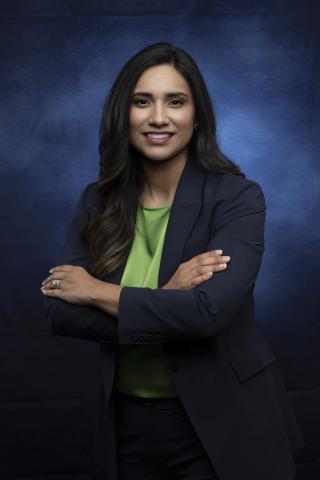
Sen. Sabrina Cervantes
Sponsored bills
The Donahoe Higher Education Act sets forth the missions and functions of California's public segments of higher education and their respective institutions of higher education. Provisions of the act apply to the University of California only to the extent that the Regents of the University of California act, by appropriate resolution, to make them applicable. Among other things, the act requires the governing board of each community college district, the Trustees of the California State University, and the Regents of the University of California to adopt and implement a rape and sexual assault education program at each of their respective campuses or other facilities. Existing federal law, known as Title IX, prohibits a person, on the basis of sex, from being excluded from participation in, being denied the benefits of, or being subject to discrimination, which includes sexual harassment, under any education program or activity receiving federal financial assistance. Existing law requires each California State University campus to establish, and each University of California campus to designate, a Title IX office that is under the administration of a Title IX coordinator who is responsible for coordinating the campus' implementation of and compliance with systemwide nondiscrimination policies, as provided. This bill would require the Attorney General to establish a statewide Gender and Sex Discrimination Educational Oversight Office. The bill would require the office to serve as a point of contact for students who are dissatisfied with their campus-based policies or investigative procedures designed to prevent or address incidents of harassment, rape, sexual assault, and violence at their respective campuses. The bill would require the office to receive complaints from students regarding the students' campuses' noncompliance with any aspect of Title IX. The bill would authorize the office to establish a process to investigate campus-based policies and investigative procedures relating to harassment, rape, sexual assault, and violence complaints. The bill would require the office to receive an annual report on incidents of harassment, rape, sexual assault, and violence that involve students who are enrolled at a campus of a community college district, the California State University, an independent postsecondary educational institution, or the University of California, as provided, and would authorize the office to investigate those institutions' policies, procedures, or campus-based investigations following the incident, and make recommendations to the Attorney General, district attorney, or city attorney, as provided. The bill would require the governing board of each community college district, the Trustees of the California State University, the governing board of each independent postsecondary educational institution, and the Regents of the University of California to submit an annual report to the office regarding those incidents, as specified. By imposing new duties on community college districts, this bill would impose a state-mandated local program. The California Constitution requires the state to reimburse local agencies and school districts for certain costs mandated by the state. Statutory provisions establish procedures for making that reimbursement. This bill would provide that, if the Commission on State Mandates determines that the bill contains costs mandated by the state, reimbursement for those costs shall be made pursuant to the statutory provisions noted above.
Existing law authorizes the Department of Motor Vehicles to issue and renew driver's licenses, as specified. Existing law also authorizes the department to issue identification cards. Existing law requires the department to, by no later than July 1, 2027, issue an identification card to an eligible applicant who is unable to submit satisfactory proof that their presence in the United States is authorized under federal law if they provide satisfactory proof of identity and California residency, as specified. This bill would expedite the date by which the department is required to issue an identification card to the above-described eligible applicants to January 15, 2026.
Existing law establishes the California State University and its various campuses under the administration of the Trustees of the California State University. Existing law requires the trustees to establish an internal audit staff with prescribed duties, including auditing, reviewing, cost and systems analysis, analyzing, and recommending operating procedures for the university. Existing law also requires the university's internal audit staff to perform audits, at least once every 5 years, of the activities of the university, as provided. This bill would require an external financial audit of each campus of the California State University to be conducted at least once every 3 years. The bill would also require all audits of the California State University or any of its campuses, including audits conducted by the university's internal audit staff, to be available to the public.
Existing law establishes the California College Promise, under the administration of the Chancellor of the California Community Colleges, to provide funding, upon appropriation by the Legislature, to each community college meeting prescribed requirements. Existing law authorizes a community college to use that funding to waive some or all of the fees for 2 academic years for first-time community college students and returning community college students, as defined, who are enrolled in 12 or more semester units or the equivalent, or less for students certified as "full time," as specified, and who complete and submit either a Free Application for Federal Student Aid or a California Dream Act application, except as provided. This bill would authorize extending the term of eligibility of the California College Promise for an additional 2 academic years for first-time community college students and returning community college students who matriculate into upper division coursework of a community college baccalaureate degree program, as specified.
Existing law, the Knox-Keene Health Care Service Plan Act of 1975, provides for the licensure and regulation of health care service plans by the Department of Managed Health Care, and makes a willful violation of the act a crime. Existing law requires a health care service plan contract issued, amended, or renewed on or after January 1, 2021, to provide coverage for medically necessary treatment of mental health and substance use disorders, as defined, under the same terms and conditions applied to other medical conditions. This bill would require the plan, as defined, to fully reimburse an enrollee who incurs out-of-pocket costs for behavioral health care services obtained from nonplan providers or facilities or mental health prescription medication obtained from a nonplan pharmacy or nonplan provider on or after May 1, 2022, until the department certifies to the Legislature that the plan has successfully completed implementation of the corrective action work plan resulting from its 2023 settlement agreement with the department. The bill would require an enrollee to submit specified documents for reimbursement and would require the plan to pay the reimbursement within 60 calendar days of an enrollee's submission of documented expenses. If the plan fails to provide this reimbursement, the bill would require it to pay the original amount plus 10% per annum interest to the enrollee, as well as a $5,000 fine per incident. The bill would require the plan to establish specified procedures, and would require the plan to submit a monthly report to the department with specified information. Because a willful violation of the bill's provisions would be a crime, the bill would impose a state-mandated local program. This bill would make legislative findings and declarations as to the necessity of a special statute for the specified plan. The California Constitution requires the state to reimburse local agencies and school districts for certain costs mandated by the state. Statutory provisions establish procedures for making that reimbursement. This bill would provide that no reimbursement is required by this act for a specified reason.
Existing law appropriates $10,000,000 from the General Fund for the 2021–22 fiscal year to the Superintendent of Public Instruction to administer the Dual Language Immersion Grant Program for the purpose of expanding access to quality dual language learning and fostering languages that English learners bring to California's education system. Under that program, the State Department of Education is required to award a minimum of 25 one-time Dual Language Immersion Grants over a period of 3 fiscal years of up to $380,000 per grant to an eligible entity to expand or establish dual language immersion programs. This bill would establish the Dual Language Immersion Education Instructional Materials Grant Program, to be administered by the Superintendent, for purposes of providing one-time grants of $100,000 to school districts, county offices of education, and charter schools to increase available instructional materials in partner languages for dual language immersion programs at one or more schoolsites, as provided. The bill would require a grant recipient to report to the department, on or before June 29, 2029, on how grant funds were expended, including a list of any materials obtained or developed. The bill would require the department to submit a report to the appropriate policy and fiscal committees of the Legislature, on or before December 31, 2029, that includes the data received from the grant recipients. The bill would make implementation of these provisions contingent upon an appropriation by the Legislature for these purposes in the annual Budget Act or another statute.
Existing law includes the 4th Friday in September, known as "Native American Day," as a state holiday. This bill would provide that the 4th Friday in September, known as "Native American Day," is a paid holiday for state employees, as specified.
(1) Existing state and federal law, including the federal Voting Rights Act of 1965, require the Secretary of State and county elections officials to provide language assistance to voters in order to access voting information, register to vote, and cast their votes at the polling place. Existing law requires a county elections official to provide, as a reference for voters, a facsimile copy of the ballot with the ballot measures and ballot instructions printed in Spanish and other languages if the Secretary of State has determined that doing so is appropriate, as specified. This bill would require the Secretary of State, by December 15, 2029, and by December 15 of every subsequent year that immediately follows a year in which there is a presidential election, to determine the number of residents of voting age in each precinct who are members of a single language minority group and lack sufficient skills in English to vote without assistance and to post on the Secretary of State's website a list of languages used by single language minority groups that make up 3% or more of the voting-age residents of a particular county or precinct. For an election with a single language minority group that makes up 3% or more of the voting-age residents or if the Secretary of State otherwise finds sufficient reason to provide translated ballots, the bill would require elections officials, beginning January 1, 2030, to, among other things, provide ballots, ballot identification envelopes, and related notices and instructions in the language of an applicable language minority group. The bill would also make related, conforming changes. (2) Existing law requires an elections official, upon receiving a vote by mail ballot, to compare the signature on the identification envelope with the voter's signature appearing on specified voter registration records. Existing law requires the elections official to notify a voter whose signature does not match or who failed to sign the envelope of the opportunity to verify or provide a signature. The elections official is required to translate the notice and related instructions into all languages required for that county under the Voting Rights Act of 1965. This bill would instead require the Secretary of State to translate the notice, instructions, and voter statements to verify or provide a signature. (3) Existing law requires translations of ballots, ballot materials, and candidate statements printed in the county voter information guide to be made by a person with specified qualifications who is selected by the county elections official. This bill would authorize county elections officials to select a translator or interpreter, who has demonstrated experience in translating official or legal documents and has been referred by a nonprofit organization specializing in language access, legal aid, or community advocacy, to make those translations. (4) Existing law requires specified information to be publicly posted at each polling place, including information regarding the languages other than English in which members of the precinct board can assist voters. This bill would also require information regarding other available language assistance to be publicly posted at each polling place. (5) By increasing the duties of local elections officials, the bill would impose a state-mandated local program. The California Constitution requires the state to reimburse local agencies and school districts for certain costs mandated by the state. Statutory provisions establish procedures for making that reimbursement. This bill would provide that, if the Commission on State Mandates determines that the bill contains costs mandated by the state, reimbursement for those costs shall be made pursuant to the statutory provisions noted above.
The Political Reform Act of 1974 provides for the comprehensive regulation of campaign financing, including requiring the filing of reports of contributions and expenditures. Existing law requires a committee that makes an independent expenditure for or against a specific candidate or measure during the 90-day period preceding the date of the election or on the date of the election to report the independent expenditure within 24 hours of the time it is made, as specified. Existing law requires an elections official, upon receiving a vote by mail ballot, to compare the signature on the identification envelope with the voter's signature appearing on specified voter registration records. Existing law requires the elections official to notify a voter whose signature does not match or who failed to sign the envelope of the opportunity to verify the signature or provide a signature, as applicable. This bill would require a committee that makes a late signature curing expenditure, as defined, to report the late signature curing expenditure within 24 hours of the time it is made. The bill would define "late signature curing expenditure" to mean an expenditure made by a committee related to ballot curing activities that occurs after the date of the election and before the certification of the election, as specified. The bill would provide that this late signature curing expenditure report is in addition to any other campaign statement required under the act. The Political Reform Act of 1974, an initiative measure, provides that the Legislature may amend the act to further the act's purposes upon a 23 vote of each house of the Legislature and compliance with specified procedural requirements. This bill would declare that it furthers the purposes of the act. The California Constitution requires the state to reimburse local agencies and school districts for certain costs mandated by the state. Statutory provisions establish procedures for making that reimbursement. This bill would provide that no reimbursement is required by this act for a specified reason.