

Passed Feb 1, 2018
0 co-sponsors
D
California Senate
·
District 31
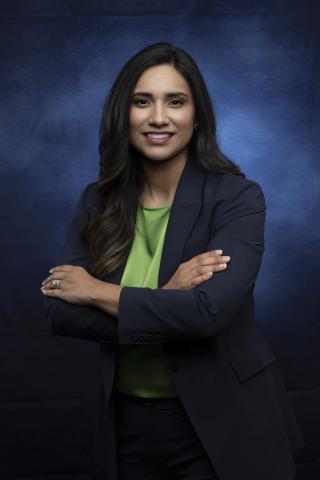
Sen. Sabrina Cervantes
Total votes
21,671
all sessions
Attendance
86%
2,660 missed
Near the chamber average
With party
98%
of cast votes
Near the chamber average
Bipartisan score
1%
crosses aisle rarely
Near the chamber average
Sponsored
1,698
bills & resolutions
Near the chamber average
Committees
11
assignments
1,698 bills and resolutions
Sponsored bills
Total
1,698
Primary
203
Co-sponsor
1,495
This page
1,698
matching current filters
Suspension and allocation of judgeships.
Existing law specifies the number of judges for the superior court of each county. Existing law allocates additional judgeships to the various counties in accordance with uniform standards for factually determining additional judicial need in each county, as updated and approved by the Judicial Council, pursuant to the Update of Judicial Needs Study, based on specified criteria, including, among others, workload standards that represent the average amount of time of bench and nonbench work required to resolve each case type. This bill would require the suspension of 4 vacant judgeships, as defined, in superior courts with more authorized judgeships than their assessed judicial need. The bill would require the allocation of 4 judgeships to superior courts with fewer authorized judgeships than their assessed judicial need and would require the judgeships to be funded using existing appropriations for the compensation of superior court judges. The bill would require the suspension to be in accordance with a methodology approved by the Judicial Council, as specified, and would require the determination of a superior court's assessed judicial need to be in accordance with the above uniform standards and be based on the criteria described above. The bill would require the Judicial Council, if a vacant judgeship is eligible for suspension, to promptly notify the applicable courts, the Legislature, and the Governor that the judgeship will be suspended, subject to approval by the Governor. This bill would also make a statement of legislative intent regarding the authority of the Legislature, the Governor, and the Chief Justice of California.
In committee Feb 1, 2018
1 co-sponsor
Maternal mental health.
Existing law declares the intent of the Legislature to maintain, to the extent resources are available, a permanent statewide community-based comprehensive perinatal system to provide care and services to low-income pregnant women and their infants who are considered underserved in terms of comprehensive perinatal care. Existing law requires the State Department of Public Health, which is within the California Health and Human Services Agency, to develop and maintain a statewide community-based comprehensive perinatal services program to, among other program objectives, ensure the appropriate level of maternal, newborn, and pediatric care services necessary to provide the healthiest outcome for mother and infant. Existing law authorizes the department to maintain a mental health service that shall advise and assist local departments of health and education in the establishment of mental health services. This bill would create a pilot program, in counties that elect to participate, designed to increase the capacity of health providers that serve pregnant and postpartum women up to one year after delivery to effectively prevent, identify, and manage postpartum depression and other mental health conditions. The pilot program would be privately funded. The bill would require the California Health and Human Services Agency to submit a report to the Legislature regarding the pilot program 6 months after the results of the pilot program are reported, as specified.
Failed Feb 1, 2018
0 co-sponsors
California Kickstart My Future Loan Forgiveness Program.
Existing law establishes the Student Aid Commission as the primary state agency for the administration of state-authorized student financial aid programs available to students attending all segments of postsecondary education. Under existing law, the commission, among other things, administers the Cal Grant Program, the Student Opportunity and Access Program, the Assumption Program of Loans for Education, the Graduate Assumption Program of Loans for Education, the Public Interest Attorney Loan Repayment Program, and the California State Work-Study Program. This bill would establish the California Kickstart My Future Loan Forgiveness Program, under the administration of the commission, to provide student loan forgiveness awards for the purpose of alleviating the burden of federal student loan debt for recent graduates meeting specified requirements. The bill would, subject to an available and sufficient appropriation, authorize an eligible applicant to receive a student loan forgiveness award equal to 100% of his or her monthly federal income-driven repayment plan payments for 24 months of repayment under the federal program. The bill would require a recipient, who no longer meets the specified requirements at the time any payment is made under this program, to refund those payments to the state, and would authorize the Franchise Tax Board to recover the payments owed.
Failed Feb 1, 2018
0 co-sponsors
Local government finance: property tax revenue allocations: vehicle license fee adjustments.
Existing property tax law requires the county auditor, in each fiscal year, to allocate property tax revenue to local jurisdictions in accordance with specified formulas and procedures, and generally provides that each jurisdiction be allocated an amount equal to the total of the amount of revenue allocated to that jurisdiction in the prior fiscal year, subject to certain modifications, and that jurisdiction's portion of the annual tax increment, as defined. Existing property tax law also requires that, for purposes of determining property tax revenue allocations in each county for the 1992–93 and 1993–94 fiscal years, the amounts of property tax revenue deemed allocated in the prior fiscal year to the county, cities, and special districts be reduced in accordance with certain formulas. It requires that the revenues not allocated to the county, cities, and special districts as a result of these reductions be transferred to the Educational Revenue Augmentation Fund in that county for allocation to school districts, community college districts, and the county office of education. Beginning with the 2004–05 fiscal year and for each fiscal year thereafter, existing law requires that each city, county, and city and county receive additional property tax revenues in the form of a vehicle license fee adjustment amount, as defined, from a Vehicle License Fee Property Tax Compensation Fund that exists in each county treasury. Existing law requires that these additional allocations be funded from ad valorem property tax revenues otherwise required to be allocated to educational entities. This bill would modify these reduction and transfer provisions for a city incorporating after January 1, 2004, and on or before January 1, 2012, for the 2017–18 fiscal year and for each fiscal year thereafter, by providing for a vehicle license fee adjustment amount calculated on the basis of changes in assessed valuation. By imposing additional duties upon local tax officials with respect to the allocation of ad valorem property tax revenues, this bill would impose a state-mandated local program. The California Constitution requires the state to reimburse local agencies and school districts for certain costs mandated by the state. Statutory provisions establish procedures for making that reimbursement. This bill would provide that, if the Commission on State Mandates determines that the bill contains costs mandated by the state, reimbursement for those costs shall be made pursuant to the statutory provisions noted above.
In committee Feb 1, 2018
1 co-sponsor
University of California: law school.
The California Constitution provides that the University of California constitutes a public trust administered by the Regents of the University of California, a corporation in the form of a board, with full powers of organization and government, subject to legislative control only for specified purposes. This bill would appropriate an unspecified sum of moneys from the General Fund to the Regents of the University of California each fiscal year, commencing with the 2018–19 fiscal year, for the creation, construction, and establishment of the University of California, Riverside School of Law.
Failed Feb 1, 2018
0 co-sponsors
Income taxes: credit: apprentices.
The Personal Income Tax Law and the Corporation Tax Law allow various credits against the taxes imposed by those laws. This bill, under both laws, for taxable years beginning on or after January 1, 2018, and before January 1, 2023, would allow a credit against those taxes in an amount equal to $1,000 for each registered apprentice trained by the taxpayer and who worked 7 months or more during the taxable year, not to exceed $10,000 per taxable year per taxpayer. This bill would take effect immediately as a tax levy.
Failed Feb 1, 2018
0 co-sponsors
Petty theft: subsequent convictions.
Existing law establishes the penalty for petty theft as a fine not exceeding $1,000, or by imprisonment in the county jail not exceeding 6 months, or by both that fine and imprisonment. Existing law, the Safe Neighborhoods and Schools Act, enacted as an initiative statute by Proposition 47, as approved by the electors at the November 4, 2014, statewide general election, provides that a registered sex offender or a person with a prior conviction for certain serious or violent felonies, such as a sexually violent offense, who commits petty theft, is subject to imprisonment in the county jail for up to one year or in the state prison for 16 months, or 2 or 3 years. Existing law allows individuals charged with specified crimes to qualify for deferred entry of judgment. Under the existing deferred entry of judgment program, an eligible defendant may have entry of judgment deferred, upon pleading guilty to the offenses charged and entering a drug treatment program for 18 months up to 3 years. If the defendant completes the program, the criminal charges are dismissed. This bill would expand the enhanced petty theft penalties described above to a person who has a prior conviction for any serious or violent felony, and to any person who has 3 or more prior convictions for crimes such as petty theft or shoplifting, grand theft, and burglary. The bill would also authorize a court to grant deferred entry of judgment, for no less than 18 months and no longer than 3 years, to a defendant who has 3 or more prior convictions for those theft-related crimes, under certain conditions, including that the court is satisfied that the defendant suffers from a drug or alcohol addiction and the court finds that the addiction played a significant role in the commission of the offense. The bill would provide that if the person performs satisfactorily during the period of deferred entry of judgment, the criminal charges would be dismissed. The bill would establish procedures for deferred entry of judgment, including requiring county probation departments to file progress reports as directed by the court. The bill would additionally make conforming changes. The California Constitution authorizes the Legislature to amend an initiative statute by another statute that becomes effective only when approved by the electors. This bill would provide that it would become effective only upon approval of the voters, and would provide for the submission of this measure to the voters for approval at the statewide general election.
In committee Feb 1, 2018
1 co-sponsor
Adopt-A-Riverway Program.
Existing law authorizes the Department of Food and Agriculture to accept funds or services from any person for maintenance or enhancement of a section of a state riverway, as defined, for purposes of operating the government-volunteer partnership Adopt-A-Riverway Program. Existing law authorizes local authorities to place and maintain highway signs recognizing sponsors of that program that donate a minimum of $5,000 annually to the Adopt-A-Riverway Fund. This bill would change the minimum annual donation amount to $4,000.
Failed Feb 1, 2018
0 co-sponsors
Community colleges: veterans.
Existing law establishes the California Community Colleges, under the administration of the Board of Governors of the California Community Colleges, as one of the segments of public postsecondary education in this state. Existing law establishes community college districts throughout the state, and authorizes these districts to provide instruction at the campuses they operate. This bill would express the intent of the Legislature to enact legislation creating an articulation platform for the California Community Colleges to facilitate the transition of recent veterans to state institutions of higher education.
Failed Feb 1, 2018
0 co-sponsors
Ask Maddy
·
AI policy assistant
Ask Maddy about Sabrina Cervantes
Scope: california
Hi! I can help you understand Sabrina Cervantes's legislative record. What would you like to know?
Try one of these
i
Maddy answers using official bill text and legislative records. Always verify before sharing.
Sources cited inline