

Existing state sales and use tax laws impose a tax on retailers measured by the gross receipts from the sale of tangible personal property sold at retail in this state of, or on the storage, use, or other consumption in this state of, tangible personal property purchased from a retailer for storage, use, or other consumption in this state. The Sales and Use Tax Law provides various exemptions from those taxes, including a partial exemption for the sale of, or the storage, use, or consumption of, qualified tangible personal property purchased for use by a qualified person to be used primarily in any stage of the manufacturing, processing, refining, fabricating, or recycling of tangible personal property, beginning at the point any raw materials are received by the qualified person and introduced into the process and ending at the point at which the manufacturing, processing, refining, fabricating, or recycling has altered tangible personal property to its completed form, including packaging, if required. Existing law (backfill requirement) requires an amount that equals the estimated revenue loss to the General Fund from the allowance of the above-described exemptions, with the concurrence of the Department of Finance, to be transferred from the Greenhouse Gas Reduction Fund to the General Fund, as prescribed. This bill would, beginning July 1, 2027, define "processing" to include the altering, converting, conditioning, or other preparation of hydrogen or electricity for the purposes of selling the hydrogen for fueling or the electricity for charging a vehicle and would define "qualified tangible personal property" to include hydrogen fueling station equipment and charging station equipment and component parts used as an integral part of those activities. By expanding the scope of the crime of perjury, this bill would impose a state-mandated local program. This bill would provide that the backfill requirement does not apply with respect to the exemptions allowed by the bill, as specified. Existing law requires any bill authorizing a new tax expenditure to contain, among other things, specific goals, purposes, and objectives that the tax expenditure will achieve, detailed performance indicators, and data collection requirements. This bill would include additional information required for any bill authorizing a new tax expenditure. The California Constitution requires the state to reimburse local agencies and school districts for certain costs mandated by the state. Statutory provisions establish procedures for making that reimbursement. This bill would provide that no reimbursement is required by this act for a specified reason. This bill would take effect immediately as a tax levy.
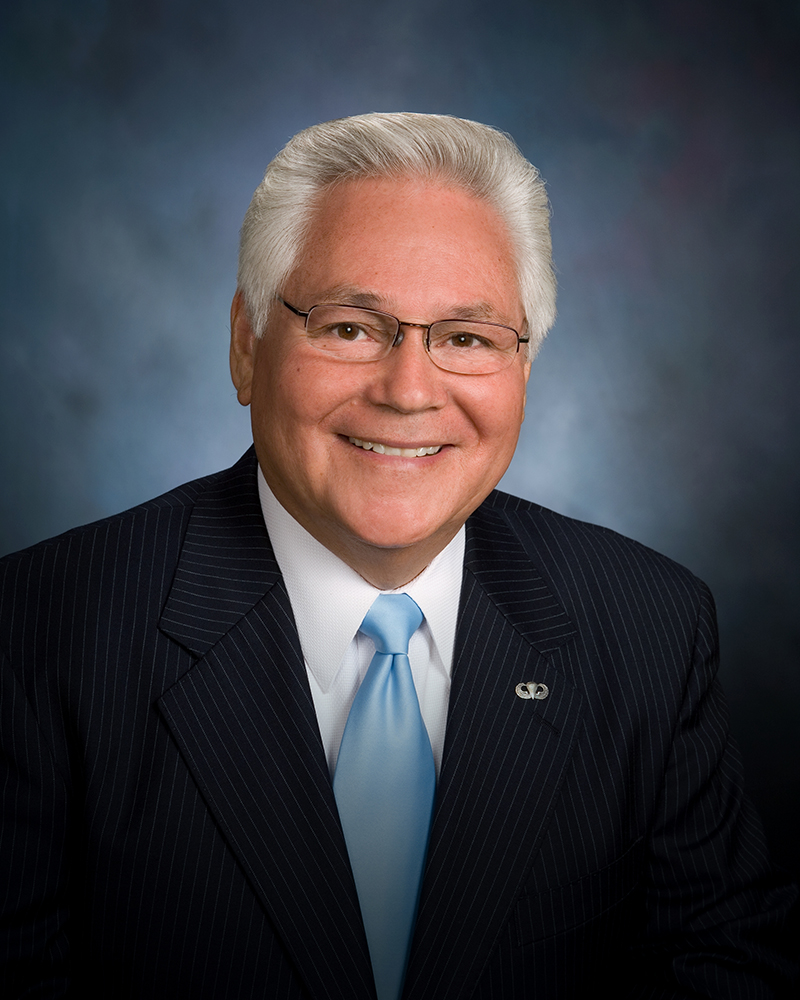
Sen. Bob Archuleta
Sponsored bills
Maddy summaryThis Senate resolution commemorates the United Nations International Day of Peace and honors the late Chancellor Young-Seek Choue for proposing the concept that led to its creation. The bill encourages all Californians to observe the day by reaffirming their commitment to peace, nonviolence, mutual understanding, and respect for human dignity. It does not create new laws or change existing policies but serves as a symbolic gesture to promote global peace and recognize the role of education in fostering international cooperation.
This measure would urge the Governor, relevant state agencies, and all local governments to adopt an urgent and coordinated approach to end and prevent unsheltered homelessness statewide, as specified.
Existing law defines a "renewable electrical generation facility" as a facility that uses biomass, solar thermal, photovoltaic, wind, geothermal, fuel cells or linear generators that use specified fuels, small hydroelectric generation of 30 megawatts or less, digester gas, municipal solid waste conversion, landfill gas, ocean wave, ocean thermal, or tidal current, and that meets other specified requirements. Existing law incorporates that definition into various programs, including the California Renewables Portfolio Standard Program, which requires the Public Utilities Commission to establish a renewables portfolio standard requiring all retail sellers, as defined, to procure a minimum quantity of electricity products from electrical generating facilities that meet that definition of "renewable electrical generation facility," and the net energy metering program, in which residential customers, small commercial customers, and commercial, industrial, or agricultural customers of an electrical utility, who use renewable electrical generation facilities, are eligible to participate, as specified. This bill would expand the definition of "renewable electrical generation facility" to include a facility that converts hydrogen gas to electricity in a turbine and meets specified criteria, including that the hydrogen used in the turbine is solely derived from an eligible renewable resource, as specified, or through the electrolysis of water, and exclusively uses electricity generated from another renewable electrical generation facility, and that the manufacturing of the hydrogen does not result in resource shuffling or use unbundled renewable energy credits, as specified. Under existing law, a violation of any order, decision, rule, direction, demand, or requirement of the commission is a crime. Because a violation of a commission action implementing this bill's requirements would be a crime, the bill would impose a state-mandated local program. The California Constitution requires the state to reimburse local agencies and school districts for certain costs mandated by the state. Statutory provisions establish procedures for making that reimbursement. This bill would provide that no reimbursement is required by this act for a specified reason. This bill would declare that it is to take effect immediately as an urgency statute.
Under existing law, there are programs providing assistance for, among other things, emergency housing, multifamily housing, farmworker housing, home ownership for very low and low-income households, and downpayment assistance for first-time home buyers. Existing law also authorizes the issuance of bonds in specified amounts pursuant to the State General Obligation Bond Law and requires that proceeds from the sale of these bonds be used to finance various existing housing programs, capital outlay related to infill development, brownfield cleanup that promotes infill development, and housing-related parks. Existing law, the Veterans and Affordable Housing Bond Act of 2018, authorized, the issuance of bonds in the amount of $4,000,000,000 to finance various existing housing programs, as well as infill infrastructure financing and affordable housing matching grant programs, as well as financing for a specified program for farm, home, and mobilehome purchase assistance for veterans, pursuant to the State General Obligation Bond Law. This bill would enact the Veterans and Affordable Housing Bond Act of 2026, which, if adopted, would authorize the issuance of bonds in the amount of $11,250,000,000, pursuant to the State General Obligation Bond Law. Of the proceeds from the sale of these bonds, $10,000,000,000 would be used to finance programs to fund affordable rental housing and home ownership programs, including, among others, the Multifamily Housing Program, the CalHome Program, and the Joe Serna, Jr. Farmworker Housing Grant Program, and $1,250,000,000 would be used to provide additional funding for the above-described program for farm, home, and mobilehome purchase assistance for veterans, as provided. This bill would provide for submission of the bond act to the voters at the November 3, 2026, statewide general election, in accordance with specified law. This bill would declare that it is to take effect immediately as an urgency statute.
Maddy summaryThis bill designates the month of May 2026 as National Stroke Awareness Month. The primary effect is to officially recognize this time period for public education and awareness campaigns regarding stroke prevention and treatment. It does not alter laws, allocate funding, or impose new requirements on individuals or organizations. The measure serves as a symbolic gesture to highlight the importance of stroke awareness during the specified month.
This measure would declare May 20, 2026, as California Nonprofits Day in recognition of the importance of nonprofit organizations to the economy and well-being of this state.
This measure would recognize May 10, 2026, as the 119th annual Mother's Day and would urge all Californians to recognize, appreciate, and be grateful for the gifts and good works of mothers on that day.
Maddy summaryThis bill designates May 2026 as Motorcycle Safety Awareness Month in California. It affects state agencies and organizations that typically host public awareness campaigns or educational events. The measure requires no changes to existing laws or regulations; it simply establishes a specific timeframe for promoting motorcycle safety. By creating this designated month, the state provides a formal opportunity to focus public attention on rider safety without altering current legal requirements.
Existing law, the California Emergency Services Act, establishes the Office of Emergency Services within the office of the Governor under the supervision of the Director of Emergency Services. The act charges the office with responsibility for the state's emergency and disaster response services for natural, technological, or manmade disasters and emergencies. The act specifies that its provisions do not prevent the Governor or the office from formally recognizing committees or boards established by or with segments of the private sector, public agencies, or both, that control facilities, resources, or the provision of services essential to the mitigation of the effects of an emergency or recovery therefrom. This bill would require the Office of Emergency Services, on or before January 1, 2027, to establish and lead the Countering Unmanned Aircraft Systems Task Force to develop a statewide strategy to protect mass gatherings, critical infrastructure, and other soft targets from attacks by unmanned aircraft systems. The bill would require the Director of Emergency Services to seek to compose a membership of the task force that includes representatives of specific public and private entities, including, among others, the State Threat Assessment Center. The bill would authorize the task force to achieve its specific purpose, primary objective, and goals by developing or updating response plans specific to unmanned aircraft systems that integrate detection systems into existing emergency operation plans or incident command systems, among other things. This bill would declare that it is to take effect immediately as an urgency statute.