

Passed May 2, 2022
1 co-sponsor
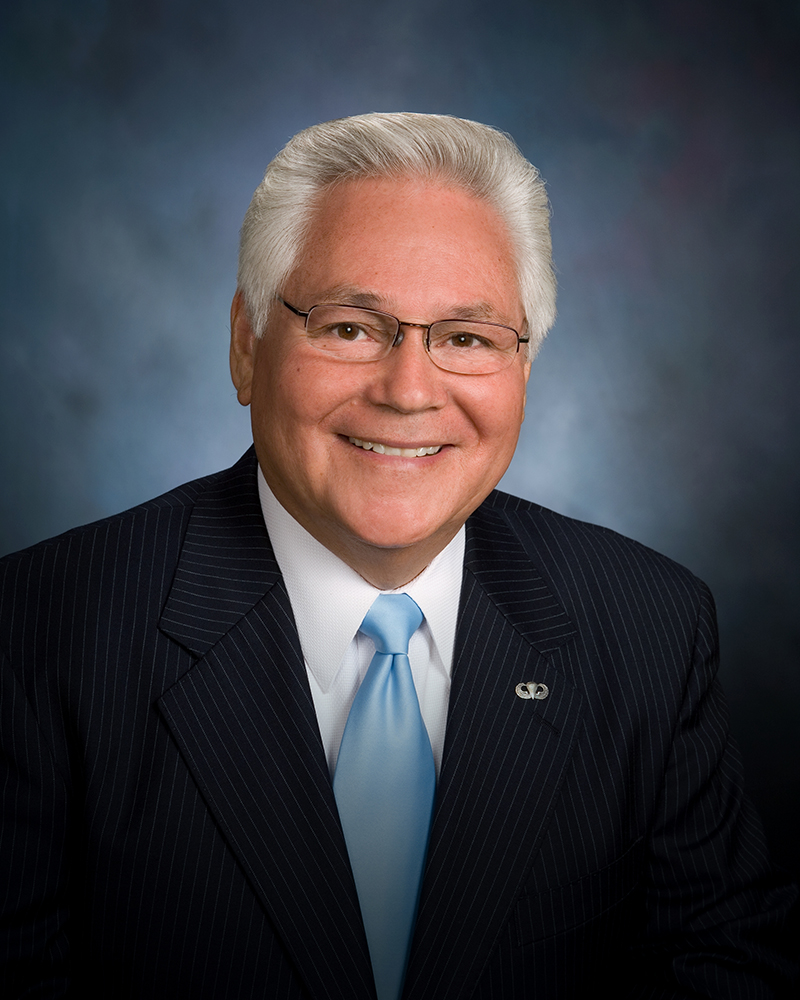
Sen. Bob Archuleta
Total votes
15,829
all sessions
Attendance
95%
631 missed
Lower than 97% of chamber peers
With party
99%
of cast votes
Near the chamber average
Bipartisan score
0%
crosses aisle rarely
Near the chamber average
Sponsored
545
bills & resolutions
Near the chamber average
Committees
9
assignments
545 bills and resolutions
Sponsored bills
Total
545
Primary
180
Co-sponsor
365
This page
545
matching current filters
Passed Apr 25, 2022
1 co-sponsor
Relative to PTA Day.
This measure would declare February 17, 2022, as PTA Day, commend the National Parent Teacher Association on the occasion of its 125th anniversary, and encourage all California residents to attend and participate in the celebration of this commemorative event.
Signed into law Apr 19, 2022
1 co-sponsor
Passed Mar 31, 2022
1 co-sponsor
California Privacy Rights Act of 2020: exemptions.
Existing law, the California Privacy Rights Act of 2020 (CPRA) , approved by the voters as Proposition 24 at the November 3, 2020, statewide general election, grants a consumer various rights with respect to personal information, as defined, that is collected or sold by a business, as defined, including the right to require the business to delete personal information about the consumer, as specified. The CPRA, until January 1, 2023, exempts from certain provisions of the act personal information reflecting a communication or a transaction between the business and a company, partnership, sole proprietorship, nonprofit, or government agency that occurs solely within the context of the business conducting due diligence or providing or receiving a product or service. The CPRA, until January 1, 2023, also exempts from certain provisions of the act personal information that is collected and used by a business solely within the context of having an emergency contact on file, administering specified benefits, or a person's role or former role as a job applicant to, an employee of, owner of, director of, officer of, medical staff member of, or an independent contractor of that business. This bill would extend those above-described exemptions indefinitely. The California Privacy Rights Act of 2020 authorizes the Legislature to amend the act to further the purposes and intent of the act by a majority vote of both houses of the Legislature, as specified. This bill would declare that its provisions further the purposes and intent of the California Privacy Rights Act of 2020.
In committee Mar 23, 2022
0 co-sponsors
Passed Mar 21, 2022
1 co-sponsor
Passed Mar 21, 2022
1 co-sponsor
Hydrogen fueling hub: southern California.
Existing law requires the State Air Resources Board to adopt hydrogen fuel regulations to ensure, among other things, that state funding for the production and use of hydrogen fuel contributes to the reduction of emissions of greenhouse gases, criteria air pollutants, and toxic air contaminants. Existing law requires the State Energy Resources Conservation and Development Commission, in partnership with the state board, and in consultation with the State Water Resources Control Board, the Department of Food and Agriculture, and other relevant state agencies, to develop and adopt a state plan to increase the use of alternative transportation fuels, which include hydrogen. This bill would require the commission to establish a hydrogen fueling hub in southern California that would include a heavy-duty hydrogen fueling station located at either the Port of Long Beach or the Port of Los Angeles and a medium- and light-duty hydrogen fueling station located within 80 miles of the heavy-duty station. The bill would require the commission to manage those stations. This bill would make legislative findings and declarations as to the necessity of a special statute for southern California.
In committee Mar 10, 2022
0 co-sponsors
Dentistry: foreign dental schools.
Existing law, the Dental Practice Act, provides for the licensure and regulation of dentists and dental assistants by the Dental Board of California. The act, prior to January 1, 2020, required a foreign dental school seeking approval to submit an application to the board, including, among other things, a finding that the educational program of the foreign dental school is equivalent to that of similar accredited institutions in the United States and adequately prepares its students for the practice of dentistry. The act also required an approved institution to submit a renewal application every 7 years and to pay a specified renewal fee. The act, beginning on January 1, 2020, prohibits the board from accepting new applications for approval of foreign dental schools, and instead requires foreign dental schools seeking approval to complete the international consultative and accreditation process with the Commission on Dental Accreditation of the American Dental Association (CODA) or a comparable accrediting body approved by the board. The act requires previously approved foreign dental schools to complete the CODA process or comparable accreditation by January 1, 2024, to remain approved, unless the foreign dental school was renewed by the board prior to January 1, 2020, through a date between January 1, 2024, and June 30, 2026, in which case the act provides the foreign dental school's approval is maintained through that date. The also act provides that graduates of a foreign dental school whose program was approved by the board prior to January 1, 2020, through any date before January 1, 2024, and who enrolled in the program prior to January 1, 2020, are eligible for licensure. This bill would require previously approved foreign dental schools to complete the CODA process or comparable accreditation by January 1, 2024, to remain approved, unless the foreign dental school was renewed by the board prior to January 1, 2020, through June 30, 2026, in which case the foreign dental school's approval would be maintained through that date. The bill would repeal the provision providing that a graduate of a foreign dental school whose program was approved by the board prior to January 1, 2020, through any date before January 1, 2024, and who enrolled in the program prior to January 1, 2020, is eligible for licensure.
In committee Mar 9, 2022
0 co-sponsors
Emergency medical services: certifying examination.
Existing law, the Emergency Medical Services System and the Prehospital Emergency Medical Care Personnel Act (act) , establishes the Emergency Medical Services Authority to coordinate and integrate all state activities concerning emergency medical services, including, among other duties, establishing training standards for specified emergency services personnel. Existing law defines the terms "certifying examination" and "examination for certification" for the purposes of these provisions to mean an examination designated by the authority for a specific level of prehospital emergency medical care personnel that must be satisfactorily passed prior to certification or recertification at the specific level and authorizes a "certifying examination" or "examination for certification" to include any examination or examinations designated by the authority. This bill would instead authorize a "certifying examination" or "examination for certification" to include any examination designated by the authority.
In committee Feb 23, 2022
0 co-sponsors
Ask Maddy
·
AI policy assistant
Ask Maddy about Bob Archuleta
Scope: california
Hi! I can help you understand Bob Archuleta's legislative record. What would you like to know?
Try one of these
i
Maddy answers using official bill text and legislative records. Always verify before sharing.
Sources cited inline