

(1) The California Constitution grants the retirement board of a public employee retirement system plenary authority and fiduciary responsibility for investment of moneys and administration of the retirement fund and system. These provisions qualify this grant of powers by reserving to the Legislature the authority to prohibit investments if it is in the public interest and the prohibition satisfies standards of fiduciary care and loyalty required of a retirement board. Existing law prohibits the boards of administration of the Public Employees' Retirement System and the State Teachers' Retirement System from making investments in certain countries and in thermal coal companies, as specified, subject to the boards' plenary authority and fiduciary responsibility for investment of moneys and administration of the systems. This bill, except as specified, would prohibit the boards of specified state and local public retirement systems from making additional or new investments in prohibited companies, as defined, domiciled in Russia or Belarus, as defined, companies that the United States government has designated as complicit in the aggressor countries', as defined, war in Ukraine, or companies that supply military equipment to the aggressor countries, and to liquidate the investments of the board in those companies, as specified. The bill would also require the board, on or before January 1, 2023, and every year thereafter, to file a specified report with the Legislature. The bill would repeal these provisions on specified triggering events. By requiring the boards of local public retirement systems to take specified actions, this bill would impose a state-mandated local program. (2) Existing law specifies the duties of the Treasurer, which include receiving and keeping in the vaults of the State Treasury or depositing in banks or credit unions all moneys belonging to the state, and, except as specified, receiving and keeping in the vaults of the State Treasury or depositing for safekeeping with any federal reserve bank or any branch thereof, or with any trust company or the trust department of any state or national bank located in a city designated as a reserve or central reserve city by the Board of Governors of the Federal Reserve System, bonds and other securities or investments belonging to the state. This bill, except as specified, would prohibit the Treasurer from making additional or new investments or renewing existing investments of state moneys in any investment vehicle in the government of Russia or the government of Belarus that meets certain conditions, or in or from a Russian or Belarusian financial institution currently under sanctions imposed by the United States, as defined and specified. The bill would repeal these provisions on specified triggering events. (3) Existing law specifies how money received into the treasury must be credited and how those state funds are to be used. Existing law prohibits state funds from being used to reimburse a state contractor for costs incurred to assist, promote, or deter union organizing, as defined and specified. Existing law also prohibits state trust moneys from being used to make additional or new investments or to renew existing investments in business firms that engage in discriminatory practices in further of or in compliance with the Arab League's economic boycott of Israel, as defined and specified. This bill, except as specified, would prohibit a state agency, as defined, from making additional or new investments or renewing existing investments of state moneys in any investment vehicle in the government of Russia or the government of Belarus that meets certain conditions, or in or from Russian or Belarusian financial institutions currently under sanctions imposed by the United States, and would require a state agency to liquidate those investments. The bill would also require a state agency to file a specified report with the Legislature and the Governor. The bill would urge companies operating in California and the Regents of the University of California to divest and separate themselves from the government of Russia, Russian financial institutions, Russian businesses, the government of Belarus, Belarusian financial institutions, and Belarusian businesses, and would request companies doing business in California to report their investments in and contracts with the government of Russia, Russian financial institutions, Russian businesses, the government of Belarus, Belarusian financial institutions, and Belarusian businesses, as specified. The bill would repeal these provisions on specified triggering events. (4) Existing law authorizes state agencies to contract for goods, information technology, or services with certain suppliers, as specified. Existing law also makes companies in Sudan involved in certain activities ineligible to bid or submit a proposal for, and forbids them from bidding on or submitting a proposal for, a contract with a state agency for goods or services, as specified. This bill, except as specified, would make a company that conducts business with the government of Russia or the government of Belarus ineligible to bid or submit a proposal for, and would forbid that company from bidding on or submitting a proposal for, a contract with a state agency for goods or services, as defined and specified. The bill would require a state agency to require a company that submits a bid or proposal with respect to a contract for goods or services to certify that the company is not a scrutinized company, as prescribed. The bill would, among other things, make a company that submits a false certification under these provisions liable for a civil penalty, and would require the Department of General Services to report the company to the Attorney General, who would be required to determine whether to bring a civil action against the company, as specified. The bill would repeal these provisions on specified triggering events. (5) The California Constitution requires the state to reimburse local agencies and school districts for certain costs mandated by the state. Statutory provisions establish procedures for making that reimbursement. This bill would provide that, if the Commission on State Mandates determines that the bill contains costs mandated by the state, reimbursement for those costs shall be made pursuant to the statutory provisions noted above. (6) This bill would declare that it is to take effect immediately as an urgency statute.
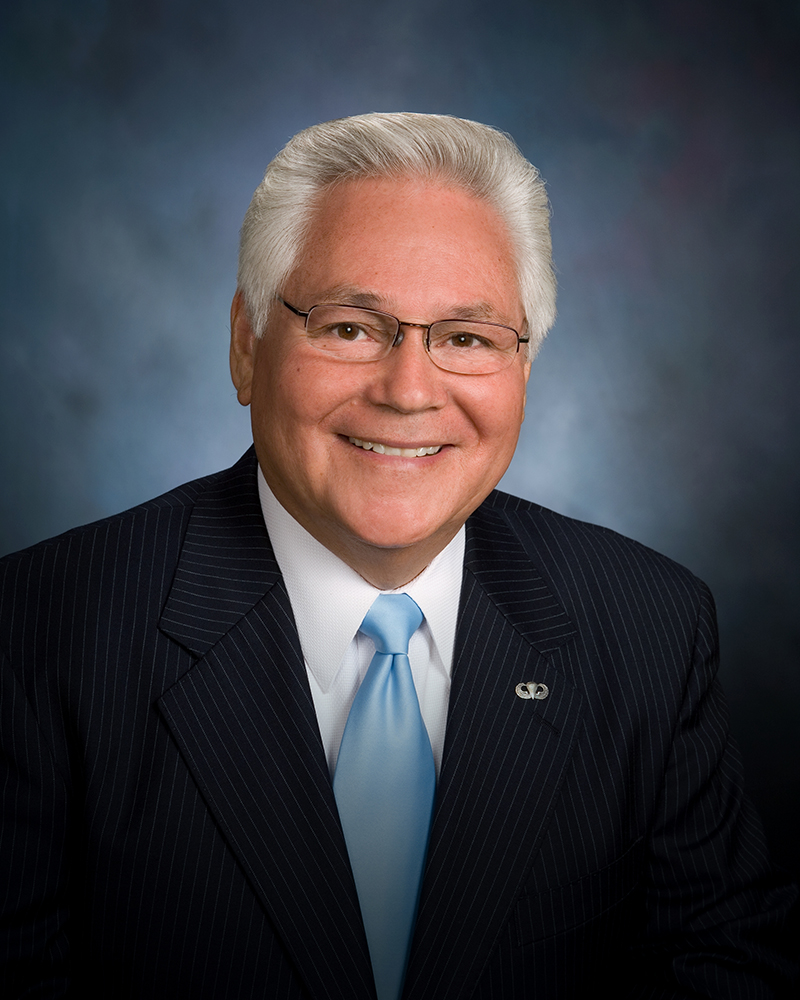
Sen. Bob Archuleta
Sponsored bills
Existing federal law, the Indian Gaming Regulatory Act of 1988, provides for the negotiation and execution of tribal-state gaming compacts for the purpose of authorizing certain types of gaming on Indian lands within a state. The California Constitution authorizes the Governor to negotiate and conclude those compacts, subject to ratification by the Legislature. Existing law expressly ratifies a number of tribal-state gaming compacts, and amendments to tribal-state gaming compacts, between the State of California and specified Indian tribes. The California Environmental Quality Act (CEQA) requires a lead agency to prepare, or cause to be prepared, and certify the completion of, an environmental impact report on a project, as defined, that it proposes to carry out or approve that may have a significant effect on the environment, as defined, or to adopt a negative declaration if it finds that the project will not have that effect. This bill would ratify the amendments to the tribal-state gaming compacts entered into between the State of California and the Alturas Indian Rancheria, California, the Augustine Band of Cahuilla Indians, California, the Bear River Band of the Rohnerville Rancheria, California, the Berry Creek Rancheria of Maidu Indians of California, the Big Sandy Rancheria of Western Mono Indians of California, the Bishop Paiute Tribe, the Blue Lake Rancheria, the Cachil Dehe Band of Wintun Indians of the Colusa Indian Community of the Colusa Rancheria, California, the Cahto Tribe of the Laytonville Rancheria, the Cahuilla Band of Indians, the Campo Band of Diegueno Mission Indians of the Campo Indian Reservation, California, the Chemehuevi Indian Tribe of the Chemehuevi Reservation, California, the Cher-Ae Heights Indian Community of the Trinidad Rancheria, California, the Chicken Ranch Rancheria of Me-Wuk Indians of California, the Elem Indian Colony of Pomo Indians of the Sulphur Bank Rancheria, California, the Ewiiaapaayp Band of Kumeyaay Indians, California, the Hopland Band of Pomo Indians, California, the Manchester Band of Pomo Indians of the Manchester Rancheria, California, the Middletown Rancheria of Pomo Indians of California, the Pauma Band of Luiseno Mission Indians of the Pauma & Yuima Reservation, California, the Picayune Rancheria of Chukchansi Indians of California, the Pit River Tribe, California, the Redding Rancheria, California, the Resighini Rancheria, California, the Robinson Rancheria, the Santa Rosa Indian Community of the Santa Rosa Rancheria, California, the Sherwood Valley Rancheria of Pomo Indians of California, the Soboba Band of Luiseno Indians, California, and the Table Mountain Rancheria to extend the terms of those compacts. The bill would provide that, in deference to tribal sovereignty, certain actions related to those amended compacts are not projects for the purposes of CEQA. This bill would declare that it is to take effect immediately as an urgency statute.
This measure would proclaim the month of May 2022 to be National Military Appreciation Month.
This measure would recognize the weeks of October 10, 2021, through October 16, 2021, and October 16, 2022, through October 22, 2022, as Art Therapy Weeks of Civic Engagement to commemorate the contributions of professional art therapists to California's communities.
The Personal Income Tax Law provides, in modified conformity to federal income tax laws, for the manner in which taxable gains are to be recognized upon the disposition of property, including real property that is the principal residence of the taxpayer. Existing law allows an individual to exclude from their gross income up to $250,000 or $500,000, as specified, of gain realized on the sale or exchange of their residence if the taxpayer owned and occupied the residence as a principal residence for an aggregate period of at least 2 of the 5 years prior to the sale or exchange. This bill, for taxable years beginning on or after January 1, 2021, and before January 1, 2026, would revise the exclusion to provide that if the buyer of a qualified principal residence, as defined, is a qualified first-time homeowner, as defined, the amount of the exclusion is increased to $300,000 or $600,000, as specified. The bill would limit the increased exclusion amount to transactions in which, on or before the closing date of the sale or exchange of the qualified principal residence, the seller obtains a certification from the buyer in writing, signed under penalty of perjury, that the buyer is a qualified first-time homeowner and including specified information concerning the sale of the qualified principal residence. By expanding the scope of the crime of perjury, this bill would impose a state-mandated local program. The bill would additionally provide that these provisions are only operative for taxable years for which resources are authorized in the annual Budget Act or other statute for specified purposes. Existing law requires that any bill introduced on or after January 1, 2020, that would authorize certain tax expenditures, as defined, or tax exemptions contain, among other things, specific goals, purposes, and objectives that the tax expenditure or exemption will achieve, detailed performance indicators, and data collection requirements. This bill would provide findings and declarations relating to the goals of the expansion of the exclusion from gross income for sales of a qualified principal residence to a first-time homeowner. The California Constitution requires the state to reimburse local agencies and school districts for certain costs mandated by the state. Statutory provisions establish procedures for making that reimbursement. This bill would provide that no reimbursement is required by this act for a specified reason. This bill would take effect immediately as a tax levy.
Existing law, the California Emergency Services Act, establishes the Office of Emergency Services within the Governor's office under the supervision of the Director of Emergency Services and makes the office responsible for the state's emergency and disaster response services for natural, technological, or man-made disasters and emergencies. Existing law sets forth various provisions on fairgrounds owned or operated by a district agricultural association, the California Exposition and State Fair, county fairs, and citrus fruit fairs. This bill would, upon an appropriation by the Legislature for this purpose, require the Office of Emergency Services to establish a grant program on or before January 1, 2024, to provide fairs with grant funding for purposes of building and upgrading broadband communication infrastructure on fairgrounds. The bill would require the office to establish standards to determine how fairs receive grant funding based on the fairgrounds' need for broadband capabilities in order to service an emergency response operation. In regard to the standards, the bill would require that fairs eligible for funding meet certain criteria, including being capable of providing publicly available broadband access to the fair's broadband network throughout the year. The bill also would authorize the office to prioritize the order of grant disbursements based on specified criteria, including the frequency in which fairgrounds are used as an emergency staging area, evacuation center, community resilience center, or other relevant emergency response site. The bill would require the office to consult with the Department of Technology and the Department of Food and Agriculture to coordinate the statewide deployment of broadband communication infrastructure on fairgrounds. For purposes of the grant program, the bill would define "fair" to mean a district agricultural association, the California Exposition and State Fair, a county fair, or a citrus fruit fair.
Existing law generally regulates classes of insurance, including life insurance. Existing law requires a life insurance policy illustration, which is a presentation or depiction that includes nonguaranteed elements of a policy of life insurance over a period of years, to include specified information and conform to specified requirements to ensure an illustration is understandable and does not mislead consumers. Existing law requires a life insurance policy to include specified disclosures, including requiring an individual life insurance policy or annuity contract that is initially delivered or issued for delivery on and after January 1, 1990, to include a notice stating that, after receipt of the policy by the owner, the policy may be returned by the owner for cancellation, as specified. This bill would entitle a policy owner, in deciding whether to cancel a policy, to review any illustration, policy, or other disclosure or information of any kind. This bill would authorize a producer to receive compensation or other incentives if the amount was not material to the recommendation of a sales transaction of a life insurance policy, other than a policy solely providing term life with no cash value, or an annuity. The bill would require a life insurance agent to make specified disclosures to a prospective policyholder, including if the agent receives monetary or nonmonetary compensation that is contingent on selling a life insurance policy or annuity or if the insurer or agent who makes a statement about the potential tax advantages of a life insurance policy. The bill would require an illustration or policy to disclose fees and charges, and surrender fees and charges in specified forms. The bill would require a prospective policyholder to sign a copy of those disclosures, and would require the insurer to retain copies of the signed disclosures, as specified. The bill would require a life agent who sells life insurance, other than term life with no cash value, to satisfactorily complete 4 hours of training prior to soliciting individual consumers in order to sell nonterm life insurance. The bill would require a life agent who sells variable life insurance to satisfactorily complete 2 hours of training prior to each license renewal. The bill would require the training to be approved by the Insurance Commissioner and to consist of topics related to, among other things, regulations related to variable life insurance. The bill would become operative on January 1, 2024.