

Existing law sets the period of parole for a person sentenced to prison for first- or 2nd-degree murder pursuant to specified provisions to be the remainder of the person's life. Existing law requires a person subject to those provisions who is on parole and who violates the law or the conditions of their parole to be remanded to the custody of the Department of Corrections and Rehabilitation and the jurisdiction of the Board of Parole Hearings for the purpose of future parole consideration. Existing law also sets the parole period for a person released on parole from state prison on or after July 1, 2020, and who was sentenced to life, to no more than 3 years. This bill would authorize the court to remand a person sentenced to prison for first- or 2nd-degree murder pursuant to specified provisions and released on parole on or after July 1, 2020, and who the court determines has committed a violation of law or the conditions of their parole, to the custody of the Department of Corrections and Rehabilitation and the jurisdiction of the Board of Parole Hearings for the purpose of future parole consideration, if the court finds that this is in the furtherance of justice. The bill would, if the court does not remand the person to the custody of the Department of Corrections and Rehabilitation, instead subject the person to a period of confinement in the county jail, as specified.
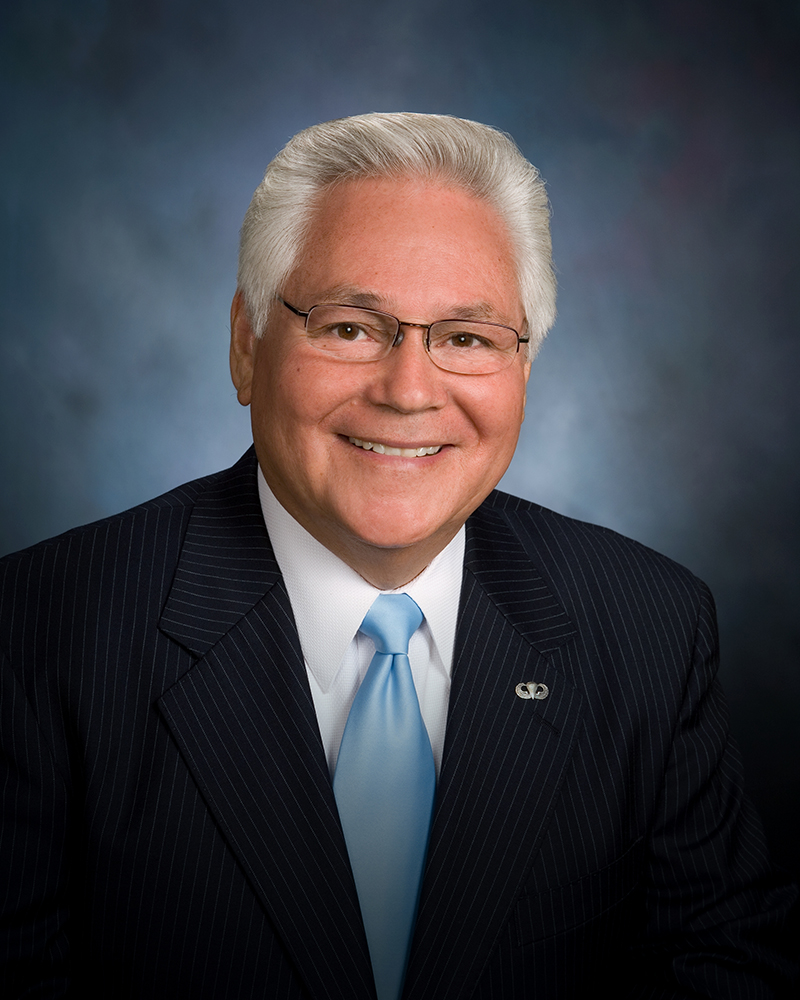
Sen. Bob Archuleta
Sponsored bills
Existing law requires school districts, county offices of education, and charter schools to provide emergency epinephrine auto-injectors to school nurses or trained volunteer personnel, and authorizes school nurses and trained personnel to use epinephrine auto-injectors to provide emergency medical aid to persons suffering, or reasonably believed to be suffering, from an anaphylactic reaction, as provided. Existing law requires school districts, county offices of education, and charter schools to, among other things, store those emergency epinephrine auto-injectors in an accessible location upon need for emergency use and include that location in specified annual notices. Existing law authorizes a pupil to carry and self-administer prescription auto-injectable epinephrine if the school district receives specified written statements from a physician and surgeon or a physician assistant, and from the parent, foster parent, or guardian of the pupil, as specified. This bill would replace all references to epinephrine auto-injectors or auto-injectable epinephrine in the above-described provisions with references instead to epinephrine delivery systems, as defined, and would require school districts, county offices of education, and charter schools to instead provide at least one type of United States Food and Drug Administration-approved epinephrine delivery system, as specified. To the extent the bill would impose additional duties on local educational agencies, the bill would impose a state-mandated local program. The California Constitution requires the state to reimburse local agencies and school districts for certain costs mandated by the state. Statutory provisions establish procedures for making that reimbursement. This bill would provide that, if the Commission on State Mandates determines that the bill contains costs mandated by the state, reimbursement for those costs shall be made pursuant to the statutory provisions noted above. This bill would declare that it is to take effect immediately as an urgency statute.
Existing law makes it a crime to possess, cultivate, and administer specified controlled substances, including psilocybin and psilocyn. Existing law makes it a crime for a person to rent, lease, or make available for use any building or room for the purpose of storing or distributing any controlled substance. This bill would, until January 1, 2031, request the University of California to establish local pilots in up to 5 counties to allow for the research and development of psilocybin services for veterans and former first responders as part of the Veterans and Former First Responders Research Pilot Program ("Pilot Program") . The bill would require these university partners, overseeing each Pilot Program to be responsible for protocol design, institutional review board approvals, training of psilocybin facilitators, data collection, and reporting. The bill would require each local pilot to partner with licensed health care and licensed community-based providers that provide services and care to the target population. The bill would require psilocybin to be provided by or under the supervision of a practitioner who has experience in providing or overseeing psilocybin or other psychedelic therapy services. The bill would require that each person being considered for the Pilot Program meet specified criteria, including that they are 21 years of age or older and have been given specified assessments. This bill would request the University of California to report specified information about the Pilot Program to the Legislature, the Secretary of California Health and Human Services, and the Governor by January 15, 2030. The bill would establish the Veterans and Former First Responders Research Pilot Special Fund and would continuously appropriate the fund to the University of California for the purposes of these provisions. The bill would request the University of California to apply for and accept grants, donations, and federal funding for the purposes of the Pilot Program, and would require those moneys to be deposited in the fund.
Existing law establishes the Department of Veterans Affairs. The department, among other services, provides veterans and their dependents and survivors with assistance in processing service-related disability claims, assistance in obtaining affordable housing, and information about health issues associated with military service. This bill would create the Veteran Task Force for the purpose of reversing the trend of veterans and individuals transitioning from the military who are leaving California to reside and work in another state. The bill would prescribe the composition of the task force, including, among others, the Secretary of Veterans Affairs. The bill would require the task force to, among other things, examine existing veterans benefits in California, assistance for individuals transitioning from the military, childcare availability, affordable housing, and other services and opportunities to retain veterans and their families in California.
Existing federal law provides for the Medicare Program, which is a public health insurance program for persons 65 years of age and older and specified persons with disabilities who are under 65 years of age. Existing federal law specifies parts of Medicare that cover specific services, such as Medicare Part B, which generally covers medically necessary services and supplies and preventive services. Existing law, the Knox-Keene Health Care Service Plan Act of 1975, provides for the licensure and regulation of health care service plans by the Department of Managed Health Care, and makes a willful violation of the act a crime. Existing law provides for the regulation of health insurers by the Department of Insurance. Existing federal law additionally provides for the issuance of Medicare supplement policies or certificates, also known as Medigap coverage, which are advertised, marketed, or designed primarily as a supplement to reimbursements under the Medicare Program for the hospital, medical, or surgical expenses of persons eligible for the Medicare Program, including coverage of Medicare deductible, copayment, or coinsurance amounts, as specified. Existing law, among other provisions, requires supplement benefit plans to be uniform in structure, language, designation, and format with the standard benefit plans, as prescribed. Existing law prohibits an issuer from denying or conditioning the offering or effectiveness of any Medicare supplement contract, policy, or certificate available for sale in this state, or discriminating in the pricing of a contract, policy, or certificate because of the health status, claims experience, receipt of health care, or medical condition of an applicant in the case of an application that is submitted prior to or during the 6-month period beginning with the first day of the first month in which an individual is both 65 years of age or older and is enrolled for benefits under Medicare Part B. Existing law requires an issuer to make available specified Medicare supplement benefit plans to a qualifying applicant under those circumstances who is 64 years of age or younger who does not have end stage renal disease. This bill would delete the exclusion of otherwise qualified applicants who have end stage renal disease, thereby making the specified Medicare supplement benefit plans available to those individuals. The bill, on and after January 1, 2027, would prohibit an issuer of Medicare supplement coverage in this state from denying or conditioning the issuance or effectiveness of any Medicare supplement coverage available for sale in the state, or discriminate in the pricing of that coverage because of the health status, claims experience, receipt of health care, medical condition, or age of an applicant, except as specified, if an application for coverage is submitted during an open enrollment period, as specified in the bill. The bill would entitle an individual enrolled in Medicare Part B to a 90-day annual open enrollment period beginning on January 1 of each year, as specified, during which period the bill would require applications to be accepted for any Medicare supplement coverage available from an issuer, as specified. The bill would require the open enrollment period to be a guaranteed issue period. The bill would authorize premium rates offered to applicants during the open enrollment period to vary based on the applicants' age at the time of issue, as specified, but would prohibit the premiums from varying based on age after the contract is issued. Because a violation of the bill's requirements by a health care service plan would be a crime, the bill would impose a state-mandated local program. The California Constitution requires the state to reimburse local agencies and school districts for certain costs mandated by the state. Statutory provisions establish procedures for making that reimbursement. This bill would provide that no reimbursement is required by this act for a specified reason.
Existing law requires the State Board of Education to adopt statewide academically rigorous content standards in the core curriculum areas of reading, writing, mathematics, history/social science, and science, as specified. Existing law requires the Instructional Quality Commission to, among other things, recommend curriculum frameworks to the state board and develop criteria for evaluating instructional materials. This bill would require the state board to, on or before January 1, 2028, develop and adopt academically rigorous content standards for ethnic studies instruction in high school. The bill would require the commission, on or before January 1, 2028, to review and recommend to the state board curriculum frameworks and instructional materials for ethnic studies instruction in high school, as specified. The bill would require the state board to provide the commission with evaluation criteria to use in providing its review and recommendations. The bill would state the intent of the Legislature to enact subsequent legislation to establish an advisory committee with a majority of the advisory committee's members being experts in African American studies, Asian American and Pacific Islander studies, Native American studies, and Latino and Chicanx studies, to provide input to the state board on proposed content standards and to the commission on proposed curriculum frameworks and instructional materials for ethnic studies instruction in high school. Existing law requires a pupil to complete designated coursework while in grades 9 to 12, inclusive, in order to receive a diploma of graduation from high school. These graduation requirements include, commencing for pupils graduating in the 2029–30 school year, the completion of a one-semester course in ethnic studies meeting specified requirements. Under existing law, the requirement to complete an ethnic studies course may be fulfilled by the completion of, among others, a course based on the model curriculum developed by the Instructional Quality Commission, an ethnic studies course taught as part of a course that has been approved as meeting the A–G requirements of the University of California and the California State University, or a locally developed ethnic studies course approved by the governing board of a school district or the governing body of a charter school. Existing law requires the curriculum, instruction, and instructional materials for these ethnic studies courses to meet specified requirements, including that they not reflect or promote any bias, bigotry, or discrimination against any person or group of persons on the basis of certain characteristics. Existing law makes these provisions relating to ethnic studies courses operative only upon an appropriation of funds by the Legislature for purposes of these provisions. This bill would require the curriculum, instruction, and instructional materials for any high school ethnic studies course, including ethnic studies courses meeting high school graduation requirements, to meet the above-described requirements, and would require the curriculum, instruction, and instructional materials for all high school ethnic studies courses to additionally, among other things, foster multicultural respect and understanding and focus on the domestic experience and stories of historically marginalized peoples in American society. To the extent that the bill would impose new duties on local educational agencies, the bill would impose a state-mandated local program. The bill would require a school district, county office of education, or charter school to provide, on or before June 30, 2026, the State Department of Education with a copy of all curricula, instruction, and instructional materials in ethnic studies that schools offer or plan to offer to pupils in any of grades 9 to 12, inclusive, and the adoption calendar for curricula, instruction, and instructional materials in ethnic studies proposed for adoption by the governing board or body of the local educational agency for instruction to these pupils. The bill would require a local educational agency that does not have an ethnic studies course in place for its pupils in any of grades 9 to 12, inclusive, on or before June 30, 2026, to provide the department with a copy of all curricula, instruction, and instructional materials in ethnic studies that its schools seek to adopt at least 60 days before being first presented at a public meeting of the governing board or body of the local educational agency for instruction to these pupils. The bill would require the department to post the information received pursuant to these requirements on its internet website. To the extent that the bill would impose new duties on local educational agencies, it would impose a state-mandated local program. The bill would require the department to monitor compliance with the requirements of this bill as part of its annual compliance monitoring of state and federal programs and to provide a report to the relevant policy and fiscal committees of the Legislature summarizing the data collected through compliance monitoring, as specified. The California Constitution requires the state to reimburse local agencies and school districts for certain costs mandated by the state. Statutory provisions establish procedures for making that reimbursement. This bill would provide that, if the Commission on State Mandates determines that the bill contains costs mandated by the state, reimbursement for those costs shall be made pursuant to the statutory provisions noted above.
Maddy summarySCR 103 designates the week of July 20-26, 2025, as "Probation Services Week" in California. This concurrent resolution recognizes the work of probation services professionals across the state. It is a symbolic observance with no new laws, regulations, or direct impact on individuals or policies. The bill does not alter existing statutes or create obligations for any entity.
Existing law establishes the Independent System Operator (ISO) as a nonprofit, public benefit corporation and requires the ISO, among other duties, to ensure the efficient use and reliable operation of the transmission grid consistent with the achievement of planning and operating reserve criteria, as provided. This bill would require the ISO to integrate surplus interconnection service considerations into its long-term transmission planning and enhance transparency around surplus interconnection service opportunities, as specified. Existing law vests the Public Utilities Commission with regulatory authority over public utilities, including electrical corporations, while local publicly owned electric utilities are under the direction of their governing boards. Existing law requires the commission to adopt a process for each load-serving entity to file an integrated resource plan, adopt a schedule for periodic updates to the plan, and ensure each load-serving entity take specified actions, as specified. Existing law also requires the governing board of each local publicly owned electric utility with an annual electrical demand exceeding 700 gigawatthours to adopt an integrated resource plan and a process for updating the plan at least once every 5 years to ensure the utility achieves certain goals, as specified. This bill would require each electrical corporation, and each local publicly owned utility with an annual electrical demand exceeding 700 gigawatthours, to require the evaluation of surplus interconnection service options and to consider surplus interconnection service options, for purposes of its integrated resource plan. This bill would also require each electrical corporation or local publicly owned electric utility to use available grid infrastructure through surplus interconnection service to use any available interconnection capacity, as specified. Under existing law, a violation of the Public Utilities Act or any order, decision, rule, direction, demand, or requirement of the commission is a crime. Because certain provisions of this bill would be part of the act and a violation of a commission action implementing the bill's requirements would be a crime, the bill would impose a state-mandated local program. Additionally, by imposing new duties on local publicly owned electric utilities, the bill would impose a state-mandated local program. The California Constitution requires the state to reimburse local agencies and school districts for certain costs mandated by the state. Statutory provisions establish procedures for making that reimbursement. This bill would provide that no reimbursement is required by this act for specified reasons.
Existing law requires the State Energy Resources Conservation and Development Commission (Energy Commission) , in consultation with specified entities, to adopt a biennial integrated energy policy report containing certain information, including an overview of major energy trends and issues facing the state. This bill would require the Energy Commission, in the next update to the biennial integrated energy policy report after January 1, 2027, and subject to available funding, to adopt a virtual power plant deployment plan. The bill would require the Energy Commission, in developing the plan, to take certain actions, and would require that the plan meet specified requirements. Existing law requires the Energy Commission, in consultation with the Public Utilities Commission and the Independent System Operator, to adopt a goal for load shifting to reduce net peak electrical demand and adjust this target in each biennial integrated energy policy report thereafter. This bill would require each electrical corporation to annually report to the Energy Commission its contribution towards meeting that load-shift goal.
Existing law, commencing January 1, 2019, made various changes to the law governing ignition interlock devices (IID) , including, among other things, requiring a person who has been convicted of driving a motor vehicle under the influence of an alcoholic beverage, as specified, to install for a specified period of time as ordered by the court, an IID on the vehicle they operate, provided however that installation of an IID is discretionary for a first offender, as specified; authorizing a person convicted of driving a motor vehicle under the influence, if all other requirements are satisfied, including the installation of an IID, to apply for a restricted driver's license without completing a period of license suspension or revocation; and requiring ignition interlock device manufacturers to be in compliance with specified provisions relating to payment for the costs of an ignition interlock device. Existing law makes these changes operative until January 1, 2026. On January 1, 2026, existing law, as it relates to these provisions, is generally reinstated to read as it read prior to January 1, 2019. Existing law makes it a crime to violate certain provisions relating to IIDs and motor vehicles equipped with IIDs. This bill would extend the operation of these provisions until January 1, 2033, and would instead reinstate the law to how it read prior to January 1, 2019, on January 1, 2033. By extending the application of a crime, the bill would impose a state-mandated local program. The California Constitution requires the state to reimburse local agencies and school districts for certain costs mandated by the state. Statutory provisions establish procedures for making that reimbursement. This bill would provide that no reimbursement is required by this act for a specified reason.