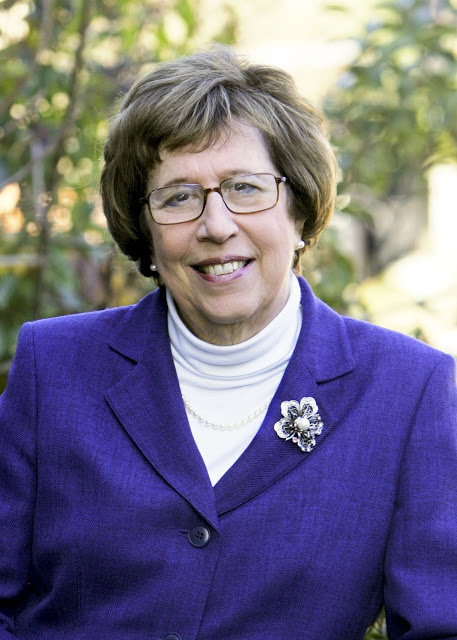
Photo of Lois Wolk
D California Senate · District 3

Sen. Lois Wolk

Compare
Total votes
28,277
all sessions
Attendance
95%
1,121 missed
Near the chamber average
With party
99%
of cast votes
Near the chamber average
Bipartisan score
1%
crosses aisle rarely
Near the chamber average
Sponsored
950
bills & resolutions
Near the chamber average
Committees
0
assignments
950 bills and resolutions

Sponsored bills

Total
950
Primary
262
Co-sponsor
688
This page
950
matching current filters
Co-sponsor SCR 103
Signed into law · California Senate · Co-sponsor
Teen Dating Violence Awareness and Prevention Month.

This measure would proclaim the month of February 2016 as Teen Dating Violence Awareness and Prevention Month, and would encourage all Californians to observe Teen Dating Violence Awareness and Prevention Month with programs and activities that raise awareness about teen dating violence.

Signed into law Jun 1, 2016 1 co-sponsor
Co-sponsor AB 2666
Failed · California House · Co-sponsor
Firearms: felons in possession.

Existing law provides that any person convicted of a felony under the laws of the United States, the State of California, or any other state or country, and who owns, purchases, receives, or has in possession or under custody or control any firearm is guilty of a felony. Existing law prescribes the punishment for that felony as imprisonment for a term of 16 months, or 2 or 3 years in the state prison. This bill would provide that the punishment for subsequent convictions of that felony would be imprisonment for a term of 4, 5, or 6 years in the state prison. By creating a new crime, this bill would impose a state-mandated local program. The bill would also make additional technical, nonsubstantive changes. The California Constitution requires the state to reimburse local agencies and school districts for certain costs mandated by the state. Statutory provisions establish procedures for making that reimbursement. This bill would provide that no reimbursement is required by this act for a specified reason.

Failed May 27, 2016 1 co-sponsor
Primary SB 1350
In committee · California Senate · Lead sponsor
Agricultural lands: greenhouse gases: Healthy Soils Program.

The California Global Warming Solutions Act of 2006 designates the State Air Resources Board as the state agency charged with monitoring and regulating sources of emissions of greenhouse gases. The act authorizes the state board to include in its regulations the use of market-based compliance mechanisms. Existing law requires all moneys, except for fines and penalties, collected by the State Air Resources Board from the auction or sale of allowances as part of a market-based compliance mechanism to be deposited in the Greenhouse Gas Reduction Fund and to be available upon appropriation by the Legislature. Existing law requires the State Air Resources Board to develop guidance on reporting and quantification methods for state agencies receiving an appropriation from the Greenhouse Gas Reduction Fund. Existing law, the Cannella Environmental Farming Act of 1995, requires the Department of Food and Agriculture to establish and oversee an environmental farming program to provide incentives to farmers whose practices promote the well-being of ecosystems, air quality, and wildlife and their habitat. The act requires the Secretary of Food and Agriculture to convene a 5-member Scientific Advisory Panel on Environmental Farming, as prescribed, for the purpose of providing advice and assistance to federal, state, and local government agencies on issues relating to air, water, and wildlife habitat, as specified. Existing law authorizes the panel to establish ad hoc committees to assist the panel in performing its functions. This bill would change the number of members on the panel from 5 to 7 members and would require that the secretary appoint 5 instead of 3 of these members, as prescribed. The bill would additionally allow the secretary to appoint, in consultation with the panel, ex officio nonvoting members to the panel. The bill would add representatives of nongovernmental entities to persons who may be on the ad hoc committees. The bill would require the State Air Resources Board to consult with the Secretary of Food and Agriculture and the panel in developing the quantification methods to demonstrate and quantify on-farm greenhouse gas emissions reductions. The bill would require the Department of Food and Agriculture, in consultation with the panel, to establish and oversee a Healthy Soils Program to seek to optimize climate benefits while supporting the economic viability of California agriculture by providing incentives, including loans, grants, research, and technical assistance, or educational materials and outreach, to farmers whose management practices contribute to healthy soils and result in net long-term on-farm greenhouse gas benefits. The bill would authorize the program to include funding of on-farm demonstration projects and, if the funding of those projects is included, would require the department to establish a technical advisory committee to review the project applications for scientific validity and the project's potential to achieve greenhouse gas benefits. The bill would require the department to implement the program and quantify greenhouse gas emissions reductions in accordance with the quantification methods developed by the State Air Resources Board and specified funding guidelines.

In committee May 27, 2016 0 co-sponsors
Co-sponsor AB 1713
In committee · California House · Co-sponsor
Sacramento-San Joaquin Delta: peripheral canal.

Existing law requires various state agencies to administer programs relating to water supply, water quality, and flood management in the Sacramento-San Joaquin Delta. The bill would prohibit the construction of a peripheral canal, as defined, unless expressly authorized by an initiative voted on by the voters of California on or after January 1, 2017, and would require the Legislative Analyst's Office to complete a prescribed economic feasibility analysis prior to a vote authorizing the construction of a peripheral canal.

In committee May 27, 2016 1 co-sponsor
Primary SB 1316
In committee · California Senate · Lead sponsor
Tissue banks: human milk.

Existing law, with certain exceptions, requires a tissue bank operating in California to have a current valid license issued by the State Department of Public Health. Existing law defines a tissue bank as a place, establishment, or institution that collects, processes, stores, or distributes tissue for transplantation into human beings. Existing law defines tissue to include human bodily fluids, and defines transplantation to include by ingestion. The department may suspend or revoke a tissue bank license for specified reasons. A violation of the provisions regulating tissue banks is a misdemeanor. This bill would require a tissue bank licensed by the department that collects, processes, stores, or distributes human milk to, among other things, work with lactation support groups to provide breastfeeding education and lactation support for a mother, from whom the tissue bank procures human milk, as provided. The bill would prohibit these tissue banks from, among other things, providing payment to a mother for human milk the tissue bank procures from her within her first 90 days postpartum. The bill would require the department to adopt, on or before January 1, 2018, rules and regulations governing these tissue banks that, at a minimum, are substantially based upon the guidelines of the Human Milk Banking Association of North America for safely procuring, processing, storing, and distributing human milk, and would require these tissue banks to comply with the latter guidelines until the department adopts those rules and regulations. The bill would provide that a violation of its provisions is not punishable as a misdemeanor under existing law. The bill would provide that its provisions remain in effect only until January 1, 2022.


In committee May 27, 2016 0 co-sponsors
Co-sponsor SB 1002
In committee · California Senate · Co-sponsor
End of Life Option Act: telephone number.

The End of Life Option Act, as enacted in the 2015–16 2nd Extraordinary Session of the Legislature, authorizes, until January 1, 2026, an adult who meets certain qualifications, and who has been determined by his or her attending physician to be suffering from a terminal disease, as defined, to make a request for a drug prescribed pursuant to the act for the purpose of ending his or her life through self-administration of the drug. The act establishes certain procedures for making a request, prohibits certain agreements or policies from being conditioned upon or affected by a request, and provides immunity from civil or criminal liability, with exceptions, to persons present when the qualified individual self-administers the drug or to persons preparing the drug. The act provides that action taken in accordance with the act shall not constitute, among other things, suicide or homicide. The act requires physicians to submit specified forms and information to the State Department of Public Health after writing a prescription for an aid-in-dying drug and after the death of an individual who requested an aid-in-dying drug. The act authorizes the Medical Board of California to update those forms. The act requires the State Department of Public Health to publish the forms on its Internet Web site, collect and review certain information, annually create a statistical report of the information collected, as specified, and post that report on its Internet Web site. This bill would require the department, on or before January 1, 2017, to post a toll-free telephone number on its Internet Web site for the purpose of receiving and responding to inquiries in multiple languages regarding the End of Life Option Act, as specified.

In committee May 27, 2016 1 co-sponsor
Primary SJR 18
Signed into law · California Senate · Lead sponsor
Relative to small unmanned aircraft systems.

This measure would request the President of the United States and the United States Secretary of Transportation to allow for the operation of small unmanned aircraft systems by farmers and rangeland managers pursuant to emergency rules adopted by the administration, as specified.

Signed into law May 20, 2016 0 co-sponsors
Co-sponsor SCR 122
Signed into law · California Senate · Co-sponsor
Relative to Autism Awareness Month.

This measure would designate the month of April 2016 as Autism Awareness Month and would encourage residents to show support for autism awareness by lighting their homes, businesses, schools, and places of worship with blue light bulbs.

Signed into law May 10, 2016 1 co-sponsor
Co-sponsor ACR 147
Signed into law · California House · Co-sponsor
Relative to California Agriculture Day.

This measure would recognize and honor the men and women of California agriculture for their dedication and productivity by observing March 15, 2016, as National Agriculture Day, and designating March 16, 2016, as California Agriculture Day.

Signed into law Apr 29, 2016 1 co-sponsor
Co-sponsor SB 1450
died · California Senate · Co-sponsor
The California Promise.

Existing law establishes the California State University, under the administration of the Trustees of the California State University, and the California Community Colleges, under the administration of the Board of Governors of the California Community Colleges, as 2 of the segments of public postsecondary education in this state. This bill would establish the California Promise, which would require the trustees and the board of governors to establish a program that authorizes a campus of the California State University and the California Community Colleges to enter into a pledge with a student who satisfies specified criteria to support the student in obtaining an associate degree within 2 academic years, or a baccalaureate degree within 4 academic years, of freshman admission. The bill would prohibit systemwide tuition charged to a California State University student who participates in a California Promise program for an academic year from exceeding the amount of tuition charged to the student for the academic year of the student's freshman admission, and would prohibit tuition of a community college transfer student from exceeding a specified amount. By imposing new duties on community college districts, this bill would impose a state-mandated local program. The California Constitution requires the state to reimburse local agencies and school districts for certain costs mandated by the state. Statutory provisions establish procedures for making that reimbursement. This bill would provide that, if the Commission on State Mandates determines that the bill contains costs mandated by the state, reimbursement for those costs shall be made pursuant to these statutory provisions.

died Apr 20, 2016 1 co-sponsor
Showing 51 to 60 of 950 bills
Previous 1 5 6 7 95 Next