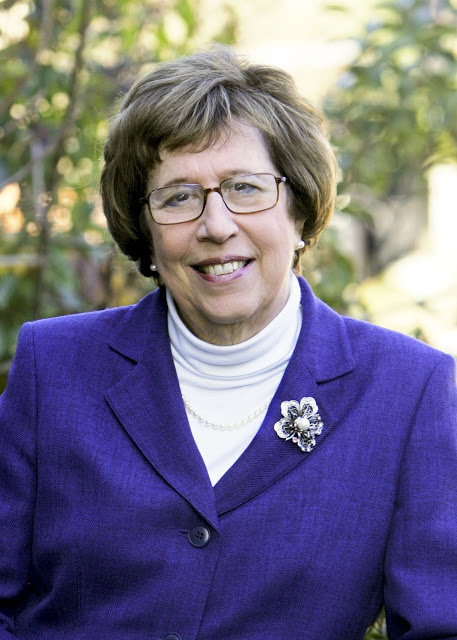
This measure would urge the Congress of the United States to lift an existing prohibition against publicly funded scientific research on the causes of gun violence and its effects on public health, and to appropriate funds for the purpose of conducting that research.
Sponsored bills
The California Constitution requires the reasonable and beneficial use of water and that the conservation of the water resources of the state is to be exercised with a view to the reasonable and beneficial use of the water in the interest of the people and for the public welfare. Existing law, the Sustainable Groundwater Management Act, requires all groundwater basins designated as high- or medium-priority basins by the Department of Water Resources and designated as subject to critical conditions of overdraft to be managed under a groundwater sustainability plan or coordinated groundwater sustainability plans by January 31, 2020, and requires all other groundwater basins designated as high- or medium-priority basins to be managed under a groundwater sustainability plan or coordinated groundwater sustainability plans by January 31, 2022, except as specified. This bill, by January 1, 2018, would require a city or county overlying a basin designated as a high- or medium-priority basin to establish a process for the issuance of a groundwater extraction permit for the development of a groundwater extraction facility that requires an applicant for a groundwater extraction permit to demonstrate, based on substantial evidence, that extraction of groundwater from a proposed groundwater extraction facility will not contribute to or create an undesirable result, as prescribed. The bill would prohibit a groundwater extraction facility in a high- or medium-priority basin from being developed without a valid groundwater extraction permit, with certain exceptions. The bill would not require a city or county overlying a medium- or high-priority basin to have a process for the issuance of a groundwater extraction permit for the development of a groundwater extraction facility on or after January 31, 2022, or once the department has evaluated a groundwater sustainability plan for the basin the city or county overlies and determined the plan to be adequate and likely to achieve the sustainability goal for the basin, whichever comes first. By increasing the duties of cities and counties, this bill would impose a state-mandated local program. The California Constitution requires the state to reimburse local agencies and school districts for certain costs mandated by the state. Statutory provisions establish procedures for making that reimbursement. This bill would provide that no reimbursement is required by this act for a specified reason.
Existing provisions of the Warren-911-Emergency Assistance Act, establishes the number "911" as the primary emergency telephone number for use in the state and requires the providing of enhanced service capable of selective routing, automatic number identification, or automatic location identification. The act requires a telephone corporation serving rural telephone areas that cannot provide enhanced 911 emergency telephone service capable of selective routing, automatic number identification, or automatic location identification to present to the Office of Emergency Services a comprehensive plan detailing a schedule by which their facilities will be converted to be compatible with the enhanced emergency telephone system. This bill would require a facilities-based provider of telecommunications services that the Federal Communications Commission requires to provide access to 911 service to provide responder outage notification by email to the Office of Emergency Services whenever there is a rural outage, as defined, within 60 minutes of discovering the rural outage. The bill would make the Office of Emergency Services responsible for notifying any applicable county office of emergency services and the sheriff of any county affected by the outage. The bill would require the responder outage notification to the Office of Emergency Services to include the telecommunications provider's contact name and calling number with a description of the estimated area affected by the outage. The bill would require the telecommunications services provider to notify the Office of Emergency Services of the estimated time to repair the outage and when service is restored. The bill would require that the telecommunications service provider ensure that the calling number provided to the Office of Emergency Services with the responder outage notification be staffed by the indicated contact person, or by a person qualified to respond to inquiries about the outage, at all times until the provider notifies the office that service has been restored.
Existing law, the Wildlife Conservation Law of 1947, establishes the Wildlife Conservation Board in the Department of Fish and Wildlife. Under existing law, the board consists of the president of the Fish and Game Commission, the Director of Fish and Wildlife, and the Director of Finance. Existing law prescribes the board's duties with regard to, among other things, real property acquisitions for property used for wildlife preservation and conservation purposes. This bill would establish the Inner Coast Range Program with specified goal areas and authorization related to the Inner Coast Range Region, as defined. This bill would require the board to establish an advisory board for the program consisting of one representative of each of the counties within the region and would authorize the board to invite certain legislators and representatives of state and federal agencies to participate as members on the advisory board. The bill would create the Inner Coast Range Program Fund in the State Treasury and would provide that moneys in the fund would be available, upon appropriation, for the purposes of the program. The bill would require the board to make a biannual report to the Legislature and to the Secretary of the Natural Resources Agency regarding expenditures, land, management costs, and administrative costs for the purposes of the program. The bill, by January 1, 2027, would require the board, in consultation with the advisory board, to review the program and issue a report to the relevant policy committees of the Legislature about the possible creation of a state conservancy for the Inner Coast Range Region.
Existing law establishes and funds various research centers and programs in conjunction with the University of California. This bill would enact the California Firearm Violence Research Act. The bill would declare the intent of the Legislature that the Regents of the University of California establish the California Firearm Violence Research Center to research firearm-related violence. The bill would declare legislative intent regarding the principles by which the university would administer the center and award research funds, as prescribed. The bill would require the university to report, on or before December 31, 2017, and every 5 years thereafter, specified information regarding the activities of the center and information pertaining to research grants. The bill would require the center and the grant recipients to provide copies of their research publications to the Legislature and specified agencies. The bill would specify that its provisions would apply to the university only to the extent that the regents, by resolution, make any of the provisions of the bill applicable to the university.
The Cortese-Knox-Hertzberg Local Government Reorganization Act of 2000 governs the procedures for the formation and change of organization of cities and special districts. Existing law authorizes a local agency formation commission to initiate proposals by resolution of application for, among other things, the consolidation of a district, a merger, and the formation of a new district or districts. This bill would additionally authorize a local agency formation commission to initiate a proposal by resolution of application for the annexation of a disadvantaged unincorporated community, as specified. Existing law requires an applicant for a change of organization or reorganization to include a plan for providing services within the affected territory that includes, among other things, an enumeration and description of the services to be extended to the affected territory and an indication of when those services can feasibly be extended to the affected territory. This bill would additionally require an applicant to include an enumeration and description of the services currently provided, and would require an indication of when services can feasibly be extended to the affected territory if new services are proposed. Existing law, except as otherwise provided, prohibits a local agency formation commission from approving an annexation to a city of any territory greater than 10 acres, or as determined by commission policy, where there exists a disadvantaged unincorporated community, as specified, unless an application to annex the disadvantaged unincorporated community to the subject city has been filed with the executive officer. This bill would extend that prohibition to an annexation to a qualified special district. The bill would define "qualified special district" to mean a special district with more than 500 service connections that provides drinking water or wastewater services. Existing law requires a local agency formation commission to develop and determine the sphere of influence of each city and each special district within the county and to enact policies designed to promote the logical and orderly development of areas within the sphere. This bill would additionally require a local agency formation commission to enact policies designed to promote the logical and orderly development of areas adjacent to the sphere of influence of each city and special district. Existing law requires a commission, in preparing and updating spheres of influence, to conduct a service review of the municipal services provided in the county or other area designated by the commission. Existing law authorizes the commission, in conducting the review, to assess various alternatives for improving efficiency and affordability of infrastructure and service delivery, as specified, and to include a review of whether the agencies under review are in compliance with the California Safe Drinking Water Act. Where there exists a disadvantaged unincorporated community that lacks adequate drinking water and wastewater services and infrastructure within or contiguous with the subject sphere, this bill would instead require the commission to make the assessment of alternatives and to include the safe drinking water review described above if the information is available from the State Water Resources Control Board or other sources. This bill would, on or before January 1, 2018, and every 5 years thereafter, additionally require a local agency formation commission to identify and determine the location of any disadvantaged unincorporated community, as defined, that is within or adjacent to the sphere of influence of a city or a special district and review the adequacy and need for water and wastewater services within the identified disadvantaged unincorporated communities, as specified. The bill would, on or before January 1, 2020, and every 5 years thereafter, require the commission to adopt a written accessibility plan that addresses any existing service inefficiencies or needs within any identified disadvantaged unincorporated community, and would require a local agency formation commission to take certain steps to implement the plan and address service needs. The bill would, on or before January, 1, 2018, additionally require a local agency formation commission to file a map of the county that identified any disadvantaged unincorporated community that lacks safe drinking water or adequate wastewater and a copy of the accessibility plan. Existing law requires each city or county, on or before the due date for the next adoption of its housing element, to review and update the land use element of its general plan based on available data, including, but not limited to, the data an analysis prepared by a local agency formation commission in a service review of the municipal services of unincorporated island, fringe, or legacy communities inside or near its boundaries, as specified. Existing law also requires each city and county to, on or before the due date for each subsequent revision of its housing element, review and if necessary amend its general plan to update specified analysis. This bill would require each city or county, on or before the next adoption of its housing element and on or before the due date for each subsequent revision of its housing element, to additionally incorporate any adopted accessibility plan into the general plan and any update of the land use element of its general plan, as specified. By imposing new duties on local government officials, this bill would impose a state-mandated local program. The California Constitution requires the state to reimburse local agencies and school districts for certain costs mandated by the state. Statutory provisions establish procedures for making that reimbursement. This bill would provide that, if the Commission on State Mandates determines that the bill contains costs mandated by the state, reimbursement for those costs shall be made pursuant to these statutory provisions.

Existing law establishes the Pierce's Disease Control Program in the Department of Food and Agriculture and the Pierce's Disease Management Account in the Department of Food and Agriculture Fund. This bill would appropriate $5,000,000 from the General Fund to the Pierce's Disease Management Account in the Department of Food and Agriculture Fund. The bill would also state various findings and declarations of the Legislature relating to, among other things, Pierce's disease, the California wine industry, and funding the Pierce's Disease Control Program.
This measure would proclaim May 16, 2016, as California Holocaust Memorial Day and would urge all Californians to observe this day of remembrance for the victims of the Holocaust in an appropriate manner.
This measure would recognize May 2016 as Better Hearing and Speech Month.
Existing law authorizes the Director of General Services to sell or exchange, at fair market value based upon an appraisal approved by the Department of General Services, all or part of a specified parcel of state property only to the County of Napa upon those terms, conditions, reservations, and exceptions the director determines are in the best interest of the state, by January 1, 2015, and subject to other requirements. Existing law requires reimbursement of the Department of General Services for any cost or expense incurred in the disposition of the property from the proceeds of the disposition of the property. Existing law requires the proceeds from this sale to be deposited in the Deficit Recovery Bond Retirement Sinking Fund Subaccount until the bonds associated with this subaccount are finally paid. This bill would apply the authorization described above to apply to the Napa County Regional Park and Open Space District instead of Napa County and would extend the period within which the sale described above may be made to January 1, 2021. The bill would revise the reference to the Deficit Recovery Bond Retirement Sinking Fund Subaccount, given that the principal and interest on the bonds have been provided and no more bonds are outstanding. Consistent with requirements of the California Constitution, the bill would direct that proceeds be paid into the Special Fund for Economic Uncertainties, which is continuously appropriated. By depositing money in a continuously appropriated fund, the bill would make an appropriation. This bill would make legislative findings and declarations as to the necessity of a special statute for the Napa County Regional Park and Open Space District.