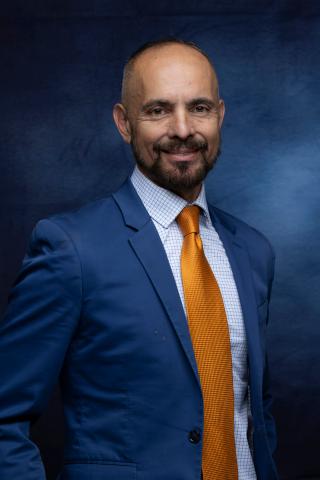
Photo of Christopher Cabaldon
D California Senate · District 3

Sen. Christopher Cabaldon

Compare
Total votes
7,546
all sessions
Attendance
98%
69 missed
Near the chamber average
With party
99%
of cast votes
Near the chamber average
Bipartisan score
0%
crosses aisle rarely
Near the chamber average
Sponsored
124
bills & resolutions
Lower than 88% of chamber peers
Committees
14
assignments
124 bills and resolutions

Sponsored bills

Total
124
Primary
40
Co-sponsor
84
This page
124
matching current filters
Primary SCR 190
Signed into law · California Senate · Lead sponsor
Relative to Larry Itliong Day.

This measure would proclaim October 25, 2026, as Larry Itliong Day in California and encourage all public schools and educational institutions to conduct exercises remembering his life, recognizing his accomplishments, and familiarizing pupils with the contributions he made to California.

Signed into law Aug 18, 2026 0 co-sponsors
Co-sponsor SR 135
Passed · California Senate · Co-sponsor
Relative to 40th Infantry Division of the California National Guard.

Maddy summarySenate Resolution 135 is a commemorative measure that formally honors the 40th Infantry Division of the California National Guard for its more than century-long history of service. The resolution highlights the unit's contributions in major conflicts, including World War I, World War II, the Korean War, and post-9/11 operations, as well as its role in responding to natural disasters within California. It specifically acknowledges the division's Medal of Honor recipients and notes that Major General Laura L. Yeager became the first woman to command an infantry division in 2019. The bill directs the Secretary of the Senate to send copies of the resolution to the Adjutant General of California, the division commander, and the author for distribution.

Passed Aug 13, 2026 1 co-sponsor
Primary SB 1054
Passed · California Senate · Lead sponsor
Unemployment insurance: reporting requirements.

Existing law provides for unemployment compensation benefits for eligible individuals in the state who are unemployed through no fault of their own. Existing law requires an employer, as defined, to make contributions for unemployment insurance premiums and to file specified reports with the Director of Employment Development, including, among other reports, a report of contributions, a quarterly return, and a report of wages paid, as specified. This bill would require the Employment Development Department to work with employers to enhance the reporting of employment and earning data, as specified, and, where feasible, to align and streamline definitions and requirements for the report of wages, deploy user-friendly application programming interfaces, and implement other means to simplify reporting processes. The bill would require, beginning July 1, 2027, every employer with 10 or more employees and every individual or organization that, as an agent, reports wages on behalf of one or more employers with 10 or more employees, as specified, to include in the report of wages, information on total monthly wage, industry, occupation, worker type, and hours worked for each employee, as provided. This bill would require the department, on or before July 1, 2027, to adopt and develop appropriate procedures for the sharing of hours worked and other necessary employment data to support employment-related verifications for initial eligibility for, and ongoing receipt of, public benefits, and to enable access to relevant wage data, as specified. The bill would require the department to work with the California Statewide Automated Welfare System (CalSAWS) to develop and implement the necessary system changes to implement the data sharing process to verify hours worked for those public benefits. The bill would also require or authorize the department to work with other specified state agencies relating to reporting requirements on workforce and employment. This bill would require the department to use existing federal and state grant funds to the extent available and to implement the bill's provisions on or before July 1, 2027, except that, the bill would require the department to begin the data sharing process to verify hours worked for the public benefits, as described above, on January 1, 2028, or when the department notifies the Legislature that CalSAWS can perform the necessary automation to implement the data sharing process, whichever is later. Under existing law, the information obtained in the administration of the Unemployment Insurance Code is for the exclusive use and information of the Director of Employment Development in the discharge of their duties and is not open to the public. However, existing law requires the director to permit the use of the information for specified purposes, including to enable governmental agencies to verify or determine eligibility for public social services. Existing law provides that a person who knowingly accesses, uses, or discloses this confidential information without authorization is guilty of a misdemeanor. This bill would also require the director, on or before January 1, 2028, to enable the State Department of Social Services and the State Department of Health Care Services to access hours worked and other necessary employment data to support employment-related verifications for initial eligibility for, and ongoing receipt of, public benefits, as prescribed. The bill would further require the director, on or before January 1, 2028, to enable the Office of the California Education Interagency Council to access any relevant wage data necessary for the council's specified purposes. By expanding the scope of a crime, this bill would impose a state-mandated local program. Existing constitutional provisions require that a statute that limits the right of access to the meetings of public bodies or the writings of public officials and agencies be adopted with findings demonstrating the interest protected by the limitation and the need for protecting that interest. This bill would make legislative findings to that effect. The California Constitution requires the state to reimburse local agencies and school districts for certain costs mandated by the state. Statutory provisions establish procedures for making that reimbursement. This bill would provide that no reimbursement is required by this act for a specified reason.


Passed Aug 13, 2026 0 co-sponsors
Primary SB 1106
Passed · California Senate · Lead sponsor
Agentic artificial intelligence.

Existing law requires the Office of Emergency Services to, as appropriate, perform a risk analysis of potential threats posed by the use of generative artificial intelligence to California's critical infrastructure, including those that could lead to mass casualty events. Existing law requires that risk analysis to be provided to the Governor, and, if appropriate, include recommendations reflecting changes to artificial intelligence technology, its applications, and risk management, including further private actions, administrative actions, and collaboration with the Legislature to guard against potential threats and vulnerabilities. This bill would require that recommendations in the risk analysis reflecting changes to artificial intelligence technology include agentic artificial intelligence, as defined. Existing law requires the Department of Technology to annually submit to certain legislative committees a report regarding a specified required comprehensive inventory of all high-risk automated decision systems that have been, or are being, used, developed, or procured by a state agency. Existing law defines "high-risk automated decision system" to mean an automated decision system that is used to assist or replace human discretionary decisions that have a legal or similarly significant effect, including decisions that materially impact access to, or approval for, housing or accommodations, education, employment, credit, health care, and criminal justice. This bill would further require the comprehensive inventory in the report to include agentic artificial intelligence that has been, or is being, used, developed, or procured by a state agency.

Passed Aug 13, 2026 0 co-sponsors
Co-sponsor SB 1021
Passed · California Senate · Co-sponsor
Fishing and hunting: youth program.

The California Constitution establishes the Fish and Game Commission and provides for the delegation to the commission of powers relating to the protection and propagation of fish and game. Existing law places the Fish and Game Commission in the Natural Resources Agency. This bill would require the commission to, on or before January 1, 2028, adopt regulations, as provided, to increase opportunities to fish, and to hunt big game, wild pigs, upland game birds, and migratory game birds, for resident youth with life-threatening illnesses. The bill would require the commission, in adopting those regulations, to ensure reasonable accommodations for participants in accordance with federal and state disability are incorporated into the regulations and to consider authorizing special hunts, as prescribed. The bill would authorize the commission to include in the regulations additional reasonable accommodations consistent with safe, ethical, and science-based wildlife management practices. The bill would require the Department of Fish and Wildlife to, on or before January 1, 2032, prepare and submit a report to the relevant legislative policy and budget committees in both houses of the Legislature and to the commission, as provided. The bill would make the implementation of its provisions contingent upon an appropriation by the Legislature. The bill would repeal these provisions on January 1, 2033.

Passed Aug 13, 2026 1 co-sponsor
Primary SJR 14
Signed into law · California Senate · Lead sponsor
World War II Nurses Congressional Gold Medal Act.

This measure would urge the United States Congress to act favorably in regard to legislation, Senate Bill 2195 and House of Representatives Bill 4901 to award the Congressional Gold Medal to the World War II members of the United States Army Nurse Corps and the United States Navy Nurse Corps.

Signed into law Aug 11, 2026 0 co-sponsors
Co-sponsor SCR 136
Signed into law · California Senate · Co-sponsor
Relative to the California Coastal Act of 1976.

This measure would acknowledge and celebrate 50 years of coastal protection and affirm the state's longstanding commitment to protecting its coastal waters, as specified.

Signed into law Aug 11, 2026 1 co-sponsor
Co-sponsor SJR 12
Signed into law · California Senate · Co-sponsor
Proposed 2026–2031 National Outer Continental Shelf Oil and Gas Leasing Program: opposition.

This measure would request that the federal Bureau of Ocean Energy Management hold public hearings in California on the proposed 2026–2031 National Outer Continental Shelf Oil and Gas Leasing Program, prepare an environmental impact statement to accompany the program, and provide the public the opportunity to comment on a draft programmatic environmental impact statement for potential offshore oil and gas leasing in California. The measure would strongly and unequivocally oppose any new offshore drilling and declare unequivocal support for the current federal prohibition on new oil or gas drilling in federal waters offshore of the Pacific coast.

Signed into law Aug 11, 2026 1 co-sponsor
Co-sponsor HR 127
Passed · California House · Co-sponsor
Relative to Transgender History Month.

Maddy summaryCalifornia House Resolution 127 declares August of each year as Transgender History Month to recognize the historical contributions and struggles of transgender, two-spirit, gender-expansive, and intersex individuals in the state. The resolution highlights specific California milestones, such as the Compton's Cafeteria Riots and the establishment of the nation's first transgender cultural district in San Francisco, while noting ongoing challenges including discrimination, hate crimes, and legislative attacks on trans rights. It commits the state legislature to increasing awareness of these communities and removing barriers to their full participation in society.

Passed Aug 10, 2026 1 co-sponsor
Primary SR 120
Passed · California Senate · Lead sponsor
Relative to Filipino American History Month.

Maddy summarySenate Resolution 120 establishes Filipino American History Month to recognize the long-standing contributions of Filipinos and Filipino Americans to California and the United States. The resolution highlights key historical events, including early immigration, service during World War II, and the significant role Filipino workers played in California's agricultural industry and labor rights movements. By documenting these achievements, the bill aims to honor the resilience and impact of this community throughout American history.

Passed Aug 3, 2026 0 co-sponsors
Showing 31 to 40 of 124 bills
Previous 1 3 4 5 13 Next