

Existing law defines "sexual orientation change efforts" as practices by mental health providers that seek to change an individual's sexual orientation, as specified. Existing law prohibits a mental health provider, as defined, from engaging in sexual orientation change efforts with a patient under 18 years of age, and provides that such efforts attempted by a mental health provider are considered unprofessional conduct and must subject the mental health provider to discipline by that provider's licensing entity. This bill would define "sexual orientation or gender identity change efforts" as any practices of a licensed mental health provider that seek, during the provision of mental health services, to direct a patient toward a predetermined sexual orientation or gender identity, as specified, and would apply the prohibitions described above to such efforts. The bill would exclude specified practices, including age-appropriate interventions to address unlawful conduct or unsafe practices that do not seek to direct the patient toward a particular sexual orientation or gender identity, from this definition.
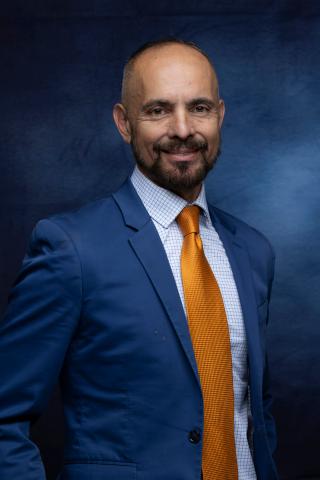
Sen. Christopher Cabaldon
Sponsored bills
The California Environmental Quality Act (CEQA) requires a lead agency, as defined, to prepare, or cause to be prepared, and certify the completion of an environmental impact report on a project that it proposes to carry out or approve that may have a significant effect on the environment or to adopt a negative declaration if it finds that the project will not have that effect. CEQA also requires a lead agency to prepare a mitigated negative declaration for a project that may have a significant effect on the environment if revisions in the project would avoid or mitigate that effect and there is no substantial evidence that the project, as revised, would have a significant effect on the environment. Existing law exempts specified projects from CEQA, including a project that consists exclusively of a day care center, as defined, that is not located in a residential area. This bill would exempt from CEQA a project that consists exclusively of a day care center, as defined, that is located in a residential area, except as provided. By imposing additional duties on a lead agency to determine the applicability of these exemptions, the bill would impose a state-mandated local program. The California Constitution requires the state to reimburse local agencies and school districts for certain costs mandated by the state. Statutory provisions establish procedures for making that reimbursement. This bill would provide that no reimbursement is required by this act for a specified reason.
Existing law establishes the Infill Infrastructure Grant Program of 2019 (program) , which requires the Department of Housing and Community Development, upon appropriation of funds by the Legislature, to establish and administer a grant program to allocate those funds to eligible applicants to fund capital improvement projects that are an integral part of, or necessary to facilitate the development of, a qualifying infill project, qualifying infill area, or catalytic qualifying infill area. Existing law requires the department to administer a specified competitive application process for capital improvement projects for large jurisdictions, as defined. For these purposes, existing law defines a qualifying infill project to include a residential or mixed-use residential project located within an urbanized area on a vacant site where at least 75% of the perimeter of the site adjoins parcels that are developed with urban uses. This bill would expand the definition of qualifying infill project to include a residential or mixed-use residential project located within an urbanized area on a vacant site where at least 75% of the perimeter of the site adjoins parcels that have been previously developed with urban uses. Existing law requires the department to administer an over-the-counter application process for grants for capital improvement projects for small jurisdictions, as provided. For these purposes, existing law defines the term "qualifying infill area" as a contiguous area located within an urbanized area that meets one of specified alternative conditions, including that the capital improvement project for which funding is requested is necessary, as specified, to make the area suitable and available for residential development or to allow the area to accommodate housing for additional income levels, and that the area may be included on an inventory of land in the housing element, as specified. This bill would expand the definition of "qualifying infill area" to additionally include a contiguous area located within an urbanized area for which the capital improvement project for which funding is requested under the program, as described above, is necessary and integral to make the area suitable and available for residential development pursuant to the Affordable Housing and High Road Jobs Act of 2022, which subjects a housing development to streamlined, ministerial approval under certain circumstances, as specified. Existing law requires the department, in its review of applications, to rank affected qualifying infill areas and catalytic qualifying infill areas based on specified criteria, including the qualifying infill area's or catalytic qualifying infill area's inclusion of, or proximity to, a train station or major transit stop and the proximity of housing to existing or planned parks, employment or retail centers, schools, or social services. This bill would revise these provisions to require the department to additionally rank applications, as described above, based on the qualifying infill area's inclusion of, or proximity or accessibility to on-demand transit services, as specified, or walkability to essential services or businesses and based on the catalytic qualifying infill area's inclusion of, or proximity or accessibility to walkability to essential services or businesses. The bill would additionally revise these provisions to require the department's ranking to be based on the proximity of housing to services, rather than social services. Existing law requires a qualifying infill project, qualifying infill area, or catalytic qualifying infill area for which a capital improvement project grant can be awarded under the program to meet specified conditions, including, among others, being located in an area designated for mixed-use or residential development, as specified. This bill would additionally allow the project to be located in an area that allows for mixed-use or residential development pursuant to a housing development that is in compliance with certain provisions deeming a housing development an allowable use or subject to streamlined, ministerial approval. Existing law defines various terms for the purposes of the program, including, "capital improvement project," "catalytic qualifying infill area," "eligible applicant," "urbanized area," and "urban uses." This bill would revise these definitions. The bill would additionally define the terms "on-demand transit service," "major transit stop," and "walkability."
Existing law, the Lesbian, Gay, Bisexual, Transgender, and Intersex Disparities Reduction Act, requires the State Department of Public Health, among other specified state entities, in the course of collecting demographic data directly or by contract as to the ancestry or ethnic origin of Californians, to collect voluntary self-identification information pertaining to sexual orientation, gender identity, and variations in sex characteristics/intersex status (SOGISC) . This bill would define "information pertaining to SOGISC" to mean information pertaining to a person's sexual orientation identity, gender identity, identification as intersex, or identification as possessing sex characteristics that vary from those typically associated with a person's sex assigned at birth. Existing law, the Information Practices Act of 1977, prescribes a set of requirements, prohibitions, and remedies applicable to agencies, as defined, with regard to their collection, storage, and disclosure of personal information, as defined. Under existing law, a person who willfully requests or obtains any record containing personal information from an agency under false pretenses is guilty of a misdemeanor. Existing law establishes the University of California, administered by the Regents of the University of California, the California State University, administered by the Trustees of the California State University, and the California Community Colleges, administered by the Board of Governors of the California Community Colleges, as the 3 segments of public postsecondary education in the state. Existing law requests the Trustees of the California State University, the Regents of the University of California, and the governing board of each community college district to allow the faculty, staff, and students to identify their sexual orientation, gender identity, and gender expression on any forms used to collect specified demographic data and to report that data, as provided. This bill would prohibit information pertaining to SOGISC collected pursuant to the Lesbian, Gay, Bisexual, Transgender, and Intersex Disparities Reduction Act, or collected by public postsecondary education institutions in accordance with the above paragraph, from being disclosed in a manner allowing personal identification to any entity outside of California state or local government, or an authorized agency thereof, subject to specified exceptions, and would require information pertaining to SOGISC reported in an identifiable form to be limited to the minimal extent required to meet the applicable exception, and in compliance with the Information Practices Act of 1977. The bill would require state entities under these provisions, after notifying the Legislature that the entity has the necessary automation capabilities, to share information pertaining to SOGISC in accordance with specified requirements when state and federal programs share systems or intake processes and that information is required for federal program participation. The bill would require the State Department of Social Services to comply with these provisions as early as possible following the notification set forth above, but no later than January 1, 2028. The bill would provide that these provisions also apply to information that could reasonably be used to infer a person's transgender or intersex status, as specified, and a that violation of these provisions is subject to penalties described in the Information Practices Act of 1977. By expanding the scope of a crime in the Information Practices Act of 1977, the bill would impose a state-mandated local program. Existing law, the California Public Records Act, requires each state and local agency, as defined, to make its records open to public inspection at all times during office hours, except as specifically exempted from disclosure by law. This bill would provide, subject to specified exceptions, that information pertaining to SOGISC is confidential and shall be exempt from disclosure by specified state entities under the California Public Records Act, unless the information pertaining to SOGISC is deidentified, or disclosed in accordance with the Information Practices Act of 1977. This bill would provide that its provisions are severable. Existing constitutional provisions require that a statute that limits the right of access to the meetings of public bodies or the writings of public officials and agencies be adopted with findings demonstrating the interest protected by the limitation and the need for protecting that interest. This bill would make legislative findings to that effect. The California Constitution requires the state to reimburse local agencies and school districts for certain costs mandated by the state. Statutory provisions establish procedures for making that reimbursement. This bill would provide that no reimbursement is required by this act for a specified reason.
Existing law establishes the Department of Consumer Affairs under the direction of the Director of Consumer Affairs and sets forth its powers and duties relating to the administration of the various boards under its jurisdiction that license and regulate various professions and vocations. Existing law requires those boards to expedite, and authorizes them to assist, the initial licensure process for an applicant who supplies satisfactory evidence to the board that the applicant has served as an active duty member of the Armed Forces of the United States and was honorably discharged. This bill would extend that requirement and authorization to also include members who were discharged or received a discharge solely as a result of a specified executive order. The bill would extend the requirement and authorization for the Speech-Language Pathology and Audiology and Hearing Aid Dispensers Board, commencing June 1, 2027. The bill would make additional conforming changes. Existing law requires the department, subject to an appropriation by the Legislature, to establish the Veteran's Military Discharge Upgrade Grant Program to help fund service providers who, for free or at low cost, will educate veterans about discharge upgrades and assist veterans in filing discharge upgrade applications, as specified. Existing law authorizes the department to prioritize veteran recipients of the services, such as prioritizing those who are able to demonstrate their less than honorable characterization of service was connected to a mental health condition, traumatic brain injury, sexual assault or harassment, or sexual orientation. This bill would instead require the program to help fund service providers who will educate veterans on the above-described services at no cost. The bill would additionally require the department to prioritize veteran recipients, regardless of discharge status, who are able to demonstrate that their less than honorable characterization of service was connected to a behavioral health condition, traumatic brain injury, sexual assault or harassment, or sexual orientation or who are able to demonstrate their characterization of service was connected to gender identity. This bill would additionally require the department, subject to an appropriation by the Legislature, to establish the Veteran's Housing and Supportive Services Grant Program to help fund service providers who, for at no cost, will provide housing supports for veterans. The bill would require the department to develop criteria, procedures, and accountability measures as may be necessary to implement the grant program, and to prioritize veteran recipients, regardless of discharge status, who are able to demonstrate their less than honorable characterization of service was connected to a behavioral health condition, traumatic brain injury, sexual assault or harassment, or sexual orientation or who are able to demonstrate their characterization of service was connected to gender identity.
Existing law makes it an unlawful employment practice for an employer to refuse to grant a request by any employee to take up to 5 days of bereavement leave upon the death of a family member, as defined, to refuse to hire, or to discharge, demote, fine, suspend, expel, or discriminate against, an individual because of the individual's exercise of the right to bereavement leave or because of the individual's giving information or testimony as to their own or another person's bereavement leave, or to interfere with, restrain, or deny the exercise of, or the attempt to exercise, any of these rights, as specified. This bill would include a designated person identified by the employee, as specified, in the definition of "family member" and authorize an employer to limit an employee to one designated person per 12-month period for purposes of these provisions relating to bereavement leave.
This measure would designate a specified portion of State Highway Route 152 in the County of Santa Clara as the Rusty Areias Highway. The measure would request that the Department of Transportation determine the cost of appropriate signs showing this special designation and, upon receiving donations from nonstate sources sufficient to cover the cost, to erect those signs.
In order to establish a record by which an adoptee can prove the facts of a foreign adoption, existing law requires a state resident who has finalized an intercountry adoption in a foreign country to file a petition to readopt within the earlier of 60 days of the adoptee's entry into the United States or the adoptee's 16th birthday. If the adoptive parent fails to file the petition within the prescribed timeframe or to provide a copy of the petition to each adoption agency that provided adoption services to the adoptive parent, existing law requires the adoption agency that facilitated the adoption to file the petition within 90 days of the child's entry into the United States and to provide a file-marked copy of the petition to the adoptive parent and any other adoption agency that provided services to the adoptive parent, as specified. Existing law requires the petition to include, among other things, a report from at least one postplacement home visit by an intercountry adoption agency or a contractor of that agency licensed to provide intercountry adoption services in the state. Existing law requires the clerk of the court to submit an order granting the petition to the State Registrar, as specified, and requires the State Registrar to issue a delayed registration of birth upon receipt of the order. This bill would authorize an adoptee of any age to file a petition on their own behalf if both the adoptive parent or parents and the adoption agency that facilitated the adoption failed to file a petition to readopt pursuant to the above-described provisions. The bill would, notwithstanding the documentation requirements described above, authorize a court to grant a petition for readoption that does not include those documents if (1) the petitioner establishes, by a preponderance of the evidence, that they are the adoptee, (2) the petitioner proves, by a preponderance of the evidence, that one or more of the required documents cannot be obtained due to the passage of time or other circumstances beyond the petitioner's control, and (3) the petitioner is able to establish, by a preponderance of the evidence, the fundamental facts necessary for the court to make the findings required to grant the petition. The bill would authorize evidence presented to the court for these purposes to include both documentary and nondocumentary evidence, including, among other things, testimony, declarations, court records, agency records, correspondence, and other corroborating sources of information the court deems sufficient. Existing law requires the court to notify all appropriate authorities if it finds that the child may be a subject of human trafficking or may be within the jurisdiction of the juvenile court as a dependent child, as specified. This bill would also expand the notice requirements described above to include any adoptee who may be, or may have been, a subject of human trafficking.
Existing law, the legislative code of ethics, prohibits Members of the Legislature from entering into, or requesting that another party enter into, a nondisclosure agreement relating to the drafting, negotiation, or discussion of proposed legislation. Existing law also makes any nondisclosure agreement relating to the drafting, negotiation, or discussion of proposed legislation entered into after January 1, 2026, void and unenforceable. Existing law provides an exception for nondisclosure agreements, or portions thereof, that prevent only the disclosure of trade secrets, financial information, or proprietary information, as specified. This bill would prohibit a local agency official, as defined, acting in their official capacity from entering into, or requesting that another individual enter into, a nondisclosure agreement relating to public business that precludes their ability to share information with fellow local agency officials serving on the same council, board, commission, district, or agency. The bill would require a local agency official in violation of that provision to, among other things, disclose the existence of the nondisclosure agreement, as specified, and would provide that these requirements imposed on a local agency official also apply to a local agency official acting in their official capacity who entered into, or requested that another individual enter into, a nondisclosure agreement described above before January 1, 2027. By imposing additional duties on local agency officials, the bill would impose a state-mandated local program. The bill would also make any nondisclosure agreement relating to public business that precludes the ability of a local agency official to share information with fellow local agency officials serving on the same council, board, commission, district, or agency and that is entered into after January 1, 2027, void and unenforceable. The bill would prohibit an employee of a local agency or a local agency official acting in their official capacity from entering into, or requesting that another individual enter into, a nondisclosure agreement relating to public business that precludes their ability to share information with the local agency official who they serve or the governing body of the local agency that employs them. The bill would also make any nondisclosure agreement relating to public business that precludes the ability of a local agency official acting in their official capacity to share information with the local agency official who they serve under or the governing body of the local agency that employs them, and that is entered into after January 1, 2027, void and unenforceable. The bill would provide that it does not apply in specified circumstances. The bill would require a local agency official in violation of a prescribed provision to, among other things, disclose the existence of the nondisclosure agreement, as specified, and would provide that these requirements imposed on a local agency official also apply to a local agency official acting in their official capacity who entered into, or requested that another individual enter into, a nondisclosure agreement described above before January 1, 2027. The California Constitution requires the state to reimburse local agencies and school districts for certain costs mandated by the state. Statutory provisions establish procedures for making that reimbursement. This bill would provide that, if the Commission on State Mandates determines that the bill contains costs mandated by the state, reimbursement for those costs shall be made pursuant to the statutory provisions noted above.
Existing law, the Mobilehome Residency Law, prescribes various terms and conditions of tenancies in mobilehome parks. Existing law authorizes a local agency to be responsible for the enforcement of certain requirements governing mobilehome parks. This bill would specify that, in the event that a mobilehome park operator, owner, or management fails to, or elects not to, comply with federal law or other federal requirements imposed in connection with a federally approved housing program, the mobilehome park operator, owner, or management shall ensure ongoing compliance with the Mobilehome Residency Law, the prescribed provisions of the Unruh Civil Rights Act, and all other applicable state and local laws and ordinances. If a mobilehome park operator, owner, or management fails to, or elects not to, conduct the age verification requirement under prescribed federal law, the bill would authorize a local agency to conduct age verification, as provided, and grant the local agency with the right to access and inspect records of the mobilehome park operator, owner, and management to conduct that verification.