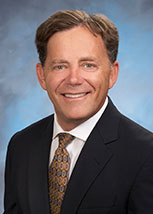
Photo of Josh Newman
D California Senate · District 29

Sen. Josh Newman

Contact Email
Compare
Total votes
11,475
all sessions
Attendance
96%
413 missed
Lower than 97% of chamber peers
With party
99%
of cast votes
Bipartisan score
0%
crosses aisle rarely
Sponsored
448
bills & resolutions
Near the chamber average
Committees
0
assignments
448 bills and resolutions

Sponsored bills

Total
448
Primary
134
Co-sponsor
314
This page
448
matching current filters
Co-sponsor SCR 21
Signed into law · California Senate · Co-sponsor
Relative to Justice Ruth Bader Ginsburg Day.

This measure would declare that the Legislature honors the life and legacy of Justice Ruth Bader Ginsburg, and proclaims March 15, 2021, as Justice Ruth Bader Ginsburg Day, a day of remembrance and education to ensure that all Californians always honor and remember a vibrant guardian of equality for all.

Signed into law May 14, 2021 1 co-sponsor
Co-sponsor ACR 56
Signed into law · California Assembly · Co-sponsor
Relative to California Holocaust Memorial Day.

This measure would proclaim April 8, 2021, as California Holocaust Memorial Day, and would urge all Californians to observe this day of remembrance for the victims of the Holocaust in an appropriate manner.

Signed into law May 7, 2021 1 co-sponsor
Co-sponsor AB 80
Signed into law · California Assembly · Co-sponsor
Taxation: Coronavirus Aid, Relief, and Economic Security Act: Federal Consolidated Appropriations Act, 2021.

The Personal Income Tax Law and the Corporation Tax Law, in conformity with federal income tax law, generally define "gross income" as income from whatever source derived, except as specifically excluded, and provide various exclusions from gross income. Existing law, in conformity with the federal Coronavirus Aid, Relief, and Economic Security Act (CARES Act) , and its subsequent amendments in the Paycheck Protection Program and Health Care Enhancement Act and the Paycheck Protection Program Flexibility Act of 2020, among other things, excludes any amounts of covered loans forgiven under the CARES Act from gross income for purposes of the Personal Income Tax Law and the Corporation Tax Law. Existing law reduces the amount of any credit or deduction otherwise allowed under the Personal Income Tax and the Corporation Tax Law for any amount paid or incurred by the taxpayer upon which this exclusion is based by the amount of the exclusion allowed. Existing law requires any bill authorizing a new tax expenditure to contain, among other things, specific goals, purposes, and objectives the tax expenditure will achieve, detailed performance indicators, and data collection requirements. Existing federal law, the Consolidated Appropriations Act, 2021, prohibits reductions in tax deductions, denials of basis adjustments, and reductions in tax attributes for federal income tax purposes based on the exclusion from gross income provided in the federal CARES Act and its subsequent amendments. This bill would exclude, for taxable years beginning on or after January 1, 2019, from gross income any advance grant amount, as defined, issued pursuant to specified provisions of the CARES Act or the Consolidated Appropriations Act, 2021, and covered loan amounts forgiven pursuant to the Consolidated Appropriations Act, 2021. This bill would adopt, except as provided, the provisions of the Consolidated Appropriations Act, 2021, prohibiting any reduction in tax deductions, denials of basis adjustments, and reductions in tax attributes based on the exclusion from gross income provided for any loan amount forgiven in modified conformity with the federal CARES Act and its subsequent amendments. This bill would provide findings to comply with the additional information requirement for any bill authorizing a new tax expenditure. This bill would also make findings and declarations related to a gift of public funds. This bill would declare that it is to take effect immediately as an urgency statute.

Signed into law Apr 29, 2021 1 co-sponsor
Co-sponsor SB 87
Signed into law · California Senate · Co-sponsor
California Small Business COVID-19 Relief Grant Program: income tax: gross income: exclusion: small business grants.

(1) Existing law establishes the Office of Small Business Advocate (CalOSBA) within the Governor's Office of Business and Economic Development, also known as GO-Biz, to advocate for causes of small business and to provide small businesses with the information they need to survive in the marketplace. Existing law prescribes the duties and functions of the Small Business Advocate, who is also the Director of the Office of Small Business Advocate. This bill would establish the California Small Business COVID-19 Relief Grant Program within CalOSBA to assist qualified small businesses affected by COVID-19 through administration of grants. The bill would require CalOSBA to provide grants to qualified small businesses, as defined, in accordance with specified criteria, including geographic distribution based on COVID-19 restrictions, industry sectors most impacted by the pandemic, and underserved small businesses. The bill would repeal these provisions on January 1, 2024. This bill would appropriate $2,075,000,000 from the General Fund to the Golden State Stimulus Emergency Fund to be transferred to the Office of Small Business Advocate for purposes of the program, and would allocate $50,000,000 of those funds for eligible nonprofit cultural institutions, as defined. (2) The Personal Income Tax Law and the Corporation Tax Law, in conformity with federal income tax law, generally define "gross income" as income from whatever source derived, except as specifically excluded, and provide various exclusions from gross income. This bill would exclude, for taxable years beginning on or after January 1, 2020, and before January 1, 2030, from gross income specified grant allocations, including grant allocations received by a taxpayer pursuant to a grant program funded by Executive Order No. 20/21-182 and pursuant to the California Small Business COVID-19 Relief Grant Program. The bill would authorize the Franchise Tax Board to adopt regulations that are necessary and appropriate to implement the exclusions, and would provide the Administrative Procedure Act does not apply to any regulation, standard, criterion, procedure, determination, rule, notice, guideline, or any other guidance established or issued by the board pursuant to the exclusions. The bill would also authorize the board to include in audits the grants that are excluded from gross income by the bill's provisions. The bill would set forth procedures for recapturing grant amounts if CalOSBA determines that the grantee has failed to meet the criteria for a qualified small business. (3) This bill would also make findings and declarations related to a gift of public funds. (4) This bill would declare that it is to take effect immediately as a bill providing for appropriations related to the Budget Bill.

Signed into law Feb 23, 2021 1 co-sponsor
Co-sponsor SB 29
Signed into law · California Senate · Co-sponsor
Elections: vote by mail ballots.

Existing law required county elections officials to mail a ballot to every registered voter for the November 3, 2020, statewide general election. Existing law, for the November 3, 2020, statewide general election, also required county elections officials to use a specified Secretary of State vote by mail tracking system or a system that meets the same specifications. This bill would extend these requirements to all elections proclaimed or conducted prior to January 1, 2022. By requiring county elections officials to mail a ballot to every registered voter, and to track those ballots, this bill would impose a state-mandated local program. The California Constitution requires the state to reimburse local agencies and school districts for certain costs mandated by the state. Statutory provisions establish procedures for making that reimbursement. This bill would provide that, if the Commission on State Mandates determines that the bill contains costs mandated by the state, reimbursement for those costs shall be made pursuant to the statutory provisions noted above. This bill would declare that it is to take effect immediately as an urgency statute.

Signed into law Feb 19, 2021 1 co-sponsor
Co-sponsor SB 1005
Vetoed · California Senate · Co-sponsor
Crime victim compensation: relocation expenses: pet costs.

Existing law generally provides for the compensation of victims and derivative victims of specified types of crimes by the California Victim Compensation Board from the Restitution Fund, a continuously appropriated fund, for specified losses suffered as a result of those crimes, including a cash payment or reimbursement not to exceed a specified amount to a victim for expenses incurred in relocating, if the expenses are determined by law enforcement to be necessary for the personal safety of the victim or by a mental health treatment provider to be necessary for the emotional well-being of the victim. Existing law requires the board to be named as the recipient of funds upon expiration of the victim's rental agreement if a security deposit is required for relocation. This bill would authorize "expenses incurred in relocating" as described above to include a pet deposit and additional rent required if the victim has a pet. The bill would also require the board to be named as the recipient of funds upon expiration of the victim's rental agreement if a pet deposit is required for relocation. By expanding the authorization for use of continuously appropriated funds, this bill would make an appropriation. This bill would incorporate additional changes to Section 13957 of the Government Code proposed by AB 900, AB 1865, and AB 1939 to be operative only if this bill and any or all of those bills are enacted and this bill is enacted last.

Vetoed Sep 28, 2018 1 co-sponsor
Co-sponsor AB 1747
Signed into law · California Assembly · Co-sponsor
School safety plans.

(1) Existing law provides that it is the intent of the Legislature that all public schools, in kindergarten, and grades 1 to 12, inclusive, operated by school districts, in cooperation with specified entities and individuals, develop a comprehensive school safety plan, as provided. Existing law provides that school districts and county offices of education are responsible for the overall development of a comprehensive school safety plan for each of its schools, as provided. Existing law requires the schoolsite council of a school, except as provided for a small school district, to write and develop the comprehensive school safety plan relevant to the needs and resources of that particular school. This bill would provide that it is the intent of the Legislature that all public schools, in kindergarten, and grades 1 to 12, inclusive, operated by school districts, including in cooperation with classified employees, develop a comprehensive school safety plan, and that all school staff be trained on this plan. Existing law requires the schoolsite council to consult with a representative from a law enforcement agency in the writing and development of the comprehensive school safety plan. Existing law requires the comprehensive school safety plan to contain certain things including assessing the current status of school crime committed on school campuses. Existing law authorizes a school district or county office of education to, in consultation with law enforcement officials, elect to not have its schoolsite council develop and write those portions of its comprehensive school safety plan that include tactical responses to criminal incidents, as defined, that may result in death or serious bodily injury at the schoolsite. This bill would require the schoolsite council to additionally consult with a fire department and other first responder entities in the writing and development of the comprehensive school safety plan and would require the comprehensive school safety plan and any updates made to the plan to be shared with the law enforcement agency, the fire department, and the other first responder entities. By expanding the responsibility of a school district or county office of education with respect to the development of a comprehensive school safety plan, the bill would impose a state-mandated local program. Existing law requires the comprehensive school safety plan to include the identification of appropriate strategies and programs that will provide or maintain a high level of school safety, which is required to include the development of disaster procedures, including establishing an earthquake emergency procedure system in every public school building, as provided. Existing law requires the system to include a school building disaster plan. Existing law requires each school to forward its comprehensive school safety plan to the school district or county office of education for approval. This bill would require the comprehensive school safety plan to additionally include procedures for conducting tactical responses to criminal incidents, as provided. By imposing additional duties on school districts and county offices of education regarding the development of comprehensive school safety plans, the bill would impose a state-mandated local program. The bill would require the State Department of Education to provide general direction to school districts and county offices of education on what to include in the school building disaster plan. The bill would also require the department to develop and post on its Internet Web site best practices for reviewing and approving school safety plans. The bill would additionally require the department to maintain and conspicuously post on its Internet Web site a compliance checklist for developing a comprehensive school safety plan, and would require the department to update the checklist when necessary. The Charter Schools Act of 1992 provides for the establishment and operation of charter schools, including countywide charter schools, and requires a petition for the establishment of a charter school to contain comprehensive descriptions of various matters and procedures, including procedures that the charter school will follow to ensure the health and safety of pupils and staff. This bill would require these procedures to also require the development of a school safety plan, as provided, and that the school safety plan be reviewed and updated by March 1 of every year by the charter school. To the extent the bill would impose additional duties on county boards of education, the bill would impose a state-mandated local program. (2) The California Constitution requires the state to reimburse local agencies and school districts for certain costs mandated by the state. Statutory provisions establish procedures for making that reimbursement. This bill would provide that, if the Commission on State Mandates determines that the bill contains costs mandated by the state, reimbursement for those costs shall be made pursuant to the statutory provisions noted above.


Signed into law Sep 27, 2018 1 co-sponsor
Co-sponsor SB 1086
Signed into law · California Senate · Co-sponsor
Workers' compensation: firefighters and peace officers.

Existing law specifies the time period within which various proceedings may be commenced under provisions of law relating to workers' compensation. With certain exceptions, a proceeding to collect death benefits is required to be commenced within one year from several circumstances, including, but not limited to, from the date of death if it occurs within one year from the date of injury. Existing law prohibits proceedings from being commenced more than one year after the date of death, and generally not more than 240 weeks from the date of injury. Existing law, for specified deceased members, including peace officers and active firefighting members, extends until January 1, 2019, the time period to commence proceedings to collect death benefits, if the proceedings are brought by, or on behalf of, a person who was a dependent on the date of death, from 240 weeks from the date of injury to no later than 420 weeks from the date of injury, not to exceed one year after the date of death for certain injuries, as specified. This bill would delete the January 1, 2019, date of repeal operation of the above-referenced extension.

Signed into law Sep 23, 2018 1 co-sponsor
Co-sponsor SB 1406
Signed into law · California Senate · Co-sponsor
Public postsecondary education: community college districts: baccalaureate degree pilot program.

Existing law establishes the California Community Colleges, under the administration of the Board of Governors of the California Community Colleges, as one of the segments of public postsecondary education in this state. Existing law requires the board of governors to appoint a chief executive officer, to be known as the Chancellor of the California Community Colleges. Existing law establishes community college districts, administered by governing boards, throughout the state, and authorizes these districts to provide instruction to students at the community college campuses maintained by the districts. Existing law requires community colleges to offer instruction through the 2nd year of college and authorizes community colleges to grant associate degrees in arts and science. In addition, existing law authorizes the board of governors, in consultation with the California State University and the University of California, to establish a statewide baccalaureate degree pilot program at not more than 15 community college districts, with one baccalaureate degree program each, to be determined by the chancellor and approved by the board of governors. Existing law requires a student participating in a baccalaureate degree pilot program to complete his or her degree by the end of the 2022–23 academic year. Existing law requires the Legislative Analyst's Office to conduct and report to the Legislature and the Governor the results of a final evaluation of the pilot program, as specified, on or before July 1, 2022. Existing law makes the authorization to establish pilot baccalaureate degree programs inoperative on July 1, 2023, and repeals the authorization on January 1, 2024. This bill would require that a student participating in a baccalaureate degree pilot program commence his or her degree program by the beginning of the 2022–23 academic year. The bill would instead require the Legislative Analyst's Office to report the results of the final evaluation of the pilot program on or before July 1, 2021. The bill would extend the inoperative and repeal dates for the authorization to establish pilot baccalaureate degree programs by 3 years.

Signed into law Sep 20, 2018 1 co-sponsor
Showing 351 to 360 of 448 bills
Previous 1 … 35 36 37 … 45 Next