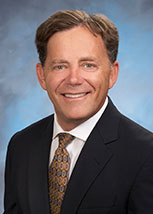
Photo of Josh Newman
D California Senate · District 29

Sen. Josh Newman

Contact Email
Compare
Total votes
11,475
all sessions
Attendance
96%
413 missed
Lower than 97% of chamber peers
With party
99%
of cast votes
Bipartisan score
0%
crosses aisle rarely
Sponsored
448
bills & resolutions
Near the chamber average
Committees
0
assignments
448 bills and resolutions

Sponsored bills

Total
448
Primary
134
Co-sponsor
314
This page
448
matching current filters
Co-sponsor ACR 118
In committee · California Assembly · Co-sponsor
Relative to Orange County Sheriff Sandra Hutchens Memorial Highway.

This measure would designate a specified portion of State Route 57 in the Cities of Orange and Anaheim as the Orange County Sheriff Sandra Hutchens Memorial Highway. The measure would request that the Department of Transportation determine the cost of appropriate signs showing this special designation and, upon receiving donations from nonstate sources covering that cost, erect those signs.

In committee Jan 14, 2022 1 co-sponsor
Primary SB 266
Signed into law · California Senate · Lead sponsor
State park system: Chino Hills State Park: expansion.

Existing law designates all parks, public campgrounds, monument sites, landmark sites, and sites of historical interest established or acquired by the state, or that are under its control, as the state park system, except as specified. Under existing law, the Department of Parks and Recreation controls the state park system, which is made up of units, one of which is the Chino Hills State Park. This bill would require the department to provide assistance acquiring and accepting land immediately adjacent to, and that expands, Chino Hills State Park, by transferring 3 specified properties into the state park system. The bill would require the department to manage the acquired properties and parcels with specified funds as part of the Chino Hills State Park, as provided.

Signed into law Oct 9, 2021 0 co-sponsors
Co-sponsor SB 671
Signed into law · California Senate · Co-sponsor
Transportation: Clean Freight Corridor Efficiency Assessment.

Existing law imposes various limitations on the emissions of air contaminants for the control of air pollution from vehicular and nonvehicular sources. Existing law establishes the California Transportation Commission and requires it to advise and assist the Secretary of Transportation and the Legislature in formulating and evaluating state policies and plans for transportation programs in the state. Existing law requires the Department of Transportation to update the California Transportation Plan every 5 years and ensure that the plan addresses how the state will achieve maximum feasible emissions reductions. Existing law also requires the Transportation Agency to prepare a state freight plan on or before December 31, 2014, and every 5 years thereafter, with specified elements to govern the immediate and long-range planning activities and capital investments of the state with respect to the movement of freight. This bill would establish the Clean Freight Corridor Efficiency Assessment, to be developed by the California Transportation Commission, in coordination with other state agencies. In developing the assessment, the bill would require the commission to identify freight corridors, or segments of corridors, throughout the state that would be priority candidates for the deployment of zero-emission medium- and heavy-duty vehicles. The bill would require the commission to submit a report containing the assessment's findings and recommendations to certain committees of the Legislature by December 1, 2023. The bill would require the assessment's findings and recommendations to be incorporated into the development of the California Transportation Plan. The bill would require the state freight plan to include a description of needed infrastructure, projects, and operations for the deployment of zero-emission medium- and heavy-duty vehicles and the development of freight corridors identified in the assessment. Existing law requires the California Transportation Commission, upon appropriation by the Legislature, to allocate certain revenues deposited in the Trade Corridor Enhancement Account and certain federal funds for eligible infrastructure projects, including truck corridor improvements to mitigate emissions from trucks, located on or along specified transportation corridors. This bill would make projects that employ advanced and innovative technology to improve the flow of freight and also environmental and community mitigation or efforts to reduce environmental impacts of freight movement eligible for this funding.

Signed into law Oct 9, 2021 1 co-sponsor
Co-sponsor SB 628
Signed into law · California Senate · Co-sponsor
California Creative Workforce Act of 2021.

Existing law establishes the California Workforce Development Board, which assists the Governor in the development, oversight, and continuous improvement of California's workforce investment system. The board reports to the Secretary of the Labor and Workforce Development Agency. Existing law creates various workforce development programs, including the Breaking Barriers to Employment Initiative and the Social Entrepreneurs for Economic Development Initiative. Existing law establishes an Arts Council in state government to, among other things, promote the employment of artists and those skilled in crafts in both the public and private sector. This bill would enact the California Creative Workforce Act of 2021, to be operative upon appropriation by the Legislature of sufficient funding for its purposes. The purpose of the act would be to establish creative arts workforce development as a state priority and to promote employment and "earn and learn," as defined, job training opportunities for creative workers, among other things. The bill would require the Arts Council, in collaboration with the California Workforce Development Board, to design the program pursuant to specified objectives. The bill would require the council to consult with local government, community nonprofit organizations, and educational institutions, among others, in this effort. The bill would require the council to adopt criteria, guidelines, and policies for the program, which would be exempt from the Administrative Procedure Act, and would make this information available to the public. The bill would require the Arts Council, in consultation with the California Workforce Development Board, to oversee and administer the grant program, to be operated and implemented locally or regionally by program grantees. The bill would require the council to specify and set aside funds to be awarded to grantees for earn and learn job training employment opportunities for students who have enrolled or completed a program in the arts, low-income or unemployed creative workers, and others with demonstrated interest in creative work in their communities. Among other things, the bill would require job training employment opportunities for a creative worker to be for no less than 12 months and no more than 24 months and to pay a living wage. The bill would also require the council to specify and set aside funds to be awarded to grantees to create equitable opportunities for career exploration and participation in creative work for individuals and communities who have faced barriers to participation and employment in creative work for specified reasons. The bill would require the council, in consultation with the board, to develop and implement a plan for grant program evaluation and to specify the data to be collected to evaluate program efficacy. The bill would make conforming changes in provisions relating to the council.

Signed into law Oct 9, 2021 1 co-sponsor
Co-sponsor SB 221
Signed into law · California Senate · Co-sponsor
Health care coverage: timely access to care.

Existing law, the Knox-Keene Health Care Service Plan Act of 1975, provides for the licensure and regulation of health care service plans by the Department of Managed Health Care. Existing law also provides for the regulation of health insurers by the Department of Insurance. Existing law requires each department to develop and adopt regulations to ensure that enrollees and insureds have access to needed health care services in a timely manner. Under existing law, a Medi-Cal managed care plan is required to comply with timely access standards developed by the department. Existing regulations require a health care service plan or an insurer to ensure that their contracted provider networks have adequate capacity and availability of licensed health care providers to offer enrollees and insureds appointments that meet specified timeframes. Existing regulations require a health care service plan or an insurer to ensure that for an enrollee requesting a nonurgent appointment with a nonphysician mental health care provider, or an insured requesting a nonurgent appointment with a nonphysician mental health care or substance use disorder provider, appointments are offered within 10 business days of the request for an appointment. Existing regulations also authorize appointments for preventive care services and periodic followup care, including periodic office visits to monitor and treat mental health or substance use disorder conditions, as specified, to be scheduled in advance consistent with professionally recognized standards of practice as determined by the treating licensed health care provider acting within the provider's scope of practice. These regulations of the Department of Managed Health Care are limited in application to mental health care providers, while those regulations of the Department of Insurance are applicable to both mental health care and substance use disorder providers. This bill would codify the regulations adopted by the Department of Managed Health Care and the Department of Insurance to provide timely access standards for health care service plans and insurers for nonemergency health care services. The bill would require both a health care service plan and a health insurer, including a Medi-Cal Managed Care Plan, to ensure that appointments with nonphysician mental health and substance use disorder providers are subject to the timely access requirements, as specified. The bill would additionally require, commencing July 1, 2022, a health care service plan and a health insurer, including a Medi-Cal Managed Care Plan, to ensure that an enrollee or insured that is undergoing a course of treatment for an ongoing mental health or substance use disorder condition is able to get a followup appointment with a nonphysician mental health care or substance use disorder provider within 10 business days of the prior appointment. The bill would require that a referral to a specialist by another provider meet the timely access standards. If a health care service plan is operating in a service area that has a shortage of providers and the plan is not able to meet the geographic and timely access standards for providing mental health or substance use disorder services with an in-network provider, the bill would require the plan, including a Medi-Cal Managed Care Plan, to arrange coverage outside the plan's contracted network. By imposing new requirements on health care service plans, the willful violation of which would be a crime, the bill would impose a state-mandated local program. The California Constitution requires the state to reimburse local agencies and school districts for certain costs mandated by the state. Statutory provisions establish procedures for making that reimbursement. This bill would provide that no reimbursement is required by this act for a specified reason.

Signed into law Oct 8, 2021 1 co-sponsor
Co-sponsor SB 589
Signed into law · California Senate · Co-sponsor
Air pollution: alternative vehicles and vehicle infrastructure.

Existing law requires the State Energy Resources Conservation and Development Commission, working with specified state entities, to prepare a statewide assessment of the electric vehicle charging infrastructure needed to support the levels of electric vehicle adoption required to meet the goals of putting at least 5 million zero-emission vehicles in service by 2030 and of reducing emissions of greenhouse gases to 40% below 1990 levels by 2030. Existing law requires the commission to update the assessment once every 2 years. This bill would require the commission, as a part of the assessment, to identify workforce development and training resources needed to meet those goals. Existing law establishes the Alternative and Renewable Fuel and Vehicle Technology Program, which is administered by the commission to provide financial assistance to certain entities to develop and deploy innovative technologies to transform California's fuel and vehicle types to help attain the state's climate change goals. Existing law requires the commission to collaborate with entities that have expertise in workforce development to implement the workforce development components of the program. This bill would specify that projects that develop instate production of raw materials and the manufacturing supply chain for zero-emission vehicle components are eligible for funding under the program. The bill would require the commission to also collaborate with the California Community Colleges, the certified community conservation corps, the California Mobility Center, and the California Conservation Corps to implement the workforce development components of the program.

Signed into law Oct 8, 2021 1 co-sponsor
Co-sponsor AB 917
Signed into law · California Assembly · Co-sponsor
Vehicles: video imaging of parking violations.

Existing law authorizes the City and County of San Francisco (San Francisco) and, until January 1, 2022, the Alameda-Contra Transit District, to enforce parking violations in specified transit-only traffic lanes through the use of video imaging and to install automated forward facing parking control devices on city-owned public transit vehicles for the purpose of video imaging parking violations occurring in transit-only traffic lanes, as specified. Existing law requires a designated employee, who is qualified by San Francisco, or a contracted law enforcement agency for the Alameda-Contra Costa Transit District, who is qualified by the city and county or the district to issue parking citations, to review video image recordings for the purpose of determining whether a parking violation occurred in a transit-only traffic lane and to issue a notice of violation to the registered owner of a vehicle within 15 calendar days, as specified. Existing law makes these video image records confidential, and provides that these records are available only to public agencies to enforce parking violations. Existing law provides that if the Alameda-Contra Costa Transit District implements an automated enforcement system as described above, the district is required to submit a report to specified committees of the Legislature by no later than January 1, 2021. This bill would extend the authorization described above to any public transit operator in the state until January 1, 2027, and to the City and County of San Francisco indefinitely, if the examiner or issuing agency, as specified, of a violation allows for the reduction or waiver of parking penalties for indigent individuals, as defined. The bill would authorize a designated employee or law enforcement agency to decline to issue a ticket, if there is evidence in the video of hardship. The bill would expand the authorization to enforce parking violations to include violations occurring at transit stops. The bill would repeal the obsolete reporting requirement of the Alameda-Contra Costa Transit District but would, except as specified, require an operator who implements an automated enforcement system to report to specified committees of the Legislature on the system's effectiveness and impact on traffic outcomes, among other things. Existing constitutional provisions require that a statute that limits the right of access to the meetings of public bodies or the writings of public officials and agencies be adopted with findings demonstrating the interest protected by the limitation and the need for protecting that interest. This bill would make legislative findings regarding the need to make certain video image records confidential. This bill would make legislative findings and declarations as to the necessity of a special statute for the City and County of San Francisco.

Signed into law Oct 8, 2021 1 co-sponsor
Co-sponsor AB 438
Signed into law · California Assembly · Co-sponsor
School employees: classified employees: layoff notice and hearing.

Under existing law, classified employees of school districts and community college districts subject to layoff as a result of the expiration of a specially funded program at the end of a school year are required to be given written notice on or before April 29 informing them of certain rights. Existing law also requires that notice be given not less than 60 days before the effective layoff date if the termination date of a specially funded program is other than June 30, or if classified employees are subject to layoff as a result of a bona fide reduction or elimination of a service performed by a department. This bill instead would revise and recast provisions relating to the layoff of classified employees of school districts and community college districts to require certain notices and opportunities for a hearing when a permanent classified employee's services will not be required for the ensuing year due to lack of work or lack of funds. The bill would, for the purposes of specified notice and hearing rights, define "permanent classified employee" to include both an employee who was permanent at the time the notice or right to a hearing was required and an employee who became permanent after the date of the required notice. The bill would express the intent of the Legislature in enacting the bill to provide permanent classified school employees and those who become permanent classified school employees with the same rights to notice and hearing with respect to layoffs as are provided to certificated employees of school districts, including teachers and administrators, and academic employees of community college districts. If classified positions must be eliminated as a result of the expiration of a specially funded program, the bill would require written notice of the layoff date and certain rights be given to the classified employees not less than 60 days before the effective layoff date. If, after January 1, 2021, the Legislature provides certificated or academic employees with any additional rights to notice or hearing as to layoffs, the bill would require the respective permanent classified employees, as described, to be afforded the same rights by the school district or community college district, as applicable. To the extent school districts and community college districts are required to perform additional duties, the bill would impose a state-mandated local program. The California Constitution requires the state to reimburse local agencies and school districts for certain costs mandated by the state. Statutory provisions establish procedures for making that reimbursement. This bill would provide that, if the Commission on State Mandates determines that the bill contains costs mandated by the state, reimbursement for those costs shall be made pursuant to the statutory provisions noted above.

Signed into law Oct 8, 2021 1 co-sponsor
Co-sponsor AB 107
Signed into law · California Assembly · Co-sponsor
Licensure: veterans and military spouses.

Under existing law, the Department of Consumer Affairs (department) , under the control of the Director of Consumer Affairs, is comprised of various boards that license and regulate various professions and vocations. Existing law requires an applicant seeking a license from a board within the department to meet specified requirements and to pay certain licensing fees. Existing law requires a board within the department to issue, after appropriate investigation, certain types of temporary licenses to an applicant if the applicant meets specified requirements, including that the applicant supplies evidence satisfactory to the board that the applicant is married to, or in a domestic partnership or other legal union with, an active duty member of the Armed Forces of the United States who is assigned to a duty station in this state under official active duty military orders and the applicant submits an application to the board that includes a signed affidavit attesting to the fact that the applicant meets all of the requirements for a temporary license and that the information submitted in the application is accurate, to the best of the applicant's knowledge. Under existing law, some of the funds within the jurisdiction of a board consist of revenue from fees that are continuously appropriated. Existing law authorizes a board to adopt regulations necessary to administer these provisions. This bill, on and after January 1, 2023, would expand the requirement to issue temporary licenses to practice a profession or vocation to include licenses issued by any board within the department, except as provided. The bill would require an applicant for a temporary license to provide to the board documentation that the applicant has passed a California law and ethics examination if otherwise required by the board for the profession or vocation for which the applicant seeks licensure. The bill would require a board to issue a temporary license within 30 days of receiving the required documentation if the results of a criminal background check do not show grounds for denial and would require a board to request the Department of Justice to conduct the criminal background check and to furnish the criminal background information in accordance with specified requirements. The bill would specifically direct revenues from fees for temporary licenses issued by the California Board of Accountancy to be credited to the Accountancy Fund, a continuously appropriated fund. The bill would require, if necessary to implement the bill's provisions, a board to submit to the department for approval draft regulations necessary to administer these provisions. The bill would exempt from these provisions a board that has a process in place by which an out-of-state licensed applicant in good standing who is married to, or in a domestic partnership or other legal union with, an active duty member of the Armed Forces of the United States is able to receive expedited, temporary authorization to practice while meeting state-specific requirements for a period of at least one year or is able to receive an expedited license by endorsement with no additional requirements superseding those for a temporary license, as described above. The bill would make conforming changes. By expanding the scope of the crime of perjury, the bill would impose a state-mandated local program. The bill's expansion of the requirement to issue temporary licenses would result in revenues from fees for certain licenses being deposited into continuously appropriated funds. By establishing a new source of revenue for those continuously appropriated funds, the bill would make an appropriation. Existing law provides that these temporary licenses shall expire 12 months after issuance, upon issuance of an expedited license, or upon denial of the application for expedited licensure by the board, whichever occurs first. Existing law authorizes the immediate termination of a temporary license upon a finding that the temporary licenseholder failed to meet the requirements for temporary licensure or provided substantively inaccurate information that would affect the person's eligibility for temporary licensure. This bill, on and after July 1, 2023, would instead provide that these temporary licenses are nonrenewable and shall expire 12 months after issuance, upon issuance or denial of a standard license, upon issuance or denial of a license by endorsement, or upon issuance or denial of an expedited license, whichever occurs first. The bill, on and after July 1, 2023, would also require the board to revoke a temporary license if the board finds that the temporary licenseholder engaged in unprofessional conduct or any other act that is cause for discipline by the board. This bill would require the Department of Consumer Affairs to compile an annual report to the Legislature containing specified information relating to the professional licensure of veterans, servicemembers, and their spouses. The bill would also require the Department of Consumer Affairs and each board within the department to post specified information on their internet websites relating to licensure for military spouses, the availability of temporary licenses, and permanent licensure by endorsement or credential for out-of-state applicants. The bill would also require the Department of Real Estate to compile specified information on military, veteran, and spouse licensure into an annual report for the Legislature. Existing law, the Psychology Licensing Law, provides for the licensure and regulation of psychologists by the Board of Psychology. Existing law authorizes a psychologist certified or licensed in another state or Canadian province who has applied to the board for licensure to provide activities and services of a psychological nature without a valid license for a period not to exceed 180 days from the time of submitting their application or from the commencement of residency in the state, whichever occurs first, subject to specified conditions and requirements. This bill would also authorize a psychologist certified or licensed in another state or Canadian province who is married to, or in a domestic partnership or other legal union with, an active duty member of the Armed Forces of the United States and who has applied to the board for licensure to perform activities and services of a psychological nature without a valid license for a period not to exceed 12 months. The California Constitution requires the state to reimburse local agencies and school districts for certain costs mandated by the state. Statutory provisions establish procedures for making that reimbursement. This bill would provide that no reimbursement is required by this act for a specified reason. This bill would incorporate additional changes to Section 2946 of the Business and Professions Code proposed by SB 801 to be operative only if this bill and SB 801 are enacted and this bill is enacted last.


Signed into law Oct 8, 2021 1 co-sponsor
Co-sponsor SB 372
Signed into law · California Senate · Co-sponsor
Medium- and heavy-duty fleet purchasing assistance program: zero-emission vehicles.

Existing law establishes the Air Quality Improvement Program that is administered by the State Air Resources Board for purposes of funding projects related to, among other things, the reduction of criteria air pollutants and improvement of air quality. Pursuant to its existing statutory authority, the state board has established the Clean Vehicle Rebate Project, as a part of the Air Quality Improvement Program, to promote the use of zero-emission vehicles by providing rebates for the purchase of new zero-emission vehicles. Existing law, the California Pollution Control Financing Authority Act, establishes the California Pollution Control Financing Authority, with specified powers and duties, and authorizes the authority to approve financing for projects or pollution control facilities to prevent or reduce environmental pollution. This bill would establish the Medium- and Heavy-Duty Zero-Emission Vehicle Fleet Purchasing Assistance Program within the Air Quality Improvement Program to make financing tools and nonfinancial supports available to operators of medium- and heavy-duty vehicle fleets to enable those operators to transition their fleets to zero-emission vehicles. The bill would require the state board to designate the California Pollution Control Financing Authority as the agency responsible for administering the program and would require the state board and the authority to enter into an interagency working agreement for the development and administration of the program. The bill would require the state board and the authority, in developing and implementing the program, to consult with various stakeholders regarding specified program components, develop and design, in consultation with other relevant state agencies, as provided, financing tools and nonfinancial supports that are most appropriate for different sizes and sectors of medium- and heavy-duty vehicle fleets, and ensure that the financial tools and nonfinancial supports required pursuant to the program are available to operators of medium- and heavy-duty fleets by January 1, 2023, as provided. The bill would require the authority to develop, in consultation with the state board, a data collection and dissemination strategy for the program, as provided, and to track project implementation and report to the state board project outcomes no less than annually. The bill would require the state board to provide on its internet website information regarding the potential financing and grant options and other technical assistance available through the program. Existing constitutional provisions require that a statute that limits the right of access to the meetings of public bodies or the writings of public officials and agencies be adopted with findings demonstrating the interest protected by the limitation and the need for protecting that interest. This bill would make legislative findings to that effect.

Signed into law Oct 7, 2021 1 co-sponsor
Showing 311 to 320 of 448 bills
Previous 1 … 31 32 33 … 45 Next