

Existing law provides for various entities, programs, and services relating to early childhood care and learning, including the provision of childcare for recipients of the CalWORKs program, the Early Childhood Policy Council, and the Emergency Child Care Bridge for Foster Children under the State Department of Social Services. Existing law establishes the California Health and Human Services Agency, which includes various state departments, such as the State Department of Public Health and the State Department of Health Care Services, and is charged with the administration of health, social, and other human services. Upon appropriation by the Legislature for the purpose of transferring early childhood development programs to a single entity, this bill would establish an administering entity or entities for early childhood development programs. The bill would require the administering entity or entities to establish an interagency workgroup comprised of specified individuals, including the Deputy Superintendent of Public Instruction and representatives from various state departments, such as the State Department of Public Health and the State Department of Health Care Services, to perform specified duties, including establishing a memorandum of understanding between the departments outlining the joint authority for the promulgation of regulations for the coordination and alignment of services relating to early childhood care and learning, and annually submitting a report on its work to the Governor, the Superintendent of Public Instruction, and the Legislature. The bill would state related findings, declarations, and intents of the Legislature.
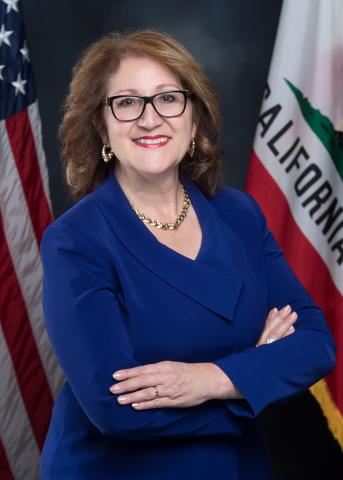
Sponsored bills
This measure would proclaim the week of March 1, 2020, to March 7, 2020, inclusive, as Women in Construction Week.
This measure would recognize February 21, 2020, as National Caregivers Day, encourage all Californians to lift up those who work tirelessly to advance the health and wellness of the physically and mentally unwell in our societies, and encourage those who choose to be caregivers.
This measure would proclaim March 2, 2020, to March 6, 2020, inclusive, as School Breakfast Week.
(1) Existing law, the Childhood Lead Poisoning Prevention Act of 1991, establishes the Childhood Lead Poisoning Prevention Program (Program) , which is administered by the State Department of Public Health. Existing law requires the department to adopt regulations establishing a standard of care, at least as stringent as the most recent federal Centers for Disease Control and Prevention screening guidelines. Existing law provides that the standard of care shall require a child who is determined to be at risk for lead poisoning to be screened. Existing law requires the regulations to include the determination of specified risk factors, including a child's time spent in a home, school, or building built before 1978. Existing law requires the department to develop the regulations, in consultation with specified individuals, including medical experts, and environmental experts, and to develop the regulations by July 1, 2019. This bill would add several risk factors to be considered as part of the standard of care specified in regulations, including a child's residency in or visit to a foreign country, or their residency in a high-risk ZIP Code, and would require the department to develop, by January 1, 2021, the regulations on the additional risk factors, in consultation with the above-specified individuals. (2) Existing law requires the department to ensure appropriate case management for children who have been identified with lead poisoning, and authorizes the department to contract with any public or private entity, including any local agency, to perform that duty. This bill would require the department to update its formula for allocating funds to any local agency that contracts with the department to administer the Program, and to revise funding allocations before each contract cycle.
Under existing law, a registered voter may vote by mail by requesting a vote by mail ballot for a specific election or by becoming a permanent vote by mail voter. County elections officials must begin mailing ballots and other required materials to these voters no later than 29 days before the day of the election. Existing law, the California Voter's Choice Act, authorizes any county to conduct any election occurring on or after January 1, 2020, as an all-mailed ballot election if specified conditions are met. In an all-mailed ballot election held under the act, the county elections official must mail a ballot to every registered voter, regardless of whether the voter requested a vote by mail ballot or is a permanent vote by mail voter. This bill would require county elections officials to mail a ballot to every registered voter for the November 3, 2020, statewide general election. Existing law requires county elections officials to permit voters with a disability, and military or overseas voters, to cast a ballot using a certified remote accessible vote by mail system. This bill would require county elections officials to permit any voter to cast a ballot using a certified remote accessible vote by mail system for the November 3, 2020, statewide general election. Existing law requires the Secretary of State to establish, by January 1, 2020, a system that a county elections official may use to allow a voter to track the voter's vote by mail ballot through the mail system and processing by the county elections official. County elections officials are not required to use the system, however. This bill would require county elections officials to use the Secretary of State's system, or a system that meets the same specifications, for the November 3, 2020, statewide general election. Under existing law, a vote by mail ballot is timely cast if it is voted on or before election day and, if returned by mail, received by the voter's elections official via the United States Postal Service, or a bona fide private mail delivery company, no later than 3 days after election day. This bill would, for the November 3, 2020, statewide general election, extend the deadline by which vote by mail ballots must be received by the county elections official to the 17th day after election day. Under existing law, any jurisdiction having the necessary computer capability may start to process vote by mail ballots on the 10th business day before the election. This processing includes opening vote by mail ballot return envelopes, removing ballots, duplicating any damaged ballots, and preparing the ballots to be machine read, or machine reading them, including processing write-in votes so that they can be tallied by the machine, but under no circumstances may a vote count be accessed or released until 8 p.m. on the day of the election. This bill would authorize these jurisdictions, for the November 3, 2020, statewide general election, to begin processing vote by mail ballots on the 29th day before the election. By requiring county elections officials to mail a ballot to every registered voter, and to take other actions expanding vote by mail voting, including making remote accessible voting available to all voters, this bill would impose a state-mandated local program. The California Constitution requires the state to reimburse local agencies and school districts for certain costs mandated by the state. Statutory provisions establish procedures for making that reimbursement. This bill would provide that, if the Commission on State Mandates determines that the bill contains costs mandated by the state, reimbursement for those costs shall be made pursuant to the statutory provisions noted above. This bill would declare that it is to take effect immediately as an urgency statute.
This measure would declare the week of February 17 to February 21, 2020, inclusive, as California Fitness Week, and would encourage Californians to enrich their lives through proper nutrition and exercise.
This measure would proclaim February 20, 2020, as Introduce a Girl to Engineering Day.
This measure would recognize February 2020 as Black History Month, urge all citizens to join in celebrating the accomplishments of African Americans during Black History Month, encourage the people of California to recognize the many talents of African Americans and the achievements and contributions they make to their communities to create equity and equality for education, economics, and social justice, and recognize the significance in protecting citizens' right to vote and remedying racial discrimination in voting.
The California Constitution requires the Legislature to convene in regular session on specified dates and provides that a majority of the membership constitutes a quorum, although a lesser number may recess from day to day and compel the attendance of absent members. The California Constitution requires the proceedings of each house of the Legislature to be open and public and recognizes the right of the public to attend, record, and broadcast those proceedings. The California Constitution authorizes the Legislature to provide for the convening of the Legislature to meet the needs resulting from a war-caused or enemy-caused disaster in the state. This measure would permit Members to remotely attend and vote in a legislative proceeding, or to vote by proxy in a legislative proceeding if permitted by their house, during the pendency of a state of emergency declared by the Governor or the President of the United States, under specified conditions. The measure would provide, among other conditions, that a Member may remotely attend and vote, or vote by proxy as authorized, in a proceeding only if the state of emergency prevents the Member from safely attending the proceeding in person. The measure would also provide that a Member attending remotely would be included in the determination of a quorum. The measure would provide that if 15 or more of the Members of a house cannot attend a proceeding during a state of emergency because they are deceased, disabled, or missing, a quorum may be established by a majority of those Members able to attend. The measure would specify that the Legislature may provide by statute for temporarily filling the vacant offices of Members with pro tempore members in the event that 15 or more of the Members of a house are deceased, disabled, or missing during a state of emergency. The measure would require the Legislature by concurrent resolution, or each house by separate resolutions, 23 of the membership concurring, to adopt rules to implement this provision no later than the end of the biennial legislative session in which this measure takes effect, except as specified.