

Childhood lead poisoning prevention.
Summary
(1) Existing law, the Childhood Lead Poisoning Prevention Act of 1991, establishes the Childhood Lead Poisoning Prevention Program (Program) , which is administered by the State Department of Public Health. Existing law requires the department to adopt regulations establishing a standard of care, at least as stringent as the most recent federal Centers for Disease Control and Prevention screening guidelines. Existing law provides that the standard of care shall require a child who is determined to be at risk for lead poisoning to be screened. Existing law requires the regulations to include the determination of specified risk factors, including a child's time spent in a home, school, or building built before 1978. Existing law requires the department to develop the regulations, in consultation with specified individuals, including medical experts, and environmental experts, and to develop the regulations by July 1, 2019. This bill would add several risk factors to be considered as part of the standard of care specified in regulations, including a child's residency in or visit to a foreign country, or their residency in a high-risk ZIP Code, and would require the department to develop, by January 1, 2021, the regulations on the additional risk factors, in consultation with the above-specified individuals. (2) Existing law requires the department to ensure appropriate case management for children who have been identified with lead poisoning, and authorizes the department to contract with any public or private entity, including any local agency, to perform that duty. This bill would require the department to update its formula for allocating funds to any local agency that contracts with the department to administer the Program, and to revise funding allocations before each contract cycle.
Bill status
passed
3 of 5 stages cleared
Introduction
Feb 2020
Committee Review
Jun 2020
Assembly Passage
Jun 2020
Senate Passage
Governor
Introduced Feb 14, 2020
Last action Jun 23, 2020
Floor votes · Assembly Jun 9, 2020
How they voted
75–0
Passed · 3 other
Total votes 78
Jun 9, 2020
D
Democratic60
95% Yea
I
Independent1
100% Yea
R
Republican17
100% Yea
Vote distribution
All Yea
All Nay
Mixed
No data
Full legislative history
Actions timeline
Total actions
12
Key actions
5
Committee
6
Jun 23, 2020
Committee
Referred to Com. on HEALTH.
upper
Jun 9, 2020
Assembly · Passed
Assembly Vote: pass (75-0-3)
assembly
Jun 8, 2020
Lower · Passed
Read third time. Passed. Ordered to the Senate. (Ayes 76. Noes 0. Page 4726.)
lower
Jun 2, 2020
Lower · Passed
From committee: Do pass. To Consent Calendar. (Ayes 18. Noes 0.) (June 2).
lower
May 19, 2020
Lower · Passed
From committee: Do pass and re-refer to Com. on APPR. with recommendation: To Consent Calendar. (Ayes 15. Noes 0.) (May 18). Re-referred to Com. on APPR.
lower
May 13, 2020
Committee
Re-referred to Com. on HEALTH.
lower
Feb 24, 2020
Committee
Referred to Coms. on HEALTH and E.S. & T.M.
lower
Feb 15, 2020
Lower · Passed
From printer. May be heard in committee March 16.
lower
1 primary · 3 co-sponsors
Sponsors
Role
Legislator
Party
State
District
P

Cristina Garcia
DDemocratic
Co

Bill Quirk
DDemocratic
Co

Connie M. Leyva
DDemocratic
Co
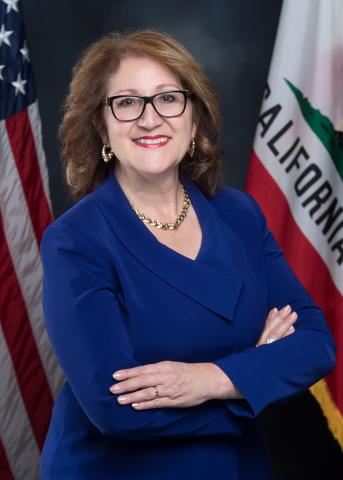
Eloise Reyes
DDemocratic
Ask Maddy
·
AI policy assistant
Ask Maddy about AB 2279
Scope: CA
Hi! I can help you understand AB 2279. What would you like to know?
Try one of these
i
Maddy answers using official bill text and legislative records. Always verify before sharing.
Sources cited inline