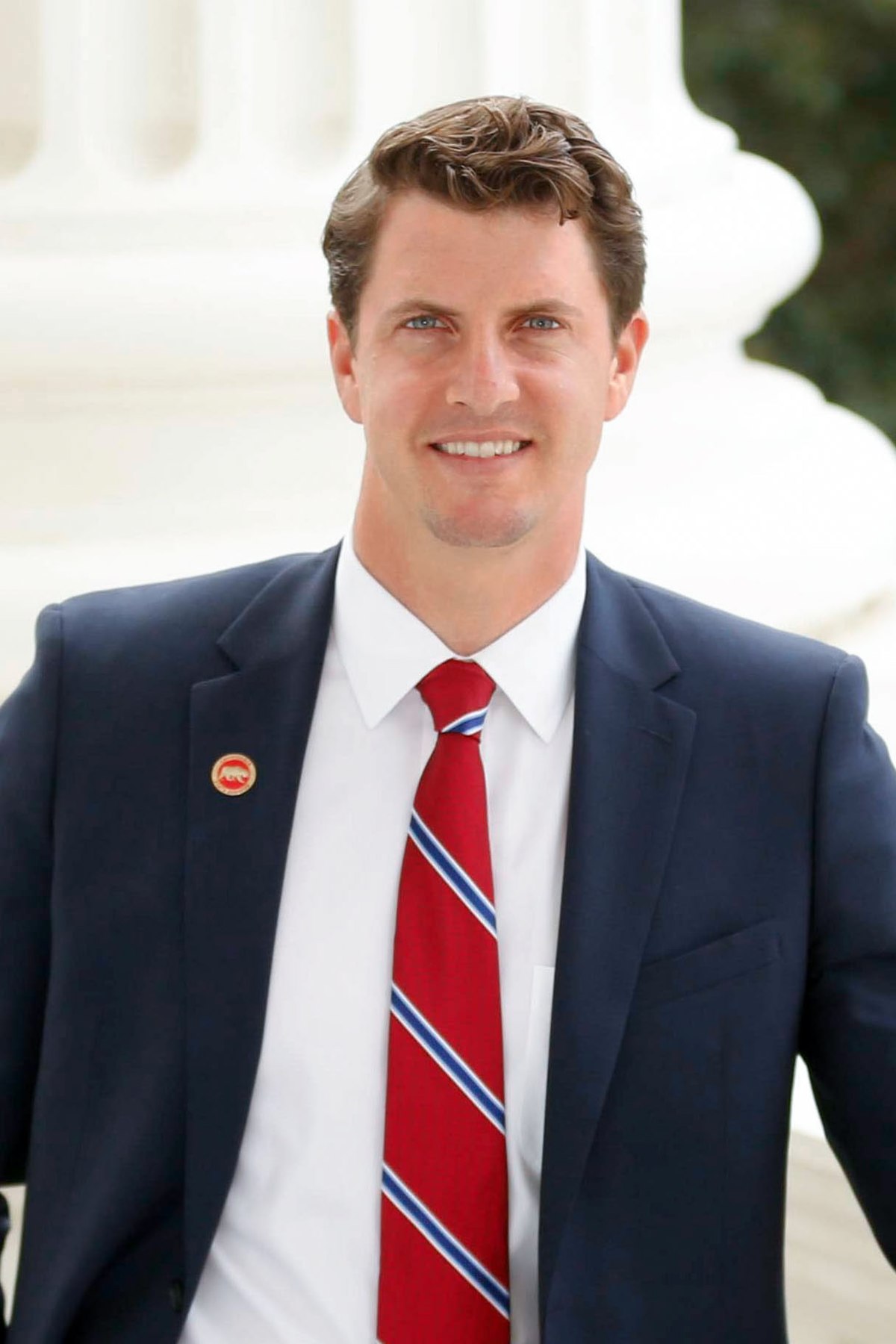
Photo of Henry Stern
D California Senate · District 27

Sen. Henry Stern

Compare
Total votes
21,214
all sessions
Attendance
88%
1,994 missed
Lower than 86% of chamber peers
With party
99%
of cast votes
Near the chamber average
Bipartisan score
0%
crosses aisle rarely
Near the chamber average
Sponsored
795
bills & resolutions
Near the chamber average
Committees
6
assignments
795 bills and resolutions

Sponsored bills

Total
795
Primary
204
Co-sponsor
591
This page
795
matching current filters
Co-sponsor AB 79
Vetoed · California House · Co-sponsor
Electrical generation: hourly greenhouse gas emissions: electricity from unspecified sources.

Existing law requires every retail supplier that makes an offer to sell electricity that is consumed in the state to disclose its electricity sources and the associated greenhouse gas emissions intensity for the previous calendar year. Existing law requires the State Energy Resources Conservation and Development Commission (Energy Commission) , in consultation with the State Air Resources Board (state board) , to adopt a methodology for the calculation of greenhouse gas emissions intensity for each purchase of electricity by a retail supplier to serve its retail customers, and requires the Energy Commission to calculate greenhouse gas emissions intensity associated with statewide retail electricity sales based on greenhouse gas emissions for total California system electricity. This bill would require, by January 1, 2019, the state board, in consultation with California balancing authorities, as defined, to update its inputs or methodology for the calculation of emissions of greenhouse gases associated with electricity from unspecified sources, a term defined in existing law but revised for this purpose. The bill would require the inputs or methodology to distinguish between those emissions associated with electricity from unspecified sources that is purchased within California balancing authority areas, as defined, and those emissions associated with electricity from unspecified sources imported into California from different subregions of the Western Electricity Coordinating Council. The bill would require the state board to regularly update the inputs to its methodology and authorize the state board to incorporate additional measures and forms of differentiation that are designed to improve the accuracy of the calculations and that support the state's initiatives for reducing emissions of greenhouse gases. The bill would authorize the state board to not update its inputs or methodology for the calculation of emissions of greenhouse gases associated with electricity from unspecified sources if it determines that updating the inputs or methodology is infeasible or is not appropriate because the administrative burden is excessive and differentiating is unlikely to materially improve the accuracy of the calculations needed for the state programs designed to regulate emissions of greenhouse gases. The bill would require the state board, in consultation with the Independent System Operator and California balancing authorities, to report to the Legislature by January 1, 2019, on any barriers to developing an enhanced methodology, based on recorded generation operations data, for the calculation of hourly greenhouse gas emissions associated with electricity from unspecified sources, as specified. The bill would require the Public Utilities Commission and the Energy Commission to incorporate the methodology into programs addressing the disclosure of the emissions of greenhouse gases and the procurement of electricity by entities under the respective jurisdiction of each. Because a local publicly owned electric utility would be required to incorporate the methodology into programs addressing the disclosure of the emissions of greenhouse gases and the procurement of electricity by the utility, this bill would impose a state-mandated local program. Under existing law, a violation of the Public Utilities Act or any order, decision, rule, direction, demand, or requirement of the commission is a crime. Because the provisions of this bill are within the act and require action by the commission to implement their requirements, a violation of which would be a crime, this bill would impose a state-mandated local program by creating a new crime. The California Constitution requires the state to reimburse local agencies and school districts for certain costs mandated by the state. Statutory provisions establish procedures for making that reimbursement. This bill would provide that no reimbursement is required by this act for specified reasons.

Vetoed Jan 12, 2018 1 co-sponsor
Co-sponsor AB 569
Vetoed · California House · Co-sponsor
Discrimination: reproductive health.

The California Fair Employment and Housing Act prohibits discrimination in employment based upon specified personal characteristics, including the race, religious creed, color, national origin, ancestry, physical disability, mental disability, medical condition, genetic information, marital status, sex, gender, gender identity, gender expression, age, sexual orientation, or military and veteran status of any person. Existing law creates the Division of Labor Standards Enforcement in the Department of Industrial Relations for the purpose of enforcing labor laws. This bill would make legislative findings and declarations relating to the right to privacy. The bill would amend provisions of labor law relating to the prohibition on an employer from taking any adverse action against an employee or their dependent or family member for their reproductive health decisions, including, but not limited to, the timing thereof, or the use of any drug, device, or medical service. The bill would also specify that any contract or agreement, express or implied, made by an employee to waive this benefit is null and void. The bill would require an employer that requires compliance with an employee handbook to include in the handbook notice of the employee rights and remedies under the provisions of this bill.

Vetoed Jan 12, 2018 1 co-sponsor
Co-sponsor AB 250
Signed into law · California House · Co-sponsor
State Coastal Conservancy: Lower Cost Coastal Accommodations Program.

(1) Existing law establishes the State Coastal Conservancy in state government, and prescribes the membership and functions and duties of the conservancy with regard to the protection, preservation, and enhancement of specified coastal lands in the coastal zone, as defined. Existing law establishes the California Coastal Commission, and prescribes the commission's duties with regard to, among other things, the review and issuance of coastal development permits for development within the coastal zone, as defined. Existing law authorizes the commission to charge various in-lieu fees to an applicant for a coastal development permit and use those fees for certain purposes related to coastal protection and preservation. This bill would require the conservancy to develop and implement a specified Lower Cost Coastal Accommodations Program intended to facilitate improvement of existing, and development of new, lower cost accommodations within 112 miles of the coast. The bill would require the conservancy to take specified actions to develop and implement the program, as prescribed. The bill would require the conservancy to prepare a lower cost coastal accommodations assessment containing specified information relating to specific opportunities to improve existing, and generate new, lower cost coastal accommodations, and to update the assessment not less than every 5 years. The bill would also authorize the conservancy to develop and implement a pilot program for the purposes of identifying and testing measures that support development, improvement, maintenance, and the operation of lower cost coastal accommodations by nonprofit or for-profit private entities, and would require the conservancy to establish criteria for the selection of projects to be included in the pilot program. The bill would authorize the commission to reclaim any in-lieu fee, as defined, that has not been expended within 7 years of its deposit with the appropriate entity, and reassign any such fee for use for one or more lower cost coastal accommodation and visitor-serving facilities projects, as described, if the executive director of the commission makes a specified written determination that the in-lieu fee will be better utilized by the reassignment to those projects, as specified. (2) Existing law authorizes the State Public Works Board to select and acquire, in the name of and on behalf of the state, with the consent of the state agency concerned, the fee or any lesser right or interest in any real property necessary for any state purpose or function. Existing law requires that all land and other real property to be acquired by or for any state agency, except for specified state agencies including the State Coastal Conservancy with respect to acceptance of offers to dedicate public accessways made pursuant to the California Coastal Act of 1976, be acquired by the state board. This bill would exempt land acquired by the conservancy for the purposes of the program from that requirement.

Signed into law Oct 15, 2017 1 co-sponsor
Co-sponsor AB 1620
Signed into law · California House · Co-sponsor
Political Reform Act of 1974: postgovernment employment.

The Milton Marks Postgovernment Employment Restrictions Act of 1990 prohibits a Member of the Legislature, for a period of one year after leaving office, from acting as a compensated agent or attorney for, or otherwise representing, any other person by making appearances before, or communications with, the Legislature or its committees, present Members, or officers or employees, if the appearance or communication is made for the purpose of influencing legislative action. The bill would extend the time period for these prohibitions for a Member of the Legislature who resigns from office by providing that the period commences with the effective date of the resignation and concludes one year after the adjournment sine die of the session in which the resignation occurred. Because a violation of the act is punishable as a misdemeanor, this bill would impose a state-mandated local program. The California Constitution requires the state to reimburse local agencies and school districts for certain costs mandated by the state. Statutory provisions establish procedures for making that reimbursement. This bill would provide that no reimbursement is required by this act for a specified reason. The Political Reform Act of 1974, an initiative measure, provides that the Legislature may amend the act to further the act's purposes upon a 23 vote of each house of the Legislature and compliance with specified procedural requirements. This bill would declare that it furthers the purposes of the act.

Signed into law Oct 14, 2017 1 co-sponsor
Primary SB 286
Signed into law · California Senate · Lead sponsor
Elections: voting.

Existing law permits vote by mail voters who return to their home precincts on election day to vote if they surrender their vote by mail ballots, as specified. Existing law requires the precinct board to return these surrendered ballots to the elections official in a designated envelope. This bill would permit vote by mail voters who return to their home precincts or go to another voting location, as specified, to vote nonprovisional ballots if they surrender their ballots to the relevant voting authority or, if they are unable to surrender their vote by mail ballots, if the voting authority verifies that they have not returned their vote by mail ballots and notates their voter records accordingly. By increasing the duties of local elections officials, this bill would impose a state-mandated local program. Existing law, the California Voter's Choice Act, authorizes certain counties to conduct any election, after a specified date, as an all-mailed ballot election if certain conditions are satisfied, including conditions related to ballot dropoff locations, vote centers, and plans for the administration of all-mailed ballot elections. This bill would make conforming and other nonsubstantive changes to provisions affected by that act. This bill would incorporate additional changes to Section 3108 of the Elections Code, proposed by AB 1403, Section 14200 of the Elections Code, proposed by AB 918, and Section 14105 of the Elections Code, proposed by AB 837, and would provide that these changes be operative only if this bill and AB 1403, AB 918, or AB 837 are enacted and this bill is enacted last. The California Constitution requires the state to reimburse local agencies and school districts for certain costs mandated by the state. Statutory provisions establish procedures for making that reimbursement. This bill would provide that, if the Commission on State Mandates determines that the bill contains costs mandated by the state, reimbursement for those costs shall be made pursuant to the statutory provisions noted above.

Signed into law Oct 14, 2017 0 co-sponsors
Primary SB 801
Signed into law · California Senate · Lead sponsor
Aliso Canyon natural gas storage facility: electrical grid data: electricity demand reduction and response: energy storage solutions.

(1) Under existing law, the Public Utilities Commission has regulatory authority over public utilities, including electrical corporations, while local publicly owned electric utilities are under the direction of their governing boards. Existing law, enacted during the energy crisis of 2000–01, requires a local publicly owned electric utility to review at the earliest practicable date its rates, tariffs, and rules to identify barriers to and determine the appropriate balance of costs and benefits of distributed energy resources in order to facilitate the installation of distributed energy resources in the interest of its customer-owners and the state, and to hold at least one noticed public meeting to solicit public comment on the review and any recommended changes. This bill would require a local publicly owned electric utility that provides electric service to 250,000 or more customers within the Los Angeles Basin to make publicly available, upon request of any person, electrical grid data necessary or useful to enable distributed energy resource providers to target solutions that support reliability in the area where electrical reliability has been impacted as a result of reductions in gas storage capacity and gas deliverability resulting from the well failure at the Aliso Canyon natural gas storage facility. (2) Existing law requires each local publicly owned electric utility, in procuring energy to serve the load of its retail end-use customers, to first acquire all available energy efficiency and demand reduction resources that are cost effective, reliable, and feasible. The California Renewables Portfolio Standard Program requires each local publicly owned electric utility to procure a minimum quantity of electricity products from eligible renewable energy resources, as defined, to achieve the procurement requirements established by the program. To the extent doing so is cost effective, this bill would require a local publicly owned electric utility providing electric service to more than 250,000 customers within the Los Angeles Basin to maximize the use of demand response, renewable energy resources, and energy efficiency to reduce demand in the area where electrical reliability has been impacted as a result of reductions in gas storage capacity and gas deliverability resulting from the well failure at the Aliso Canyon natural gas storage facility. (3) Existing law requires the Public Utilities Commission to determine appropriate targets for each load-serving entity to procure viable and cost-effective energy storage systems to be achieved by December 31, 2020. Existing law requires the governing board of each local publicly owned electric utility to determine appropriate targets for the utility to procure viable and cost-effective energy storage systems to be achieved by December 31, 2020. Existing law requires the Public Utilities Commission, in consultation with the State Air Resources Board and the State Energy Resources Conservation and Development Commission, to direct the state's 3 largest electrical corporations to file applications for programs and investments to accelerate widespread deployment of distributed energy storage systems, as defined. Existing law authorizes the Public Utilities Commission to approve, or modify and approve, programs and investments in distributed energy storage systems, up to a maximum capacity of 500 megawatts in aggregate, as provided. This bill would require the Los Angeles Department of Water and Power, in coordination with the city council of the City of Los Angeles, by June 1, 2018, to determine the cost-effectiveness and feasability of deploying a minimum aggregate total of 100 megawatts of cost-effective energy storage solutions and, if it determines that doing so is cost effective and feasible, to consider deploying those cost-effective energy storage solutions after June 1, 2018. The bill would require an electrical corporation serving the Los Angeles Basin, by June 1, 2018, to the extent doing so is cost effective and feasible and necessary to meet the reliability requirements of the electrical system in the Los Angeles Basin, to deploy a minimum aggregate total of 20 megawatts of cost-effective energy storage solutions and would authorize the electrical corporation to count these cost-effective energy storage solutions towards the capacity requirement for purposes of the distributed energy storage requirements described above. (4) The Public Utilities Act provides for the assessment of criminal fines and civil penalties for violation of the act or an order, decision, rule, direction, demand, or requirement of the commission. Existing law requires that fines and penalties imposed by the Public Utilities Commission pursuant to the Public Utilities Act be paid to the General Fund. Notwithstanding this requirement, this bill would require certain moneys collected by the Public Utilities Commission from a gas corporation serving the Los Angeles Basin pursuant to an administrative enforcement or legal proceeding relating to the well failure at the Aliso Canyon natural gas storage facility to be deposited in the Aliso Canyon Recovery Account, which the bill would create. The bill would authorize moneys in the Aliso Canyon Recovery Account to be allocated, upon appropriation by the Legislature, for purposes of mitigating impacts on local air quality, public health, and ratepayers resulting from the well failure at Aliso Canyon. (5) Existing law creates the Gas Storage Facility Leak Mitigation Account and requires the commission to deposit moneys from penalties assessed against a gas corporation in regards to a natural gas storage facility leak into the account. Existing law specifies purposes for these moneys, including purposes solely applicable to moneys from penalties assessed for the Aliso Canyon gas leak. This bill would repeal the provisions establishing the account and the provisions concerning the expenditure of moneys deposited in the account. (6) The bill would state the intent of the Legislature that the Public Utilities Commission and specified public utilities shall take immediate actions to support rapid compliance with the bill's provisions, and would state the intent of the Legislature that local governments strongly consider taking immediate actions for these purposes. (7) Under existing law, a violation of the Public Utilities Act or any order, decision, rule, direction, demand, or requirement of the Public Utilities Commission is a crime. Because certain of the provisions of this bill would be a part of the act and because a violation of an order or decision of the Public Utilities Commission implementing its requirements by an electrical corporation would be a crime, this bill would impose a state-mandated local program by creating a new crime. Because the bill would impose additional duties upon local publicly owned electric utilities in the Los Angeles Basin, this bill would impose a state-mandated local program. The California Constitution requires the state to reimburse local agencies and school districts for certain costs mandated by the state. Statutory provisions establish procedures for making that reimbursement. This bill would provide that no reimbursement is required by this act for specified reasons. (8) This bill would make legislative findings and declarations as to the necessity of a special statute for the Los Angeles Basin.


Signed into law Oct 14, 2017 0 co-sponsors
Co-sponsor AB 1491
Signed into law · California House · Co-sponsor
Sales of dogs and cats: contracts.

Existing law generally regulates formation and enforcement of contracts, including what constitutes an unlawful contract. Under existing law, a contract is unlawful if it is contrary to an express provision of law, contrary to the policy of express law, though not expressly prohibited, or otherwise contrary to good morals. Existing law, the Unruh Act, provides for the regulation of retail installment contracts, as defined. Existing law, the Karnette Rental-Purchase Act, provides for the regulation of rental-purchase agreements, as defined. Existing law regulates the sale of dogs and cats in this state, including provisions governing the retail sale of dogs and cats. This bill would declare a contract entered into on or after January 1, 2018, to transfer ownership of a dog or cat in which ownership is contingent upon the making of payments over a period of time subsequent to the transfer of possession of the dog or cat void as against public policy unless those payments are on an unsecured loan for the purchase of that animal. This bill would also declare a contract entered into on or after January 1, 2018, for the lease of a dog or cat that provides for or offers the option of transferring ownership of the dog or cat at the end of the lease term void as against public policy. The bill would require that the consumer taking possession of a dog or cat transferred under one of these contracts be deemed the owner of the dog or cat and be entitled to the return of all amounts paid under the contract.

Signed into law Oct 13, 2017 1 co-sponsor
Co-sponsor AB 733
Signed into law · California House · Co-sponsor
Enhanced infrastructure financing districts: projects: climate change.

Existing law authorizes the legislative body of a city or a county to establish an enhanced infrastructure financing district to finance public capital facilities or other specified projects of communitywide significance, and makes related findings and declarations. This bill would additionally authorize the financing of projects that enable communities to adapt to the impacts of climate change, including, but not limited to, specified impacts described in the bill, and would make conforming changes to the Legislature's findings and declarations.

Signed into law Oct 11, 2017 1 co-sponsor
Co-sponsor AB 24
Signed into law · California House · Co-sponsor
Instructional programs: State Seal of Civic Engagement.

Existing law sets forth various requirements for the issuance of diplomas conferred upon a pupil as evidence of graduation from high school. Existing law establishes the Golden State Seal Merit Diploma for the purpose of recognizing pupils who have mastered the high school curriculum. Existing law also establishes the State Seal of Biliteracy, awarded by the Superintendent of Public Instruction in accordance with specified criteria, to recognize high school graduates who have attained a high level of proficiency in speaking, reading, and writing in one or more languages in addition to English. This bill would require the Superintendent, on or before January 1, 2020, to recommend to the State Board of Education criteria for awarding a State Seal of Civic Engagement to pupils who have demonstrated excellence in civics education and participation and have demonstrated an understanding of the United States Constitution, the California Constitution, and the democratic system of government. The bill would require the Superintendent to consider, among other criteria, the successful completion of history, government, and civics courses, including courses that incorporate character education, and voluntary participation in community service or extracurricular activities. The bill would require the state board, on or before January 31, 2021, to adopt, reject, or modify the criteria recommended by the Superintendent. The bill would require the Superintendent to prepare and deliver to participating school districts the seal insignia to be affixed to the diploma or transcript of a pupil awarded the State Seal of Civic Engagement. The bill would also require participating school districts to maintain records in order to identify pupils who have earned the State Seal of Civic Engagement and to affix the appropriate insignia to the diploma or transcript of those pupils.

Signed into law Oct 9, 2017 1 co-sponsor
Showing 751 to 760 of 795 bills
Previous 1 75 76 77 80 Next