Existing law establishes the Department of Forestry and Fire Protection in the Natural Resources Agency to provide fire protection and prevention services, as specified. This bill would require the department to maintain a standard minimum level of staffing for each of its engines, as specified, without the regular practice of forcing overtime on its personnel. The bill would require the department to increase its existing firefighter fuel crews, as specified. The bill would require the department, on or before January 1, 2024, to provide to the Legislature a long-term staffing plan to meet the new era of wildfire firefighting.
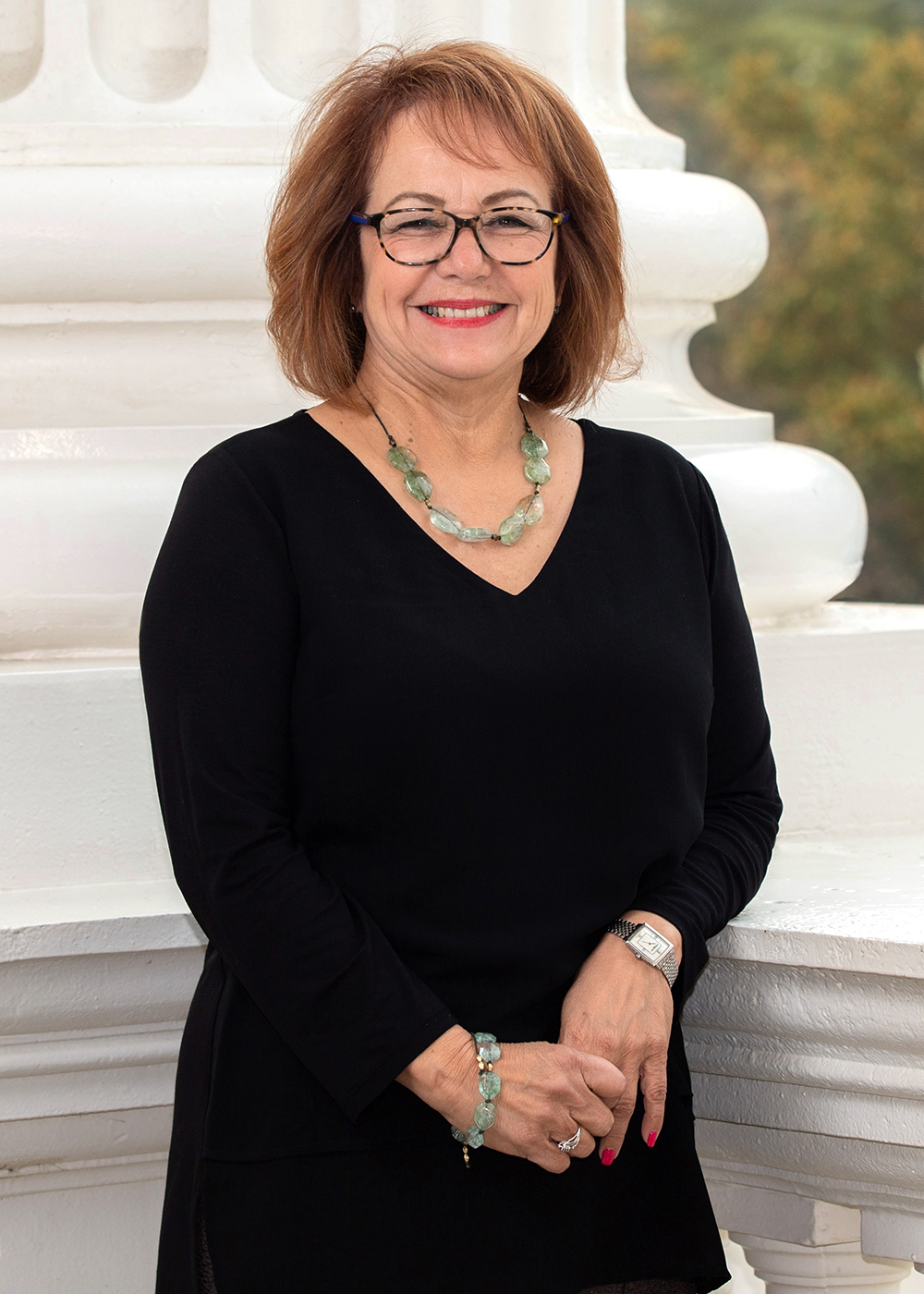
Sen. María Elena Durazo
Sponsored bills
This measure would designate a portion of southbound State Route 101, from the Temple St. ramp to the Broadway St. ramp, adjacent to the Cathedral of Our Lady of the Angels, as the Los Angeles Firefighter Kelly Wong Memorial Highway. This measure would request the Department of Transportation to determine the cost of appropriate signs showing this special designation and, upon receiving donations from nonstate sources covering that cost, to erect those signs.
Existing law, the California Pollution Control Financing Authority Act, establishes the California Pollution Control Financing Authority (authority) , with specified powers and duties, and authorizes the authority to approve financing for projects or pollution control facilities to prevent or reduce environmental pollution. Existing federal law establishes the Capital Magnet Fund and makes moneys in that fund available to the United States Secretary of the Treasury to carry out a competitive grant program to attract private capital for, and increase investment in, certain affordable housing and economic development projects by providing grants, as provided, to Treasury-certified community development financial institutions or nonprofit organizations that meet specified criteria. Existing federal law, the federal Community Development Financial Institutions Program, provides financial and technical assistance to specified recipients to enhance their ability to provide specified financial products, financial services, and development services to, and in, their target markets in order to promote economic revitalization and community development through investment in, and assistance to, community development financial institutions, as defined and specified. This bill would authorize the authority to establish the California Investment and Innovation Program for the purpose of providing grants to enhance the capacity of specified community development financial institutions to provide technical assistance and capital access to economically disadvantaged communities in the state. The bill would establish the California Investment and Innovation Fund and, upon appropriation and the authority's establishment of the program, require the authority to award grants to eligible applicants, defined as community development financial institutions that meet specified criteria under the program, as provided. The bill would require eligible applicants, prior to receiving any grant funds, to enter into a grant agreement with the authority containing specified requirements. The bill would specify authorized uses of grant funds, including increasing working capital for the purpose of funding services and operations that contribute to the overall community development mission of the eligible applicant. The bill would require the authority to adopt, amend, or repeal guidelines for the operation of the program, as specified. The bill would make the authority's duties under these provisions contingent on the authority establishing the program. The bill would also, beginning on January 1, 2024, change the name of the authority to the California Community Development Financing Authority, as specified.
The California Constitution declares that defending life and liberty, acquiring, possessing, and protecting property, and pursuing and obtaining safety, happiness, and privacy are inalienable rights, and that a person may not be deprived of life, liberty, or property without due process of law or equal protection of the laws. Existing law, the Reproductive Privacy Act, declares that every individual possesses a fundamental right of privacy with respect to personal reproductive decisions and prohibits the state from denying or interfering with a person's right to choose or obtain an abortion before viability of the fetus, or when the abortion is necessary to protect the life or health of the person. This measure would amend the California Constitution to prohibit the state from denying or interfering with an individual's reproductive freedom in their most intimate decisions, which includes their fundamental right to choose to have an abortion and their fundamental right to choose or refuse contraceptives.
Existing law establishes a workers' compensation system, administered by the Administrative Director of the Division of Workers' Compensation, to compensate an employee for injuries sustained in the course of employment. Existing law creates a rebuttable presumption that specified injuries sustained in the course of employment of a specified member of law enforcement or a specified first responder arose out of and in the course of employment. Existing law, until January 1, 2023, creates a rebuttable presumption of injury for various employees, including an employee who works at a health facility, as defined, to include an illness or death resulting from COVID-19, if specified circumstances apply. This bill would define "injury," for a hospital employee who provides direct patient care in an acute care hospital, to include infectious diseases, cancer, musculoskeletal injuries, post-traumatic stress disorder, and respiratory diseases. The bill would include the novel coronavirus 2019 (COVID-19) , among other conditions, in the definitions of infectious and respiratory diseases. The bill would create rebuttable presumptions that these injuries that develop or manifest in a hospital employee who provides direct patient care in an acute care hospital arose out of and in the course of the employment. The bill would extend these presumptions for specified time periods after the hospital employee's termination of employment.
The California Building Standards Law provides for the adoption of building standards by state agencies by requiring all state agencies that adopt or propose adoption of any building standard to submit the building standard to the California Building Standards Commission for approval and adoption. In the absence of a designated state agency, the commission is required to adopt specific building standards, as prescribed. Existing law requires the commission to codify and publish all building standards of adopting agencies or state agencies that propose the building standards and statutes defining building standards into one California Building Standards Code, and further requires the commission to publish, or cause to be published, editions of the code in its entirety once every 3 years. This bill would require the commission, commencing with the next triennial edition of the California Building Standards Code adopted after January 1, 2023, to adopt, approve, codify, and publish mandatory building standards for safe maximum indoor air temperature in newly constructed dwelling units. The bill would require the Department of Housing and Community Development to develop and propose mandatory building standards for safe maximum indoor air temperature in existing dwelling units and would require the department and the commission to consult with stakeholders, as specified, in developing those standards. The bill would also state the intent of the Legislature regarding those standards. Existing law requires that any building with a dwelling unit maintain certain characteristics in order to be tenantable, including the maintenance of adequate heating that conforms to the standard of quality set by applicable law. Beginning one year after the California Building Standards Code includes the standards for safe maximum indoor air temperature in dwelling units described above, this bill would require that any building with a dwelling unit also maintain adequate cooling, as specified. The State Housing Law, which is administered by the Department of Housing and Community Development, prescribes standards for buildings used for human habitation and establishes definitions for this purpose. The law provides that a building, or a portion of it, in which certain conditions are found to exist, such as lack of heating, is substandard. The law provides that a violation of these provisions is a misdemeanor. Beginning one year after the California Building Standards Code includes the standards for safe maximum indoor air temperature in dwelling units described above, this bill would add that lack of cooling, as specified is a substandard condition. By expanding the definition of a crime, this bill would impose a state-mandated local program. The California Constitution requires the state to reimburse local agencies and school districts for certain costs mandated by the state. Statutory provisions establish procedures for making that reimbursement. This bill would provide that no reimbursement is required by this act for a specified reason.
(1) The California Constitution grants the retirement board of a public employee retirement system plenary authority and fiduciary responsibility for investment of moneys and administration of the retirement fund and system. These provisions qualify this grant of powers by reserving to the Legislature the authority to prohibit investments if it is in the public interest and the prohibition satisfies standards of fiduciary care and loyalty required of a retirement board. Existing law prohibits the boards of administration of the Public Employees' Retirement System and the State Teachers' Retirement System from making investments in certain countries and in thermal coal companies, as specified, subject to the boards' plenary authority and fiduciary responsibility for investment of moneys and administration of the systems. This bill, except as specified, would prohibit the boards of specified state and local public retirement systems from making additional or new investments in prohibited companies, as defined, domiciled in Russia or Belarus, as defined, companies that the United States government has designated as complicit in the aggressor countries', as defined, war in Ukraine, or companies that supply military equipment to the aggressor countries, and to liquidate the investments of the board in those companies, as specified. The bill would also require the board, on or before January 1, 2023, and every year thereafter, to file a specified report with the Legislature. The bill would repeal these provisions on specified triggering events. By requiring the boards of local public retirement systems to take specified actions, this bill would impose a state-mandated local program. (2) Existing law specifies the duties of the Treasurer, which include receiving and keeping in the vaults of the State Treasury or depositing in banks or credit unions all moneys belonging to the state, and, except as specified, receiving and keeping in the vaults of the State Treasury or depositing for safekeeping with any federal reserve bank or any branch thereof, or with any trust company or the trust department of any state or national bank located in a city designated as a reserve or central reserve city by the Board of Governors of the Federal Reserve System, bonds and other securities or investments belonging to the state. This bill, except as specified, would prohibit the Treasurer from making additional or new investments or renewing existing investments of state moneys in any investment vehicle in the government of Russia or the government of Belarus that meets certain conditions, or in or from a Russian or Belarusian financial institution currently under sanctions imposed by the United States, as defined and specified. The bill would repeal these provisions on specified triggering events. (3) Existing law specifies how money received into the treasury must be credited and how those state funds are to be used. Existing law prohibits state funds from being used to reimburse a state contractor for costs incurred to assist, promote, or deter union organizing, as defined and specified. Existing law also prohibits state trust moneys from being used to make additional or new investments or to renew existing investments in business firms that engage in discriminatory practices in further of or in compliance with the Arab League's economic boycott of Israel, as defined and specified. This bill, except as specified, would prohibit a state agency, as defined, from making additional or new investments or renewing existing investments of state moneys in any investment vehicle in the government of Russia or the government of Belarus that meets certain conditions, or in or from Russian or Belarusian financial institutions currently under sanctions imposed by the United States, and would require a state agency to liquidate those investments. The bill would also require a state agency to file a specified report with the Legislature and the Governor. The bill would urge companies operating in California and the Regents of the University of California to divest and separate themselves from the government of Russia, Russian financial institutions, Russian businesses, the government of Belarus, Belarusian financial institutions, and Belarusian businesses, and would request companies doing business in California to report their investments in and contracts with the government of Russia, Russian financial institutions, Russian businesses, the government of Belarus, Belarusian financial institutions, and Belarusian businesses, as specified. The bill would repeal these provisions on specified triggering events. (4) Existing law authorizes state agencies to contract for goods, information technology, or services with certain suppliers, as specified. Existing law also makes companies in Sudan involved in certain activities ineligible to bid or submit a proposal for, and forbids them from bidding on or submitting a proposal for, a contract with a state agency for goods or services, as specified. This bill, except as specified, would make a company that conducts business with the government of Russia or the government of Belarus ineligible to bid or submit a proposal for, and would forbid that company from bidding on or submitting a proposal for, a contract with a state agency for goods or services, as defined and specified. The bill would require a state agency to require a company that submits a bid or proposal with respect to a contract for goods or services to certify that the company is not a scrutinized company, as prescribed. The bill would, among other things, make a company that submits a false certification under these provisions liable for a civil penalty, and would require the Department of General Services to report the company to the Attorney General, who would be required to determine whether to bring a civil action against the company, as specified. The bill would repeal these provisions on specified triggering events. (5) The California Constitution requires the state to reimburse local agencies and school districts for certain costs mandated by the state. Statutory provisions establish procedures for making that reimbursement. This bill would provide that, if the Commission on State Mandates determines that the bill contains costs mandated by the state, reimbursement for those costs shall be made pursuant to the statutory provisions noted above. (6) This bill would declare that it is to take effect immediately as an urgency statute.

This measure would recognize the 30th anniversary of the Los Angeles Riots on April 29, 2022, as a time of building and reflection for the citizens of Los Angeles and the citizens of California.